


Partial descongelamento during transfer
Atraso na doca, transferência aérea ou gelo seco insuficiente podem aquecer as bordas antes que o núcleo responda.
Plasma fresco congelado needs a congelado route that prevents descongelamentoing without letting gelo seco damage bags, rótulos, or documentos. The configuração de embalagem should control temperature, suporte das bolsas, espaço de vapor, e recebendo evidências juntos.
As remessas de produtos sanguíneos devem ser avaliadas pelo histórico de temperatura e pelas condições de recebimento. Os detalhes abaixo são orientações de planejamento de embalagem; o manuseio final deve seguir o procedimento da sua instalação e os requisitos locais.
Atraso na doca, transferência aérea ou gelo seco insuficiente podem aquecer as bordas antes que o núcleo responda.
O contato direto pode tornar os sacos quebradiços, damage rótulos, ou causar problemas localizados de resfriamento excessivo e manuseio.
Geada, água derretida, ou o gerenciamento de vapor de gelo seco pode dificultar a revisão da documentação de recebimento e da condição da caixa.
| Condição da rota | Objetivo de temperatura | Configuração de embalagem | Planejamento de refrigerante ou gelo seco | Verificação no recebimento |
|---|---|---|---|---|
| Short congelado courier, 0-8 h | Manter a condição congelada e evitar o descongelamento da superfície durante a transferência. | Congelado caixa médica para envio, bandeja de saco rígida, gelo seco separado dos sacos, forro absorvente ou resistente a vazamentos, one registrador near carga útil edge. | Os testes de pequenas parcelas geralmente começam com 1-3 kg gelo seco quando permitido pela transportadora e regras de rota. | Chegada congelada, sem furo, documentos secos, remaining gelo seco, e tempo de transferência. |
| Pacote congelado padrão ou via aérea, 8-24 h | Mantenha a condição congelada por meio de transferência, atraso, e fila de recebimento. | Expedidor de alto isolamento, gelo seco acima ou ao redor de uma zona de carga útil protegida, expedidor ventilado, documentos isolados da geada. | Teste 3-8 kg gelo seco para parcelas comuns, em seguida, ajuste para carga útil massa, tamanho do remetente, e exposição ambiental. | Registrador curve, remaining gelo seco, fragilidade do saco, geada de caixa, e legibilidade do rótulo. |
| Faixa longa ou interrupção na estação quente, 24-48 h | Rota de congelados validada com reserva suficiente de gelo seco e regras de manuseio claras. | Larger caixa isotérmica para envio, zona de reserva geada seca, camadas espaçadoras, marcação de gelo seco, revisão de risco de rota, procedimento de recebimento. | Algumas pistas mais longas ou quentes podem exigir 8-15 kg ou mais gelo seco; calcular e validar antes de usar. | condição congelada, temperatura mínima, remaining gelo seco, suporte das bolsas, e atraso no recebimento. |
Use esses intervalos como ponto de partida para amostragem e cotação. Final refrigerante, PCM, gelo seco, isolamento, e as escolhas de monitoramento devem ser validadas com a carga útil real, tamanho do remetente, duração da rota, processo de transporte, temporada, e procedimento de recebimento.
A configuração de embalagem deve preservar um componente já congelado, não congelar o produto durante o transporte.
Use bandejas, espaçadores, ou forros para que o gelo seco não toque nos sacos, rótulos, ou papelada diretamente.
Use um transportador ventilado e siga o procedimento de transporte para peso de gelo seco, rotulagem, and documentos.
O recebimento deve revisar os dados do registrador com a condição da bolsa, remaining gelo seco, documentos, e notas de atraso.
Estes são os problemas visíveis e operacionais que a configuração de embalagem deve reduzir antes que a remessa chegue ao destinatário.
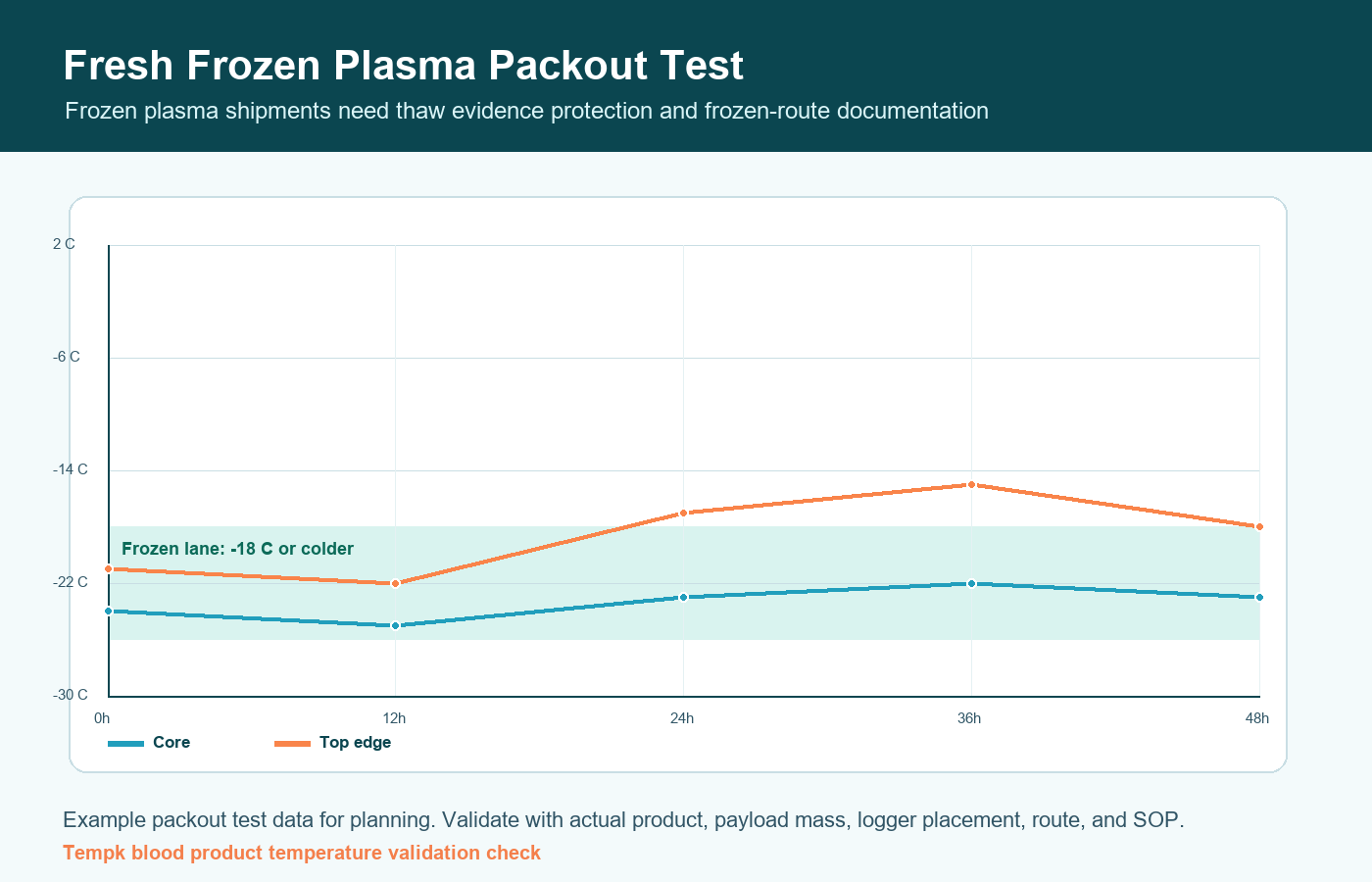
Use a curva de teste como uma comparação funcional, então valide com a carga útil real, remetente, refrigerante or gelo seco mass, duração da pista, perfil ambiente, e processo de recebimento.
Use estas páginas para comparar rotas de produto sanguíneo próximas, escolhas de refrigerante, opções de isolamento, e perguntas sobre risco de rota antes da amostragem.
Plasma fresco congelado needs a congelado route with enough refrigerante capacity for delays. The configuração de embalagem should avoid descongelamento parcial at the top layer and protect bags from gelo seco pressure points.
Common failures include descongelamento das bordas, fragilidade do saco, gelo seco depletion, etiqueta dano por geada, e caixas molhadas após o revenido.
Use uma caixa isotérmica qualificada para congelado, separadores de bolsas e uma barreira plana entre gelo seco e bolsas de plasma. Mantenha a documentação seca e fora da zona mais fria.
Use gelo seco ou embalagem congelada validada pela duração exigida. Dimensione o gelo seco para a rota mais atraso no recebimento, não apenas para o tempo de trânsito programado.
Verifique a dureza do saco, gelo seco remaining, registrador data, legibilidade do rótulo, and any signs of descongelamento parcial.
As rotas de plasma fresco congelado devem ser dimensionadas para o trânsito programado, além do atraso de recebimento realista. A camada superior e os sacos de borda geralmente aquecem primeiro, so they need special attention in the test configuração de embalagem.
Use um remetente qualificado para congelados, separadores de sacos, e uma barreira de gelo seco que evita marcas de pressão ou danos causados pelo gelo nas etiquetas. Mantenha os documentos secos e fora da zona mais fria.
Tempk deve validar massa de gelo seco, contagem de malas, arranjo de carga útil, e atraso na rota. Verifique o gelo seco restante, dureza do saco, registrador data, legibilidade do rótulo, and any descongelamento parcial signs.
Custom configuração de embalagem support
Para tamanhos de caixa fixos, carga útil limits, requisitos de marca, pistas sazonais, ou alvos de validação, Tempk can adapt this solution into a custom cold-chain configuração de embalagem.
Compartilhe o tipo de componente, contagem de carga útil, tamanho do saco ou recipiente, faixa alvo, duração da rota, condição ambiente, etapas do correio, limite de transferência, and verificações no recebimento. Tempk pode ajudar a comparar o remetente, layout de refrigerante, inserção de suporte, posição de monitoramento, e plano de validação.
Request a configuração de embalagem review