


Congelar contato na face refrigerante
Gel refrigerante congelado ou blocos de gelo podem criar um ponto frio que não aparece em uma leitura com registrador apenas no centro.
As remessas de glóbulos vermelhos precisam de controle refrigerado sem congelar o componente ou pressionar os sacos contra o refrigerante rígido. The configuração de embalagem should protect the component, o rótulo, o conjunto de documentos, e o registro de temperatura ao mesmo tempo.
As remessas de produtos sanguíneos devem ser avaliadas pelo histórico de temperatura e pelas condições de recebimento. Os detalhes abaixo são orientações de planejamento de embalagem; o manuseio final deve seguir o procedimento da sua instalação e os requisitos locais.
Gel refrigerante congelado ou blocos de gelo podem criar um ponto frio que não aparece em uma leitura com registrador apenas no centro.
Transferência de porta aberta, tempo de espera do correio, e o atraso no recebimento pode levantar a carga externa útil mais rápido do que o esperado.
Inserções apertadas, heavy refrigerante, ou condensação pode danificar os sacos, rótulos, e documentação necessária para receber.
| Condição da rota | Objetivo de temperatura | Configuração de embalagem | Planejamento de refrigerante ou gelo seco | Verificação no recebimento |
|---|---|---|---|---|
| Veículo controlado ou correio curto, 0-6 h | Manter o manuseio refrigerado e evitar congelamento; align with the facility procedure for glóbulos vermelhos. | Pre-conditioned insulated caixa médica para envio, forro absorvente, berço de bolsa, one registrador near carga útil, refrigerante separado por divisória. | Often no congelado refrigerante against carga útil. Por um 3-8 Pacote L, teste 0.8-1.5 kg condicionado 2-8 Gel C ou PCM atrás de uma barreira. | Curva de temperatura, sem marcas de frio, rótulo seco, suporte das bolsas, e tempo de transferência. |
| Parcela padrão ou rota de verão, 6-24 h | Rota refrigerada com proteção mais forte do lado quente e sem contato direto com o gelo. | EPP or caixa isotérmica shipper, divisor mais grosso, contenção secundária absorvente, dois registradores para posições quentes e frias. | Comece os testes por aí 1.5-3.5 kg condicionado 2-8 Gel C ou PCM para pequenas parcelas; aumentar somente após revisão do ponto frio. | Borda quente, cara fria, condensação, legibilidade do rótulo, e atraso no recebimento. |
| Rota fria de inverno ou transferência aérea | Evite o congelamento devido à exposição ambiental enquanto ainda mantém o controle refrigerado. | Expedidor de alto isolamento, refrigerante reduzido ou tamponado, layout de contato não direto, carga útil envolta em manga de suporte. | Use PCM condicionado em vez de gel congelado onde o risco de frio for alto. Teste o ambiente mais baixo esperado antes do envio ao vivo. | Temperatura mínima, localização de ponto frio, flexibilidade da bolsa, secura da embalagem externa, e tempo de permanência do correio. |
Use esses intervalos como ponto de partida para amostragem e cotação. Final refrigerante, PCM, gelo seco, isolamento, e as escolhas de monitoramento devem ser validadas com a carga útil real, tamanho do remetente, duração da rota, processo de transporte, temporada, e procedimento de recebimento.
The component should enter a stable refrigerated configuração de embalagem. Não confie na caixa para puxar uma carga quente útil de volta ao alcance.
Use uma divisória, espaçador de espuma, ou carga útil manga para que o gel refrigerante ou PCM não possa tocar diretamente nos sacos.
Coloque os documentos fora das zonas úmidas e use contenção absorvente ou resistente a vazamentos ao redor da carga útil.
Coloque um sensor próximo à borda provavelmente quente e outro próximo ao ponto de risco do lado refrigerante durante a validação.
Estes são os problemas visíveis e operacionais que a configuração de embalagem deve reduzir antes que a remessa chegue ao destinatário.
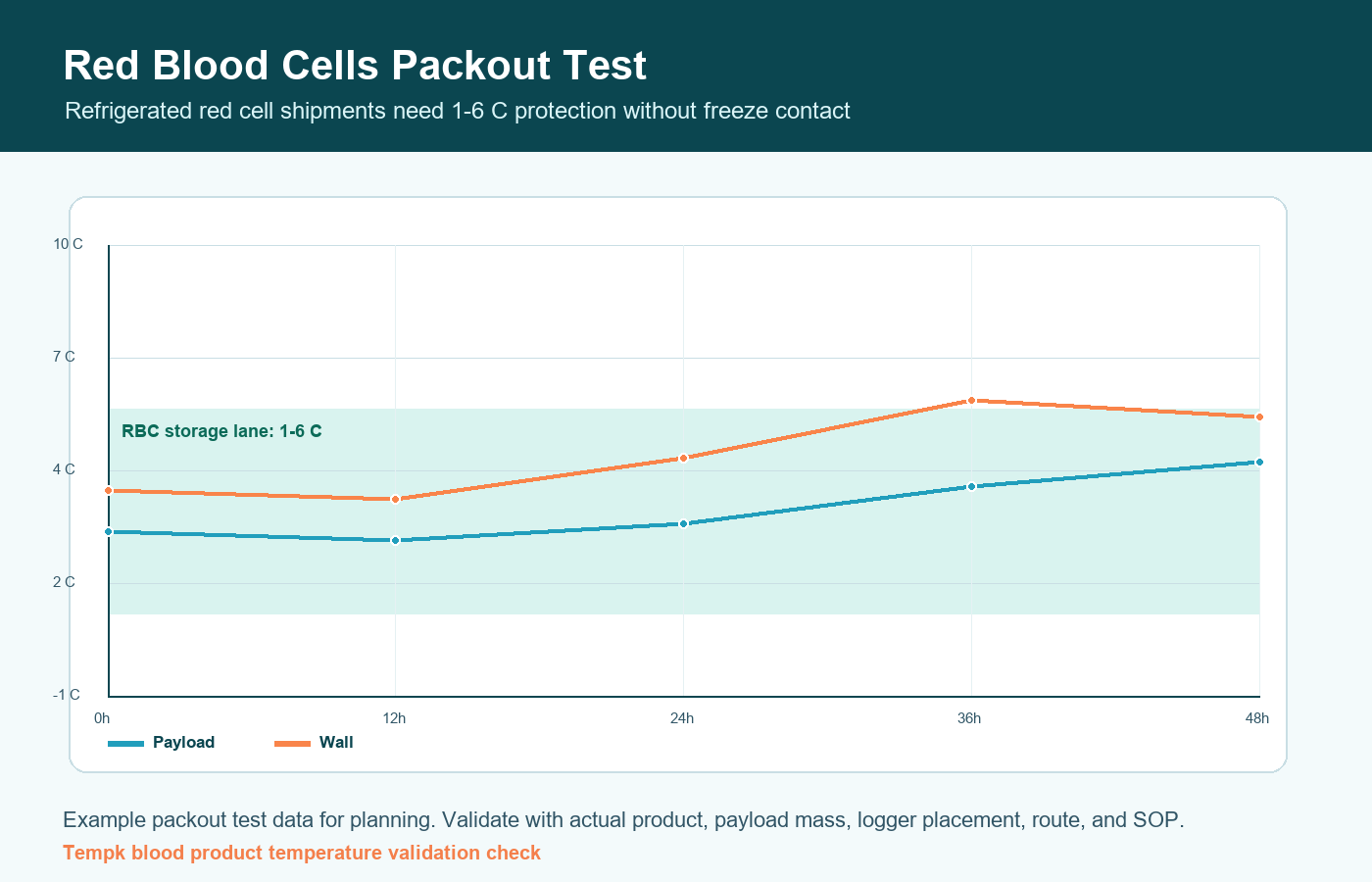
Use a curva de teste como uma comparação funcional, então valide com a carga útil real, remetente, refrigerante or gelo seco mass, duração da pista, perfil ambiente, e processo de recebimento.
Use estas páginas para comparar rotas de produto sanguíneo próximas, escolhas de refrigerante, opções de isolamento, e perguntas sobre risco de rota antes da amostragem.
Glóbulos vermelhos exigem transporte refrigerado controlado com posicionamento cuidadoso do registrador. A embalagem deve evitar aquecimento e congelamento acidental durante o handoff.
Exposição congelada, atrasos de recebimento quentes, pressão nas bolsas points, e má separação de carga útil são os principais modos de falha.
Use uma caixa qualificada para sangue com compartimento de carga, liner absorvente e separação do refrigerante. Mantenha as bolsas planas o suficiente para evitar dano por pressão.
Use qualificado 1 para 6 Componentes de embalagem C. Do not substitute gel refrigerante congelado padrão without full validation.
Revise os dados mínimos e máximos do registrador, condição da bolsa, controle de vazamento, e tempo desde a entrega até o armazenamento controlado.
Glóbulos vermelhos require a qualified refrigerado route, não é uma caixa de gelo genérica. A área de carga útil deve proteger os sacos do refrigerante direto e incluir controle absorvente suficiente para risco de vazamento.
Uso validado 1 para 6 Componentes C e manter o registrador de temperatura na útil zona de carga. Um registrador contra a parede fria pode exagerar o risco de congelamento, enquanto um registrador fora da carga útil pode perder aquecimento.
A revisão temporária deve cobrir a contagem de malas, carga útil mass, duração da rota, hora de transferência, e recebendo fluxo de trabalho. Verifique a temperatura mínima e máxima, condição da bolsa, vazamento, e transferência para armazenamento controlado.
Custom configuração de embalagem support
Para tamanhos de caixa fixos, carga útil limits, requisitos de marca, pistas sazonais, ou alvos de validação, Tempk can adapt this solution into a custom cold-chain configuração de embalagem.
Compartilhe o tipo de componente, contagem de carga útil, tamanho do saco ou recipiente, faixa alvo, duração da rota, condição ambiente, etapas do correio, limite de transferência, and verificações no recebimento. Tempk pode ajudar a comparar o remetente, layout de refrigerante, inserção de suporte, posição de monitoramento, e plano de validação.
Request a configuração de embalagem review