


Compatibilidade de SKUs mistos
Alimentos preparados, laticínio, produzir, e bebidas podem não ter o mesmo odor, umidade, ou tolerância à resistência da caixa.
Paletes mistos refrigerados combinam produtos com diferentes níveis de umidade, odor, resistência das caixas e sensibilidade térmica. O plano de rota deve manter o palete refrigerado sem bloquear o fluxo de ar nem amassar caixas mais frágeis.
Rotas de paletes devem ser avaliadas pela temperatura no nível da carga e pela condição no recebimento. O plano abaixo fornece um ponto de partida prático antes de executar um teste de pista com o padrão de paleta real e o processo de reboque.
Alimentos preparados, laticínio, produzir, e bebidas podem não ter o mesmo odor, umidade, ou tolerância à resistência da caixa.
O embrulho excessivo pode prender zonas quentes e impedir que o ar frio do armazém ou do trailer alcance áreas expostas.
As caixas externas veem primeiro a exposição da doca e da transferência do trailer, enquanto a condensação pode enfraquecer etiquetas e placas.
| Condição da rota | Objetivo de temperatura | Configuração de proteção da carga | Planejamento de refrigerante ou cobertura | Verificação no recebimento |
|---|---|---|---|---|
| Câmara fria to carreta refrigerada, 0-4 h exposição na doca | Use o requisito de SKU mais rigoroso da paleta, muitas vezes 2-8 C para mercearia refrigerada. | Paleta pré-resfriada, envolvimento atento ao fluxo de ar, cantoneiras se necessário, cobertura térmica durante a transferência de doca. | Normalmente não há refrigerante adicional quando a pista da carreta refrigerada está estável. Se a exposição à transferência for alta, teste 4-10 kg PCM ou acumuladores de gel em um tampão de paleta separado. | Principal, borda, and temperatura do núcleos; movimento do filme; caixas molhadas; caixas macias esmagadas. |
| Doca de transbordo or rota de múltiplas paradas, 4-12 h | Manter a temperatura refrigerada através de pontos de transferência e eventos de porta aberta. | Cobertura térmica de palete or liner, Separação de SKU por risco de umidade/odor, mapa de registradores at borda exposta and core. | Para suporte passivo validado, teste sobre 8-20 kg PCM or conditioned acumuladores de gel, colocado de forma que o fluxo de ar não seja bloqueado. | Propagação de temperatura, condensação, legibilidade do rótulo, transferência de odor, e atraso no recebimento. |
| Roteamento de interrupção ou buffer passivo, 12-24 h | Rota refrigerada validada com mais isolamento e limites de recebimento claros. | Capa de paleta isolada, padrão de envoltório respirável ou controlado, zonas de refrigeração separadas, revisão de risco de rota. | Sobre 20-40 kg PCM ou acumuladores de gel condicionados podem ser necessários para um plano de paleta passiva; confirme com teste de pista. | curva dos registradores, umidade da caixa, aquecimento das bordas, compatibilidade do produto, e ajuste da capa. |
Use esses intervalos para amostragem e cotação. Final gelo seco, PCM, acumulador de gel, cobrir, ou escolhas de liner devem ser confirmadas com massa de paleta, padrão de caixa, duração da rota, ventilação, regras da operadora, exposição ambiental, e recebimento de manuseio.
Produtos separados que criam umidade, absorver odor, ou esmagar facilmente. Paleta mista de mercearias falha quando o SKU mais fraco é ignorado.
Não embrulhe com tanta força que o fluxo de ar fique bloqueado. Use aberturas de ventilação, ajuste da capa, e tensão do envoltório com base no layout do armazém e do trailer.
Pacotes de gel ou PCM podem ajudar durante a exposição à transferência, mas apenas quando estão separados do produto e não bloqueiam os canais de ar.
Coloque sensores no topo, borda externa, centro, e camada inferior para que a revisão da rota reflita toda a paleta.
Estes são os problemas visíveis e operacionais que o plano de paleta deve reduzir antes que a carga chegue ao receptor.
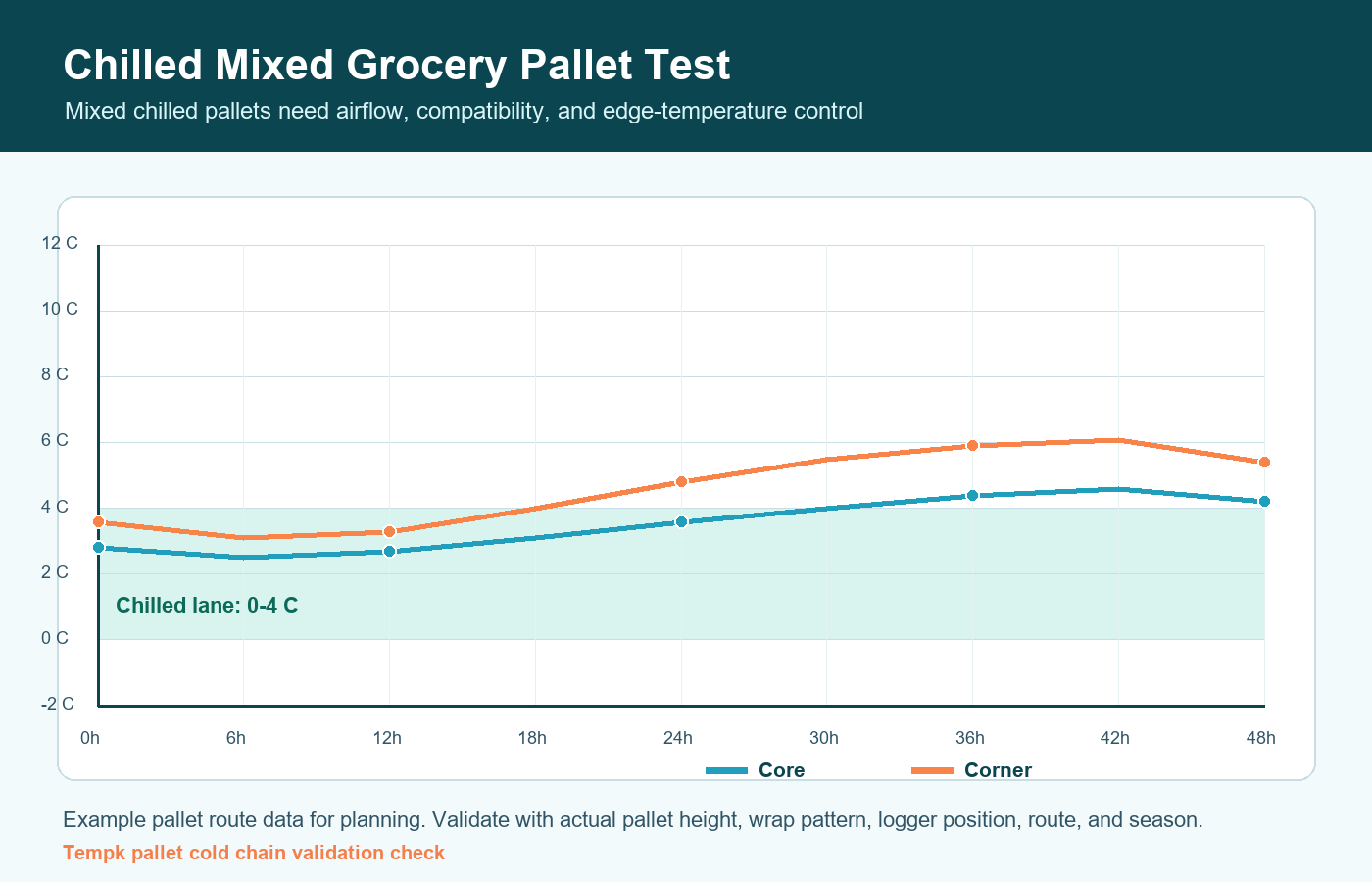
Use a curva de teste como uma comparação funcional, então valide com a massa real da paleta, cobrir, forro, suporte de refrigerante, processo de reboque, e estação. Para paletas, a borda exposta e a camada superior geralmente são tão importantes quanto o núcleo.
Use estas páginas para comparar rotas de paletas próximas, planejamento de gel seco, escolha de isolamento, e risco de rota antes da amostragem.
For chilled paletes mistos de mercearia, paletas mistas contêm produtos com diferentes cargas térmicas e limites de esmagamento. A configuração de embalagem deverá ser escolhida a partir da condição do produto e promessa de entrega, não apenas pelo tamanho da caixa. Comece com 0-4 C refrigerado ou -18 Controle C congelado na preparação da paleta, transferência de doca, e transporte de linha, então decida se o maior risco é o aquecimento, congelando, condensação, vazamento, dano de pressão, ou atraso no recebimento.
Use mantas palete ou palco refrigerado, coloque itens sensíveis longe das bordas da paleta, and reduce permanência na doca time. Valide as caixas de borda e o núcleo da paleta separadamente. O isolamento deve deixar uma cavidade de carga útil estável e o líquido refrigerante deve ser colocado onde remova o calor sem tocar nas superfícies sensíveis do produto. Se o percurso for curto e controlado, um layout de pacote de gel condicionado mais leve pode ser suficiente. Se o percurso incluir estadia em parcelas de verão, atraso no frete aéreo, ou fim de semana recebendo risco, use mais isolamento ou um perfil PCM mais suave antes de adicionar refrigerante congelado agressivo.
Execute o teste com a contagem real do produto, Tamanho da caixa, massa de refrigerante, e fluxo de trabalho do empacotador. Registre o ponto mais quente do produto, o ponto mais frio próximo ao refrigerante, condição do pacote, e tempo desde a entrega até o armazenamento. A recomendação final do Tempk deve informar à equipe de embalagem exatamente onde cada item de refrigerante está e o que o receptor deve verificar primeiro.
Custom configuração de embalagem support
Para tamanhos de caixa fixos, limites de carga útil, requisitos de marca, pistas sazonais, ou alvos de validação, Tempk can adapt this solution into a custom cold-chain configuração de embalagem.
Compartilhe as dimensões da paleta, massa do produto, padrão de caixa, temperatura alvo, tempo na doca, tipo de reboque, doca de transbordo steps, condição ambiente, e recebimento de cheques. Tempk pode ajudar a comparar capas, forros, acumuladores de gel, PCM, suporte gelo seco, posições dos registradores, e etapas de validação.
Solicitar revisão de rota de paletes