


Qualidade do esmalte e da superfície
As oscilações de temperatura podem afetar o esmalte do gelo, aparência superficial, e confiança do cliente.
Paletes de frutos do mar congelados precisam de controle congelado e proteção da qualidade superficial. O plano de rota deve gerenciar condição do glaze, vazamento das caixas, separação de odor, caixas de borda exposta e qualquer suporte de gelo seco durante a transferência.
Rotas de paletes devem ser avaliadas pela temperatura no nível da carga e pela condição no recebimento. O plano abaixo fornece um ponto de partida prático antes de executar um teste de pista com o padrão de paleta real e o processo de reboque.
As oscilações de temperatura podem afetar o esmalte do gelo, aparência superficial, e confiança do cliente.
O degelo ou danos à caixa podem criar água derretida, odor, e recebendo preocupações de saneamento.
Paletas Frutos do Mar podem precisar de separação de produtos mistos, embalagem retornável, ou caixas absorventes.
| Condição da rota | Objetivo de temperatura | Configuração de proteção da carga | Planejamento de refrigerante ou cobertura | Verificação no recebimento |
|---|---|---|---|---|
| Frozen armazém to carreta refrigerada, 0-4 h exposição na doca | Keep frutos do mar frozen, comumente planejado perto -18 C, e proteger as bordas expostas da paleta. | Paletes pré-congeladas, cobertura congelada durante a transferência, separação de vazamento/odor se misturado, topo-borda-núcleo registradores. | Normalmente não há gelo seco se o transporte congelado ativo for estável. Use a frozen cover or liner for exposição na doca. | Borda e temperatura do núcleo, condição do esmalte, molhamento das caixas, odor, e tempo de transferência. |
| Doca de transbordo or multi-stop frozen route, 4-12 h | Rota congelada com proteção adicional para a qualidade da superfície dos frutos do mar e controle de vazamentos. | Frozen cobertura de palete or liner, padrão de caixa estável, camada de controle de vazamento quando necessário, gelo seco separado se validado. | O backup Gelo seco pode ser testado em torno 10-25 kg por paleta quando permitido, com ventilação e controles de recepção. | curva dos registradores, descongelamento das bordas, esmalte, vazamento, transferência de odor, e restante gelo seco. |
| Risco de atraso ou segmento congelado passivo, 12-24 h | Proteção contra congelamento validada com gelo seco transparente, cobrir, e recebimento de procedimentos. | Cobertura congelada de alto desempenho, separação de vazamento/odor, zonas de gelo seco longe de danos à caixa, revisão de risco de rota. | Sobre 25-55 kg de gelo seco pode ser necessário para alguns frutos do mar paleteizados; calcular e validar para a rota. | Mapa de temperatura, condição do esmalte, molhamento das caixas, odor, estabilidade da carga, e gelo seco restante. |
Use esses intervalos para amostragem e cotação. Final gelo seco, PCM, acumulador de gel, cobrir, ou escolhas de liner devem ser confirmadas com massa de paleta, padrão de caixa, duração da rota, ventilação, regras da operadora, exposição ambiental, e recebimento de manuseio.
Não combine frutos do mar com embalagens absorventes de odores, a menos que o forro ou o plano de separação tenham sido verificados.
Utilize a capa, forro, e mapa de registradores para proteger a borda superior e externa onde o aquecimento começa primeiro.
Use revestimentos ou camadas de separação quando a água derretida ou danos à caixa retardarem o recebimento ou contaminarem cargas adjacentes.
Se for necessário gelo seco, planejar massa, colocação, ventilação, rotulagem, e recebendo manuseio antes do teste de pista.
Estes são os problemas visíveis e operacionais que o plano de paleta deve reduzir antes que a carga chegue ao receptor.
Use a curva de teste como uma comparação funcional, então valide com a massa real da paleta, cobrir, forro, suporte de refrigerante, processo de reboque, e estação. Para paletas, a borda exposta e a camada superior geralmente são tão importantes quanto o núcleo.
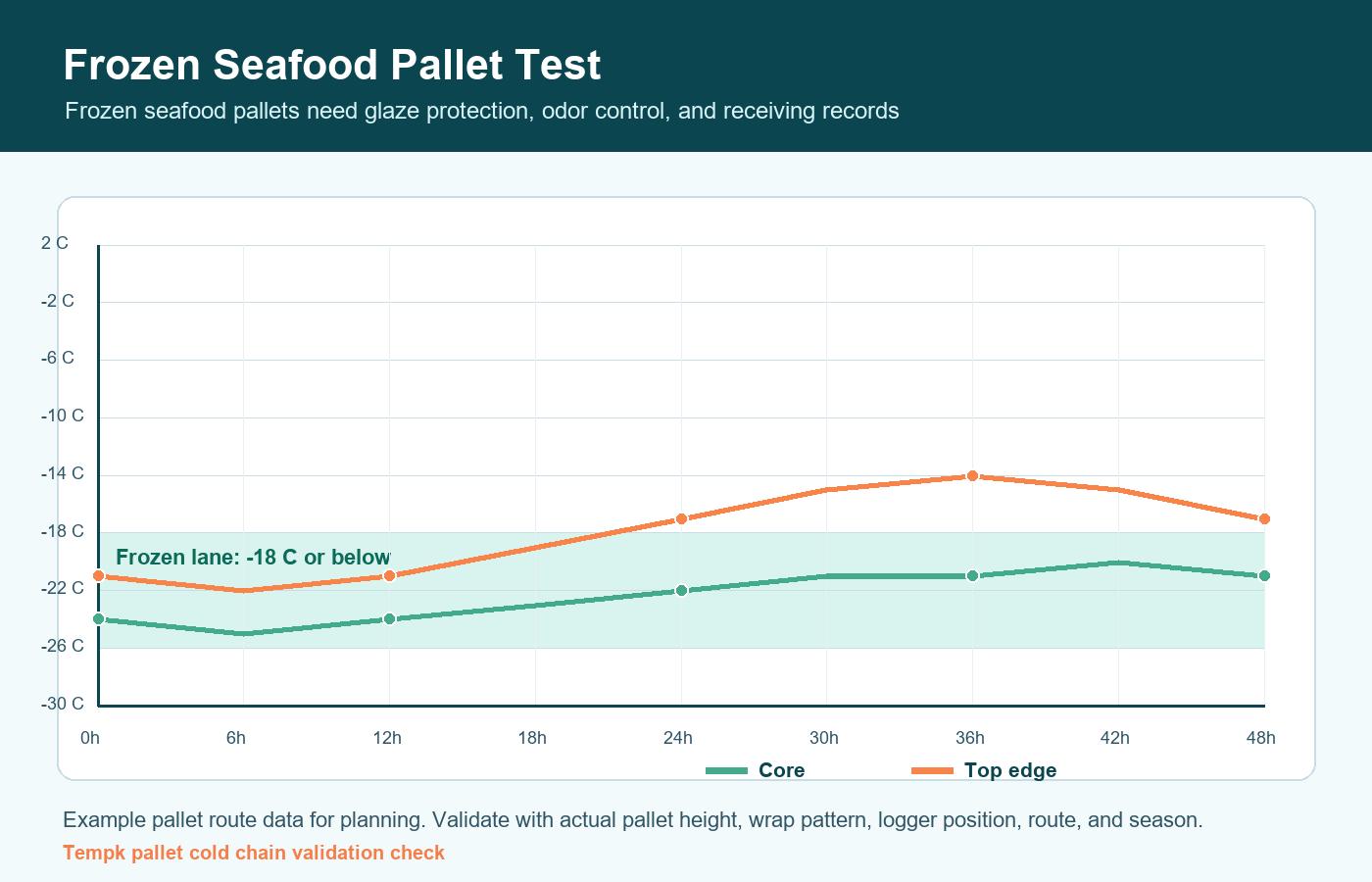
Use estas páginas para comparar rotas de paletas próximas, planejamento de gel seco, escolha de isolamento, e risco de rota antes da amostragem.
Paletes de frutos do mar congelados need frozen temperature plus moisture and odor control. Glazed frutos do mar, caixas com forros, e cargas de espécies mistas podem comportar-se de forma diferente no mesmo reboque.
Falhas típicas são caixas de canto descongeladas, perda de esmalte, frutos do mar odor in the trailer, caixas molhadas, e caixas esmagadas devido ao empilhamento irregular.
Use embalagem interna resistente a vazamentos, caixas fortes, palete cantoneiras, e uma cobertura superior que protege da condensação da doca sem reter a água do degelo.
Suplementar com gelo seco ou gel congelado somente após verificação da ventilação, controle de odor, e segurança do manipulador. Não coloque líquido refrigerante onde possa quebrar as costuras da caixa.
Inspecione o esmalte, odor, umidade da caixa, e temperaturas dos cantos da paleta. As verificações da paleta Frutos do Mar devem incluir uma nota de vazamento e odor.
Paletes de frutos do mar congelados should be validated beyond palete temperature. Glazed frutos do mar, filetes em caixa, e mariscos podem criar problemas de umidade e odor quando as bordas das caixas descongelam parcialmente durante a permanência na doca.
Use caixas fortes, cantoneiras, e uma cobertura superior que protege da condensação sem reter a água do degelo. Gelo seco ou gel congelado suplementar não deve bloquear o fluxo de ar ou danificar as costuras da caixa.
Tempk deve mapear o núcleo da paleta, cantos expostos, camada superior, e posições do lado da doca. O recebimento deve verificar a condição do esmalte, odor, umidade da caixa, estabilidade da paleta, e dureza do produto.
Custom configuração de embalagem support
Para tamanhos de caixa fixos, limites de carga útil, requisitos de marca, pistas sazonais, ou alvos de validação, Tempk can adapt this solution into a custom cold-chain configuração de embalagem.
Compartilhe as dimensões da paleta, massa do produto, padrão de caixa, temperatura alvo, tempo na doca, tipo de reboque, doca de transbordo steps, condição ambiente, e recebimento de cheques. Tempk pode ajudar a comparar capas, forros, acumuladores de gel, PCM, suporte gelo seco, posições dos registradores, e etapas de validação.
Solicitar revisão de rota de paletes