


Estimar a massa de gelo seco
Usar peso da carga útil, Tamanho da caixa, tempo de rota, temperatura ambiente sazonal, e limites da operadora antes do teste da primeira pista.
Bolinhos congelados são pequenos pedaços com embalagens finas. Um breve degelo pode causar aglomeração, rachaduras na embalagem, deformação, e condensação de saco. A embalagem deve manter os bolinhos congelados, proteger sacos de perfurações, e separar o gelo seco do contato direto com o produto.
As quantidades de gelo seco abaixo são faixas iniciais para planejamento. O pacote final deve ser validado com a carga exata, Tamanho da caixa, faixa de transporte, temporada, e limite de gelo seco.
| Condição da rota | Intenção de temperatura | Configuração de embalagem temporária | Faixa de planejamento de refrigeração | Posição do refrigerante |
|---|---|---|---|---|
| Entrega local, 8-18 h | Qualidade de peças soltas congeladas | Caixa isolada ou caixa EPP, suporte para bolsa, barreira de umidade, refrigerante congelado separado ou gelo seco. | 1.0-1.8 kg de gelo seco para 1-5 kg de carga útil, ou PCM/gel congelado validado para pistas controladas. | Câmara lateral ou superior com divisória; evitar pressão direta nos sacos de bolinho. |
| Parcela noturna, 18-36 h | -18 Intenção da rota C | Isolamento mais espesso, bolsa de gelo seco, proteção interna do saco, espaço livre limitado. | 2.0-4.0 kg de gelo seco para 1-5 kg de carga útil. | Gelo seco perimetral separado dos sacos; mantenha as bolsas apoiadas para reduzir perfurações. |
| Pista quente ou 36-48 h | Pista congelada validada | Maior isolamento, caixa externa mais forte, espaço vazio reduzido, verificação de risco de rota. | 4.0-6.5 kg de gelo seco para 1-5 kg de carga útil. | Se aparecer aglomeração, reduzir a exposição ao degelo e melhorar a distribuição do líquido refrigerante. |
Para uma estimativa mais precisa, comece com o Calculadora de gelo seco e revisar as opções de isolamento no Referência de material de isolamento.
As devoluções de alimentos congelados geralmente resultam de uma pequena falha de layout: contato direto com gelo seco, muito espaço livre, uma caixa molhada, ou uma pilha de produtos que se desloca durante o manuseio.
Não deixe os bolinhos ficarem quentes durante a colheita ou preparação; um breve degelo pode começar a se acumular antes do início do trânsito.
Use reforço interno ou um forro para que o líquido refrigerante e os cantos da caixa não rasguem os sacos finos.
Mantenha o gelo seco em uma bolsa ou câmara com divisória para que os bolinhos não sejam esmagados por blocos de gelo seco.
Ao receber, verifique a temperatura, aglomerados, rachaduras na embalagem, saco de gelo, perfurações, e gelo seco restante.
Use estas verificações de recebimento ao ajustar a massa de gelo seco, espessura de isolamento, ou separação interna.
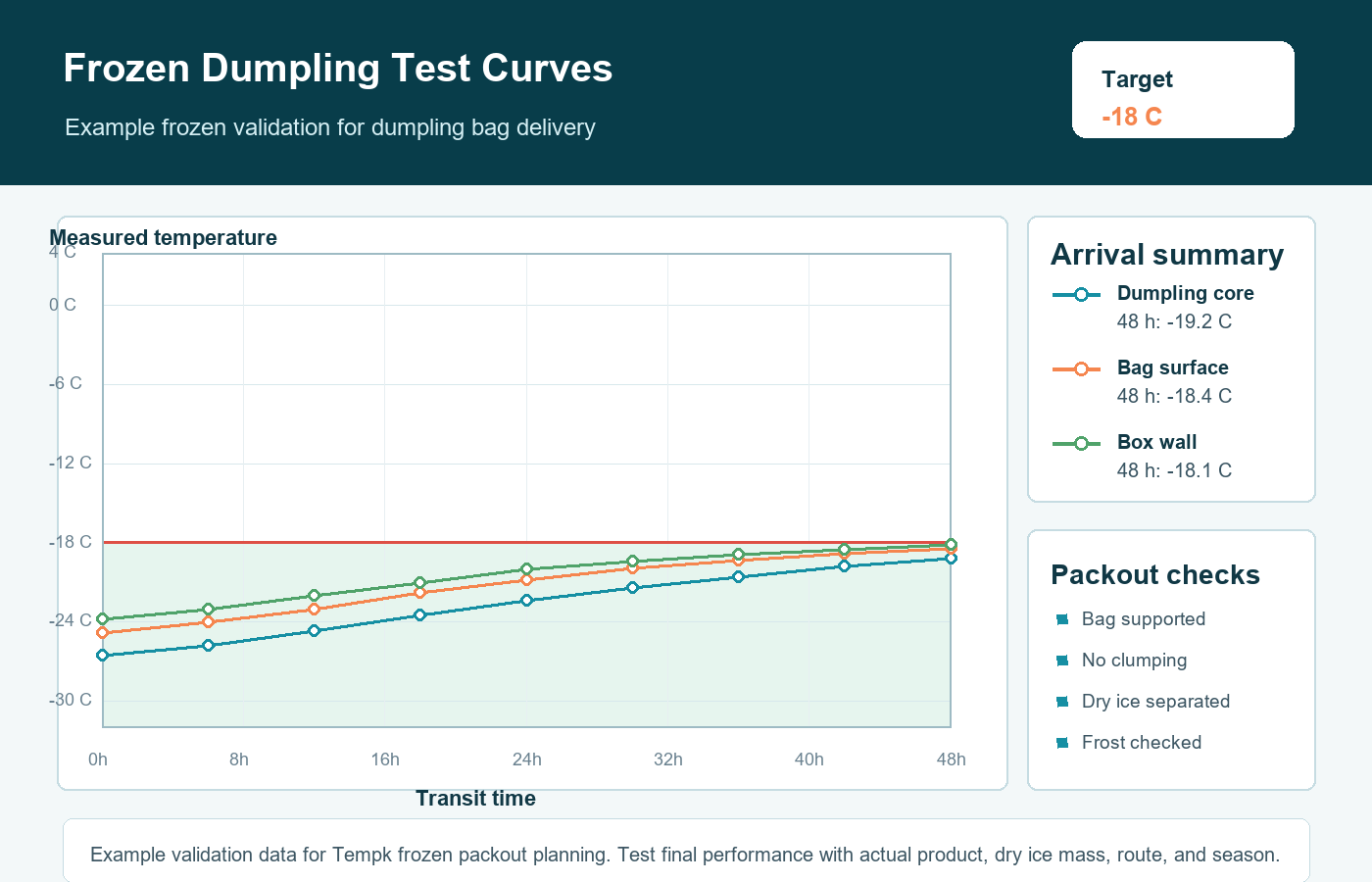
Use a página do produto para a lógica de tratamento, em seguida, dimensione o primeiro teste com ferramentas e valide a rota real.
Usar peso da carga útil, Tamanho da caixa, tempo de rota, temperatura ambiente sazonal, e limites da operadora antes do teste da primeira pista.
Comparar gelo seco, pacotes de gel congelado, e PCM congelado na escolha da primeira embalagem congelada.
Rever o tempo de retirada, atraso na última milha, janela de recebimento, e rotas de verão antes do lançamento.
Compartilhe o tipo de produto congelado, peso da carga útil, Tamanho da caixa, duração da rota, perfil ambiente, limites da operadora, e recebimento de cheques. Tempk pode ajudar a escolher o isolamento, colocação de gelo seco ou refrigerante congelado, e etapas de validação.
Suporte a pacotes personalizados
Para tamanhos de caixa fixos, limites de carga útil, requisitos de marca, pistas sazonais, ou alvos de validação, A Tempk pode adaptar esta solução em um pacote personalizado de cadeia de frio.