


Estimar a massa do refrigerante
Usar peso da carga útil, tempo de rota, Tamanho da caixa, e temperatura ambiente sazonal antes de solicitar o primeiro pacote de teste.
A embalagem de peito de frango deve controlar a temperatura refrigerada e o vazamento de aves cruas ao mesmo tempo. Uma embalagem útil mantém o produto em 0-4 C, mantém o refrigerante separado do pacote primário, e adiciona forro e capacidade absorvente suficientes para proteger caixas e itens próximos.
As quantidades de refrigerante abaixo são faixas iniciais para planejamento. O pacote final deve ser validado com a carga exata, Tamanho da caixa, faixa de transporte, e estação.
| Condição da rota | Intenção de temperatura | Configuração de embalagem temporária | Faixa de planejamento de refrigeração | Posição do refrigerante |
|---|---|---|---|---|
| Rota de aves local ou no mesmo dia, 8-18 h | 0-4 C resfriado | Pacote primário selado, forro secundário, almofada absorvente, EPP ou caixa isolada. | 0.8-1.4 kg de pacotes de gel condicionado ou 0 CPCM para 1-4 kg de carga útil. | Refrigeração lateral com divisória; não deixe que a água derretida ou a condensação atinjam as embalagens de aves. |
| Parcela noturna, 18-36 h | 0-4 C com baixa permanência quente | Isolamento mais espesso, barreira dupla contra vazamentos, base absorvente, registrador no espaço aéreo do produto. | 1.4-2.6 kg de pacotes de gel ou PCM para 1-4 kg de carga útil. | Líquido refrigerante superior e lateral separado por placa ou bolsa; proteger o revestimento contra perfurações. |
| Rota quente ou risco de atraso, 36-48 h | Rota refrigerada validada | Maior isolamento, espaço livre reduzido, contenção secundária mais forte, serviço de operadora mais rápido quando possível. | 2.6-4.2 kg de pacotes de gel ou PCM para 1-4 kg de carga útil. | Se aparecer umidade na caixa, atualize o revestimento e a estrutura absorvente antes de adicionar refrigerante. |
Para uma primeira estimativa mais precisa, use o Calculadora de bolsa de gelo. Se a rota estiver congelada, comparar com o Calculadora de gelo seco antes de testar.
A sequência correta reduz o tempo de espera quente, vazamento, contato de refrigerante, e danos à embalagem antes que a caixa chegue ao receptor.
A embalagem deve manter a temperatura, não retire aves cruas quentes após embalá-las.
Use o pacote de produto primário mais um revestimento secundário seguro para alimentos com material absorvente dimensionado para a purga esperada.
Mantenha os pacotes de gel ou PCM ao redor da câmara com uma divisória para que os pacotes crus não sejam esmagados ou molhados.
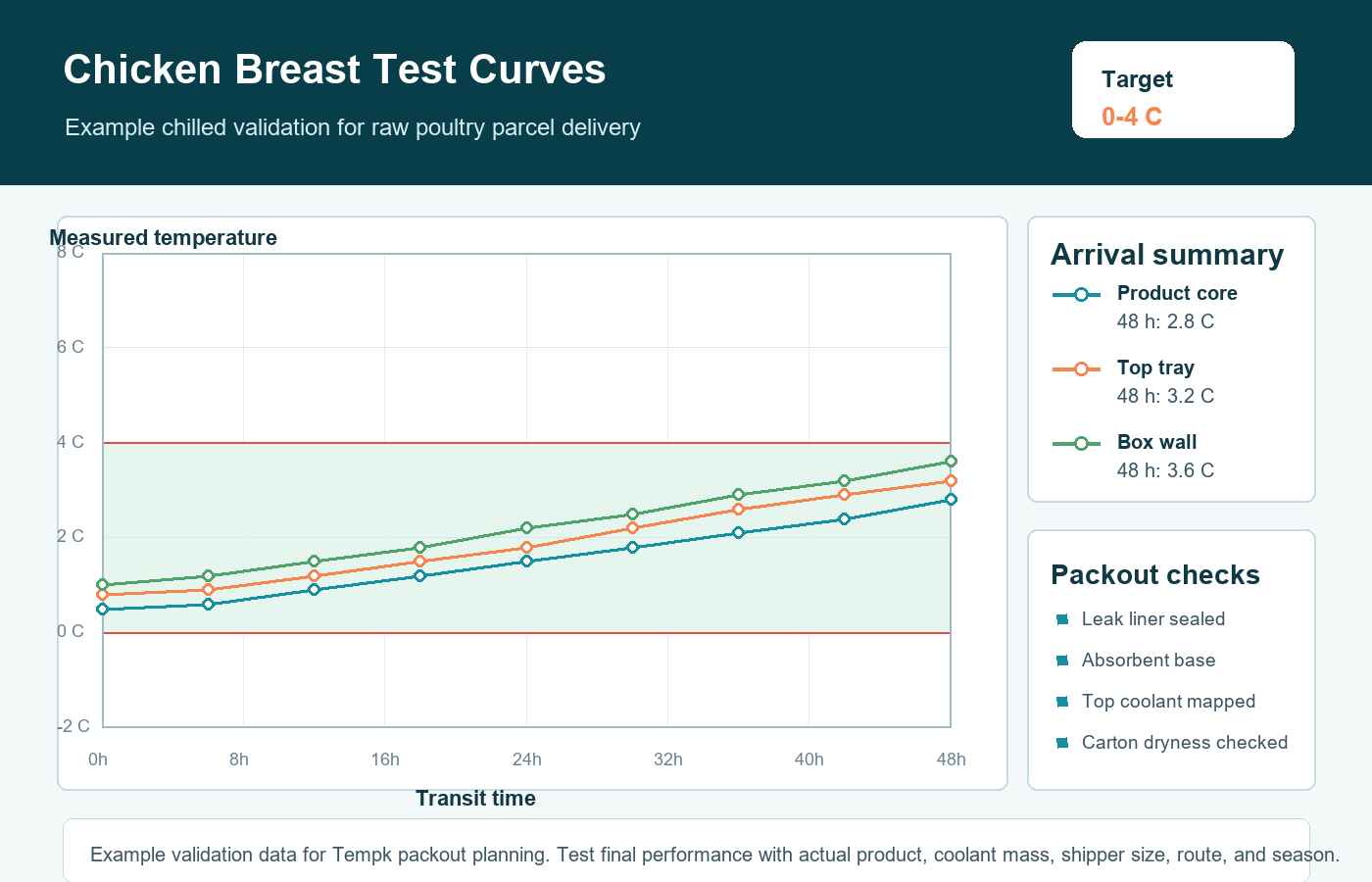
Registrar a temperatura do produto, vazamento, secura da caixa, odor, punção do forro, e se o refrigerante mudou durante o transporte.
Use estas verificações de recebimento ao decidir se deve ajustar a massa do líquido refrigerante, estrutura do forro, ou espessura do isolamento.
Use a página do produto para a lógica de tratamento, em seguida, dimensione o primeiro teste com ferramentas e valide a rota real.
Usar peso da carga útil, tempo de rota, Tamanho da caixa, e temperatura ambiente sazonal antes de solicitar o primeiro pacote de teste.
Compare pacotes de gel condicionado, 0 PCM, e lógica de gelo seco de rota congelada antes de alterar o tamanho do isolamento.
Rever o tempo de retirada, atraso na última milha, janela de recebimento, e tempere antes de lançar uma rota de carne.
Compartilhe o formulário do produto, alvo resfriado ou congelado, peso da carga útil, Tamanho da caixa, duração da rota, temporada, e recebimento de cheques. Tempk pode ajudar a escolher o isolamento, massa de refrigerante, estrutura do forro, e etapas de validação.
Suporte a pacotes personalizados
Para tamanhos de caixa fixos, limites de carga útil, requisitos de marca, pistas sazonais, ou alvos de validação, A Tempk pode adaptar esta solução em um pacote personalizado de cadeia de frio.