


Execute a estimativa do refrigerante
Usar peso da carga útil, Tamanho da caixa, tempo de rota, e temperatura sazonal antes de finalizar o pacote de gel ou massa de PCM.
Os filés de salmão precisam de uma rota fria que proteja a textura, cor, e limpeza da caixa. A embalagem deve manter o filé próximo à temperatura do gelo, refrigerante separado do pacote de peixe, absorver purga, e evite marcas de pressão de pacotes de gel congelados ou cargas superiores pesadas.
As quantidades de refrigerante abaixo são faixas iniciais para planejamento. O pacote final deve ser validado com a carga exata, tamanho do isolamento, faixa de transporte, e estação.
| Condição da rota | Intenção de temperatura | Configuração de embalagem temporária | Faixa de planejamento de refrigeração | Posição do refrigerante |
|---|---|---|---|---|
| Amostra de varejo ou entrega local, 8-18 h | 0-2 C resfriado | Caixa EPP ou caixa isolada, forro selado, almofada absorvente, bandeja ou embalagem a vácuo. | 0.6-1.2 kg de pacotes de gel condicionado ou 0 CPCM para 1-3 kg de carga útil. | Refrigeração lateral e perimetral com divisória; mantenha a camada superior leve para evitar a pressão do filé. |
| Pacote noturno de frutos do mar, 18-36 h | 0-2 C com permanência quente limitada | Isolamento mais espesso, forro interno, camada absorvente, registrador no espaço aéreo do produto. | 1.2-2.2 kg de pacotes de gel ou PCM para 1-3 kg de carga útil. | Líquido refrigerante superior e lateral separado do produto; deixe um pequeno caminho de ar ao redor da câmara do produto. |
| Tempo quente ou risco de atraso, 36-48 h | Pista refrigerada validada | Maior isolamento, espaço livre reduzido, controle de vazamento duplo, verificação de nível de serviço. | 2.2-3.8 kg de pacotes de gel ou PCM para 1-3 kg de carga útil. | Evite contato direto. Considere um volume de caixa menor, serviço de operadora mais rápido, ou tamanho do remetente pré-qualificado. |
Para uma primeira estimativa mais precisa, use o Calculadora de bolsa de gelo e então compare as famílias de refrigerantes no Refrigerante & Referência PCM.
Pequenas mudanças no layout podem decidir se o receptor vê um pacote de frutos do mar limpo e resfriado ou um pacote molhado., pressionado, produto parcialmente congelado.
Carregue o salmão já resfriado. Bandejas quentes, forros, e as caixas podem consumir refrigerante antes do pacote sair da origem.
Use um revestimento contra vazamentos e uma almofada absorvente para que a purga não alcance a embalagem externa ou a etiqueta voltada para o cliente.
Coloque pacotes de gel ou PCM ao redor da parede lateral e acima da câmara somente com uma divisória. Evite que embalagens pesadas e congeladas pressionem as bordas do filé.
Registrar a temperatura do produto, nível de gotejamento, odor, molhamento da caixa, condição do rótulo, e quaisquer marcas de congelamento antes de alterar a massa do líquido refrigerante.
Use estas verificações de recebimento ao ajustar a quantidade de líquido refrigerante, espessura de isolamento, ou separação interna.
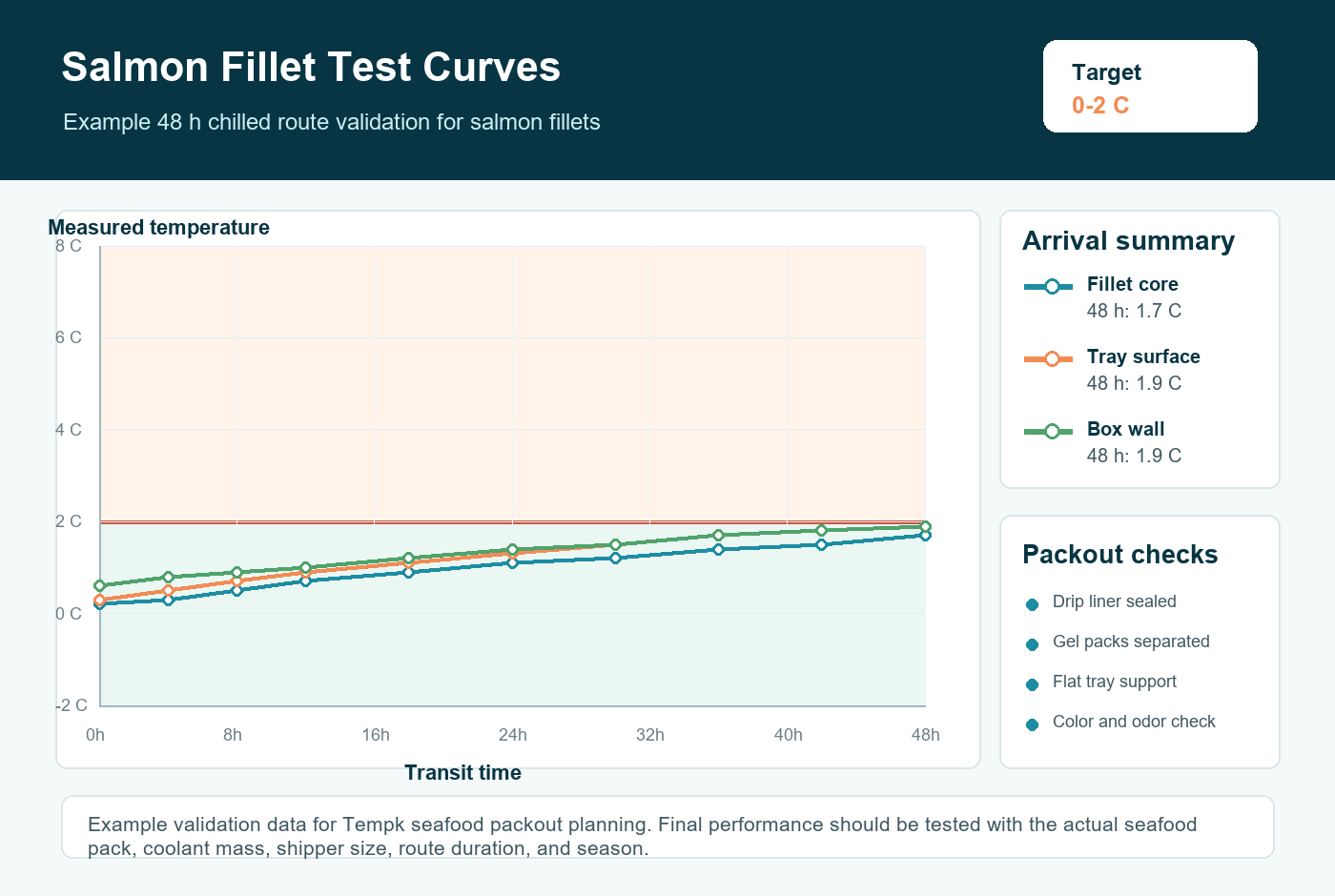
Use a página do produto para a lógica de embalagem, em seguida, use as ferramentas para dimensionar o primeiro pacote de teste antes de um teste de pista.
Usar peso da carga útil, Tamanho da caixa, tempo de rota, e temperatura sazonal antes de finalizar o pacote de gel ou massa de PCM.
Compare pacotes de gel congelado, pacotes de gel condicionado, e 0 C PCM para que o produto seja resfriado sem danos diretos por congelamento.
Revise o tempo da pista, tempo de coleta, atraso na última milha, e processo receptor antes do lançamento.
Compartilhe a forma de frutos do mar, peso da carga útil, Tamanho da caixa, nível de serviço, temperatura de origem, temporada de pista, e janela de recebimento. Tempk pode ajudar a comparar o isolamento, massa de refrigerante, colocação, e etapas de validação.
Suporte a pacotes personalizados
Para tamanhos de caixa fixos, limites de carga útil, requisitos de marca, pistas sazonais, ou alvos de validação, A Tempk pode adaptar esta solução em um pacote personalizado de cadeia de frio.