Validating a cold chain packout means proving that one defined configuration keeps one defined payload inside its temperature range under the conditions that lane will actually produce — and then being able to repeat that result. It is not a single test, and it is not the same thing as certification. The framework below follows the sequence Tempk’s validation and packout testing page sets out: agree the acceptance criteria, freeze the configuration, choose the ambient profile, map the loggers, plan the worst case, review the data, handle deviations, and lock the result with change control before you scale.
Define acceptance criteria first
Nothing can pass or fail until the acceptance rule exists. Write it before any packout is built, and make it specific enough that two people reading it reach the same decision:
- المدى الهدف: the temperature band the payload must stay inside, for example 2–8°C refrigerated or 15–25°C controlled room temperature.
- حكم الرحلة: whether any short departure from the band is tolerated, and how long or how far.
- Measurement point: where the temperature is judged — the payload chamber, a product-simulating mass, أو الحمولة نفسها.
- Pass or fail statement: the sentence that turns a trace into a decision.
This is the step the site’s validation page means by “clear acceptance criteria”. Everything after it is evidence gathering against that rule.
Fix the configuration: حمولة, صندوق, المبرد والتكييف
A validation result belongs to a configuration, so the configuration has to be frozen before the test and identical through it:
- حمولة: real product, or a simulated load with the same mass and volume as commercial shipments.
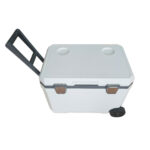
- صندوق: the shipper family and the exact internal volume, not a “similar” model.
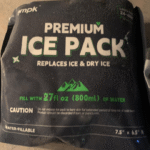
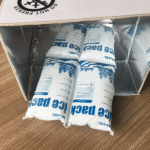
- سائل التبريد: عبوات هلامية أو طوب PCM, quantity and fill weight.
- تكييف: the documented temperature state the coolant is brought to, and how long it is staged before loading.
- تَخطِيط: the separation layers and the loading order the operator will use.
If any of these changes between runs, you have validated a different packout. ال 2–8°C pharmaceutical packout design guide covers how these decisions are made in the first place.
Choose the ambient profile
The ambient profile is the condition the test runs against, and it should match the lane rather than flatter it:
- محيطة عالية: for warm-season and heated-vehicle exposure.
- Low ambient: for winter routes where freezing injury, not overheating, is the risk.
- Dynamic profile: for lanes that change temperature repeatedly, for example through warehouse dwell and multiple handoffs.
Tempk’s own published reference tests use exactly these labels — the pharmaceutical pages describe 2–8°C cases tested against high, ملفات تعريف محيطة منخفضة وديناميكية, and state plainly that they are reference examples rather than a universal guarantee. Use published cases to choose which profile matters for your lane; use your own test to prove your configuration against it.
Map the logger positions
A validation run is only as good as where the sensors sit. Plan the logger map before the test, and record it with the result:
- Payload-simulating position: the sensor that represents what the product actually experiences.
- Chamber edge: the position most exposed to the box wall, to catch the worst case inside the payload space.
- Near-coolant position: useful for detecting freeze risk, but never the basis for a pass decision on its own.
- Outside the box: to record the ambient the packout was actually exposed to.
سجل هوية الاستشعار, calibration status and position for each logger, because the trace is only interpretable alongside that map.
أدوات اتخاذ القرار مفيدة
تحقق من التفاصيل قبل اختيار التغليف
يمكن أن تساعدك هذه الأدوات السريعة في مقارنة مخاطر المسار, احتياجات التحجيم, خيارات المبرد, وتفاصيل التعبئة والتغليف قبل أن تطلب عرض أسعار.
مدقق مخاطر الطريق
قم بمراجعة ظروف المسار قبل اختيار التغليف لمتطلبات التشغيل الحقيقية.
تحقق من مخاطر الطريقمرجع المواد العازلة
قارن بين خيارات المواد العازلة لاحتياجات التعبئة والتغليف المختلفة لسلسلة التبريد.
قارن الموادمقاومة سقوط المواد العازلة
مراجعة مقاومة السقوط وعوامل المناولة قبل اختيار المواد العازلة.
تحقق من المقاومةPlan the worst-case route
Design the test around the worst case the lane can reasonably produce, ليس المتوسط. That means taking the planned transit time and adding the delay margin, and including the pressure points the site’s validation page names: عدد عمليات التسليم, يسكن الوقت, تأخير الجمارك أو الوسيط, التعرض للمدرج, التدريج في الهواء الطلق, والمشاركة في الشحن الجوي.
Running a route risk screen first helps decide how much margin the lane needs. The screen is a planning-level view; the test is what converts that view into evidence.
مراجعة البيانات: traces, replicates and controls
When the run is over, the review is about reading the trace against the acceptance rule and being honest about what the data does and does not show:
- Compare the trace with the acceptance rule at the payload-simulating position, and note the time and depth of any excursion.
- Check the ambient trace against the profile you intended to run; a test that never reached the profile proves little.
- If your protocol includes repeat runs, compare them — repeat runs show whether the result is stable or lucky. A single run demonstrates a configuration; it does not establish a distribution.
- If your protocol includes a control, for example the same packout without a separator, use it to show which element is doing the work.
Keep the raw data, not only the summary curve, so the review can be repeated later by someone else. How to read a published result against your own lane is covered in the 2–8°C packout test case walkthrough, and route-side assumptions in the summer parcel route risk guide.
Receiving condition and deviation handling
Validation does not end when the box is opened in the lab; it continues at the receiving step in real shipments. Define what the receiver checks — the downloaded trace, seal and closure condition, حالة المبرد, payload condition and any visible condensation — and define what counts as a deviation.
A deviation note should record what departed from the approved configuration, when it was noticed, what the trace showed, and what was decided about the payload. Keeping deviation records gives you the material for the next design change instead of relying on recollection; بدونهم, a repeated problem looks like a new one every time.
Approval record and change control before scale-up
The last step is making the validated configuration official, and keeping it that way. An approval record should tie together the acceptance criteria, the frozen configuration, الملف الشخصي المحيط, the logger map, the route assumptions and the reviewed data, so that the packout can be rebuilt exactly as tested.
Change control is what protects the result. Any change to payload, صندوق, سائل التبريد, تكييف, الانفصال, طريق, carrier or season is a change to the packout, and should trigger a review of whether the existing evidence still applies. Without that rule, a validated configuration drifts into an unvalidated one through a series of individually sensible decisions.
This framework is a method, not a certification, and it does not replace any formal qualification your own quality system requires. If you need the configuration, the testing programme and a repeatable supply set up together, ال تغليف سلسلة التبريد المخصصة path and the pharmaceutical cold chain packaging pages describe how the packout, coolant and documentation are matched to a lane, و صفحة الاتصال is the place to start a lane review.