Brauch Kaltkettenverpackung works best when the supplier understands the shipment before recommending a box, Liner, Gelpackung, PCM-Paket, Trockeneissystem, or reusable shipper. A quote request that only says “I need an ice pack” or “I need a cold box” usually leads to repeated sampling, unclear pricing, and a higher risk of temperature failure in real distribution.
Für B2B-Käufer, the right RFQ should describe the product risk, erforderlichen Temperaturbereich, Haltezeitziel, Streckenprofil, Nutzlastgröße, Kastengröße, Kühlmittelpräferenz, Regulierungsbedarf, Branding-Anforderungen, and expected monthly volume. This article gives a practical, source-backed checklist for food, pharmazeutisch, gefroren, Lebensmittelgeschäft, Essensset, Meeresfrüchte, Kosmetik, and laboratory sample shippers that need custom cold chain packaging.
Why a cold chain RFQ should start with the shipment, nicht das Produkt
Cold chain packaging is a system. Die Isolierung, Kühlmittel, Produktkammer, absorbierende Schicht, Kartonstärke, Beschriftung, Verpackungsanweisung, and route handling all affect the result. A gel pack that performs well in a small insulated pouch may not be enough for a larger parcel with warm last-mile dwell. A foam shipper that works for chilled food may not protect a 2-8°C medicine if the coolant touches the payload directly. A dry ice packout may keep frozen products hard, but it also requires venting and transport documentation.
When a buyer gives the supplier the correct inputs at the beginning, the supplier can narrow the design faster, estimate sample quantity, select realistic material options, and recommend a packout test path. Für Unternehmenskunden, this also creates a repeatable specification that procurement, Qualität, Lager, and operations teams can approve together.
Source-backed parameters to include in your RFQ
| Parameter | Reference value or rule | Why it matters in custom packaging |
|---|---|---|
| Refrigerated food safety target | Cold food should be kept at 40°F / 4°C or below according to FDA food safety guidance. | Helps define chilled meal, Molkerei, Fleisch, produzieren, and prepared-food packouts. |
| Frozen storage reference | FDA safe food handling guidance uses freezer storage at 0°F / -18° C oder unten. | Helps separate “chilled” packouts from true frozen-food packouts. |
| Gel coolant application range | FedEx describes gel coolants for products that should stay between 34°F / 1°C und 50°F / 10°C. | Helps determine when gel packs are suitable and when dry ice or a frozen PCM approach may be needed. |
| Dry ice temperature | USGS states that dry ice sublimates at -78.5°C / -109.3° F. | Explains why dry ice can freeze products and why it needs separation from sensitive payloads. |
| Vaccine refrigerated range | CDC vaccine storage guidance gives 2°C to 8°C / 36°F to 46°F for refrigerator storage. | Useful for pharma and medical cold chain RFQs, but always follow the product label. |
| Thermal test profiles | ISTA 7E provides thermal transport profiles based on real-world heat and cold exposures. | Useful when a buyer needs evidence beyond a simple sample shipment. |
| Foam shipper wall reference | FedEx empfiehlt einen isolierten Schaumstoffbehälter mit mindestens 1.5 In / 4 cm-Wände für verderbliche Sendungen. | Provides a practical reference when comparing foam, Liner, and reusable shipper designs. |
| Dry ice air-shipment marking | PHMSA states dry ice packages must permit gas release and show “Dry ice,”UN1845, und ggf. Nettomasse. | Needed before quoting dry ice packouts for air or express lanes. |
RFQ checklist for custom cold chain packaging
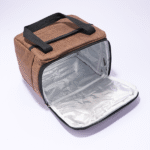
Use the following table when preparing a request for custom Gelpackungen, PCM -Packungen, Trockeneisbeutel, Isoliertaschen, isolierte Boxauskleidungen, EPP Cooler Boxen, VIP-Medizinboxen, oder Palettenabdeckungen.
| RFQ-Artikel | Was ist bereitzustellen? | Example of a useful answer |
|---|---|---|
| Produkttyp | Essen, Pharma, Meeresfrüchte, gefrorenes Dessert, Kosmetik, Lebensmittelgeschäft, Laborprobe, biologisch, or palletized goods. | “Prepared chilled meals in sealed trays, 1.8 kg payload per box.” |
| Erforderlicher Temperaturbereich | State the temperature range and whether brief excursions are allowed. | “Maintain product below 4°C; avoid freezing the sauce cups.” |
| Produktstarttemperatur | Gekühlt, gefroren, Raumtemperatur, or pre-conditioned. | “Product is packed at 2-4°C after overnight refrigeration.” |
| Haltezeitziel | Door-to-door time plus safety margin. | “36 hours transit, design target 48 Std." |
| Umgebungsrisiko | Sommerhitze, Winterkälte, Flughafen wohnen, Verspätung am Wochenende, cross-border hold, last-mile dwell. | “US summer last-mile route with potential 4-hour doorstep dwell.” |
| Details zur Nutzlast | Gewicht, Abmessungen, Anzahl der Einheiten, Produktgeometrie, zerbrechliche Gegenstände. | “Six meal trays plus sauce cups, gesamt 2.2 kg.“ |
| Existing carton size | Innen- und Außenmaße des Kartons, if the carton is already fixed. | “Outer carton 430 X 330 X 220 mm, single-wall corrugated.” |
| Preferred insulation | Schaumbox, Folieneinlage, paper liner, EPP-Box, VIP -Box, isolierte Tasche, or no preference. | “Need flat-shipped liner to reduce warehouse space.” |
| Kühlmittelpräferenz | Gelpackung, water injection pack, PCM-Paket, Eisstein, Trockeneis, or supplier recommendation. | “Prefer gel packs, but open to PCM if freeze risk is high.” |
| Branding and OEM needs | Logo, film printing, Kartondruck, Farbcodierung, private-label instructions. | “Custom logo on gel pack and carton, English instruction card.” |
| Qualitätsdokumentation | SDS, Materialdeklaration, Temperaturkurve, Verpackungsanweisung, Checkliste für die Ankunft. | “Need SDS and pilot test temperature logger curve.” |
| Volume and launch date | Probenmenge, pilot volume, monatliche Prognose, Saisonalität. | “100 samples, Pilot 2,000 boxes/month, peak summer 8,000/month.” |
Temperature range should drive the packaging family
Do not choose packaging only by price or box size. The required temperature range usually decides the packaging family first.
Für gekühlte Lebensmittel und Lebensmittellieferungen, gel packs and insulated liners may be appropriate when the product needs to remain cold but not frozen. Für gefrorene Meeresfrüchte, gefrorene Mahlzeiten, oder Eis, the design may need stronger insulation, frozen coolant mass, eutectic PCM, or dry ice depending on route length and product sensitivity. For 2-8°C medicines, the design should focus on no-freeze protection, Kühlmitteltrennung, Platzierung des Loggers, and documented packing instructions. For palletized air cargo, temperature exposure during airport dwell can be more important than the carton itself.
The route is part of the packout
Many failed cold chain shipments are not caused by a single bad product. They fail because the packout was designed for an ideal route rather than the real route. Sortierzentren, Orientierungsänderungen, Kompression, verspätete Abholung, Verspätung am Wochenende, cross-border clearance, unconditioned vans, and doorstep dwell can change the thermal load.
A good RFQ should state the route type, not only the destination. Zum Beispiel, “48-hour parcel shipping to mixed US residential addresses in summer” is more useful than “shipping across the United States.” If the lane includes air cargo or dry ice, the RFQ should also flag the carrier rules and required markings.
Hilfreiche Entscheidungshilfen
Überprüfen Sie die Details, bevor Sie sich für die Verpackung entscheiden
Mit diesen schnellen Tools können Sie das Routenrisiko vergleichen, Größenanforderungen, Kühlmittelauswahl, und Verpackungsdetails, bevor Sie ein Angebot anfordern.
Fallfestigkeit des Isolationsmaterials
Überprüfen Sie die Fallfestigkeit und die Handhabungsfaktoren, bevor Sie Isoliermaterialien auswählen.
Widerstand prüfenRoutenrisiko-Checker
Überprüfen Sie die Fahrspurbedingungen, bevor Sie die Verpackung entsprechend den tatsächlichen Betriebsanforderungen auswählen.
Streckenrisiko prüfenVerpackungsauswahl
Vergleichen Sie isolierte Verpackungsoptionen nach Produkt, Route, und Temperaturbedarf.
Verpackung findenWhat custom options can be specified
| Verpackungskomponente | Common custom options | Notes for enterprise buyers |
|---|---|---|
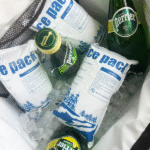
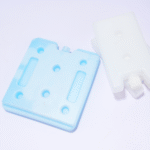
| Gel -Eisbeutel | Größe, Füllgewicht, Filmdicke, Gelformel, Logodruck, Anleitung zum Einfrieren, Kartonverpackung. | Best for chilled and refrigerated packouts; test quantity by route and insulation. |
| PCM-Paket | Phase-change temperature, container style, Füllgewicht, Konditionierungsmethode. | Useful when the payload must stay near a narrower temperature band. |
| Water injection pack | Unfilled shipping format, hydration instruction, Größe, Siegel, Kartonverpackung. | Helps reduce inbound freight and warehouse cold-storage burden before filling. |
| Isolierte Boxauskleidung | Kartontauglich, fold style, Isolationsdicke, Verschlussmethode, recyclable material preference. | Useful when the buyer wants to keep its existing corrugated carton. |
| EPS or EPP cooler box | Innere Größe, Wandstärke, Deckelstil, handhaben, Drainage, Branding, return/reuse plan. | Better when rigidity, wiederholter Gebrauch, or higher protection is needed. |
| Thermo-Palettenabdeckung | Palettengröße, Höhe, side closure, top cover, reflektierende Schicht, Streckenbelichtung, Wiederverwendbarkeit. | Used for air freight, Lagerhaus wohnen, and pallet-level temperature protection. |
RFQ mistakes that slow down custom projects
The first common mistake is asking for “a 48-hour solution” without stating the product mass, Starttemperatur, Umgebungsprofil, and acceptable arrival temperature. A second mistake is asking for the smallest possible coolant mass without acknowledging route delay. A third mistake is treating branding as a separate request after the packout has already been tested. Printed films, Kartonetiketten, and customer instructions can change how the warehouse packs and how the receiver handles the parcel.
Another mistake is requesting a quote before deciding whether the packaging is a one-way system or a reusable loop. This matters for insulation choice, Haltbarkeit, Reinigung, Lagerhaltung, und Retourenlogistik. Zum Beispiel, a meal kit brand may prefer flat-shipped liners, while a medical logistics program may prefer reusable EPP or VIP-Logen with controlled packout instructions.
FAQ
Can I request a quote without a tested packout?
Ja, but the quote will be more accurate if you provide the temperature range, Nutzlast, Kartongröße, Streckendauer, and expected ambient risk. For high-value pharma, gefrorenes Essen, or cross-border shipments, a quote should usually be followed by sample testing.
Is a gel pack enough for 48-hour shipping?
Es kommt auf die Nutzlast an, Isolierung, Starttemperatur, Umgebungseinflüsse, und akzeptabler Ankunftszustand. FedEx describes gel coolants for chilled ranges, while frozen shipments may require dry ice or another frozen packout design.
What is the most important information for a 2-8°C shipment?
Provide the product label requirement, Nutzlastgröße, Streckendauer, No-Freeze-Anforderung, logger requirement, and whether the coolant may touch the product. Direct contact with frozen coolant can create freeze risk.
Can custom packaging include logo printing?
Ja. Maßgeschneiderte Gelpacks, Isoliertaschen, Kartonetiketten, Anleitungskarten, and private-label cartons can often be specified. Branding should be included before sample approval so the final packing workflow is realistic.
Do I need ISTA testing for every project?
Not every project needs full ISTA thermal testing. Jedoch, ISTA 7E and related thermal standards are useful when a customer needs a structured, evidence-based profile instead of only a trial shipment.
Letzter Imbiss
A strong custom cold chain packaging RFQ is not a list of product names. It is a shipment profile. Before asking for samples or prices, prepare the temperature requirement, Produktmasse, Streckendauer, Umgebungsrisiko, Kastengröße, Kühlmittelpräferenz, Isolierungspräferenz, Branding-Bedürfnisse, und Dokumentationsbedarf. This makes the supplier’s recommendation faster, realistischer, and easier for procurement and quality teams to approve.