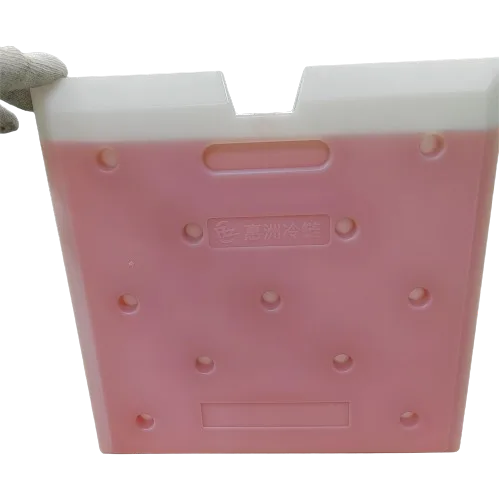
Gel-Brick-Verpackung: Bauen Sie ein wiederholbares thermisches System auf
Gel brick packaging works when the coolant, Isolierung, Produkt, Trennschichten, Schließung, and packing process behave as one defined system. The brick stores a finite amount of cooling energy; it does not regulate temperature or establish a shipment’s hold time on its own. A well-made brick can still fail in an oversized carton, beside a freeze-sensitive product, or after incomplete conditioning.
The useful buying question is therefore not which brick “lasts longest.” It is which complete packout protects the specified payload through the intended journey and can be reproduced by normal warehouse staff. That answer requires a clear design basis, mapped testing, and control of every component that affects heat flow.
Write the Shipping Requirement Before Choosing Components
Professional packout development begins with the acceptance decision at destination. The product owner or quality team should define the required condition and how any excursion will be assessed. Essen, diagnostisches Material, Kosmetika, and pharmaceuticals do not share one universal temperature requirement, even when all are described as chilled.
Turn that requirement into an engineering brief:
Product dimensions, Masse, Primärverpackung, and thermal sensitivity
Minimum, typisch, and maximum payload configurations
Starting condition of the product and packaging components
Total time from packing through receipt, including a justified delay allowance
Credible hot and cold exposures at staging areas, Fahrzeuge, Hubs, und Lieferung
Whether direct contact with a conditioned brick is acceptable
Erwartete Rückgänge, Vibration, Kompression, Orientierungsänderungen, und Feuchtigkeit
Überwachung, Empfang, Dokumentation, and product-disposition responsibilities
The minimum payload deserves explicit attention. A full shipper contains more product thermal mass and less headspace. A light order may respond faster to ambient conditions and allow bricks to move. If the business needs several order sizes, it may require a small family of controlled packouts rather than one large carton filled differently each day.
Route time must also mean door to door. Carrier transit is only one segment. Verpackung, Versandwarteschlangen, pickup cutoff, Transfers, Zoll ggf, Lieferung fehlgeschlagen, and receiving all consume the passive system’s cooling reserve.
Read the Packout as a Network of Heat Paths
Wärme dringt durch die Wände ein, Base, Deckel, Gelenke, und Öffnungen. Insulation slows that transfer. Gelsteine absorb part of the incoming heat as their contents warm and, for suitable formulations, change phase. The payload itself contributes thermal mass, while spacers and internal geometry determine where warm and cold regions develop.
| Packout-Element | Its thermal or operational role | What must remain controlled |
|---|---|---|
| Gelstein | Provides finite thermal storage | Formulierung, gefüllte Masse, Abmessungen, Zustand, Menge, und Position |
| Isolierung | Limits heat entering the cavity | Materialkonstruktion, Dicke, Nähte, Deckel passt, Schaden, und Orientierung |
| Produkt | Defines acceptance and influences temperature response | Starting condition, Masse, Verpackung, Platzierung, und Lastbereich |
| Separator | Buffers direct cold contact and fixes spacing | Material, Abdeckung, Dicke, moisture state, und Lage |
| Leerenkontrolle | Prevents shifting and preserves the mapped geometry | Typ, Menge, Kompression, und Platzierung |
| Umverpackung | Maintains shape and survives distribution | Carton or case dimensions, Schließung, Nassfestigkeit, and handling condition |
| Monitor | Records evidence for a defined decision | Genauigkeit, Kalibrierung, Intervall, Aktivierung, Standort, und Datenüberprüfung |
The table doubles as a change-control map. Replacing a carton, Abstandhalter, or brick can alter the same thermal pathways as an obvious insulation change. Nominally similar components should not be substituted only because they fit the purchasing description.
Brick behavior is more than size
“Gel brick” describes a format, not one material or transition temperature. Products that look alike may use different water-rich gels or phase-change formulations, enclosure resins, fill masses, and seal designs. Those differences can affect conditioning time, Oberflächentemperatur, Erweiterung, Steifheit, and heat absorption.
Ask for the exact specification and recommended conditioning method. A low-temperature brick is not automatically safer. Die Nutzlast darf nicht einfrieren, an initially cold surface can create a local excursion even when a central air sensor remains acceptable.
Insulation performance lives at the joints
Material data for a panel or foam sample do not describe the completed shipper. Deckeleingriff, Ecklücken, compressed regions, Verbindungselemente, Ablauffunktionen, and edge bridges can dominate a compact package. Inspect the installed construction and test the commercial assembly, not only the nominal Isolationsmaterial.
Reflective layers also need context. They can influence radiant heat transfer when installed in an appropriate orientation with the intended adjacent space. A metallic appearance alone does not prove a duration or compensate for an open seam.
Convert Thermal Theory into a Packable Layout
Begin with a dimensioned payload envelope: the usable space reserved for approved product loads after bricks, Separatoren, Überwachung, and assembly clearance are included. External carton capacity is not usable payload volume. Tapered walls, geformte Aussparungen, Deckel, and conditioned brick thickness all reduce the practical cavity.
Different layouts solve different problems. A top layer can address heat near a lid and may simplify packing, but it can create a cold upper product zone. Side arrays can cover large walls but need restraint. A top-and-bottom arrangement is compact, yet it puts vertical pressure and cold surfaces close to the product. A full perimeter offers broad contact at the cost of weight, Raum, and possible overcooling.
Choose a starting layout from likely heat entry and product risk, then map it. Do not rely on the slogan that cold air falls; tightly packed passive systems involve conduction, natural convection, Strahlung, and product thermal mass. A symmetrical arrangement is not necessarily best if the shipper has an asymmetric lid or joint.
Design around human variation
A technically capable packout is weak if workers can build it several ways. Use formed locations, numbered layers, distinctive component identifiers, or preassembled kits where practical. The final-view check should show brick count, Orientierung, separator coverage, Nutzlastposition, Standort des Loggers, und Schließung.
Hilfreiche Entscheidungshilfen
Überprüfen Sie die Details, bevor Sie sich für die Verpackung entscheiden
Mit diesen schnellen Tools können Sie das Routenrisiko vergleichen, Größenanforderungen, Kühlmittelauswahl, und Verpackungsdetails, bevor Sie ein Angebot anfordern.
Routenrisiko-Checker
Überprüfen Sie die Fahrspurbedingungen, bevor Sie die Verpackung entsprechend den tatsächlichen Betriebsanforderungen auswählen.
Streckenrisiko prüfenEisbeutel-Rechner
Schätzen Sie die Menge an Gel-Eisbeuteln für gekühlte Sendungen und nutzen Sie die praktische Routenplanung.
Schätzen Sie EisbeutelReferenz zu Isoliermaterialien
Vergleichen Sie die Auswahl an Isoliermaterialien für unterschiedliche Kühlkettenverpackungsanforderungen.
Vergleichen Sie MaterialienObserve new packers assembling a prototype without coaching. Their mistakes reveal design ambiguity. A missing top brick may be a selection problem; a top layer that never fits may be a dimensional problem. Training hilft, but the physical design should make a serious error visible before the carton closes.
Consider a typical low-fill order. The product occupies half the qualified cavity, so a packer fills the remaining space with loose paper and places an extra frozen brick above it. The shipment is heavier, the lid compresses the insulation, and the product shifts against the brick. The better solution is a defined minimum-load module or a smaller approved shipper, followed by testing of that specific configuration.
Qualification Must Challenge the Whole Recipe
WHO guidance describes passive shipping systems as insulated enclosures that use a finite amount of preconditioned coolant, and its technical material outlines design, operativ, and performance qualification for shipping containers. That framework reinforces an important boundary: a brick is a component; qualification evidence belongs to the defined packout and process.
Während der Entwicklung, use representative products or justified simulants and enough calibrated sensors to locate both warm and cold product positions. Record the exact bill of materials, Ziegelzustand, Nutzlast, Sensorkarte, Montage, and external challenge. A single center reading can hide an early cold boundary or a late warm corner.
Operational qualification should test predefined acceptance criteria under relevant hot and cold profiles, Nutzlast-Extreme, permitted conditioning variation, and the intended duration. ISTA-Standard 20 provides a structured design and qualification process for Isolierte Versandbehälter. ISTA 7E offers thermal profiles for parcel-delivery testing. Those tools improve test discipline, but they do not replace a product-specific risk assessment or a lane profile when the standard challenge does not represent the journey.
Mechanical stresses belong in the program as well. Tropfen, Vibration, Kompression, and abrasion can shift bricks, crack insulation, open a carton, or puncture a liner. Where those effects could change thermal performance, inspect and thermally challenge the system after representative physical conditioning.
Performance shipments then test routine execution on the intended network. Pair the logger trace with packout records, Trägerveranstaltungen, Paketbedingung, und Empfangszeit. A mild successful trip is useful evidence, but it is not proof for every season, Route, oder Nutzlast.
Conditioning and Monitoring Are Production Controls
Conditioning is not simply freezer storage. Lufttemperatur, Brick-Ausgangszustand, freezer loading density, Rackabstand, Luftstrom, Verweilzeit, and time between removal and package closure affect the result. A freezer display returning to its set point does not prove that the centers of densely loaded bricks are ready.
Study the actual equipment at production batch size. Define approved loading, Bereitschaft, inventory status, and response to alarms or power interruption. Separate incoming, Konditionierung, freigegeben, and returned bricks so staff cannot select a partly prepared unit. If a design uses tempering or another step to reduce cold-contact risk, describe that step with the same precision as freezing.
Monitoring must support a decision. Während der Entwicklung, multiple sensor positions reveal gradients. Routine placement should then come from that map and represent the payload rather than the nearest convenient wall. A data logger documents exposure; es schützt das Produkt nicht. The quality process should define activation, Abruf, Alarmüberprüfung, Messunsicherheit, und Produktdisposition.
Temperature patterns can guide investigation. An early cold excursion suggests direct contact, inadequate buffering, or an inappropriate brick condition. An immediate warm start may point to warm payload, unvollständige Konditionierung, or a delayed closure. A stable period followed by an early rise suggests limited reserve, unexpected exposure, a heat leak, or a longer journey. Review the whole record before adding coolant or lowering the freezer setting.
Procurement Evidence That Matters After the Sample
Production consistency is as important as prototype performance. Ask suppliers to identify measurable attributes rather than describe products as heavy duty or long lasting.
For the brick, confirm dimensional and filled-mass tolerances, refrigerant functional information, enclosure and seal construction, Konditionierungsanweisungen, Leck- und mechanische Prüfmethoden, Losidentifikation, product-specific safety information, and transport classification as applicable.
For insulation and the outer case, Bau anfordern, Abmessungen, Toleranzen, joint and closure details, Feuchtigkeitsverhalten, Lagerbedingungen, and protection during inbound transport. Thermal reports should identify the tested parts, Nutzlast, Profil, Dauer, Sensorpositionen, Konditionierung, und Akzeptanzkriterien. A report for another size can inform design but does not qualify the quoted configuration.
Agree on change notification for formulation, resin or film, gefüllte Masse, Abmessungen, Isolierung, Abstandshalter, Karton, Band, Produktionsstandort, and critical process changes. The supplier can provide equivalence data, but the buyer’s quality process determines whether document review, gezielte Überprüfung, oder eine Umqualifizierung ist notwendig.
Incoming inspection should focus on attributes that can disrupt the approved build. Confirm part and lot identity, check critical dimensions or mass according to a justified sampling plan, and look for leakage, Schwellung, Punktionen, zerdrückte Isolierung, or closure damage. Periodic comparison with approved specifications can reveal gradual drift before packers begin forcing components into place. When a defect is found, preserve the affected lot and assembly records so the supplier can investigate a defined condition instead of a vague report that the shipment “did not stay cold.”
Reuse needs evidence too. A brick or case that can physically survive another trip is not automatically ready for controlled service. Define cleaning compatibility, leak and damage inspection, Identifikation, Eigentum zurückgeben, Lagerung, und Ruhestand. Evaluate actual recovery and completed cycles rather than an unverified maximum reuse claim.
Häufig gestellte Fragen
How many gel bricks should be used in a shipper?
There is no dependable count based only on box volume or journey distance. Quantity depends on brick properties and condition, Isolierung, Nutzlast, Kopfspace, Ausgangstemperaturen, externes Profil, Dauer, Platzierung, and the permitted product range. Screen a candidate arrangement, then verify the final count and location through mapped testing.
Can a gel brick touch refrigerated medicine or food?
Only when product requirements and packout evidence support contact. A frozen brick can create a local condition below the lower limit of a freeze-sensitive product. A defined separator, different conditioning state, or another coolant formulation may be appropriate. Food-contact suitability is a separate material question and should be verified for the actual use.
Does a passing ISTA test guarantee every route?
NEIN. An appropriate ISTA method can provide a disciplined, repeatable challenge, but the result applies to the tested configuration and conditions. The shipper still needs a risk assessment for its product, Nutzlasten, Jahreszeiten, handling network, und Verzögerungen. Route changes or recurring excursions may require additional verification.
When should a qualified packout be reviewed again?
Review it when a critical component, Nutzlast, Konditionierungsprozess, Verpackungsmethode, Route, Transportdienst, oder Änderungen des Akzeptanzkriteriums. Damage or excursion trends can also trigger reassessment. The scope may range from a documented comparison to broader requalification, depending on the potential impact.
Abschluss: Control the Interfaces, Not Just the Parts
Reliable gel brick packaging comes from a controlled recipe with defined inputs, Geometrie, Vorbereitung, und Beweise. Specify the product and lane first, map the heat paths, build a layout that normal staff can reproduce, and qualify the entire commercial assembly. Then protect the result through conditioning controls, Überwachung, supplier specifications, und Änderungsmanagement.
The most practical first step is a dimensioned cross-section of the proposed packout. It gives packaging, Qualität, Operationen, and suppliers one shared design to challenge before money is committed to bulk components or formal testing.
Über Tempk
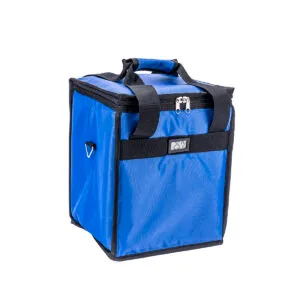
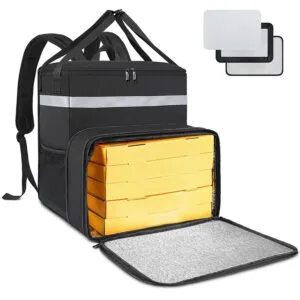
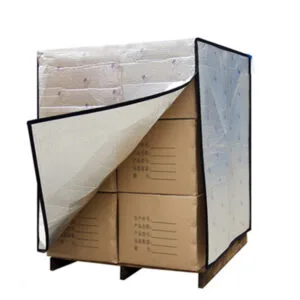
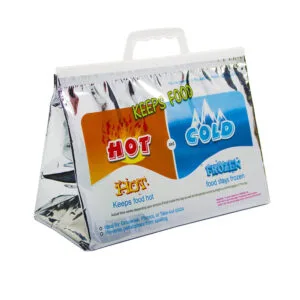
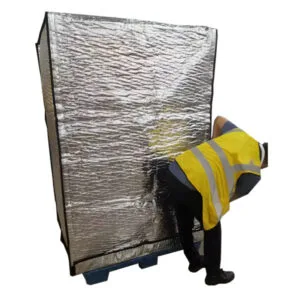
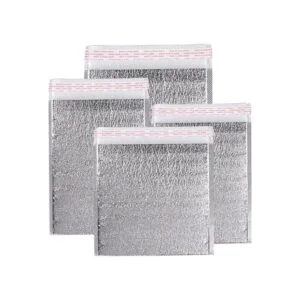
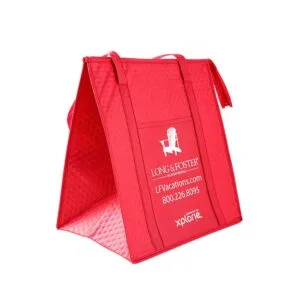
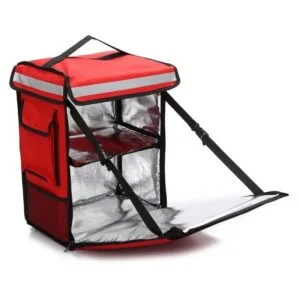
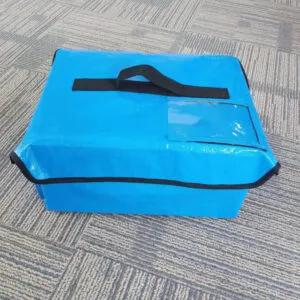
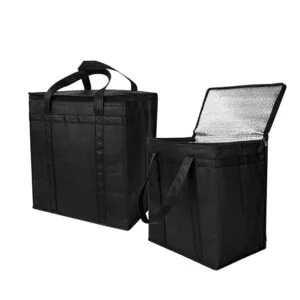
Und Tempk, Wir bieten Gel -Eisbeutel and temperature-control packaging formats that include Isoliertaschen, Isolierte Kisten, Und Thermopalettenabdeckungen. For a gel brick packaging project, we can discuss component dimensions, Konditionierungsbedürfnisse, Isolationspassform, and production samples for packout development. The final configuration should still be evaluated for the buyer’s product, Nutzlastreichweite, Route, and quality requirements rather than relying on a component claim.
Share your payload drawing, erforderliche Bedingung, Streckendauer, current insulation, and packing constraints with Tempk to discuss a sample configuration for controlled testing.