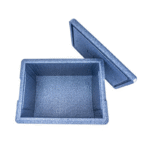
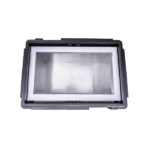
Der Handel mit Kühltaschen in Vietnam ist nicht mehr nur ein Thema der kostengünstigen Beschaffung. In 2026, Es handelt sich um ein strategisches Beschaffungsthema, das durch die Exportrolle Vietnams geprägt ist, growing cold-chain activity, and rising buyer expectations around compliance, Dokumentation, und streckenbasierte Leistung. If you source well, Vietnam can be a strong base for chilled delivery bags, seafood transport bags, reusable cold-chain carriers, and specialty thermal products. If you source poorly, the same project can fail through vague specifications and weak supplier control.
Dieser Artikel hilft Ihnen bei der Beantwortung:
- Why refrigerated bag trade Vietnam is becoming more strategic
- How to define the right product brief before asking for quotes
- Which thermal and transport tests reduce sourcing risk
- What trade, Einhaltung, and sustainability factors matter in 2026
- How to shortlist better Vietnamese suppliers
Why is Vietnam attracting more refrigerated bag buyers?
Vietnam matters because the trade foundation is strong. The EU identifies Vietnam as its largest goods-trade partner in ASEAN, with total goods trade reaching about €67 billion in 2024. The EU-Vietnam Free Trade Agreement has been in force since August 1, 2020 and aims to eliminate 99% of tariffs while reducing overlapping red tape. Für Käufer, this strengthens Vietnam’s role as a more practical and strategic manufacturing base. (Trade and Economic Security)
Cold-chain demand is also real, not theoretical. Official reporting projected Vietnam’s seafood exports at around USD 11.2-11.3 Milliarden in 2025, while sector analysis points to strong cold-chain growth driven by seafood, Fleisch, and other temperature-sensitive flows. That matters because local demand often sharpens local bag capability. Suppliers serving active chilled or frozen sectors usually learn faster than suppliers building only for display samples. (en.mae.gov.vn)
What should you define before you source?
A refrigerated bag is an operating tool, not a generic sewn product. If you ask for a quote using only a photo and rough dimensions, your unit price will be unreliable and your sample cycle will slow down.
Before issuing an RFQ, definieren:
- Produktkategorie: gekühlt, gefroren, or mixed route
- Nutzlasttyp: Essen, Meeresfrüchte, Lebensmittelgeschäft, Medizin, oder Mahlzeiten
- Streckendauer
- Öffnungsfrequenz
- Ambient temperature range
- Cooling media used
- Cleaning requirement
- Carrying method
- Export packaging requirement
- Compliance target market
- Specification comparison table
| Spezifikationsartikel | Weak brief | Better brief | Warum ist es wichtig |
|---|---|---|---|
| Thermal target | “Keep cold” | Zeit, Ambient, and payload defined | Better quote accuracy |
| Use cycle | “Delivery bag” | Open-close frequency stated | Better closure design |
| Cleaning need | “Waterproof” | Wash-down or wipe-clean defined | Better liner choice |
| Verpackung | “Standard carton” | Carton limit and stacking defined | Lower transit damage |
| Market target | “Export” | EU, food service, Einzelhandel, or medical | Better compliance fit |
Which technical details usually decide success?
Thermal performance depends on system logic. In refrigerated bag trade, buyers often overfocus on foam thickness and ignore airflow, Verschlussqualität, seam leakage, and internal empty space. But route performance usually depends on those details just as much.
A strong supplier should be able to explain:
- insulation build and thickness
- shell resistance to wear and moisture
- liner toughness and cleanability
- closure path and seal performance
- coolant pocket position
- handle reinforcement for heavy loads
ASTM C518 is useful for understanding insulation material behavior, while ASTM D4169 helps evaluate shipping units under realistic distribution hazards and ISTA 7D focuses on temperature exposure in transport packaging. Zusammen, those references give buyers a better technical language for validation. (ASTM International | ASTM)
Field lesson: Many bags fail not because the wall is too thin, but because the lid leaks under repeated openings or the internal volume is too large for the payload.
How should you screen Vietnamese suppliers?
Look for operating maturity, not only price speed. The best Vietnamese supplier is usually the one that can connect product design, process control, und Exportdisziplin.
Ask shortlisted suppliers for:
- similar-product references
- cross-section material breakdown
- Probenvorlaufzeit
- QC checkpoint summary
- Verpackungsmethode
- export market history
- corrective-action example after a defect
- Good supplier signals
- stable and neat sewing
- reinforced stress points
- fast and technical sample feedback
- clear mass-production controls
- organized carton labeling
- willingness to discuss route testing
What compliance and sustainability issues matter now?
If the bag or liner may contact food, documentation aligned with the EU food-contact framework remains essential. Verordnung (EC) NEIN 1935/2004 continues to define the core safety and inertness expectations for food-contact materials on the EU market. (Lebensmittelsicherheit)
On the sustainability side, the EU Corporate Sustainability Due Diligence Directive entered into force on July 25, 2024, pushing in-scope companies to identify and address human-rights and environmental impacts across value chains. That means more international buyers now request stronger supplier documentation even when the factory itself is outside the directive’s formal scope. (Europäische Kommission)
Labor governance also matters in Vietnam’s export ecosystem. Better Work Viet Nam brings together government, employers, Arbeiter, and international buyers to improve labor standards and competitiveness, which reinforces the value of choosing suppliers with a real compliance culture. (国际劳动组织)
2026 development and trend outlook
- The refrigerated bag market is moving in five clear directions:
- More route-specific design: buyers want bags matched to actual route behavior
- More documentation: especially for export and food-related applications
- Mehr Verpackungsdisziplin: freight and damage control matter more
- More sustainability pressure: especially from Europe-facing buyers
- More supplier filtering: process control now matters as much as factory size
The cold-chain business case remains strong. FAO notes that 13.2% of food is lost after harvest and before retail, and it has also highlighted very large losses tied to inadequate refrigeration. Better thermal transport tools are therefore part of both cost control and waste reduction. (fao.org)
FAQ
Why is refrigerated bag trade Vietnam growing in importance?
Because Vietnam combines export manufacturing strength, stronger trade links, and real cold-chain demand from sectors like seafood and temperature-sensitive logistics.
What is the smartest first step before sourcing?
Write a route-based specification. Without that, bag pricing and sampling are mostly guesswork.
Should you test the full bag or just its materials?
Beide. Material data helps comparison, but full-route or transport-style testing reveals operational weaknesses.
Is social compliance now part of bag sourcing?
Ja. In 2026, many buyers treat labor and environmental governance as part of sourcing quality, not as a separate issue.
Zusammenfassung und Empfehlung
Refrigerated bag trade Vietnam works best when you source with clarity. Definieren Sie die Route, Nutzlast, Temperaturziel, cleaning need, and target market first. Then choose the Vietnamese supplier that can show technical understanding, Prozessstabilität, and documentation maturity. That approach gives you a better chance of getting not only a good price, but a refrigerated bag that performs under real commercial pressure.
If you are planning a new project, start by testing one high-risk route profile before finalizing the bag structure. It is one of the fastest ways to avoid expensive bulk-order mistakes.
Über Tempk
Tempk develops cold chain and thermal bag solutions for transport, Lieferung, and temperature-sensitive handling. We focus on turning real route conditions into practical bag structures, klarere Spezifikationen, and more dependable sourcing outcomes.
Aufruf zum Handeln: Build your next Vietnam sourcing project around route data, process control, and documentation quality rather than a photo and a target price alone.