VIP Kalte Versandbox für den Versand frischer Produkte: Vom Crop Brief zum genehmigten Packout
Eine VIP-Kühlbox für den Frischwarenversand ist nur dann die richtige Wahl, wenn drei Schlussfolgerungen zusammenpassen: Das Erntegut hat einen definierten und verträglichen Zustand, Die Route benötigt mehr Wärmepufferung oder Nutzlastraum, als ein einfacheres Paket bieten kann, und die komplette Verpackung funktioniert unter repräsentativer Handhabung und Umgebungseinflüssen. Die Isolierung muss mit korrekt konditioniertem Kühlmittel gepaart sein, physische Trennung, Gas- und Feuchtigkeitsmanagement, Überwachung, und wiederholbare Anweisungen. VIP kann feldwarme Produkte nicht vorkühlen, eine Mischbeladung kompatibel machen, oder die Einhaltung selbst nachweisen. Sein Wert ist auf anspruchsvollen Paketspuren am höchsten; Sein Wert verschwindet, wenn hochwertige Materialien die falsche Temperatur oder einen ungetesteten Prozess schützen.
Legen Sie eine Genehmigungsregel fest, bevor Sie sich Kisten ansehen
Beschaffungsteams beginnen oft mit den Katalogabmessungen und der versprochenen Dauer. Kehren Sie diese Reihenfolge um. Entscheiden Sie, welche Beweise die Zahlung für VIP rechtfertigen würden, bevor ein Lieferant eine Konfiguration vorschlägt. Eine sinnvolle Genehmigungsregel erfordert einen dokumentierten Erntebedarf, eine Routenherausforderung, und eine messbare Verbesserung gegenüber einer herkömmlichen Alternative.
Der Erntebedarf erklärt, was Misserfolg bedeutet. Wärmeeinwirkung kann die Atmung beschleunigen, Wasserverlust, Reifung, oder Verfall. Übermäßige Kälte kann bei empfindlichen Gütern zu Kälteschäden führen, auch wenn das Produkt nie gefriert. Ein Feuchtigkeitsproblem kann zu Schrumpfung oder Kondensation führen. In einem abgedichteten Kopfraum kann es zu einem Gaskompatibilitätsproblem kommen. Diese Ergebnisse erfordern unterschiedliche Kontrollen, und eine stärkere Isolierung behebt nur einen Teil davon.
Die Routenherausforderung zeigt auf, warum herkömmliche Verpackungen nicht ausreichen. Mögliche Gründe sind ein Hot-Sort-Center, Winterlieferfahrzeug, lange Zollfrist, feste Abmessungen von Flugzeugpaketen, oder wiederholte Transfers außerhalb der Kühlung. Wenn eine stabile Route bereits in herkömmlichem Schaum verläuft, VIP kann ohne sinnvollen Schutz die Komplexität erhöhen. Paletten- oder LKW-Ladungsströme eignen sich möglicherweise besser für die kontinuierliche Kühlung als viele passive Boxen.
Die messbare Verbesserung sollte in betrieblicher Hinsicht angegeben werden: mehr nutzbare Produkte innerhalb desselben äußeren Würfels, geringeres Risiko bei bekannter Übergabe, akzeptable Leistung durch eine glaubwürdige Verzögerung, oder ein reparierbares, geschlossenes Gut. „Höhere Leistung“ ist zu vage. Vergleichen Sie komplett verpackte Systeme bei gleicher Nutzlast, externes Profil, und Akzeptanzkriterien.
Frieren Sie zuerst den biologischen Brief ein
Frische Produkte sind keine inerte thermische Masse. Es verbraucht Sauerstoff und setzt Kohlendioxid frei, Wasser, und Atemwärme nach der Ernte. Der Satz variiert je nach Kultur, Reife, und Temperatur. Die Verpackung muss daher einen Produktzustand bewahren, kein abstrakter Luftsollwert.
Schreiben Sie die Ernte, relevante Sorte, Reifestadium, und die beabsichtigte Ankunftsbedingung oben im Brief. Eine Tomate, die später reifen soll, hat andere Bedürfnisse als verzehrfertiges Obst. Kräuter, Beeren, und tropische Früchte sollten nicht nur deshalb eine Temperatur haben, weil sie alle „frisch“ sind.
Die Nachernteberatung von UC Davis macht das Ausmaß dieses Unterschieds sichtbar. Erdbeeren werden üblicherweise bei etwa 0 °C gelagert, während reife grüne Tomaten im Allgemeinen viel wärmer behandelt werden. Die Empfehlungen für reife grüne Avocados variieren je nach Sorte und Dauer. Diese Referenzwerte sollten Anlass zu einer Rohstoffüberprüfung sein, nicht blind in eine Bestellung übernommen werden. Die Produktdaten des Exporteurs, Vorheriger Temperaturverlauf, Marktzeit, und Qualitätsprogramm bleiben entscheidend.
Geben Sie sowohl den gewünschten Zustand als auch die Grenzen an. Ein niedriger Grenzwert ist bei kälteempfindlichen Produkten oder bei Verwendung von gefrorenem Kühlmittel unerlässlich. Geben Sie an, ob eine Exkursion anhand der Spitzentemperatur beurteilt wird, Zeit außerhalb des Bereichs, Produkt-Kern-Reaktion, oder eine andere Qualitätsregel. Wenn keine qualifizierte Person erklären kann, wie der Empfänger eine Exkursion interpretieren wird, Ein Logger kann die Mehrdeutigkeit später nicht auflösen.
Relative Luftfeuchtigkeit, Kondensation, und Gasaustausch gehören in denselben Aufgabenbereich. Hohe Luftfeuchtigkeit kann den Wasserverlust verringern, während freies Wasser den Verfall fördern oder Papierpackungen beschädigen kann. Eine versiegelte Einlage kann Feuchtigkeit speichern, aber auch die Sauerstoffbewegung einschränken. Ethylenproduzierendes Obst ist möglicherweise nicht mit empfindlichem Gemüse in derselben Kammer kompatibel. Wenn eine kontrollierte Atmosphäre vorgesehen ist, Verpackungsdurchlässigkeit und Produktatmung erfordern ein eigenes Design; Eine luftdichte VIP-Hülle schafft nicht zufällig eine sichere Schutzatmosphäre.
Verwandeln Sie die Reise in eine Thermik- und Handling-Herausforderung
Starten Sie die Uhr vor der Abholung durch den Spediteur und stoppen Sie sie, nachdem der Empfänger das Produkt in ein geeignetes Lager überführt hat. Bereitstellung im Packraum, Sicherheit, Konsolidierung, Cross-Docking, Zoll, verpasste Lieferung, und Wochenendaufenthalte können wichtiger sein als die geplante Fahrt- oder Flugzeit. Ordnen Sie gewöhnliche und verzögerte Flüsse getrennt zu.
Zeichnen Sie Produkt- und Umgebungstemperaturen auf, wenn die Kontrolle den Besitzer wechselt. Spurdaten zeigen Dauer und Reihenfolge, während glaubwürdige saisonale Fälle heiße und kalte Herausforderungen definieren. Die Isolierung verlangsamt den Wärmeeintritt im Sommer und den Wärmeaustritt im Winter, Testen Sie also beide Risiken.
Das USDA-Transporthandbuch erklärt, warum Produkte vor dem Verladen auf oder nahe der Transporttemperatur sein sollten. Die Fahrzeugkühlung ist üblicherweise so dimensioniert, dass sie den Produktzustand aufrechterhält, Eine große Feldwärmelast kann nicht schnell entfernt werden. Eine Passivbox hat noch weniger Möglichkeiten, als Vorkühler zu fungieren. Definieren Sie den Vorkühlprozess, Endpunkt, und maximale Bereitstellungszeit. Wählen Sie Zwangsluftkühlung, Hydrokühlung, Vakuumkühlung, oder eine andere Methode nur dann, wenn sie zum Erntegut und zur Primärverpackung passt.
Beachten Sie auch Tropfen, Vibration, Kompression, Feuchtigkeit, Orientierung, Stapelung, und Revisionsöffnungen. VIP-Umschläge sind empfindlich gegen Durchstoßen und starkes Biegen, während der Aufprall Kühlmittel in Richtung der Nutzlast bewegen kann. Ein stationärer Kammertest kann nicht jedes Verteilungsrisiko aufdecken.
Standardisierte Profile können die Entwicklung unterstützen. ISTA 7E bietet externe Wärme- und Kälteprofile für thermische Pakettests. Es hilft Teams, eine gemeinsame Herausforderung zu nutzen, Es ist jedoch kein Ersatz für die Pflanzenspezifikation oder Spurüberprüfung. Geben Sie an, warum das ausgewählte Profil die Sendung darstellt, und fügen Sie bei Bedarf routenspezifische Ereignisse hinzu.
Konstruieren Sie das Paket als interagierende Schichten
Der fertige Shipper verfügt über vier Funktionsschichten. Die Außenhülle übernimmt die Handhabung und trägt Etiketten. Die VIP-Schicht schränkt die Wärmeübertragung ein. Das Kühlmittel nimmt Energie auf oder gibt sie ab. Die Nutzlastbaugruppe steuert den Kontakt, Luftraum, Feuchtigkeit, und Bewegung. Ein Überwachungsgerät überwacht ausgewählte Bedingungen. Keine Schicht kann für die anderen einspringen.
Ein Vakuumisolationspaneel enthält einen evakuierten porösen Kern in einer Barrierehülle. Niedriger Gasdruck reduziert die gasförmige Wärmeleitung, Ermöglicht eine starke Isolierung in einer dünnen Platte. Nähte, Kanten, Deckelgelenke, und Abschlüsse erzeugen Wärmebrücken. ASTM C1667 misst die Wärmeübertragung in der Mitte des Panels mit einem Wärmeflussmesser; es qualifiziert nicht als Versender zusammengebauter Produkte.
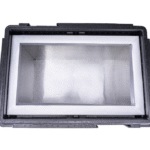
Fordern Sie eine Zeichnung aller Paneele und Verbindungen an. Suchen Sie nach freiliegenden Kanten, Lücken, Deckelüberlappung, und die Art und Weise, wie die Paneele geschützt sind. Abnehmbare Platten können den Austausch und die Inspektion unterstützen, während integrierte Paneele die Montage vereinfachen und die Hülle abschirmen können. Keines von beiden ist allgemein überlegen. Das beste Format hängt vom Schadensrisiko ab, Reinigung, Feldinspektion, und wem die Box nach der Lieferung gehört.
Die Auswahl des Kühlmittels bestimmt den Temperaturbereich. Gefrorene Wasserpackungen, Gelpackungen, Eisziegel, und Phasenwechselmaterialien weisen ein unterschiedliches thermisches Verhalten und eine unterschiedliche Handhabung auf. Für jede vorgeschlagene Komponente, Definieren Sie die Rezeptur oder Teilenummer, Masse, Konditionierungstemperatur und -zeit, Ladereihenfolge, und Trennung vom Obst und Gemüse. Der Übergangsbereich und die Latentwärmedaten eines PCM sind nur dann nützlich, wenn die Komponente im erforderlichen Zustand beginnt und die vollständige Packung über genügend Kapazität für die Route verfügt.
Schützen Sie die Nutzlast vor direktem Kühlmittelkontakt, wenn Schäden durch niedrige Temperaturen möglich sind. Auch Trennwände und Abstandshalter beeinflussen die Konvektion und den Nutzraum, es handelt sich also um kontrollierte Komponenten, keine optionalen Packhilfsmittel. Dasselbe gilt auch für Saugeinlagen, Liner, Band, und Tabletts. Ein Austausch kann den Wärmefluss verändern, Feuchtigkeit, Kopfspace, oder Paketgeometrie.
Erstellen Sie ein Beweisdossier, das zu einer Entscheidung führt
Die Beweise sollten mit der erhobenen Behauptung übereinstimmen. Verwenden Sie eine kompakte Prüftabelle, damit jede Funktion weiß, was sie genehmigt.
| Entscheidung | Mindestens nützliche Beweise | Frage des Eigentümers |
|---|---|---|
| Erntezustand | Ware, Reife, Vorkühlung, Luftfeuchtigkeit, Gas, und Ausflugsgrenzen | Wird diese Bedingung die beabsichtigte Ankunftsqualität schützen?? |
| VIP-Bau | Panel-Spezifikation, gemeinsame Zeichnung, Schutz, und Inspektionsmethode | Behält die montierte Wand den Materialvorteil bei?? |
| Kühlmittelverpackung | Komponenten-ID, Konditionierung, Menge, Position, und Trenner-Layout | Können Betreiber die getestete Wärmekapazität reproduzieren?? |
| Streckenleistung | Repräsentative Nutzlast, Umgebungsprofil, Sensorkarte, Ergebnisse, und Akzeptanzkriterien | Übersteht das Gesamtsystem sowohl heiße als auch kalte Risiken?? |
| Skalierungs- und Änderungskontrolle | Produktionsmuster, Stückliste, Revisionsprozess, und Erhalt von Schecks | Die gelieferten Einheiten entsprechen weiterhin dem genehmigten Muster? |
| End-of-Use-Plan | Entsorgungsstellen oder Rückgabe, Reinigung, Inspektion, Verlust, und Austauschprozess | Was passiert mit jeder Komponente nach der Lieferung?? |
Dieses Dossier verhindert, dass ein Panel-Datenblatt als Nachweis für die Streckendauer verwendet werden kann. Es verhindert auch, dass ein erfolgreicher Routenversuch unkontrollierte Produktionsänderungen verdeckt. Fehlende Beweise werden zu einer definierten Maßnahme und nicht zu einem Streit zwischen Lieferanten, Maschinenbau, und Qualitätsteams.
Hilfreiche Entscheidungshilfen
Überprüfen Sie die Details, bevor Sie sich für die Verpackung entscheiden
Mit diesen schnellen Tools können Sie das Routenrisiko vergleichen, Größenanforderungen, Kühlmittelauswahl, und Verpackungsdetails, bevor Sie ein Angebot anfordern.
Fallfestigkeit des Isolationsmaterials
Überprüfen Sie die Fallfestigkeit und die Handhabungsfaktoren, bevor Sie Isoliermaterialien auswählen.
Widerstand prüfenKühlakku-Rechner
Schätzen Sie die Menge an Gel-Eisbeuteln für gekühlte Sendungen und nutzen Sie die praktische Routenplanung.
Schätzen Sie EisbeutelTrockeneisrechner
Schätzen Sie vor dem Verpacken den Bedarf an Trockeneis für gefrorene oder ultrakalte Sendungen.
Schätzen Sie TrockeneisTesten Sie nach Möglichkeit mit repräsentativen Produkten und Primärverpackungen. Ein wasserbasierter Simulator reproduziert möglicherweise die Wärmekapazität, jedoch nicht die Atmung, Ethylen, oder Gasaustausch, Dokumentieren Sie also die Begründung. Füllen Sie die Kammer bestimmungsgemäß, da sich bei Teillasten die Luftmenge verändert, Kühlmittelabdeckung, und Bewegung.
Instrumentieren Sie die erwarteten warmen und kalten Standorte. Teilungsnähte einbeziehen, Deckelzonen, und Produkt in der Nähe von Kühlmittel, zusammen mit einer repräsentativen Mittelposition. Verwenden Sie kalibrierte Geräte, die für die Unsicherheit und Entscheidung geeignet sind. Probenahmeintervall definieren, Start- und Stoppzeit, und Umgang mit fehlenden Daten vor dem Test. Eine Sensorkarte liefert einen Kontext, den eine einzelne Temperaturkurve nicht bieten kann.
Nach Kammer- und physikalischen Tests, Führen Sie einen kontrollierten Routenversuch durch. Bei der Studie werden Ereignisse überprüft, die dem Labor möglicherweise entgehen, wie etwa Montageverzögerungen, Carrier-Handling, Öffnung, und Empfängerantwort. Es beweist nicht jede zukünftige Spur, Es kann jedoch bestätigt werden, dass der schriftliche Prozess unter ausgewählten Betriebsbedingungen funktioniert.
Lehnen Sie die Abkürzungen ab, die falsches Vertrauen schaffen
Ein Daueranspruch ohne Testbedingungen ist das erste Warnsignal. „Hält tagelang kalt“ sagt nichts über die Nutzlast aus, Starttemperatur, Umgebungsprofil, Kühlmittel, Sensorposition, oder zulässigen Bereich. Fordern Sie den Bericht an oder wiederholen Sie den Anspruch als unbestätigt.
Die Nennkapazität ist eine weitere Falle. Erfragen Sie nach VIP nutzbare Innenmaße, Kühlmittel, Abstandshalter, und Trennwände sind eingebaut. Bestätigen Sie die Anzahl und Ausrichtung der Fächer. Dünne Wände können das Verhältnis von Nutzlast zu Außenwürfel verbessern, aber eine schlechte Kühlmittelgeometrie kann den Platz zurückgeben.
Allgemeine Sprache zur Lebensmittelqualität, Einhaltung, Wiederverwendung, oder Recycling sollten konkrete Fragen auslösen. Welche Komponente ist für den Lebensmittelkontakt vorgesehen?? Auf welche Gerichtsbarkeit und Regel bezieht sich die Erklärung?? Welche Reinigungsmethode wurde bewertet?? Welche örtliche Einrichtung nimmt jedes getrennte Material an?? Eine Box kann ein Hygienetransportprogramm unterstützen, ohne ein universelles Konformitätszertifikat zu sein.
Die Hygienevorschriften der FDA für den Transport veranschaulichen den Unterschied. Für versicherte US-Amerikaner. Motor- und Bahnbetrieb, Es weist den Verladern die Verantwortung für die Hygienepraxis zu, Lader, Träger, und Empfänger- und Adressgeräte, Operationen, Ausbildung, und Aufzeichnungen. Die Parteien können eine Temperaturüberwachung für Lebensmittel vereinbaren, die aus Sicherheitsgründen eine Temperaturkontrolle erfordern. Anwendbarkeit und spezifische Pflichten variieren. Der VIP -Box ist Ausrüstung innerhalb eines Prozesses; es befriedigt den Prozess allein nicht.
Die Kontrolle von Lieferantenänderungen wird oft übersehen. Fragen Sie, wie sich der Kern ändert, Barrierefolie, Panelgröße, Hülse, Kühlmittel, Liner, Schließung, oder Montageort überprüft und kommuniziert. Ordnen Sie das Produktionsmuster der getesteten Stückliste zu. Ohne diesen Schritt, Ein Beschaffungsteam kann ein System genehmigen und ein anderes erhalten, das ähnlich aussieht.
Machen Sie Versand und Empfang zu einem kontrollierten Prozess
Beim Versand, Überprüfen Sie die Produkttemperatur, Kühlmittelaufbereitung, Komponentenanzahl, richtige saisonale Konfiguration, Logger-Identität, und Schließung. Verwenden Sie eine prägnante, illustrierte Anleitung, anstatt sich auf Ihr Gedächtnis zu verlassen. Begrenzen Sie die Zeit, die das Kühlmittel im Packungsbereich wartet. Zeichnen Sie Ausnahmen auf, anstatt stillschweigend Pakete oder Bänder hinzuzufügen.
Bei Erhalt, Überprüfen Sie vor dem Öffnen äußere Schäden, Beachten Sie dann den Kühlmittelaustritt, verschobene Bauteile, Kondensation, und sichtbarer Produktzustand. Rufen Sie Überwachungsdaten gemäß der schriftlichen Entscheidungsregel ab. Die Temperatur ist eine Eingabe: körperliche Verletzung, Geruch, Verfall, und atmosphärenbedingte Symptome können ebenfalls eine Rolle spielen. Bringen Sie akzeptierte Produkte umgehend in die nächste kontrollierte Umgebung.
Wiederverwendbare Systeme fügen eine Schleife hinzu. Reinigen und trocknen Sie die Schale mit einer für die Materialien geeigneten Methode. Überprüfen Sie die Schutzvorrichtungen und -platten, Ersetzen Sie fehlerhafte Teile nach definierten Kriterien, und abgeschlossene Nutzungen verfolgen. Ein zurückgegebener Karton ist nicht automatisch versandbereit. Fehlende Trennwände oder eine nicht erkannte beschädigte Platte können die Gültigkeit der Verpackung beeinträchtigen.
Die Schulung sollte kritische Schritte erklären. Packer sollten verstehen, dass einem teilweise konditionierten PCM der getestete Energiezustand fehlt, während Empfänger wissen müssen, warum die Sensorposition wichtig ist. Kurz verwenden, rollenspezifische Anweisungen.
Beurteilen Sie Kosten und Nachhaltigkeit bei gleicher Leistung
Vergleichen Sie VIP mit konventioneller Isolierung und aktiver Kühlung bei gleichem Produktlieferungsziel. Beinhaltet die Kosten für Box und Kühlmittel, konditionierende Energie, Arbeit, Frachtgewicht und Kubikmeter, Produktverlust, Verzögerungen, Rücktransport, Reinigung, Schaden, und Ersatz. VIP ist wirtschaftlich, wenn der Vorteil der Isolierung oder der dünnwandigen Nutzlast ein kostspieliges Risiko begrenzt. Es ist verschwenderisch, wenn ein einfacheres System mit ausreichendem Spielraum funktioniert.
Umweltvergleiche erfordern die gleiche Disziplin. Der UNEP- und FAO-Bericht „Sustainable Food Cold Chains“ zeigt, dass eine ineffektive Kühlung zum Lebensmittelverlust beiträgt, während die Kühlkettenaktivität auch Emissionen mit sich bringt. Zählen Sie sowohl geschützte Produkt- als auch Verpackungsressourcen. Bei einer Einweg-Verbundplatte kann die lokale Wiederherstellung begrenzt sein. A wiederverwendbare Box verteilt Produktionsauswirkungen nur auf erfolgreiche Fahrten, nach Rückkehr, Reinigung, Verlust, und Reparatur sind im Preis inbegriffen.
Die aktuelle Verpackungspolitik verstärkt diese Kontrolle. Die Verpackungs- und Verpackungsabfallverordnung der Europäischen Union gilt grundsätzlich ab August 2026 und führt Maßnahmen zur Recyclingfähigkeit ein, Abfallvermeidung, recycelter Inhalt, und wiederverwenden. Die Anforderungen hängen von der fertigen Konfiguration und der Lieferkettenrolle ab. Käufer sollten die offiziellen Regeln für ihren Markt prüfen und weitreichende Behauptungen vermeiden, dass jedes VIP-Format standardmäßig recycelbar oder wiederverwendbar sei.
Häufig gestellte Fragen
Was ist der stärkste Grund, VIP für Lebensmittelpakete zu wählen??
Wählen Sie es, wenn eine verifizierte Route eine stärkere Wärmepufferung bei begrenzten Außenabmessungen erfordert, und Tests zeigen eine deutliche Verbesserung gegenüber einem einfacheren Versender. Typische Treiber sind exponierte Übergaben, Verzögerungsrisiko, wertvolle Nutzlast, oder Maßbeschränkungen. Premium-Isolierung allein ist kein Grund dafür, dass der Ernteauftrag oder der Betriebsablauf undefiniert bleiben.
Kann eine Schale unterschiedliche Kühlmittelpakete für unterschiedliche Feldfrüchte verwenden??
Es kann sein, aber jede Konfiguration benötigt eine eigene kontrollierte Stückliste, Konditionierungsmethode, Warenumfang, und Beweise. Ein Wechsel des Kühlmittels kann das Risiko niedriger Temperaturen verändern, Nutzlastraum, Gasvolumen, und Dauer. Beschriften Sie Konfigurationen deutlich, damit Verpacker saisonale oder warenspezifische Teile nicht vermischen können.
Wie viel Belüftung sollte eine VIP-Produktbox haben??
Es gibt keinen universellen Öffnungsbereich. Die Belüftung hängt von der Ernte ab, Masse, Atmung, Temperatur, Reiselänge, Liner, und jede beabsichtigte Atmosphäre. Öffnungen wirken sich auch auf die Wärmeleistung aus. Nutzen Sie Nachernte- und Verpackungswissen, um den Gasaustausch zu gestalten, Beziehen Sie dann die endgültige Entlüftungs- und Auskleidungsanordnung in die Prüfung ein.
Ist ein thermischer Test bei leerer Box sinnvoll??
Es kann Konstruktionen vergleichen oder grobe Unterschiede in der Wärmeübertragung aufdecken, Es kann jedoch nicht selbst eine geladene Sendung vorhersagen. Nutzlast verändert die thermische Masse, Luftstrom, Atmung, und Kühlmittelkontakt. Verwenden Sie für die Zulassungsstudie repräsentative Produkte oder einen geeigneten Simulator und geben Sie an, was der Ersatz nicht reproduziert.
Was sollte bei der Rückgabe einer wiederverwendbaren VIP-Loge überprüft werden??
Überprüfen Sie die Schale, Deckel, Schließungen, geschützte Panelbereiche, Kühlmittelbehälter, Trenner, Etiketten, Sauberkeit, Trockenheit, und Komponentenanzahl. Befolgen Sie die Methode des Lieferanten zur Identifizierung von Vakuumverlust oder Panelausfall. Verfolgen Sie Reparaturen und abgeschlossene Nutzungen, sodass Betriebs- und Umweltaussagen die tatsächlichen Zyklen widerspiegeln.
Genehmigen Sie das System, Dann schützen Sie den genehmigten Zustand
Die Entscheidung ist bei Bedarf vertretbar, Streckenbelichtung, Verpackungsdesign, Betriebsanleitung, und Beweise stimmen überein. VIP kann wertvolle Wärmereserven und nutzbaren Raum schaffen, Aber Kühlmittel und Packout-Geometrie bestimmen, wie dieser Rand das Erntegut erreicht. Vorkühlung, Belüftung, Luftfeuchtigkeit, Überwachung, Hygiene, und Änderungskontrolle bleiben getrennte Zuständigkeiten. Genehmigen Sie die vollständige Konfiguration, Vergleichen Sie es mit einfacheren Optionen, und halten Sie die Stückliste und den Prozess nach der Skalierung unter Kontrolle.
Über Tempk
Tempk bietet VIP-Isolierboxformate mit abnehmbaren oder integrierten Paneelen und Hybridkonstruktionen mit Optionen wie Kunststoffschalen, EPP -Boxen, oder Liner. Wir können die Isolierung mit PCM-Paketen kombinieren, Gelpackungen, oder Eissteine und planen Sie das Plattenlayout, Nutzlastkammer, Kühlmittelplatzierung, und Probemontagen für eine angegebene Route. Für den Warenversand, Unser nützlicher Ausgangspunkt ist eine genaue Ernte- und Spurbeschreibung, gefolgt von repräsentativen Tests und nicht von einem universellen Temperatur- oder Dauerversprechen.
Senden Sie Tempk Ihre Ware, Reife, Vorkühlzustand, Nutzlastanordnung, Streckenbelichtung, und Rückgabe- bzw. Entsorgungsplan. Fordern Sie ein VIP-Angebot zusammen mit einem einfacheren Referenzpaket an, damit Ihr Team die Option genehmigen kann, die ihre Kosten und Komplexität verdient.