VIP-Isolierbox für temperaturkontrollierten Versand: Specify the System You Can Operate
A VIP-Isolierbox für Temperaturkontrollierter Versand is a sound choice only when its complete configuration matches the product, the route and the facilities using it. Compare usable chamber space rather than empty-box volume, verify temperature performance with the specified coolant and load, and confirm that staff can reproduce preparation and assembly. Then evaluate the cost of delivery, inspection and any return loop. The buying decision should approve a defined operating envelope, not an unlimited promise attached to an Isolationsmaterial. This approach makes supplier proposals comparable and keeps the eventual dispatch process within the evidence supporting it.
Draw the operating boundary before shortlisting suppliers
Begin with a written statement of what a successful shipment means. Identify the product, permitted temperature exposure, physical protection needs and receiving conditions. Obtain the relevant limits from controlled product information or the responsible quality function. Do not let a familiar cold-chain category stand in for the actual requirement.
Describe the journey from removal from controlled storage to placement into the receiving environment. The advertised carrier transit is only one part of that sequence. Packing queues, collection delays, transfer facilities, clearance procedures and receiving availability can change the duration that the package must withstand. State which delays the planned system must cover and which require a different operational response.
Give the supplier realistic load boundaries. Include the smallest order, the largest permitted order and any arrangement that changes where product sits relative to the insulating wall or coolant. Identify secondary containment and monitoring components early. A proposal based on a bare product dimension is not a complete fit assessment.
This requirement becomes an operating envelope: a defined combination of product, laden, Route, environment and process within which the system is intended to work. Anything outside that envelope needs an explicit assessment. It should not become approved merely because the new shipment fits inside the same outer carton.
Zum Beispiel, imagine a distributor using one package for transfers between staffed warehouses and proposing to extend it to appointment-only clinics. The thermal construction may remain unchanged, but the receiving uncertainty is different. The sensible first action is to define the clinic handover and failed-delivery procedure. Testing can then address the revised journey rather than compensating for a destination process that no one has agreed.
Use the boundary to remove unsuitable options early. A design that requires unavailable conditioning equipment or a return process your recipients cannot support is not ready for your operation, unabhängig von seinen Materialeigenschaften. Eliminating that mismatch before sampling is usually more useful than negotiating the price of a system that cannot be used as intended.
Buy working payload space and controlled interfaces
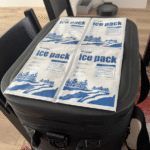
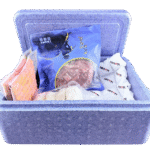
VIP walls can make insulation more space-efficient, but buyers need to evaluate the product chamber after every required component has been installed. Ask for a loaded drawing showing coolant, product supports, protective layers, required clearances and the monitor. Check that the drawing matches the physical sample, including the closure.
The panel itself is an engineered assembly with a porous core, evacuated interior and barrier envelope. Its performance depends on preserving that construction. The box adds joints, corners and structural parts that create a different thermal problem from the center of an individual panel. Aus diesem Grund, a low material conductivity is useful design information, not a delivery guarantee.
Pay attention to how components locate against each other. Operators should not need to guess which panel overlaps, force the lid down or adjust a divider with a knife. A well-defined interface makes correct assembly observable. It also helps inspection identify when the wrong component has been selected.
| What the buyer receives | What it should demonstrate | What it does not establish alone |
|---|---|---|
| Loaded chamber drawing | Produkt, coolant and accessories fit as intended | Temperature performance through the route |
| Panel specification | Identity and relevant material characteristics | Performance of every joint and closure |
| Wärmebericht | Behavior of the stated system under stated conditions | Suitability of untested loads or substitutions |
| Preparation instruction | A reproducible starting state for components | Readiness without actual process records |
| Return and inspection procedure | How accepted components re-enter use | Unlimited service life or automatic sustainability |
Read the items together. Each closes a different uncertainty, and a strong result in one row cannot fill a gap in another. This is a more reliable basis for comparison than ranking suppliers by a single insulation number or advertised duration.
Ask each bidder to identify assumptions and departures from your requirement in a separate response field. Zum Beispiel, the proposal might assume a different product orientation, preparation facility or receiving window. Resolve those differences before comparing price. Ansonsten, a cheaper offer may simply cover a narrower task. Carry the accepted assumptions into the sample request and purchase specification so they do not disappear between commercial negotiation and engineering review. This also gives the supplier a fair opportunity to explain a constraint rather than being judged against an unstated expectation after the order has been placed.
Request a clear distinction between prototype and production components. The accepted design must remain identifiable when supplied in volume. Specifications should cover not only the VIP but also coolant identity, protective structures, supports and the closure arrangement. A visually similar replacement can still change the configuration that was assessed.
Ask evidence questions that lead to a yes-or-no decision
Thermal evidence should answer a practical question: can this configuration keep the relevant product locations within their permitted limits during the defined challenge? To answer it, the report needs a recognizable load, Vorbereitungszustand, Umweltprofil, sensor arrangement and acceptance rule. A headline hold time without those details cannot support an informed release decision.
Separate the thermal storage mechanism from the insulation mechanism. VIP reduziert den Wärmefluss; PCM absorbs or releases energy as conditions change. The transition point does not make the entire payload perfectly uniform, and the amount of available thermal capacity depends on the starting condition. Examine both excessive cooling near the beginning and loss of protection later in the exposure.
The minimum load deserves deliberate attention. A nearly empty chamber can behave differently from a full one, even when every coolant component remains in place. Compare the proposed routine order range with the tested range. Where a bridging rationale is offered instead of direct testing, ask the responsible technical team to assess whether that rationale is appropriate.
Use recognized frameworks with an understanding of their role. ISTA's 7E profiles provide specified thermal challenges, während Standard 20 addresses the qualification process for insulated shipping systems. Their names should lead to a review of the actual work performed. Neither name changes the fact that product, handling and route requirements must be addressed for the intended application.
Evidence should include a reasoned approach to physical distribution hazards. A damaged closure or punctured panel can change thermal behavior, so the package cannot be assessed as though it will remain untouched between assembly and receipt. Ask how the relevant handling risks were evaluated and how the results inform inspection and rejection criteria.
Hilfreiche Entscheidungshilfen
Überprüfen Sie die Details, bevor Sie sich für die Verpackung entscheiden
Mit diesen schnellen Tools können Sie das Routenrisiko vergleichen, Größenanforderungen, Kühlmittelauswahl, und Verpackungsdetails, bevor Sie ein Angebot anfordern.
Boxliner & Dimensionierung der Palettenabdeckung
Überprüfen Sie die Größenlogik für Kartoneinlagen und Palettenabdeckungen für isolierte Verpackungsprojekte.
Schätzen Sie die GrößeFallfestigkeit des Isolationsmaterials
Überprüfen Sie die Fallfestigkeit und die Handhabungsfaktoren, bevor Sie Isoliermaterialien auswählen.
Widerstand prüfenTrockeneisrechner
Schätzen Sie vor dem Verpacken den Bedarf an Trockeneis für gefrorene oder ultrakalte Sendungen.
Schätzen Sie TrockeneisEndlich, define the authority to approve. The supplier can propose configurations and provide information; the buyer's responsible function decides whether the evidence is sufficient for its use. Record unresolved items explicitly. A proposal that still requires development should not be released to routine dispatch under the same wording as an approved operating configuration.
Make readiness visible at the packing station
A package can be designed correctly and still be assembled from components in the wrong state. Establish separate locations or clear status identification for unprepared coolant, prepared coolant, returned assemblies and rejected materials. The operator should not have to infer readiness from appearance or from where someone happened to leave a part.
A preparation procedure must fit the facility that will execute it. Confirm available equipment, Lademodalitäten, monitoring and records, including any prescribed tempering stage. Test whether the operation can produce enough accepted components for its dispatch pattern. Empty-box inventory is irrelevant when the necessary coolant is not ready.
Translate the approved design into an instruction that works under normal working conditions. Show component identity, placement sequence, load limits and closure checks. Use the same names in the instruction, purchase order and component labels. Where seasonal versions differ, make the selection rule explicit and prevent similar-looking parts from being mixed inadvertently.
A packing rehearsal with the intended team can expose ambiguity. Have operators work from the supplied instruction rather than from an engineer's verbal coaching. Observe any points where they guess, force a fit or ask whether a substitute is acceptable. Resolve those issues before a pilot becomes routine production. Such a rehearsal checks usability; it does not replace thermal or distribution testing.
Give receiving staff an equally clear sequence. They need to identify the parcel, inspect condition, retrieve the required temperature evidence and place product into its approved environment. Questionable shipments should enter the established review process rather than being accepted because the delivery was on time or because some coolant remains cold.
Define exception handling before launch. If a courier misses collection or the destination cannot receive, staff need an authorized decision path. Reopening a box, Hinzufügen Kaltpackungen or changing the load can invalidate its documented arrangement. Instructions should make these limits explicit, alongside the permitted options for escalation or alternative service.
For reused assemblies, readiness also includes history and inspection. Keep component status linked to its identity where the program requires it. Do not allow the replacement of a worn carton to conceal uncertainty about the VIP assembly or coolant inside. Each component needs a defensible route back into accepted stock.
Compare the operating model and expand only where it holds
Build the business case around the payload successfully delivered under the required conditions. Include components, Vorbereitung, Arbeit, Fracht, monitoring and receiving effort. A reusable model adds retrieval, Inspektion, cleaning where appropriate, redistribution and replacement. Compare these activities using realistic order sizes and return behavior rather than an ideal fully loaded journey repeated indefinitely.
A lower outer volume can be valuable, but only after usable load and carrier charging conditions have been checked. Ähnlich, reuse can reduce the demand for replacement packaging in a functioning loop, but it does not automatically establish a lower environmental footprint. Actual rotations, Schaden, return distance and material treatment determine the comparison.
Keep recovery instructions component-specific. A carton, a sealed VIP assembly and a PCM pack should not be described as though they share one recycling pathway. Ask what can be separated and what the receiving location can recover. For regulated packaging markets, review the applicable category and implementation dates independently of any environmental marketing claim.
Während eines Piloten, collect observations that distinguish causes. A late delivery, damaged panel, assembly deviation, failed monitor download and confirmed temperature excursion are not the same event. Reviewing them separately helps identify whether the next improvement belongs in the package, the carrier plan, operator instructions or data handling.
Use the pilot to establish a routine service model. Document special support that would not be available in normal operation, such as an engineer packing every parcel or a receiver waiting outside its usual hours. Remove dependence on that support or incorporate it deliberately into the operating requirement before claiming the route is ready to scale.
Expansion should preserve the evidence chain. A new destination, changed carton, alternative coolant or modified panel frame may require review. The scope of additional work depends on the change, but the decision must be made explicitly. A controlled package family with defined applications is stronger than a universal box selected by habit.
The purchasing outcome should be simple enough to communicate: which system is approved, what it can carry, how it is prepared, where it can travel and what triggers reassessment. Wenn diese Antworten klar sind, a VIP investment becomes a manageable shipping capability rather than an unexplained premium material choice.
Practical questions before committing to volume
What is the most useful first sample request?
Request a complete representative packout, not only an empty enclosure. Include the intended coolant components, product supports and monitoring-location features, together with the relevant instructions and specifications. This allows your team to assess usable fit and assembly immediately. State that operational evaluation does not itself establish thermal approval, and agree what evidence or testing will follow.
When should a conventional shipper remain in the program?
Retain it where it meets the defined product and route requirements with an operating model that is simpler or more economical. VIP need not replace every qualified package. Compare actual loads, freight implications, handling and preparation rather than assuming a material hierarchy. A mixed packaging program is manageable when selection rules and component identities are clear.
What would stop a promising design from being approved?
Examples include an untested load condition, unavailable preparation equipment, ambiguous component substitutions or a receiving process that cannot be executed. These are resolvable engineering or operational questions, but they should remain visible until resolved. A favorable price, an impressive material property or a successful demonstration shipment should not override a critical gap in the intended operating envelope.
Über Tempk
Und Tempk, we combine protected VIP structures with selected PCM components and configurable payload chambers. We also provide practical inputs such as samples, component specifications and preparation instructions for the buyer's qualification review. The advantage is a coordinated discussion of product fit and packout control, without treating an empty box as a universally approved solution. Share your load range, route conditions and preparation facilities with Tempk to develop a reviewable specification for a VIP insulated box for temperature controlled shipping before moving from samples to routine supply.