


Glasur- und Oberflächenqualität
Temperaturschwankungen können sich auf die Eisglasur auswirken, Oberflächenerscheinung, und Kundenvertrauen.
Tiefkühl-Meeresfrüchtepaletten brauchen Tiefkühlkontrolle plus Schutz der Oberflächenqualität. Der Routenplan sollte Glasurzustand, Kartonleckage, Geruchstrennung, exponierte Randkartons und jede Trockeneisunterstützung während des Transfers steuern.
Palettenrouten sollten nach Temperatur auf Ladungsebene und Wareneingangszustand bewertet werden. Der folgende Plan bietet einen praktischen Ausgangspunkt, bevor ein Spurtest mit dem tatsächlichen Palettenmuster und dem Trailerprozess durchgeführt wird.
Temperaturschwankungen können sich auf die Eisglasur auswirken, Oberflächenerscheinung, und Kundenvertrauen.
Durch Auftauen oder Beschädigungen des Kartons kann Schmelzwasser entstehen, Geruch, und Empfang von Hygienebedenken.
Meeresfrüchte-Paletten müssen möglicherweise von gemischten Produkten getrennt werden, Rückgabeverpackung, oder saugfähige Kartons.
| Routenbedingung | Temperaturziel | Ladungsschutzaufbau | Planung von Kühlmittel oder Abdeckung | Wareneingangsprüfung |
|---|---|---|---|---|
| Frozen Lager to Kühlauflieger, 0-4 h Rampenexposition | Keep Meeresfrüchte frozen, üblicherweise in der Nähe geplant -18 C, und schützen Sie freiliegende Palettenkanten. | Vorgefrorene Palette, gefrorene Abdeckung während des Transfers, Leck-/Geruchstrennung bei Mischung, oben-Rand-Kern Temperaturschreiber. | Normalerweise kein Trockeneis, wenn der aktive Gefriertransport stabil ist. Verwenden Sie für die Rampenexposition eine gefrorene Abdeckung oder Folie. | Edge and Kerntemperatur, Zustand der Glasur, Kartonbefeuchtung, Geruch, und Transferzeit. |
| Umschlaglager or multi-stop frozen route, 4-12 H | Gefrorene Route mit zusätzlichem Schutz für die Oberflächenqualität von Meeresfrüchten und Leckagekontrolle. | Gefrorene Palettenabdeckung oder Liner, stabiles Kartonmuster, Bei Bedarf eine Leckschutzschicht anbringen, getrenntes Trockeneis bei Validierung. | Trockeneis-Backup kann rundherum getestet werden 10-25 kg pro Palette, sofern zulässig, mit Lüftungs- und Aufnahmesteuerung. | Temperaturschreiber-Kurve, Strandurlaub, Glasur, Leckage, Geruchsübertragung, und restliches Trockeneis. |
| Verzögerungsrisiko oder passiv eingefrorenes Segment, 12-24 H | Validierter Frostschutz mit klarem Trockeneis, Abdeckung, und Empfangsverfahren. | Hochleistungsfähiges gefrorenes Leichentuch, Leck-/Geruchstrennung, Trockeneiszonen vor Kartonschäden, Überprüfung des Routenrisikos. | Um 25-55 kg Trockeneis may be needed for some Paletteized Meeresfrüchte lanes; Berechnen und Validieren der Route. | Temperaturkarte, Zustand der Glasur, Kartonbefeuchtung, Geruch, Ladungsstabilität, und Trockeneis übrig. |
Verwenden Sie diese Bereiche für die Bemusterung und Angebotserstellung. Final Trockeneis, PCM, Kühlgelpack, Abdeckung, oder Liner-Auswahl sollte mit der Palettenmasse bestätigt werden, Kartonmuster, Streckendauer, Belüftung, Trägerregeln, Umgebungseinflüsse, und Empfangsabwicklung.
Kombinieren Sie Meeresfrüchte nicht mit geruchsabsorbierenden Kartons, es sei denn, die Einlage oder der Trennplan wurden überprüft.
Benutzen Sie die Abdeckung, Liner, und Temperaturschreiber-Karte zum Schutz der Ober- und Außenkante, wo die Erwärmung zuerst beginnt.
Verwenden Sie Auskleidungen oder Trennschichten, wenn Schmelzwasser oder Kartonschäden die Annahme benachbarter Ladungen verlangsamen oder verunreinigen würden.
Wenn Trockeneis erforderlich ist, Masse planen, Platzierung, Belüftung, Beschriftung, und Empfangshandhabung vor dem Spurtest.
Dies sind die sichtbaren und betrieblichen Probleme, die der Palettenplan reduzieren sollte, bevor die Ladung den Empfänger erreicht.
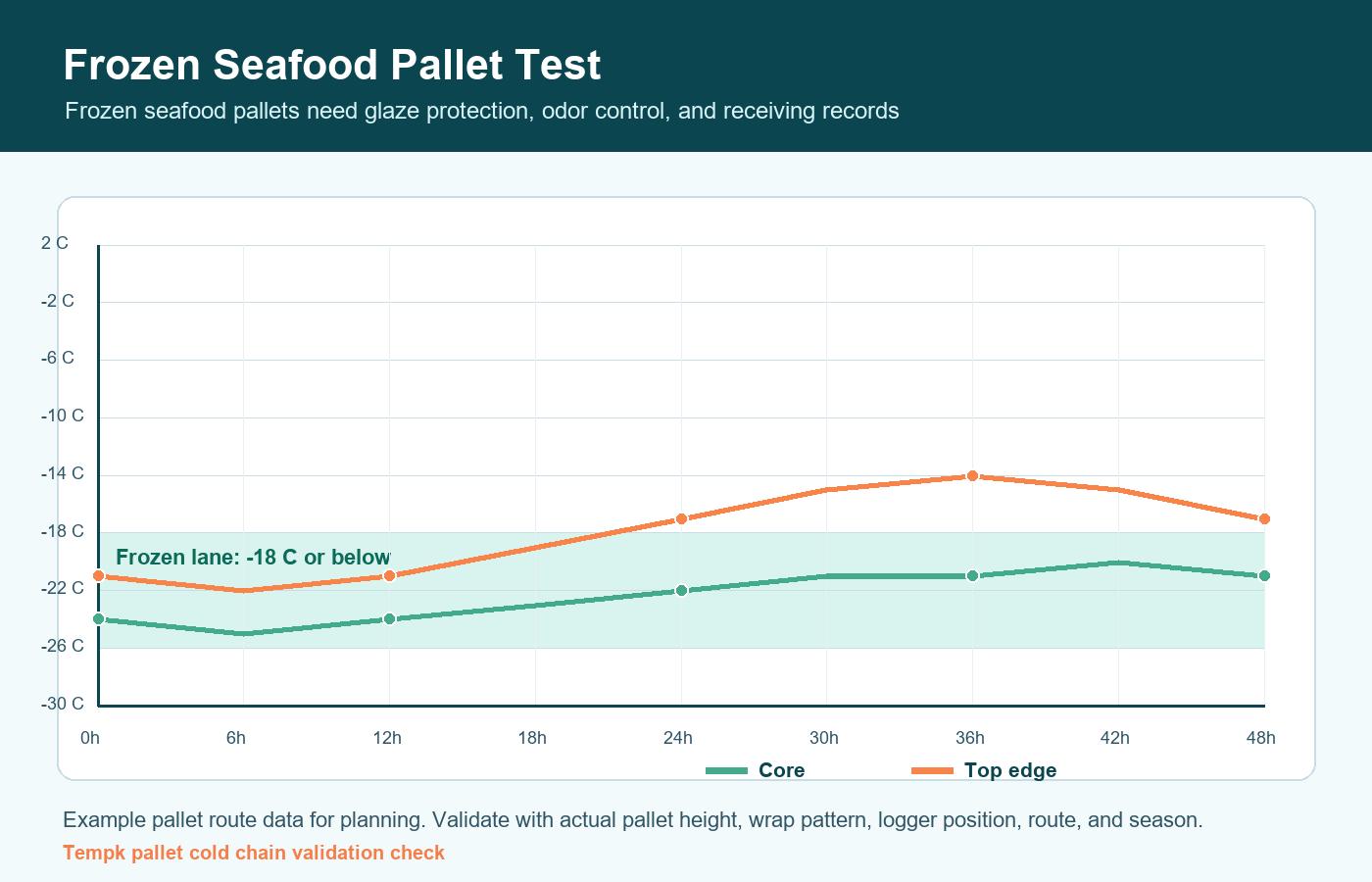
Nutzen Sie die Testkurve als Arbeitsvergleich, Anschließend mit der tatsächlichen Palettenmasse validieren, Abdeckung, Liner, Kühlmittelunterstützung, Anhängerprozess, und Jahreszeit. Für die Palette, Der exponierte Rand und die oberste Schicht sind oft genauso wichtig wie der Kern.
Nutzen Sie diese Seiten, um nahegelegene Palettenrouten zu vergleichen, Trockeneis planning, Wahl der Isolierung, und Routenrisiko vor der Probenahme.
Tiefkühl-Meeresfrüchtepaletten need frozen temperature plus moisture and odor control. Glazed Meeresfrüchte, Kartons mit Liner, und gemischte Ladungen können sich im selben Anhänger unterschiedlich verhalten.
Typische Fehler sind aufgetaute Eckkartons, Glasurverlust, Meeresfrüchte odor in the trailer, nasse Kartons, und zerdrückte Kartons durch ungleichmäßiges Stapeln.
Verwenden Sie eine auslaufsichere Innenverpackung, starke Kartons, Palette Kantenschutzleisten, und eine obere Abdeckung, die vor Dockkondensation schützt, ohne Schmelzwasser einzufangen.
Ergänzung mit Trockeneis oder gefrorenem Gel nur nach Überprüfung der Belüftung, Geruchskontrolle, und Sicherheit des Bedieners. Platzieren Sie das Kühlmittel nicht dort, wo es die Nähte des Kartons zerstören kann.
Glasur prüfen, Geruch, Feuchtigkeit im Karton, und Palettenecktemperaturen. Die Kontrollen der Meeresfrüchte-Palette sollten eine Leckage- und Geruchsnotiz enthalten.
Tiefkühl-Meeresfrüchtepaletten should be validated beyond Palette temperature. Glazed Meeresfrüchte, verpackte Filets, und Schalentiere können zu Feuchtigkeits- und Geruchsproblemen führen, wenn Randkartons während der Rampenstandzeit teilweise auftauen.
Verwenden Sie stabile Kartons, Kantenschutzleisten, und eine obere Abdeckung, die vor Kondensation schützt, ohne Schmelzwasser einzufangen. Supplemental Trockeneis or frozen gel must not block Luftstrom or damage carton seams.
Tempk sollte den Palettenkern abbilden, freiliegende Ecken, Oberschicht, und Hafenpositionen. Beim Empfang sollte der Zustand der Glasur überprüft werden, Geruch, Feuchtigkeit im Karton, Stabilität der Palette, und Produkthärte.
Custom Verpackungsaufbau support
Für feste Kartongrößen, Nutzlastgrenzen, Branding-Anforderungen, Saisonspuren, oder Validierungsziele, Tempk kann diese Lösung in einen maßgeschneiderten Kühlketten-Verpackungsaufbau umwandeln.
Teilen Sie die Abmessungen der Palette, Produktmasse, Kartonmuster, Zieltemperatur, Rampenzeit, Anhängertyp, Umschlaglager steps, Umgebungsbedingungen, und Erhalt von Schecks. Tempk kann beim Vergleich von Covern helfen, Liner, Kühlgelpacks, PCM, Trockeneis support, Positionen der Temperaturschreiber, und Validierungsschritte.
Palettenroutenprüfung anfragen