


Lachsfilets
Gekühlte Textur schützen, hautseitige Darstellung, Tropfkontrolle, und Kartontrockenheit, ohne dass gefrorene Gelpackungen die Fischpackung direkt berühren.
Meeresfrüchtelieferungen scheitern aus unterschiedlichen Gründen: Frische Filets können auslaufen und ihre Konsistenz verlieren, Thunfischsteaks benötigen eine strengere Warmhaltekontrolle, Austern müssen kalt bleiben, ohne zu gefrieren, und gefrorene Meeresfrüchte benötigen einen separaten Tiefkühl-Routenplan. Diese Seite hilft bei der Zuordnung der Meeresfrüchteart zur Isolierung, Kühlmittelplatzierung, Feuchtigkeitskontrolle, und Routenvalidierung.
Frischer Fisch, lebende Schalentiere, und gefrorene Meeresfrüchte benötigen ein anderes Kühlmittelverhalten. Die Verpackung sollte die Temperatur schützen, Feuchtigkeit, Leckage, Geruch, und Produktdruck gleichzeitig. For fully frozen lanes, sehen frozen foods Kühlkettenverpackung solutions.
Gekühlte Textur schützen, hautseitige Darstellung, Tropfkontrolle, und Kartontrockenheit, ohne dass gefrorene Gelpackungen die Fischpackung direkt berühren.
Kontrollieren Sie den warmen Aufenthalt, Oberflächenfarbe, Geruchsübertragung, und Druckstellen für histaminempfindliche Thunfischprogramme, die über Paket- oder Luftrouten transportiert werden.
Austern kalt halten, Feuchte, und vor Frost geschützt, stehendes Schmelzwasser, Brechkraft, und unleserliche Schalentier-Tags.
Diese Planungsbereiche helfen bei der Entscheidung, welches Tempk-Paket zuerst validiert werden soll. Die endgültige Kühlmittelmasse sollte mit der tatsächlichen Nutzlast getestet werden, Kastengröße, Spurtemperatur, und Serviceniveau.
| Meeresfrüchte-Route | Gemeinsames Ziel | Verpackungsstruktur | Kühlmittelstartpunkt | Zuerst ansehen |
|---|---|---|---|---|
| Frische Filets, 8-18 H | Halten Sie sich nah dran 0-2 C für Qualität unter Einhaltung des Lebensmittelsicherheitsprogramms des Versenders. | Leckage-Liner, absorbierender Pad, Produktschale oder Vakuumbeutel, seitliches/peripheres Kühlmittel, EPP oder Isolierkarton. | Um 0.6-1.2 kg konditionierte Gelpackungen oder 0 C PCM für 1-3 kg Nutzlast. | Direkte Gefrierspuren, tropfen, nasse Kartons, Geruchsübertragung. |
| Frischer Fisch, 18-36 H | Nahezu eisgekühlte Route mit weniger warmem Aufenthalt bei Abholung und Lieferung. | Stärkere Isolierung, versiegeltes Innenfutter, Getrenntes oberes und seitliches Kühlmittel, Logger im Produktluftraum. | Um 1.2-2.4 kg Gelpacks oder PCM für 1-3 kg Nutzlast. | Kühlmittelkontakt, Boxkomprimierung, Empfangstemperatur. |
| Lebende Schalentiere, 8-30 H | Kalt und feucht, aber nicht gefroren oder in Schmelzwasser getaucht. | Je nach Bedarf atmungsaktives oder nicht luftdichtes Shipper-Design, feuchter Liner, Muschelschutz, abgetrenntes Kühlmittel über oder neben dem Produkt. | Um 0.5-1.8 kg konditionierte Gelpackungen, angepasst an Schalentiermenge und Saison. | Erfrierungsverletzung, stehendes Wasser, Schalenbruch, Lesbarkeit des Tags. |
| Gefrorene Meeresfrüchte | -18 C oder niedriger, wenn die Route als eingefroren angegeben ist. | Gefrorener Versender, Plan für Trockeneis oder gefrorenes Kühlmittel, Dampfspalt, Etiketten- und Spediteurkontrollen. | Verwenden Sie eine Trockeneisplanung nach Kartongröße, Nutzlast, Streckenzeit, und Trägerlimit. | Trockeneissublimation, vorschriftsmäßige Kennzeichnung, Tauwetter auf der letzten Meile. |
Nutzen Sie diese als Planungsbereiche, dann validieren. Für gefrorene Meeresfrüchtepaletten, sehen Gefrorene Meeresfrüchte-Paletten.
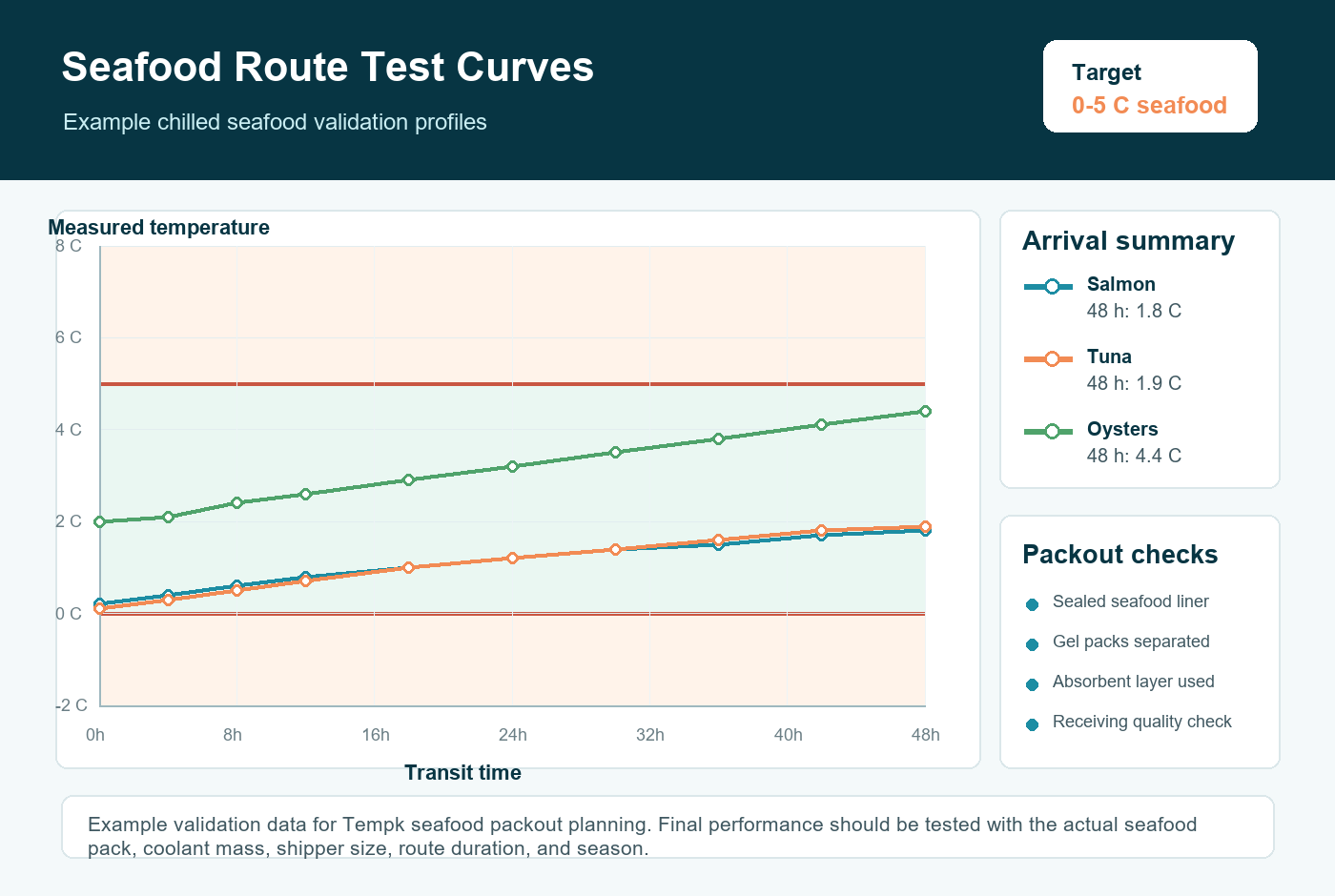
Eine Kontrolle der Meeresfrüchteroute sollte sowohl die Temperaturkontrolle als auch den Produktzustand beim Empfang zeigen: tropfen, Geruch, Schalen- oder Filetdruck, Etikettenzustand, und ob das Kühlmittel vom Produkt getrennt blieb.
Verwenden Sie diese Produkthinweise, wenn die Meeresfrüchtesorte nicht zu den drei Prioritätsseiten gehört, aber dennoch eine andere Feuchtigkeit benötigt, Druck, oder Entscheidungen zur Kühlmittelplatzierung.
Für kleinere Fischprogramme, die noch produktspezifische Handhabungshinweise benötigen, Sehen Sie sich den Packout-Leitfaden an, bevor Sie den Spurtest erstellen.
Für kleinere Fischprogramme, die noch produktspezifische Handhabungshinweise benötigen, Sehen Sie sich den Packout-Leitfaden an, bevor Sie den Spurtest erstellen.
Für kleinere Fischprogramme, die noch produktspezifische Handhabungshinweise benötigen, Sehen Sie sich den Packout-Leitfaden an, bevor Sie den Spurtest erstellen.
Für kleinere Fischprogramme, die noch produktspezifische Handhabungshinweise benötigen, Sehen Sie sich den Packout-Leitfaden an, bevor Sie den Spurtest erstellen.
Für kleinere Fischprogramme, die noch produktspezifische Handhabungshinweise benötigen, Sehen Sie sich den Packout-Leitfaden an, bevor Sie den Spurtest erstellen.
Führen Sie eine erste Berechnung durch, Wählen Sie die Kühlmittelfamilie, und validieren Sie dann die Route mit der tatsächlichen Meeresfrüchte-Verpackung. For parcel and express lanes, sehen parcel and express delivery cold chain solutions.
Verwandte Programme: Abo-Boxen für Meeresfrüchte Und alle Kühlkettenlösungen.
Teilen Sie das Meeresfrüchte-Formular, Nutzlastgewicht, Kastengröße, Serviceniveau, Ursprungstemperatur, Bahnsaison, und Empfangsfenster. Tempk kann beim Vergleich von Isolierungen helfen, Kühlmittelmasse, Platzierung, und Validierungsschritte.
Bei Meeresfrüchtelieferungen sollte nicht für jedes Produkt ein festes Rezept verwendet werden. Beginnen Sie mit 0-2 C-Kühlregler für frische Meeresfrüchte oder -18 C-Steuerung für eingefrorene Formate, Dann trennen Sie die Produkte nach Wärmebelastung, Verpackungsstärke, und wie sie angenommen werden. Für gemischte Programme, Tempk vergleicht normalerweise eine kurze lokale Route, eine Paketroute über Nacht, und die heißeste erwartete Jahreszeit, bevor Sie den Versender bestätigen.
Verwenden Sie eine auslaufsichere Auskleidung, absorbierende Schicht, Isolierter Versender, und Umkarton mit klarer Orientierungskontrolle. Der Kühlmittelplan sollte mit Gel-Eisbeuteln für gekühlte Meeresfrüchte beginnen, Trockeneis oder gefrorenes PCM nur, wenn das Produkt gefroren verkauft wird. Wenn die Nutzlast empfindliche Einzelhandelskartons enthält, weiche Textur, Live-Material, oder medizinische Dokumentation, Schützen Sie zuerst die Nutzlast und erhöhen Sie dann die Kühlkapazität. Wenn sich der Versand beim Verpacken verzögert, weiterleiten, Zoll, oder Docktransfer, Anstatt nur das Kühlmittelgewicht zu erhöhen, sollte das Streckenprofil erneut überprüft werden.
Die Validierung sollte die Überprüfung des Tropfverlusts umfassen, Geruchskontrolle, Oberflächentrockenheit, und Logger zeichnet am wärmsten Produktpunkt auf. Ein nützlicher Test erfasst den wärmsten Nutzlastpunkt, der kälteste Punkt in der Nähe des Kühlmittels, und der Empfangszustand nach der Handhabung. Dadurch erhält das Einsatzteam eine praktische Packout-Anleitung, nicht nur ein Temperaturdiagramm.
Unterstützung für benutzerdefinierte Pakete
Für feste Kartongrößen, Nutzlastgrenzen, Branding-Anforderungen, Saisonspuren, oder Validierungsziele, Tempk kann diese Lösung in eine individuelle Kühlkettenverpackung umwandeln.