


Laden Sie keine warmen Lebensmittel ein
Zusätzliche Gelpackungen können warme Früchte nicht vollständig korrigieren. Vorgekühltes Produkt senkt die Wärmebelastung und hält die Kältespur stabil.
Früchte & Kühlkette für Gemüse
Frischwarenlieferungen brauchen mehr als nur kalte Luft. Eine praktische Verpackung sorgt für die Kontrolle der Vorkühlung, Luftfeuchtigkeit, Luftstrom, Kompression, Kondensation, und Transportzeit, ohne dass das Produkt einfriert oder Einzelhandelsverpackungen beschädigt werden.
Kategorieentscheidungen
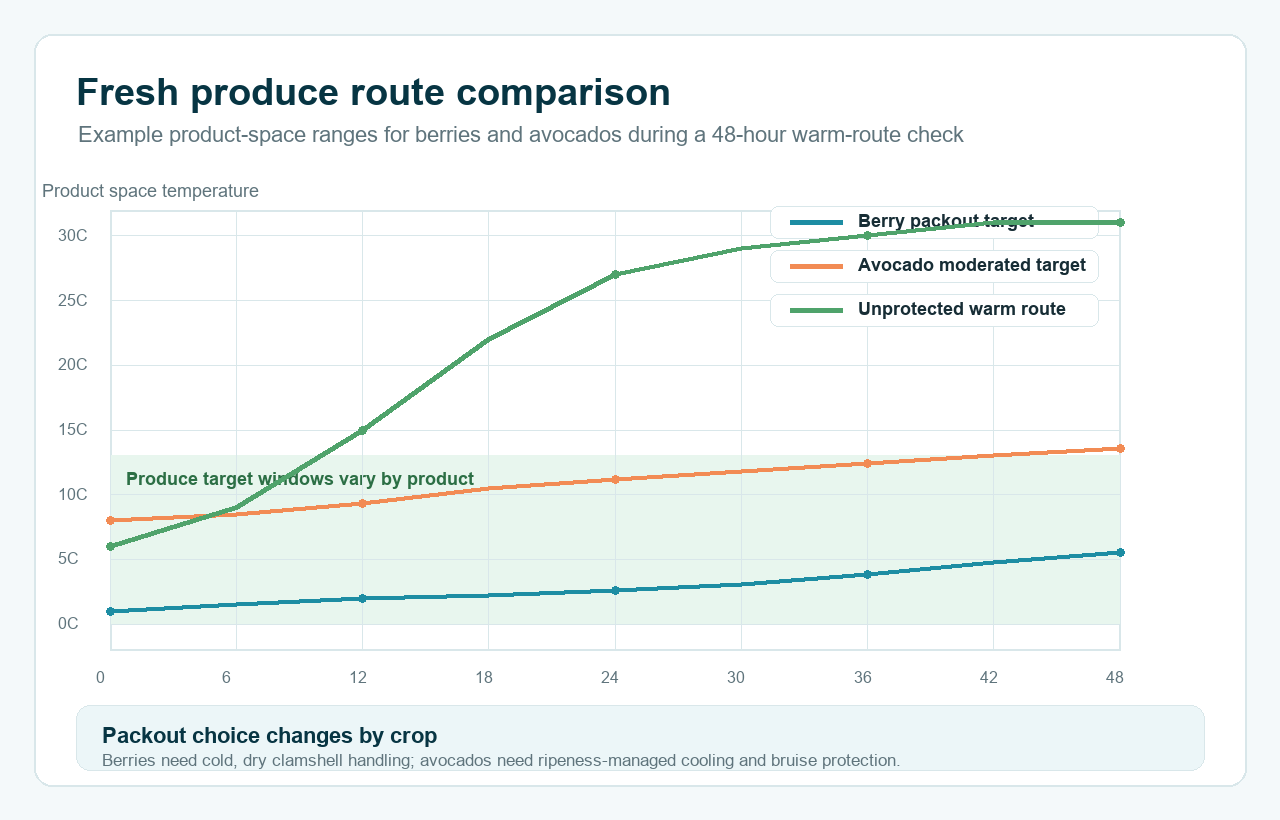
Obst- und Gemüseverpackungen scheitern aus unterschiedlichen Gründen. Beeren bekommen blaue Flecken und lecken, Blaubeeren verlieren an Blüte und Festigkeit, Avocados brauchen eine Reifekontrolle, und Pilze oder Spargel können durch Feuchtigkeit und Luftströmungsfehler beschädigt werden. Das beste Paket basiert auf der Temperaturempfindlichkeit des Produkts, Atemfrequenz, Packformat, und Erhalt von Schecks.
Zusätzliche Gelpackungen können warme Früchte nicht vollständig korrigieren. Vorgekühltes Produkt senkt die Wärmebelastung und hält die Kältespur stabil.
Verwenden Sie saugfähige Pads, Liner-Taschen, und Luftstromspalten, um Austrocknung und Kondensationsflecken zu verhindern.
Gefrorene Packungen können Muschelschalen platt machen, Frucht markieren, oder Lüftungsöffnungen blockieren, wenn die Nutzlast nicht unterstützt wird.
Bei der Ankunftskontrolle sollte die Festigkeit berücksichtigt werden, Trockenheit, Blutergüsse, Leck, blühen, Stammzustand, und Kartonfestigkeit.
Hochwertige Produktrouten
Auf diesen Seiten finden Sie Ratschläge zur Verpackung auf Produktebene, Kühlmittelstartbereiche, Anforderungen an die Vorkühlung, und Validierungsprüfungen für die drei Produktionsrouten, die bereits in diese Lösungsgruppe integriert sind.
Vorgekühlte Klappschale-Sendungen konzentrierten sich auf Blutergüsse, Lecks, Kondensation, und Kalthalten ohne Frostkontakt.
Erdbeerlösung ansehen Kleine BeereBelüftete Klappverpackung, die die Blüte schützt, Festigkeit, Luftstrom, und trockene Einzelhandelspräsentation.
Blaubeerlösung ansehen ReifeempfindlichTemperaturgesteuerte Routen mit Fokus auf Reife, Blutergüsse, Kälte- und Verletzungsgefahr, und Kartonunterstützung.
Avocado-Lösung ansehenRoutenplanung
Derselbe Verlader kann eine andere Leistung erbringen, wenn es sich bei der Nutzlast um eine belüftete Beerenmuschel handelt, ein reifender Avocadokarton, oder ein Pilztablett mit hoher Feuchtigkeit. Nutzen Sie diese Routenauswahl als Ausgangspunkt vor Produkttests.
| Versandzustand | Typische Paketrichtung | Kühlmittelrichtung | Was zu überprüfen |
|---|---|---|---|
| Gekühlte Lieferung noch am selben Tag Vorgekühltes Produkt, kurze Stadtroute, begrenzte Dockzeit | Isolierte Kartoneinlage oder kompakte EPS-Versandtasche mit Produkttrennern und absorbierender Einlage | Konditionierte Gelpackungen an den Seitenwänden oder in der oberen Ecke, von Muschellüftungsöffnungen ferngehalten | Produktmittentemperatur, Trockenheit der Verpackung, Beerenblutergüsse, Entlüftungsspielraum, und verbleibender Kühlmittelzustand |
| Paketroute über Nacht Depot-Exposition, Van-Wärme, 18-36h Lieferfenster | Isolierbox aus EPP oder EPS, Liner-Tasche, Stärkerer Umkarton, und feste Kühlmitteltaschen | Gelpackungen oder gekühltes PCM, ausgewählt nach Zielbereich, Nutzlastmasse, Kastengröße, und Umgebungsbedingungen | Wärmster Punkt in der Nutzlast, Gefahr kalter Stellen in der Nähe des Kühlmittels, Kondensation, und Komprimierung von Einzelhandelsverpackungen |
| Heißes Wetter oder verzögerungsanfällige Route Hohe Umgebungstemperatur, Wochenende halten Risiko, längere Übergabe | Dickere Isolierung, höhere Kühlmittelreserve, Logger, und reduzierter freier Platz im Inneren des Transportbehälters | Kühlmittelanordnung am Umfang mit Trennwänden; Vermeiden Sie es, hartgefrorenes Gewicht direkt auf das Produkt zu geben | Spitzentemperatur, Einfrierrisiko, Feuchtigkeitsrückgewinnung, Kartonstärke, und produktspezifische Liefermängel |
Unterstützende Produktführer
Diese unterstützenden Leitfäden helfen Käufern dabei, die Risiken von Produkten in der Nähe zu vergleichen, ohne jedes Produkt auf einer separaten Lösungsseite darzustellen.
Nützliche interne Links
Produkttyp teilen, Zellstoff- oder Produkttemperatur beim Verpacken, Packformat, Nutzlastgewicht, Streckendauer, Sommerambiente-Bereich, und Erhalt von Schecks. Tempk kann bei der Auswahl des Versenders behilflich sein, Kühlmittelanordnung, Pufferschichten, und Validierungsplan.
Fordern Sie eine Überprüfung der Produktverpackung anUnterstützung für benutzerdefinierte Pakete
Für feste Kartongrößen, Nutzlastgrenzen, Branding-Anforderungen, Saisonspuren, oder Validierungsziele, Tempk kann diese Lösung in eine individuelle Kühlkettenverpackung umwandeln.