


TemperaturabsichtBefolgen Sie das Produktetikett. Die FDA weist darauf hin, dass die Lagerung von Insulin in Kühlschränken weit verbreitet ist 36-46 F, ca. 2-8°C, und warnt vor dem Einfrieren.
Kühlkettenlösung für Insulinpens
Insulinpen-Sendungen sind kleine Nutzlasten; der Verpackungsaufbau muss daher sowohl Wärmeexposition als auch Überkühlung durch direkten Gelpack-Kontakt vermeiden. Ziel ist eine gekühlte Route nach Produktetikett mit geschützten Kartons, stabiler Pen-Position und klarer Temperaturaufzeichnung beim Empfang.
Was die Verpackung kontrollieren muss
KühlmittelregelUse konditionierte Gelpacks or 5 C PCM mit Abstandshalter. Halten Sie Stifte und Kartons von direkt gefrorenen Oberflächen fern.
Schwerpunkt VerpackungKleine Nutzlasten unterkühlen leicht, also Karton-Unterstützung, Pufferschichts, Trockenheit kennzeichnen, und die Platzierung des Datenloggers sind von entscheidender Bedeutung.
Verpackungsaufbau nach Routenbedingung wählen
| Routenbedingung | Verpackungsaufbau | Vorläufiger Kühlmittelbereich | Platzierungs- und Empfangsprüfung |
|---|---|---|---|
| Local Apotheke Übergabe, 4-8 H | Kleiner isolierter Karton, Pen-Karton in der Mitte, side Kühlmittel with paperboard Abstandshalter. | 0.3-0.7 kg konditionierte Gelpacks oder PCM für a 0.5-2 L Nutzlast. | Check no direkter Kühlmittelkontakt and move into storage quickly. |
| DTC oder Kurierpaket, 8-24 H | EPP oder isolierter Karton, center Nutzlastraum, conditioned side/top Kühlmittel, trockene Dokumentenhülle. | 0.7-1.6 kg konditionierte Gelpacks oder PCM für a 0.5-3 L Nutzlast. | Check Datenlogger min/max, Kartontrockenheit, Etikettenklarheit, und Stiftbewegung. |
| Warme Route oder mögliche Verzögerung, 24-36 H | Dickere Isolierung, balanced Kühlmittel, größere Pufferzone, Datenlogger near product cavity. | 1.6-2.8 kg konditionierte Gelpacks or PCM, vor der Skalierung validiert. | Wenn sich die Mindesttemperatur dem Gefrierpunkt nähert, Fügen Sie Puffer hinzu oder wählen Sie wärmeres PCM, bevor Sie weiteres Kühlmittel hinzufügen. |
Nutzen Sie diese Bereiche als Ausgangspunkt für die Verpackungsüberprüfung. Bestätigen Sie die endgültige Kühlmittelmasse mit dem genehmigten Etikett, Nutzlastanzahl, Versendergröße, Streckendauer, Umgebungsprofil, Datenlogger placement, und internes Qualitätsverfahren.
Wie Tempk die Sendung aufbauen würde
Aus der gekennzeichneten Lagerbedingung laden
Beginnen Sie mit dem Produktetikett und konditionieren Sie den Versandbehälter und das Kühlmittel vor, damit die Verpackung die Reichweite beibehält, anstatt eine warme Nutzlast zu korrigieren.
Eine Mittelkammer aufbauen
Halten Sie die Stiftkartons durch die Verwendung von Pappe von den Wänden des Versandbehälters und von Gel-Kühlelementen fern, Schaum, oder geformte Einsätze.
Kältestellen kontrollieren
Platzieren Sie den Datenlogger in der Nähe der Nutzlast, not against Kühlmittel, und überprüfen Sie die Mindesttemperatur ebenso sorgfältig wie die Höchsttemperatur.
Apothekenunterlagen und Etiketten schützen
Verwenden Sie eine trockene Hülle oder einen trockenen äußeren Dokumentbereich, damit die Etiketten nicht durch Kondensation beschädigt werden, Losinformationen, oder patientenbezogene Dokumente.
Typische Fehlerpunkte vermeiden
For Arzneimittel parcels, Ein Kältepaket reicht nicht aus. Der Empfänger benötigt eine dokumentierte Sendung, die innerhalb des erforderlichen Bereichs blieb und die Produktverpackung schützte.
- Kälteexposition durch direkten Kontakt mit gefrorenem Gel.
- Warm delivery after Verweilzeit vor der Tür or delayed Übergabe.
- Nassetiketten oder Kartons von Kondensation.
- Pen Kartons bewegen sich in einem übergroßen Versandbehälter.
Validierungskurve und Empfangsnachweise
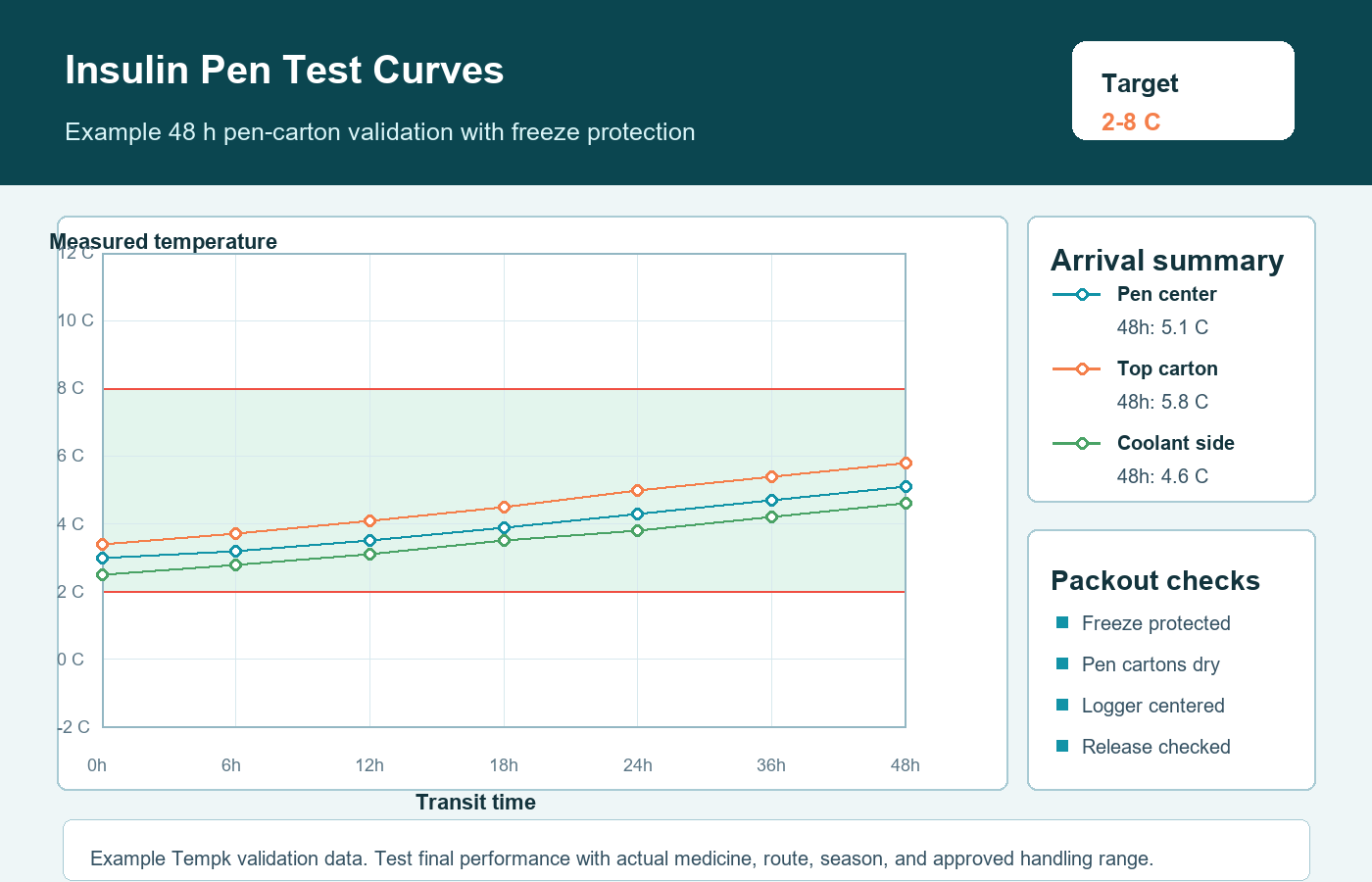
Überprüfen Sie die Kurve mit der tatsächlichen Nutzlast, Kühlmittel mass, Versendergröße, Spurdauer, und Jahreszeit. Fügen Sie Empfangsnotizen für den Kartonzustand hinzu, Etikettenklarheit, Produktbewegung, and any direkter Kühlmittelkontakt.
Verwandte Seiten für die Verpackungsplanung
Praktische Routenhinweise
Insulinpens vor Wärme und Gefrieren schützen
Insulinpens werden in der Regel als patientenfertige Kartons versendet. Der Verpackungsaufbau sollte den gekennzeichneten Kühlbereich halten und verhindern, dass gefrorene Gelpacks Kältestellen am Pen-Karton erzeugen.
Wo dieses Produkt normalerweise versagt
Die Hauptrisiken sind Frostexposition, verspätete Lieferung an Privathaushalte, Karton-Crush, und Patienten, die ein nasses oder verwirrendes Paket erhalten.
Verpackungsaufbau to test first
Verwenden Sie eine kleine Nutzlasthülle oder einen Kartonhohlraum mit einem durchsichtigen Puffer auf jeder dem Kühlmittel zugewandten Seite. Fügen Sie Hohlraumfüllung hinzu, damit Pen-Kartons nicht gegen harte Packungen klappern können.
Kühlmittelauswahl
Verwenden 2 Zu 8 C PCM oder sorgfältig konditionierte Gelpacks für Übernachtungs- und Zweitagestouren. Vermeiden Sie Trockeneis und vermeiden Sie ungekühlte Tiefkühlpackungen neben Insulinkartons.
Überprüfung der Routenvalidierung
Testen Sie die heiße und die kalte Jahreszeit getrennt. Place the Datenlogger beside the Pen-Karton and check Mindesttemperatur, Kartontrockenheit, und geduldige Öffnungserfahrung.
Detail zum Verpackungsaufbau
Insulin pen parcels need patientensichere Anweisungen
Anwendungsfall
Insulinpens werden oft nach Hause verschickt, Daher muss die Verpackung das Produkt schützen und dem Patienten beim Öffnen Sicherheit geben. Die Nutzlast sollte sauber sein, trocken, und durch einen sichtbaren Puffer vom Kühlmittel getrennt.
Wahl der Verpackung
Für Nacht- oder Zweitagesspuren, verwenden 2 Zu 8 C PCM oder konditionierte Gelpacks im validierten Layout. Vermeiden Sie Trockeneis und vermeiden Sie den direkten Kontakt mit der gefrorenen Verpackung, da das Einfrieren schädlicher sein kann als eine kurze, milde Wärmeeinwirkung.
Was Tempk validieren sollte
Tempk sollte die tatsächliche Pen-Karton-Anzahl testen, kleinste Nutzlast, größte Nutzlast, und Wohnen. Review Mindesttemperatur, Maximale Temperatur, Kartontrockenheit, und ob die Anweisungen leicht zu befolgen sind.
Custom Verpackungsaufbau support
Diese Spur muss rund um Ihr Produkt und Ihre Route aufgebaut sein?
Für feste Kartongrößen, Nutzlastgrenzen, Branding-Anforderungen, Saisonspuren, oder Validierungsziele, Tempk kann diese Lösung in einen maßgeschneiderten Kühlketten-Verpackungsaufbau umwandeln.
Diese Arzneimittelroute vor Versand prüfen lassen?
Senden Sie die Produktetikettentemperatur, Nutzlastgröße, Kartonabmessungen, Serviceniveau, Umgebungsbedingungen, delivery Übergabe, and Datenlogger requirement. Tempk kann beim Vergleich von Isolierungen helfen, konditionierte Gelpacks, PCM, Pufferschichts, Einsätze, und Validierungsschritte.
Verpackungsprüfung anfragen