


Insulinstift
Insulin-Pen-Sendungen erfordern eine gekühlte Handhabung, bei der zuerst das Produktetikett angegeben wird, kein Gefrieren, geschützte Kartons, and simple Empfangsnachweise for Apotheke or Hauszustellung.
Temperatursensitive Arzneimittel sollten vom Produktetikett aus geplant werden. Für viele gekühlte Arzneimittel, Die Verpackung muss einen Temperaturbereich von 2–8 °C schützen, Einfrieren verhindern, Unterstützen Sie kleinere Kartons oder Stifte, Etiketten schützen, und erleichtern die Überprüfung der Empfangstemperaturaufzeichnung.
Arzneimittelpakete sind oft klein, so können ein paar gefrorene Gel-Kühlelemente die Nutzlast unterkühlen, wenn sie den Karton berühren. Tempk entwirft den Transporter rund um konditioniertes Kühlmittel, PCM-Auswahl, Pufferschichts, Stift- oder Fläschchenhalterung, Streckendauer, and the Empfangsnachweise the Apotheke, Klinik, oder Patientenservice-Bedürfnisse.
Insulin-Pen-Sendungen erfordern eine gekühlte Handhabung, bei der zuerst das Produktetikett angegeben wird, kein Gefrieren, geschützte Kartons, and simple Empfangsnachweise for Apotheke or Hauszustellung.
GLP-1-Pens sind klein, Hochwertige Pakete mit direktem Gel-Pack-Kontakt, Zustellverweilzeit, und das Zerquetschen von Karton kann ein größeres Risiko darstellen als die Bruttotemperatur des Versenders.
Der Versand von Fruchtbarkeitsspritzen erfordert eine sorgfältige Unterstützung durch Fläschchen oder Spritzen, 2-8°C-Steuerung, keine Frostexposition, and clear Übergabe timing for Klinik or Patientenlieferung.
| Produktroute | Temperaturabsicht | Verpackungsaufbau | Vorläufiger Kühlmittelbereich | Überprüfen Sie beim Empfang |
|---|---|---|---|---|
| Insulinpen-Apotheken- oder DTC-Paket, 8-24 H | Beachten Sie die Anforderungen an Produktetiketten; commonly refrigerated 2-8°C and Gefrieren vermeiden. | Kleines EPP oder isolierter Karton, Pen-Kartons in a Mittelkammer, konditionierte Gelpackungen oder 5 C PCM getrennt durch Abstandshalterplatine. | Um 0.6-1.6 kg konditionierte Gelpacks oder PCM für a 0.5-3 L Arzneimittel payload. | Logger-Minimum und -Maximum, Kartontrockenheit, Stiftbewegung, Etikettenklarheit, and Zustellverweilzeit. |
| GLP-1-Pen-Hauszustellung, 12-36 H | Produktetikett zuerst bei 2–8 °C mit starkem Frostschutz für kleine Nutzlasten. | Starres Innentablett, Etiketten-/Dokumentenhülle, center Nutzlastraum, conditioned Kühlmittel on sides/top with Pufferschicht. | Um 0.8-2.4 kg konditionierte Gelpacks oder PCM für a 0.5-3 L Nutzlast, angepasst an Strecke und Jahreszeit. | Minimale Temperatur, Karton-Crush, direkter Kühlmittelkontakt, Verweilzeit vor der Tür, und verbleibender Kühlmittelzustand. |
| Fertilitätsinjektion an Klinik oder Patient, 8-24 H | Normalerweise sind etwa 2–8 °C geplant, wenn das Produktetikett eine Kühlung erfordert; vor Frost und Stößen schützen. | Vial or Spritze support, Pfosten/Trennwand einsetzen, wo nötig, Isolierter Karton- oder EPP-Versender, konditioniertes Kühlmittel vom Produkt getrennt. | Um 0.5-1.8 kg konditionierte Gelpacks or PCM for small Vial or Spritze payloads. | Übergabezeit, Datenlogger record, Vial/Spritze support, Kartonzustand, und jedes Minusrisiko. |
Dies sind Planungsbereiche für die Verpackungsdiskussion, keine Freigabekriterien für Arzneimittel. Der finale Verpackungsaufbau muss dem zugelassenen Etikett, der Versendergröße, der Nutzlastanzahl, der Streckendauer, dem Umgebungsprofil, der Überwachungsanforderung und dem internen Qualitätsverfahren folgen.
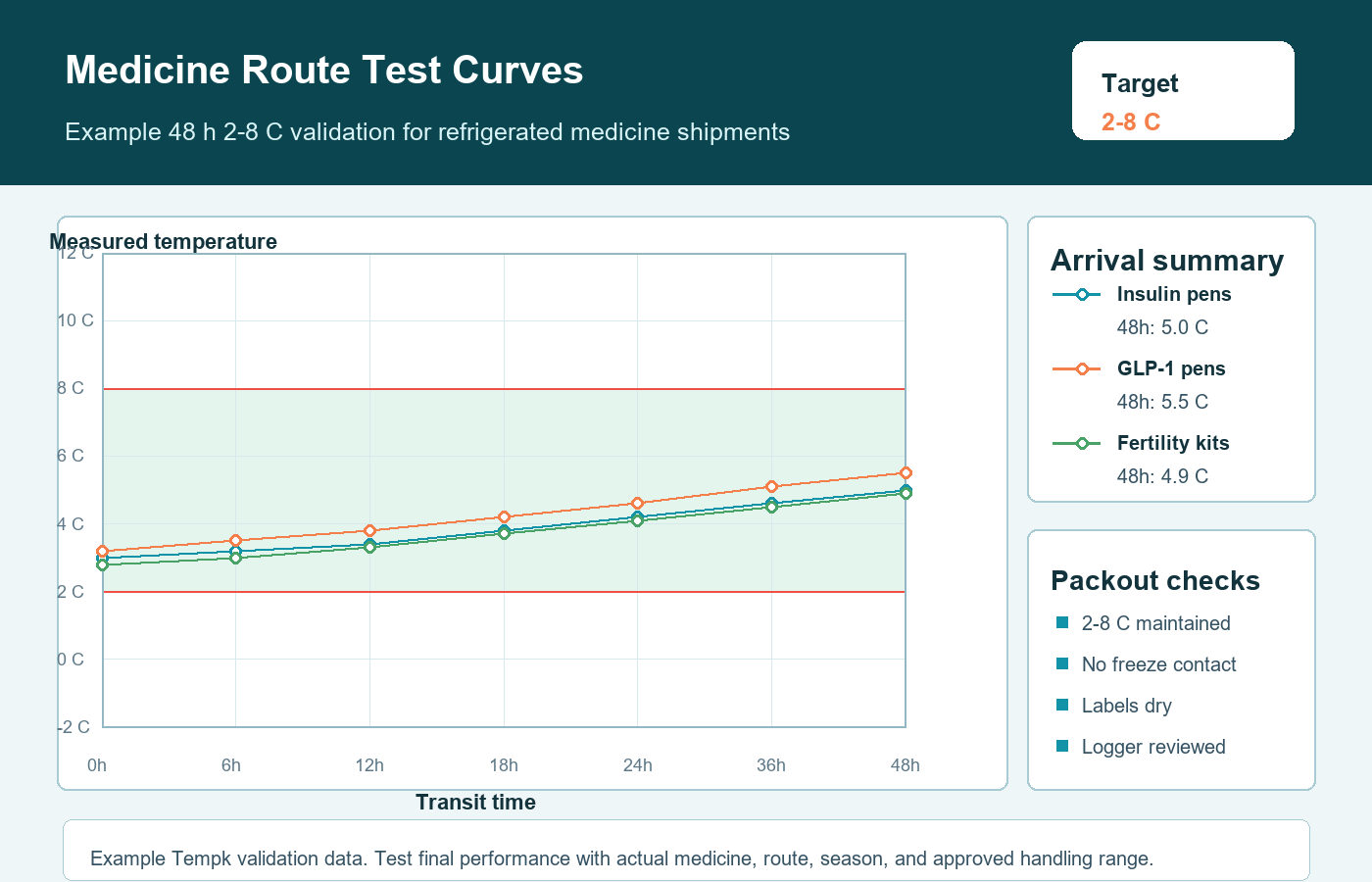
Verwenden Sie die Validierungskurve beim Empfangen von Notizen. Bei Arzneimittelsendungen können Mindesttemperatur und Risiko durch direkten Kühlmittelkontakt genauso wichtig sein wie die endgültige Ankunftstemperatur.
Diese Artikel unterstützen verwandte Arzneimittelspuren und halten gleichzeitig die Lösungsstruktur überschaubar.
Nutzen Sie diesen Leitfaden als fokussierte Referenz für den Arzneimittel-Verpackungsaufbau, ohne eine weitere eigene Lösungsseite hinzuzufügen.
Nutzen Sie diesen Leitfaden als fokussierte Referenz für den Arzneimittel-Verpackungsaufbau, ohne eine weitere eigene Lösungsseite hinzuzufügen.
Nutzen Sie diesen Leitfaden als fokussierte Referenz für den Arzneimittel-Verpackungsaufbau, ohne eine weitere eigene Lösungsseite hinzuzufügen.
Nutzen Sie diesen Leitfaden als fokussierte Referenz für den Arzneimittel-Verpackungsaufbau, ohne eine weitere eigene Lösungsseite hinzuzufügen.
Nutzen Sie diese Seiten, um die Auswahl an Kühlmitteln zu vergleichen, Routenrisiko, und Isolierung vor dem Validierungslauf.
Arzneimittelsendungen sollten nicht für jedes Produkt dasselbe feste Boxrezept verwenden. Beginnen Sie mit einer 2-8°C-Kontrolle für gekühlte Arzneimittel, mit kontrollierten Raumtemperaturalternativen nur, wenn das Etikett dies zulässt, Dann trennen Sie die Produkte nach Wärmebelastung, Verpackungsstärke, und wie sie angenommen werden. Für gemischte Programme, Tempk vergleicht normalerweise eine kurze lokale Route, eine Paketroute über Nacht, und die heißeste erwartete Jahreszeit, bevor Sie den Versender bestätigen.
Beauftragen Sie einen qualifizierten Paketversender, Abstandshalter system, manipulationssicherer Verschluss, and Datenlogger-supported Übergabe. Der Kühlmittelplan sollte mit pharmazeutischen Gel-Kühlelementen oder PCM beginnen, die sowohl warme Abweichungen als auch Frostexposition vermeiden. Bei der Nutzlast handelt es sich um empfindliche Einzelhandelskartons, weiche Textur, Live-Material, oder medizinische Dokumentation, Schützen Sie zuerst die Nutzlast und erhöhen Sie dann die Kühlkapazität. Wenn sich die Sendung beim Packen, bei der Übergabe, beim Zoll oder beim Docktransfer verzögert, sollte das Routenprofil erneut geprüft werden, statt nur das Kühlmittelgewicht zu erhöhen.
Die Validierung sollte die Überprüfung der Mindest- und Maximaltemperatur umfassen, Patientenlieferung time, und Kartonzustand bei Erhalt. Ein nützlicher Test erfasst den wärmsten Nutzlastpunkt, der kälteste Punkt in der Nähe von Kühlmittel, und der Empfangszustand nach der Handhabung. So erhält das Betriebsteam eine praktische Anweisung für den Verpackungsaufbau, nicht nur ein Temperaturdiagramm.
Custom Verpackungsaufbau support
Für feste Kartongrößen, Nutzlastgrenzen, Branding-Anforderungen, Saisonspuren, oder Validierungsziele, Tempk kann diese Lösung in einen maßgeschneiderten Kühlketten-Verpackungsaufbau umwandeln.
Teilen Sie die Temperatur auf dem Produktetikett mit, Nutzlastanzahl, Kartonabmessungen, Streckendauer, Umgebungsbedingungen, delivery Übergabe, and Empfangskontrollen. Tempk kann beim Vergleich von Isolierungen helfen, konditionierte Gelpacks, PCM, Pufferschichts, Einsätze, and Datenlogger placement.
Verpackungsprüfung anfragen