


TemperaturabsichtPlanen Sie herum 0-4 C oder die Produktkennzeichnungspflicht, mit vorgekühlten Mahlzeiten, die schnell in den Versender geladen werden.
Kühlkettenlösung für gekühlte Fertiggerichte
Bei gekühlten Fertiggerichten werden oft Tabletts kombiniert, versiegelte Folien, Soßenfächer, Ärmel, Etiketten, und manchmal gemischte Protein- oder Gemüsekomponenten. Die Verpackung muss zuverlässig sein 0-4 C-Steuerung ohne Biegen der Tabletts, wodurch nasse Ärmel entstehen, oder gefrorene Gelpackungen gegen den Foliendeckel drücken.
Was das Paket steuern muss
KühlmittelregelVerwenden Sie konditionierte Gelpackungen oder 0 C PCM um den Tablettstapel herum, durch einen Abstandshalter getrennt, so dass die obere Schale nicht durch gefrorene Packungen gedrückt wird.
Schwerpunkt VerpackungTablettunterstützung, Soßenkontrolle, Trockenheit kennzeichnen, und gleichmäßige Stapelung sind ebenso wichtig wie die Temperaturkurve.
Wählen Sie die Packout-by-Routen-Bedingung
| Streckenzustand | Verpackungsaufbau | Vorläufiger Kühlmittelbereich | Platzierungs- und Empfangsscheck |
|---|---|---|---|
| Lieferung vor Ort, 4-8 H | Isolierter Karton oder kleine EPP-Box, bequemer Tabletteinsatz, Liner, seitliche Gelpackungen. | 0.4-0.9 kg Gelpacks oder PCM für a 1-3 kg Nutzlast. | Halten Sie die Tabletts flach; Platzieren Sie das Kühlmittel an den Seiten statt direkt auf den Foliendeckeln. |
| Am selben Tag oder über Nacht, 8-24 H | EPP oder Isolierkarton, Tablettteiler, Leckage-Liner, oberes und seitliches Kühlmittel mit Distanzstück. | 0.9-2.0 kg Gelpacks oder PCM für a 2-5 kg Nutzlast. | Überprüfen Sie die Kerntemperatur der Mahlzeit, Saucenbecher-Siegel, Ärmeltrockenheit, und Tablettbewegung. |
| Warme Route oder mögliche Verzögerung, 24-36 H | Dickere Isolierung, ausgewogene seitliche/obere Kühlmittelzufuhr, stärkere Tablettunterstützung, absorbierende Schicht. | 2.0-3.4 kg Gelpacks oder PCM für a 2-5 kg Nutzlast, Route vor dem Start getestet. | Wenn die Ärmel nass werden, Verbessern Sie die Auskleidung und den Abstand, bevor Sie einfach mehr Kühlmittel hinzufügen. |
Nutzen Sie diese Bereiche als Ausgangspunkt für die Verpackungsüberprüfung. Bestätigen Sie die endgültige Kühlmittelmasse anhand des Produktetiketts, Zustand vor dem Abkühlen, Versendergröße, Streckendauer, Umgebungsprofil, und ein Temperaturlogger-Test.
Wie Tempk die Lieferung bauen würde
Kühlen Sie die Mahlzeiten und den Versandbereich vor
Laden Sie gekühlte Mahlzeiten schnell ein, damit das Kühlmittel die Temperatur beibehält, Versuchen Sie nicht, einen warmen Tablettstapel herunterzuziehen.
Stützen Sie den Tablettstapel
Verwenden Sie einen eng anliegenden Innenkarton, Trennwand aus Pappe, oder geformter Einsatz, damit sich die Tabletts beim Kuriertransport nicht verbiegen oder reiben.
Kühlmittel von Foliendeckeln trennen
Gelpackungen sollten den Nutzlastraum kühlen, ohne direkt auf die obere Schale zu drücken oder Soßenbereiche einzufrieren.
Qualität prüfen, nicht nur die Temperatur
Beim Empfang, Temperatur aufzeichnen, Tablett reißt, Soßenleckage, Ärmeltrockenheit, Etikettenzustand, und verbleibendes Kühlmittel.
Häufige Fehlerquellen, die es zu vermeiden gilt
Für Fertiggerichte, Eine kalte Ankunft ist nur ein Teil der Entscheidung. Außerdem muss die Sendung sauber aussehen, bleib trocken, Textur schützen, und bestehen Sie die Qualitätsprüfung des Empfängers.
- Versagen der Tablettdichtung oder rissige Ecken durch Druck.
- Saucenwanderung nach seitlicher Handhabung oder Vibration.
- Nasse Ärmel und unleserliche Etiketten durch Kondenswasser.
- Kalte Stellen, an denen gefrorene Gelpackungen die obere Ablage berühren.
Validierungskurve und Erhalt von Beweisen
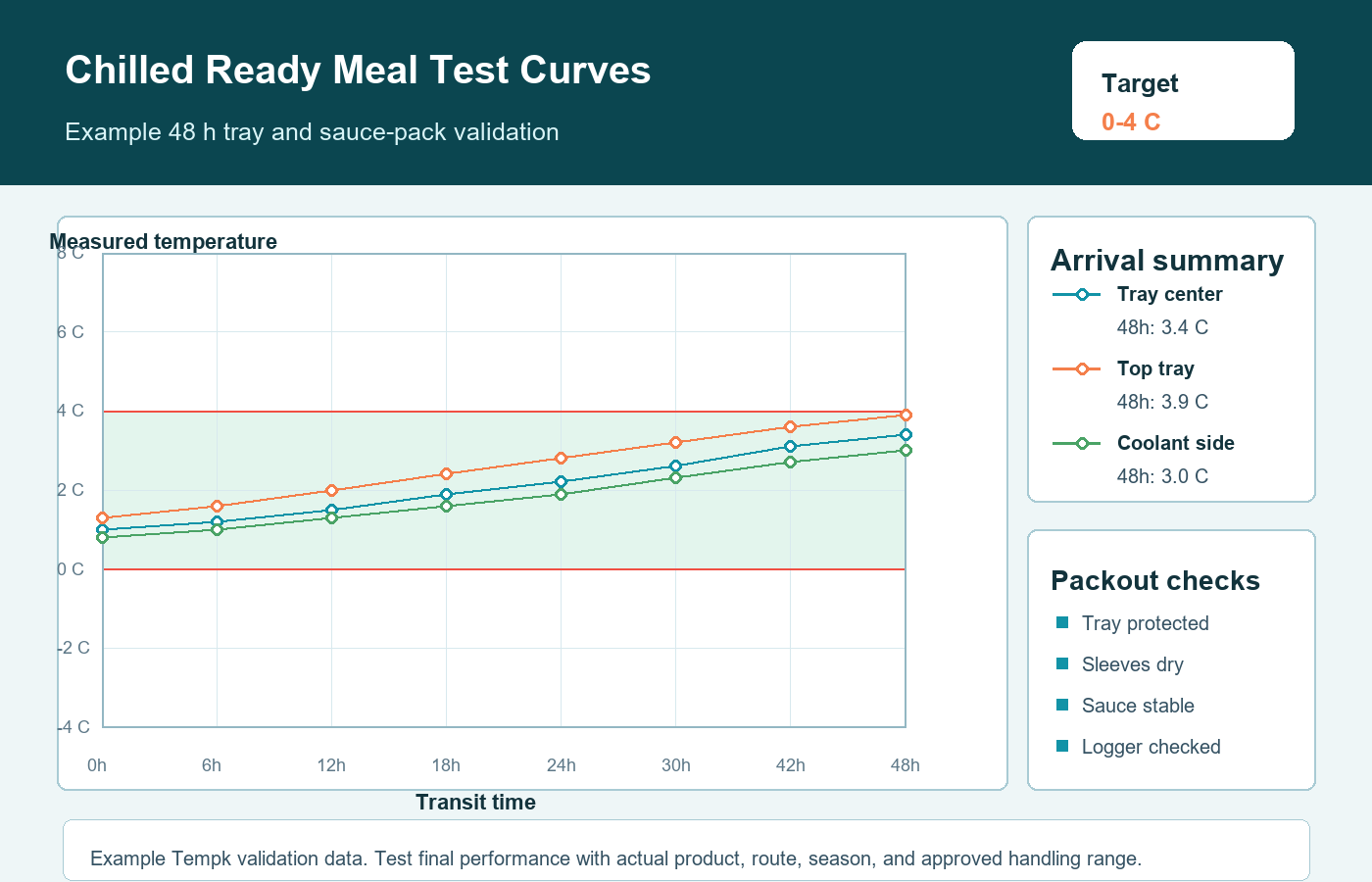
Überprüfen Sie die Kurve mit dem tatsächlichen Produkt, Kühlmittelmasse, Versendergröße, Spurdauer, und Jahreszeit. Fügen Sie Ankunftsfotos und Empfangsnotizen hinzu, damit die Verpackung anhand der Temperatur und des Produktzustands beurteilt werden kann.
Verwandte Seiten zur Packout-Planung
Kategorie „Fertiggerichte“.Essfertige SalateSandwiches & wickeltLeitfaden für frische PastagerichteIsolierte Lieferbeutel für die gekühlte Lieferung von FertiggerichtenGel-Kühlakkus für die gekühlte Lieferung von FertiggerichtenPCM-Packungen und Eissteine für die Lieferung gekühlter FertiggerichteKühlkettenwerkzeugeTempk kontaktieren
Praktische Routenhinweise
Verpacken Sie gekühlte Fertiggerichte durch Schalenversiegelung und Soßenverhalten
Gekühlte Fertiggerichte sind oft in der Schale versiegelt und enthalten viel Soße. Die Verpackung soll Dichtungen schützen, verhindern Sie Risse in der Schale, und bewahren Sie die Mahlzeit innerhalb der vorgesehenen Haltbarkeitsdauer bei gekühlter Portion auf.
Wo dieses Produkt normalerweise versagt
Zu den häufigsten Fehlern gehört das Auslaufen von Soße, Filmlift, Tablett reißt, geschwollene Packungen, und durch Kondensation geschwächte Kartons.
Verpackungsaufbau zum ersten Testen
Stapeln Sie Mahlzeiten flach mit Eckstützen und einer Einlage. Platzieren Sie gekühlte Gelpackungen mit einer Trennwand über und neben dem Stapel, damit harte Packungen die Folien nicht beschädigen.
Kühlmittelauswahl
Verwenden 0 C- oder gekühlte Gel-Packs für kurze, gekühlte Strecken. PCM kann helfen, wenn Fertiggerichte durch warme Lieferfenster in der Stadt reisen.
Überprüfung der Routenvalidierung
Foliendichtungen prüfen, Tablettecken, Soßenbewegung, und Ankunftstemperatur. Als wärmste Probe sollte die leichteste Mahlzeit verwendet werden.
Verpackungsdetails
Die Verpackung von Fertiggerichten sollte mit der schwächsten Schale beginnen
Anwendungsfall
Für gekühlte Fertiggerichte, Der schwächste Punkt ist oft die Folienversiegelung oder die Tablettecke, nicht die Isolierung. Zu einer guten Testverpackung gehört die leichteste Schale, die flüssigste Mahlzeit, und alle Papierhüllen, die während des Transports weich werden könnten.
Wahl der Verpackung
Verwenden Sie gekühlte Gelpackungen rund um den Stapel mit einer Trennwand über dem oberen Tablett. Wenn die Mahlzeit Soße enthält, Fügen Sie eine Leckauskleidung hinzu und vermeiden Sie starkes Kühlmittel direkt über Foliendichtungen.
Was Tempk validieren sollte
Tempk kann eine kurze Route und eine erweiterte Routenversion dimensionieren. Die Eingangskontrolle sollte die Temperatur in der Mitte umfassen, Filmlift, Tablett reißt, Soßenbewegung, Ärmelfeuchtigkeit, und Kartonzustand.
Unterstützung für benutzerdefinierte Pakete
Diese Spur muss rund um Ihr Produkt und Ihre Route aufgebaut sein?
Für feste Kartongrößen, Nutzlastgrenzen, Branding-Anforderungen, Saisonspuren, oder Validierungsziele, Tempk kann diese Lösung in eine individuelle Kühlkettenverpackung umwandeln.
Dieser Weg der zubereiteten Lebensmittel muss vor dem Versand überprüft werden?
Senden Sie das Produktformat, Zieltemperatur, Nutzlastgröße, Paketabmessungen, Streckendauer, Umgebungsbedingungen, und Empfangsstandard. Tempk kann beim Vergleich von Isolierungen helfen, Gelpack oder PCM-Layout, Liner, Trenner, und Validierungsschritte.
Fordern Sie eine Packout-Bewertung an