


TemperaturabsichtPlanen Sie herum 0-4 C oder die Produktkennzeichnungspflicht, mit vorgekühlten und trocken verpackten Salaten.
Kühlkettenlösung für verzehrfertige Salate
Verzehrfertige Salate reagieren empfindlich auf Blattquetschungen, Kondensation, Verbandlecks, und direktem Frostkontakt. Die Verpackung sollte kühl bleiben und gleichzeitig die Blätter knusprig halten, Muschelschalen intakt, und von der Kältequelle getrennte Dressingbecher.
Was das Paket steuern muss
KühlmittelregelVerwenden Sie konditionierte Gelpackungen oder 5 C PCM an den Seiten oder über einem Abstandshalter. Vermeiden Sie direkten gefrorenen Kontakt mit Blättern oder Muschelschalen.
Schwerpunkt VerpackungNiederdruck, Feuchtigkeitsgleichgewicht, Verbandstrennung, und eine klare, übersichtliche Präsentation steigern die Akzeptanz.
Wählen Sie die Packout-by-Routen-Bedingung
| Streckenzustand | Verpackungsaufbau | Vorläufiger Kühlmittelbereich | Platzierungs- und Empfangsscheck |
|---|---|---|---|
| Lokale Route, 4-8 H | Isolierter Karton, Clamshell-Unterstützung, seitliches Kühlmittel, Trockenliner. | 0.4-0.8 kg konditionierte Gelpackungen oder PCM für a 1-2 kg Nutzlast. | Überprüfen Sie die Blattstruktur, Dressing-Cup-Dichtung, und Kondensation auf der Muschelschale. |
| Route am selben Tag, 8-18 H | EPP oder Isolierkarton, Niederdruck-Stapelteiler, Kühlmittel seitlich/oben mit Distanzstück. | 0.8-1.6 kg konditionierte Gelpackungen oder 5 C PCM für a 1-3 kg Nutzlast. | Vermeiden Sie den direkten Druck des Gelpacks auf die Grüns; Überprüfen Sie die gefrorenen Blattränder. |
| Warme Stadtroute, 18-24 H | Dickere Isolierung, feuchtigkeitsregulierendes Futter, Ausgewogenes Kühlmittel um den Nutzlasthohlraum herum. | 1.6-2.6 kg PCM oder konditionierte Gelpackungen, angepasst durch Streckentests. | Wenn die Blätter welken oder gefrieren, Passen Sie die Kühlmitteltemperatur und den Kühlmittelabstand an, bevor Sie die Masse erhöhen. |
Nutzen Sie diese Bereiche als Ausgangspunkt für die Verpackungsüberprüfung. Bestätigen Sie die endgültige Kühlmittelmasse anhand des Produktetiketts, Zustand vor dem Abkühlen, Versendergröße, Streckendauer, Umgebungsprofil, und ein Temperaturlogger-Test.
Wie Tempk die Lieferung bauen würde
Salate kalt und trocken verpacken
Feuchte Blätter und warme Muschelschalen bilden schnell Kondenswasser. Kühlen Sie das Produkt vor und vermeiden Sie es, nasse Außenverpackungen zu laden.
Schützen Sie den Clamshell-Stapel
Verwenden Sie Trennwände oder eine Innenschale, damit starkes Kühlmittel weder Deckel zerdrückt noch Blätter beschädigt.
Wählen Sie eine sanftere Kühlmittelverteilung
A 5 C PCM oder konditionierte Gelpackungen können besser sein als eine kältere gefrorene Packung, wenn das Einfrieren der Blätter das größte Risiko darstellt.
Überprüfen Sie die Textur beim Empfang
Produkttemperatur aufzeichnen, Blattquetschung, gefrorene Kanten, Verbandleckage, Muschelrisse, und Trockenheit kennzeichnen.
Häufige Fehlerquellen, die es zu vermeiden gilt
Für Fertiggerichte, Eine kalte Ankunft ist nur ein Teil der Entscheidung. Außerdem muss die Sendung sauber aussehen, bleib trocken, Textur schützen, und bestehen Sie die Qualitätsprüfung des Empfängers.
- Gefrorene Blattränder durch direkten Gel-Pack-Kontakt.
- Verwelktes Grün nach warmer Übergabe oder unzureichender Isolierung.
- Leckage des Abrichtbechers bei seitlicher Handhabung.
- Muschelschwärmerei, nasse Etiketten, oder kundenseitige Kondensation.
Validierungskurve und Erhalt von Beweisen
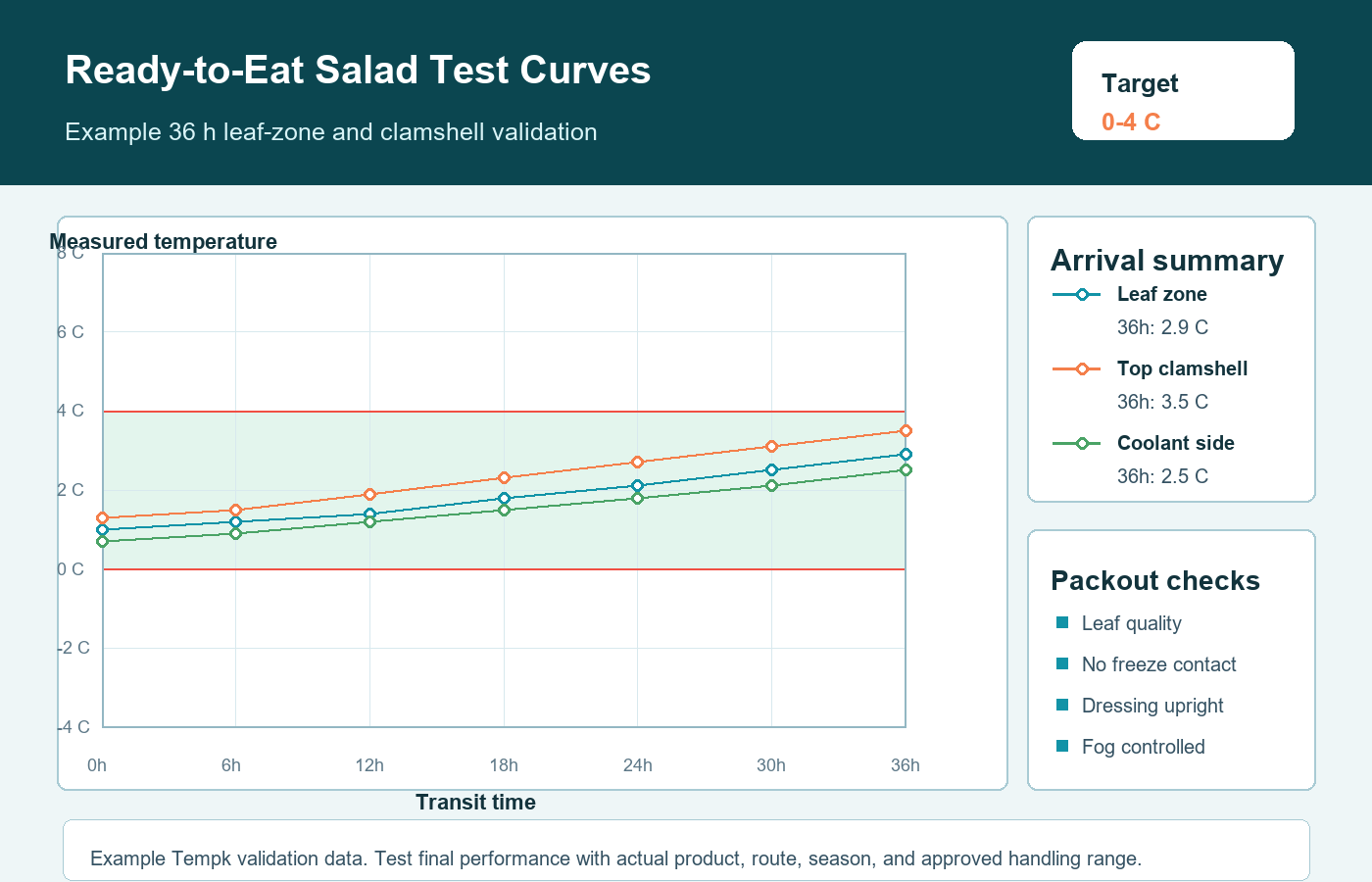
Überprüfen Sie die Kurve mit dem tatsächlichen Produkt, Kühlmittelmasse, Versendergröße, Spurdauer, und Jahreszeit. Fügen Sie Ankunftsfotos und Empfangsnotizen hinzu, damit die Verpackung anhand der Temperatur und des Produktzustands beurteilt werden kann.
Verwandte Seiten zur Packout-Planung
Kategorie „Fertiggerichte“.Gekühlte FertiggerichteSandwiches & wickeltLeitfaden für gekühlte SuppenIsolierte Lieferbeutel für die Lieferung von verzehrfertigem SalatGel-Eisbeutel für die Lieferung von verzehrfertigem SalatIsolierte Boxeinlagen für die Lieferung von verzehrfertigem SalatKühlkettenwerkzeugeTempk kontaktieren
Praktische Routenhinweise
Halten Sie Salate knackig, ohne dass die Blattränder einfrieren
Fertigsalate brauchen Abkühlung, Belüftung, und Schutz vor direkten Kältebrücken. Zu viel Kältekontakt kann die Blattränder beschädigen, selbst wenn die Gesamtverpackung akzeptabel aussieht.
Wo dieses Produkt normalerweise versagt
Blätter welken, Rand einfrieren, Verbandlecks, nasse Etiketten, und zerdrückte Schüsseln sind die größten Qualitätsmängel.
Verpackungsaufbau zum ersten Testen
Verwenden Sie starre Salatschüsseln oder Muschelschalen mit Hohlraumkontrolle. Legen Sie Gelpackungen um eine Trennwand und halten Sie die Dressingbecher aufrecht und getrennt vom Blattgemüse.
Kühlmittelauswahl
Gekühlte Gelpackungen sind bei direktem Kontakt in der Regel sicherer als gefrorene Packungen. Verwenden Sie PCM, wenn die Route im Sommer stark ausgesetzt ist oder die Lieferfrist unsicher ist.
Überprüfung der Routenvalidierung
Untersuchen Sie die Blattstruktur, Abrichtbecherdichtungen, Klappdeckel, und kostenloses Wasser in der Packung. Eine Salatverpackung sollte eine visuelle Frischekontrolle beinhalten.
Verpackungsdetails
Salatkisten benötigen einen Kälteschutz ohne Blattgefrierung
Anwendungsfall
Verzehrfertige Salate können durch direkten Kontakt mit der Tiefkühlverpackung beschädigt werden. Blattränder können einfrieren, während die Mitte der Schüssel in Reichweite bleibt, Daher sollte das Kühlmittel durch eine Trennwand getrennt oder in Seitenkanälen platziert werden.
Wahl der Verpackung
Halten Sie die Dressingbecher aufrecht und fern von Blättern. Wenn die Route eine warme Zustellung auf der letzten Meile beinhaltet, Erhöhen Sie die Isolierung oder verwenden Sie PCM, anstatt kältere Gelpackungen gegen die Salatschüsseln zu drücken.
Was Tempk validieren sollte
Für Tempk-Tests, Geben Sie die Schüsselgröße an, Grünmischung, Position des Dressingbechers, Packung, und Streckendauer. Überprüfen Sie die Knusprigkeit der Blätter, Rand einfrieren, kostenloses Wasser, Deckelsicherung, Trockenheit kennzeichnen, und Ankunftstemperatur. Für Essenslieferungen oder Büroverpflegung, Fügen Sie bei der Validierung eine kurze Verzögerung nach der Lieferung hinzu, da Salate oft warten, bevor sie geöffnet werden.
Unterstützung für benutzerdefinierte Pakete
Diese Spur muss rund um Ihr Produkt und Ihre Route aufgebaut sein?
Für feste Kartongrößen, Nutzlastgrenzen, Branding-Anforderungen, Saisonspuren, oder Validierungsziele, Tempk kann diese Lösung in eine individuelle Kühlkettenverpackung umwandeln.
Dieser Weg der zubereiteten Lebensmittel muss vor dem Versand überprüft werden?
Senden Sie das Produktformat, Zieltemperatur, Nutzlastgröße, Paketabmessungen, Streckendauer, Umgebungsbedingungen, und Empfangsstandard. Tempk kann beim Vergleich von Isolierungen helfen, Gelpack oder PCM-Layout, Liner, Trenner, und Validierungsschritte.
Fordern Sie eine Packout-Bewertung an