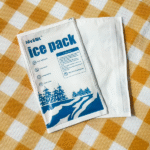
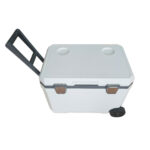
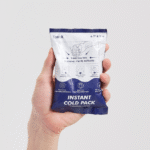
No existe un número universal de bolsas de hielo en gel para envío de cadena fría. La cantidad correcta depende del rango de temperatura del producto., masa de carga útil, tamaño del cartón, tipo de aislamiento, duración de la ruta, exposición ambiental, tamaño del paquete de gel, temperatura inicial, y margen de seguridad requerido. Un envío pequeño de comida refrigerada puede necesitar una relación entre refrigerante y carga útil diferente a la de un paquete de marisco., una caja de comestibles, o un kit de muestras médicas.
Este artículo explica cómo los compradores empresariales pueden estimar la cantidad de paquetes de gel antes de solicitar muestras.. No reemplaza la validación térmica.. En cambio, Proporciona un marco práctico para preparar los datos de envío., evitando errores comunes de subdimensionamiento, y usar una calculadora o una prueba de muestra de manera más efectiva.
Comience con la condición de llegada requerida.
La primera pregunta no es “¿cuántos paquetes de gel?La primera pregunta es ¿qué temperatura debe mantener el producto??” Un paquete de comida refrigerada, un envío médico a 2-8°C, y un envío de mariscos congelados requieren una lógica de refrigerante diferente.
La guía alimentaria de la FDA establece que los alimentos fríos deben mantenerse a 40 °F / 4°C o menos. FedEx describe refrigerantes en gel para productos que deben permanecer entre 34°F / 1°C y 50°F / 10°C. Para comida congelada, La guía de manipulación segura de la FDA hace referencia al almacenamiento en congelador a 0°F / -18°C o menos. Estos valores respaldados por fuentes muestran por qué una cantidad de paquete de gel no se adapta a todos los programas.
Variables clave que cambian la cantidad del paquete de gel
| Variable | ¿Por qué cambia la cantidad del paquete de gel? | Qué proporcionarle a su proveedor |
|---|---|---|
| Objetivo de temperatura del producto | Las temperaturas objetivo más bajas generalmente requieren más refrigerante o un aislamiento más fuerte.. | Rango de temperatura requerido y condiciones de llegada aceptables.. |
| Masa de carga útil | Una carga útil más grande puede mantener el frío por más tiempo, pero también requiere una protección térmica más total.. | Peso total del producto y dimensiones del producto.. |
| Temperatura inicial | El producto preenfriado necesita menos energía de extracción que el producto caliente. | Temperatura de carga del producto y método de preenfriamiento.. |
| Tamaño de la caja y espacio libre | Más espacio de aire aumenta la inestabilidad térmica y puede cambiar la ubicación del refrigerante. | Dimensiones interiores de la caja y disposición del producto.. |
| Tipo de aislamiento | Caja de espuma, Caja EPP, palco vip, o el revestimiento cambia la tasa de ganancia de calor. | Material de aislamiento, espesor, y si la caja está fija. |
| Duración de la ruta | 24-Las rutas de una hora y de 48 horas necesitan diferentes márgenes de seguridad.. | Tiempo puerta a puerta más posible retraso. |
| Exposición ambiental | Calor de verano, riesgo de heladas invernales, habitacion del camion, residencia en el aeropuerto, y la puerta habita la materia. | Información estacional y de carriles. |
| Tamaño del paquete de gel | Unos pocos paquetes grandes y muchos paquetes pequeños pueden comportarse de manera diferente. | Dimensiones del paquete, peso de relleno, y requisito de colocación. |
| Sensibilidad del producto | Medicamento, chocolate, producir, y la ensalada puede dañarse por el contacto directo con el congelado. | Sensibilidad a la congelación y requisito de separación de productos.. |
Un flujo de trabajo de estimación práctico
Una estimación del paquete de gel debe realizarse en pasos.
Primero, definir el objetivo del producto. ¿El objetivo es inferior a 4°C?, dentro de 2-8°C, por debajo de 10°C, o simplemente “llega genial”? Segundo, confirmar la condición inicial. No se debe esperar que los paquetes de gel bajen el producto caliente a una temperatura segura durante el envío.. Tercero, elige el formato de aislamiento. A revestimiento de cartón, remitente de EPS, Enfriador de PPE, palco vip, o bolsa aislante cambiará la tasa de ganancia de calor. Cuatro, estimar el tiempo de ruta y el margen de retraso. Quinto, seleccione el tamaño y la ubicación del paquete de gel. Sexto, Pruebe el paquete completo con registradores de datos..
La lógica térmica básica es:
Capacidad de refrigerante requerida = calor que ingresa a través del paquete + Calor del producto y del espacio de aire. + manipulación y margen de retraso.
Esta es una ecuación de planificación., no es un método de validación terminado. La cantidad final debe confirmarse con un paquete de muestra en condiciones ambientales realistas..
Referencias de diseño respaldadas por fuentes
| Punto de referencia | Detalle respaldado por la fuente | Cómo afecta la planificación del paquete de gel |
|---|---|---|
| Seguridad de los alimentos refrigerados | La FDA dice que los alimentos fríos deben mantenerse a 40°F / 4°C o menos. | Define el objetivo de envasado de alimentos refrigerados y los controles de aceptación de recepción.. |
| Rango de uso del refrigerante en gel | FedEx describe refrigerantes en gel para 34°F / 1°C a 50°F / 10Envíos en °C. | Ayuda a determinar si los paquetes de gel son adecuados para el rango solicitado. |
| Referencia de aislamiento de espuma | FedEx recomienda un contenedor de espuma aislado con un mínimo 1.5 en / 4 cm paredes para perecederos. | Muestra que el espesor del aislamiento puede reducir la carga de refrigerante. |
| Uso de absorbentes y revestimientos. | FedEx recomienda revestimientos de plástico y material absorbente para productos perecederos. | Ayuda a proteger las cajas de la condensación y las fugas.. |
| Distinción de hielo seco | FedEx identifica hielo seco para envíos congelados, no envíos generales de paquetes de gel refrigerados. | Evita el uso de paquetes de gel cuando se necesita un paquete congelado o un diseño de hielo seco.. |
La colocación del paquete de gel es tan importante como la cantidad
Más paquetes de gel no significan automáticamente un mejor rendimiento. La ubicación determina cómo interactúa la fuente fría con la carga útil y las superficies más cálidas del paquete.. La guía de FedEx para artículos fríos o congelados recomienda colocar refrigerantes en todos los lados y encima del producto.. En la práctica, el mejor diseño depende de la orientación de la caja, forma de carga útil, y sensibilidad al producto.
Para comida refrigerada, Se pueden colocar paquetes de gel encima y alrededor de los alimentos para reducir la ganancia de calor desde la parte superior y los lados.. para medicina, Es posible que se requiera una cámara de producto o un divisor para evitar que el refrigerante congelado toque la carga útil.. Para mariscos, El plan de refrigerante puede priorizar el contacto directo con el frío si el producto está empaquetado para tolerarlo.. Para chocolate o productos agrícolas, el almacenamiento en búfer y la separación son más importantes.
Herramientas útiles para tomar decisiones
Comprueba los detalles antes de elegir el embalaje.
Estas herramientas rápidas pueden ayudarle a comparar el riesgo de la ruta, necesidades de dimensionamiento, opciones de refrigerante, y detalles del embalaje antes de solicitar una cotización.
Comprobador de riesgos de ruta
Revise las condiciones del carril antes de seleccionar el embalaje para requisitos operativos reales..
Comprobar riesgo de rutaCalculadora de hielo seco
Calcule las necesidades de hielo seco para envíos congelados o ultrafríos antes de empacar.
Estimar hielo secoCalculadora de bolsa de hielo
Estimación de la cantidad de bolsas de hielo en gel para envíos refrigerados y planificación práctica de rutas.
Estimar las bolsas de hieloEjemplo de tabla de planificación para una solicitud de cotización de proveedor
Utilice la siguiente tabla para preparar datos antes de usar una calculadora o solicitar muestras. No lo utilice como una especificación de paquete validada..
| Categoría de entrada | El comprador debe definir | Por qué el proveedor lo necesita |
|---|---|---|
| Perfil del producto | tipo de producto, peso, temperatura de carga, sensibilidad a la congelación o la humedad. | Determina el tipo de refrigerante y si se requiere separación.. |
| Meta de temperatura | Temperatura máxima permitida a la llegada y si está prohibida la congelación.. | Determina la temperatura del paquete de gel., cantidad, y colocación. |
| Duración del envío | Tiempo de servicio planificado y margen de retraso realista. | Impulsa la capacidad térmica total necesaria. |
| Cartón y aislamiento | Tamaño de la caja, tipo liner o espuma, espesor de pared, estilo de cierre. | Determina la ganancia de calor y el espacio disponible para los paquetes de gel.. |
| Proceso operativo | Capacidad de congelación del almacén, mano de obra de embalaje, secuencia del paquete, almacenamiento antes de la recogida. | Determina si el diseño es práctico a escala.. |
| Método de aceptación | Registrador de datos, recibir control de temperatura, inspección visual del cliente. | Determina cómo se verificará el rendimiento.. |
Errores comunes al reducir el tamaño del paquete de gel
El error más común es diseñar según el tiempo de la etiqueta del transportista en lugar de la ruta real.. Un envío de “un día” aún puede sufrir retrasos en la recogida, permanencia del centro de clasificación, exposición a vehículos calientes, y morar en la puerta. Un segundo error es ignorar la temperatura inicial de la carga útil.. Si el producto tibio se coloca en una caja fría, Los paquetes de gel se consumirán enfriando el producto en lugar de protegerlo durante el tránsito.. Un tercer error es utilizar un revestimiento más delgado o una caja más grande después de que el paquete original ya haya sido probado..
Otro problema común es el daño por congelación.. Un comprador puede agregar paquetes de gel congelado adicionales para resolver el calentamiento del verano, pero los paquetes adicionales pueden congelar el producto durante las primeras horas de tránsito. Esto es especialmente relevante para la medicina., ensaladas, chocolate, y producir. en esos casos, el paquete puede necesitar PCM, un divisor, un método de acondicionamiento en gel más cálido, o un diseño de aislamiento de dos etapas.
Cuándo usar una calculadora y cuándo realizar pruebas
Una calculadora de bolsas de hielo es útil para el diseño inicial. Ayuda al comprador a comparar la masa de carga útil., tiempo de ruta, formato de aislamiento, y supuestos sobre refrigerante antes de pedir muestras. Sin embargo, una calculadora no debería ser el método de aceptación final para un programa de cadena de frío. No puede reproducir completamente cada carril de transporte, orientación del cartón, proceso de almacén, o condición de recepción del cliente.
Utilice una calculadora para la detección. Utilice pruebas de muestra para su aprobación. Utilice pruebas de ruta cuando el producto sea de alto valor., regulado, perecedero, o sensibles a la marca.
Preguntas frecuentes
¿Puedo copiar la cantidad del paquete de gel usado por otra marca??
No. La otra marca puede usar un tamaño de caja diferente., peso del producto, material aislante, temperatura de carga, perfil de carril, o requisito de llegada. Copiar los recuentos de paquetes puede generar un enfriamiento insuficiente, sobrecongelación, o costo innecesario.
¿Deben colocarse paquetes de gel encima o alrededor del producto??
En muchos paquetes de paquetes, La exposición superior es importante porque el calor puede entrar desde arriba y porque los paquetes pueden manipularse en diferentes orientaciones.. FedEx recomienda colocar refrigerantes en todos los lados y encima para artículos fríos o congelados., pero el diseño final debe ser probado.
¿Más paquetes de gel siempre mejoran la seguridad alimentaria??
No siempre. Más paquetes de gel aumentan la capacidad de frío, pero también pueden agregar peso, reducir el espacio del producto, aumentar la condensación, y congelar productos sensibles. Utilice la cantidad mínima validada con un margen de retraso realista.
¿Pueden los paquetes de gel mantener congelados los alimentos congelados??
Los paquetes de gel estándar suelen ser mejores para estufas refrigeradas. Para verdaderos envíos congelados, hielo seco o es posible que se necesite un sistema PCM congelado según el producto., ruta, y aislamiento.
Comida final para llevar
La cantidad de paquetes de gel debe calcularse a partir del perfil de envío completo.: objetivo de temperatura, masa de carga útil, temperatura inicial, aislamiento, tamaño de la caja, tiempo de ruta, exposición ambiental, y margen de seguridad. Utilice calculadoras para limitar el diseño., luego apruebe el paquete final mediante pruebas de muestra o pruebas de ruta. Para programas de cadena de frío B2B, El objetivo es la llegada repetible dentro del alcance., no simplemente agregar la mayor cantidad posible de bolsas de hielo.