Médico envío de cadena fría packaging must be designed and evaluated as a defined packout, not as a list of materials. The technical objective is to keep the product within its approved or scientifically justified transport conditions for the intended route while preventing local risks such as freezing, calentamiento excesivo, aplastante, fuga, or uncontrolled handling. The qualification evidence is only applicable when the shipped configuration remains inside the tested operating envelope.
This approach aligns with the European Union Good Distribution Practice guidelines, which base container and packaging selection on product requirements, espacio de carga útil, anticipated temperature extremes, tiempo máximo de tránsito, y estado de calificación. The WHO model guidance similarly treats storage and transport as controlled activities within a broader quality system while recognizing the priority of local requirements.
Control de llave
- Turn the shipping need into a testable performance specification before selecting insulation or coolant.
- Test the exact packout, proceso de acondicionamiento, sobre de carga útil, plan de sensores, and ambient challenge intended for use.
- Treat qualification as evidence for a defined operating envelope, not as a universal guarantee for every route or load.
Convert the Shipping Need Into a Performance Specification
A request such as keep the product refrigerated for 72 hours is incomplete. It does not identify the product, allowable exposure, sensibilidad a la congelación, desafío de ruta, carga útil, delay model, or acceptance method. Before selecting insulation or coolant, write a performance specification that the packaging engineer and quality reviewer can test.
| Specification field | que definir | error común |
|---|---|---|
| Product acceptance condition | Approved or data-supported limits, exposiciones prohibidas, excursion authority, and other sensitivities. | Applying a familiar temperature band to every medical product. |
| Payload envelope | Minimum and maximum mass, dimensiones, contar, embalaje primario, orientación, and void space. | Testing only a convenient mid-load and assuming it covers all loads. |
| Duración de la ruta | Planned transit plus hubs, aduanas, fines de semana, entrega fallida, y una indemnización por retraso justificada. | Using carrier service time as the entire thermal exposure period. |
| Ambient challenge | Summer and winter profiles or justified route data, including transitions between controlled and uncontrolled environments. | Using one constant room temperature profile for every lane. |
| Método de embalaje | Exact component, acondicionamiento, colocación, secuencia, cierre, etiquetas, and time limits. | Leaving coolant conditioning or placement to operator judgment. |
| Acceptance evidence | Ubicaciones de los sensores, estado de calibración, sampling rate, repeticiones, criterios de aprobación, desviaciones, y aprobación del informe. | Accepting a marketing hold-time chart without the underlying conditions. |
Design the Thermal Architecture
A passive packout controls heat flow through the interaction of insulation, refrigerante, masa térmica de carga útil, espacios aéreos, y barreras. Better insulation can reduce heat gain or loss, but the result still depends on coolant state and quantity. Más refrigerante puede ampliar la capacidad térmica, pero también puede reducir el espacio de carga útil, increase transport weight, and create a cold-surface risk. The design should balance these variables rather than maximize one component in isolation.
Choose coolant by its behavior in the packout
Coolant selection should consider its transition behavior, ventana de acondicionamiento, geometría, temperatura de la superficie, contención, and compatibility with the product and transport mode. Water-based frozen packs may be appropriate for some applications and inappropriate for freeze-sensitive products without adequate separation and control. Engineered phase change material may offer a different temperature plateau, but the complete system still needs testing. hielo seco introduces much lower temperatures and transport requirements; it should never be substituted into a refrigerated packout without a product- and mode-specific assessment.
Control direct contact and gradients
A shipper can meet an average temperature target while creating unacceptable local conditions. Sensors near the coolant, at the geometric center, and at anticipated warm or cold locations help reveal gradients. The exact sensor plan should be justified by the packout geometry and risk assessment. Espaciadores, divisores, almohadillas corrugadas, or other barriers may be required to prevent direct contact and keep the loading pattern repeatable.
Test the allowed payload configurations
Minimum and maximum loads may not behave the same way. A low-mass payload can respond quickly to local coolant temperatures, while a high-mass payload can change pull-down and warm-up behavior. If one system is offered for several payloads, the qualification plan should identify the worst-case configurations or test a justified family of configurations. The logic should be documented rather than assumed.
Build a Qualification Protocol That Matches the Decision
Qualification should demonstrate that the defined packout can meet its acceptance criteria under stated conditions. The protocol should identify the configuration, component lots where relevant, proceso de acondicionamiento, payload simulant or real product basis, perfiles ambientales, plan de sensores, calibración de equipos, número de carreras, secuencia de manipulación, criterios de aceptación, y proceso de desviación. The number of runs should follow the organization's risk and quality requirements; there is no responsible universal number that fits every product and route.
The report should preserve the complete configuration and raw evidence needed for review. Como mínimo, a buyer should be able to see the bill of materials, dibujos de embalaje, preconditioning records, perfil de cámara, time-temperature data, mapa de sensores, fotos, run results, desviaciones, and the approved conclusion. A summary certificate without traceable conditions is not enough for a technical decision.
Herramientas útiles para tomar decisiones
Comprueba los detalles antes de elegir el embalaje.
Estas herramientas rápidas pueden ayudarle a comparar el riesgo de la ruta, necesidades de dimensionamiento, opciones de refrigerante, y detalles del embalaje antes de solicitar una cotización.
Generador de lista de cumplimiento
Cree una lista de verificación práctica para la revisión del embalaje, envío, y documentación.
Crear lista de verificaciónrefrigerante & Referencia PCM
Compare las opciones de refrigerante y PCM cuando una ruta necesite soporte de temperatura adicional.
Comparar opcionesCalculadora de acumuladores de frío
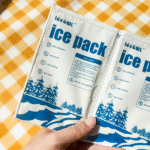
Estimación de la cantidad de bolsas de hielo en gel para envíos refrigerados y planificación práctica de rutas.
Estimar las bolsas de hieloThe definition of a qualified package in Health Canada's environmental-control guidance is useful here: documented testing should provide a high degree of assurance that defined acceptance criteria are met under the stated conditions. The same guidance warns that excursion decisions should be evidence based and that monitoring needs should be managed according to risk. These are Canadian guidance concepts and should be applied together with the requirements of the target market.
Qualification is not a universal route guarantee
A chamber profile is a controlled challenge, not a prediction of every future shipment. Qualification supports use within its assumptions. A route change, longer delay exposure, new payload, refrigerante diferente, altered insulation, new assembly process, or extreme weather event may move the shipment outside those assumptions. Route data and operational feedback should be used to confirm that the selected profile remains appropriate.
Translate the Tested Packout Into an Operating Process
The production packout must be assembled the same way as the qualified configuration. Instructions should identify every component and show the sequence visually. Coolant conditioning should include target state, equipo, loading limits, and verification method. The procedure should control how long components and product may remain outside their designated environments during assembly.
A practical release record can include component lot or identification, versión empaquetada, conditioner or freezer identification, conditioning verification, assembler check, logger identification when used, estado del sello, tiempo de envío, and carrier service. The level of documentation should be proportionate to risk and the governing quality system.
Prepare receiving and excursion instructions
The receiver should know where the package must be delivered, who can accept it, how to inspect the shipper, how quickly to move product into controlled storage, and how to quarantine a questionable shipment. A temperature alarm or out-of-range reading should trigger the approved investigation process. It should not lead automatically to product release or disposal without the authorized technical assessment.
Review Supplier Evidence Before Price
A technically useful supplier package should include the tested configuration, límites de carga útil, dimensiones internas utilizables, especificaciones de los componentes, requisitos de acondicionamiento, perfiles ambientales, plan de sensores, resultados de la prueba, instrucciones de funcionamiento, proceso de control de cambios, y controles de muestra a producción. If a supplier proposes an existing qualified system, ask which variables may be customized without invalidating the evidence.
Price comparisons should use the same performance boundary. A lower-cost shipper that requires more coolant, más mano de obra, higher dimensional weight, or a narrower operating window may not be the lower-cost system. En cambio, the highest insulation value or longest advertised duration may add cost without addressing the actual route.
Prepare a Complete Packaging Proposal Request
Provide the controlled product requirement, carga útil mínima y máxima, route and delay model, desafío ambiental, restricciones de empaquetado, and the evidence your quality team expects. This information allows the supplier to propose a configuration that can be qualified instead of quoting an unsupported hold time.
Referencias
The links below support the regulatory and technical boundaries discussed in this article. Local requirements and product-specific instructions still take precedence.
- EU Guidelines on Good Distribution Practice of medicinal products for human use
- WHO Technical Report Series 961 Anexo 9
- Health Canada Drug Storage and Transportation Guidance