A summer parcel does not experience one temperature — it experiences a sequence of them. Route risk is the practice of asking, before you ship, where a parcel will sit, how long it will sit there, and what that does to the packout you have chosen. On warm-season parcel and express lanes the usual pressure points are a warm vehicle, a busy sorting hub, last-mile dwell at the door, retraso del fin de semana, and the handoffs between warehouse, airport and customs. This guide shows how to review those risks against your payload, box and coolant assumptions, how to use a planning-level route screen, and what to hold in reserve as contingency.
What route risk means for a parcel
A declared test profile is a constant; a route is a sequence. When a packout is described as holding a range «under a 36°C ambient profile», that describes a steady condition. A real parcel instead collects short exposures: twenty minutes in a warm vehicle, an hour on a hub floor, a full afternoon on a doorstep, a weekend in a depot.
Route risk multiplies three things: the intensity of each exposure, the time spent in it, and the number of handoffs where the parcel is handled, re-sorted or left unattended. None of those three is visible on a product data sheet, which is why the route review has to be done per lane rather than per product.
Start from the packout assumptions
A route review is only meaningful against a defined packout. Write down the configuration first, because these are the variables a route can defeat:
- Carga útil: masa, sensibilidad de volumen y congelación.
- Expedidor: the box or bag family and its declared internal volume.
- refrigerante: paquetes de gel o ladrillos PCM, cantidad, and the conditioning and staging state.
- Separación: the layers between coolant and payload.
- Escucha: the logger model and its position in the payload chamber.
If any of those is still «to be decided», the route review cannot conclude anything. El 2–8°C pharmaceutical packout design guide sets out the same sequence for refrigerated lanes, and the same logic applies to any parcel lane.
The handoff chain: vehículo, centro, última milla
Parcel and express lanes are built from handoffs, and each handoff is a chance for the parcel to sit outside a controlled space. El parcel and express delivery packaging path exists precisely because these lanes need their own packout assumptions rather than a generic box.
- Pickup and line-haul vehicle. A parcel can wait on a loading dock and then travel in a vehicle whose cab or hold is simply ambient.
- Sorting hub. Hub dwell is variable and often the longest uncontrolled period in an express lane; the parcel is moved between belts and cages with no thermal protection beyond its own packout.
- Estancia de última milla. The final leg ends with the parcel on a doorstep, at a reception desk or in a parcel locker — unattended, in the warmest part of the day, for an unknown duration.
Add handoff count to the list of assumptions you control, and keep it in the review rather than treating it as fixed.
Habitar: retraso del fin de semana, depósito, airport and customs
Dwell is the part of route risk that planning usually misses. The site’s validation page names the pressure list directly: recuento de traspasos, tiempo de permanencia, retraso en la aduana o el agente, exposición al asfalto, puesta en escena al aire libre, y participación en envíos aéreos. Each one extends the time the packout has to work.
- Weekend and holiday delay. A Friday dispatch can add two uncontrolled days without changing the box.
- Puesta en escena del almacén. Pre-dispatch staging at ambient, before the shipment even starts moving.
- Airport and tarmac exposure. Transfer between terminals and standing time on the apron.
- Customs or broker delay. Documentation queues that pause a shipment at the point where nobody can open or condition it.
These are conditions to plan against, not predictions to assume. The safe approach is to add a delay margin to the planned transit time rather than to design for the best case.
Running a route risk screen
Once the packout and the route are written down, the assumptions can be screened at planning level with the comprobador de riesgo de ruta. The screen takes the lane’s shape — season, tiempo de tránsito, dwell and handoffs — and returns a risk view you can act on.
Treat the output for what it is: a planning-level screen that tells you whether a lane needs a stronger shipper, más masa refrigerante, tighter monitoring or a documented contingency. It is not a certified qualification, it does not replace a packout test, and a low-risk screen does not make a configuration compliant with anything. Use it to decide what to test and how much margin to design in.
Herramientas útiles para tomar decisiones
Comprueba los detalles antes de elegir el embalaje.
Estas herramientas rápidas pueden ayudarle a comparar el riesgo de la ruta, necesidades de dimensionamiento, opciones de refrigerante, y detalles del embalaje antes de solicitar una cotización.
Revestimiento de caja & Dimensionamiento de la cubierta de paleta
Lógica de tamaño de revestimiento de cajas y cubiertas de paletas para proyectos de embalaje aislado.
Estimar el tamañoCalculadora de hielo seco
Calcule las necesidades de hielo seco para envíos congelados o ultrafríos antes de empacar.
Estimar hielo secoCalculadora de bolsa de hielo
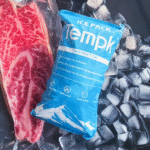
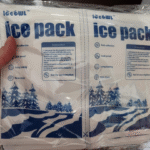
Estimación de la cantidad de bolsas de hielo en gel para envíos refrigerados y planificación práctica de rutas.
Estimar las bolsas de hieloPlanning contingency
Contingency is what you do when the lane behaves worse than the plan. Practical options, in rough order of effort:
- Add thermal margin: más masa refrigerante, a stronger shipper family, o ambos, for a defined peak season.
- Separate seasonal rules: a summer configuration and a winter configuration for the same lane.
- Route shaping: avoid known weekend cut-offs or customs bottlenecks where the carrier offers an alternative.
- Monitoring density: a logger per shipment on high-risk lanes, so a deviation is visible rather than assumed.
- A named escalation: who is contacted, and what decision they are authorised to make, when a trace shows a problem.
Keep the contingency written into the packout specification so it is applied consistently across the season.
Recibir cheques
A route review protects nothing until the receiving step confirms what actually arrived. Al recibir, download the logger trace and compare it with the lane’s acceptance rule; check seal, closure and coolant state; inspect the payload against its own requirements; and record a deviation note whenever the trace, kit or timing departs from the approved configuration.
Keep the trace with the shipment record. Over a season those records are what tell you whether a summer rule was adequate, and they are the evidence base for changing it. Para carriles frigoríficos, el 2–8°C packout test case walkthrough shows how to read a published result against your own lane, y el selector de embalaje helps narrow the shipper family before you test.
Summer parcel route risk: preguntas frecuentes
Is a route risk screen the same as a packout test?
No. A route risk screen is a planning-level view of lane conditions. A packout test reproduces the configuration under controlled conditions with a real or simulated payload. The screen decides what to test; the test produces the evidence.
What is the biggest route risk for summer parcels?
It depends on the lane, but dwell and handoff count are the two factors most often underestimated, because a parcel can sit unattended far longer than the planned transit time without anything going wrong operationally.
Do I need a different packout for summer and winter?
A menudo si. Summer heat and winter cold stress the same packout in opposite directions, so many programs keep separate seasonal rules even when the product and payload do not change.
How much delay margin should I add?
There is no single figure that applies to every lane. Use the delay you have actually observed on the lane, plus the dwell, customs and staging conditions listed above, and confirm the result with a sample test.
Where should the logger be placed?
Where it represents payload risk — inside the payload chamber, not against a coolant surface or on the inner wall of the box — so the trace reflects what the product experienced.
Can I get a lane review and quotation?
Sí. Send the lane, estación, transit and dwell assumptions, carga útil, box and coolant preferences, y volumen esperado, and Tempk can suggest a packout direction and testing path through the pagina de contacto.