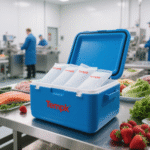
personaje Cold Shipping Box para el transporte de vacunas: A Route-to-Release Framework
A VIP cold shipping box for vaccine transport is a strong option when a passive parcel needs high thermal resistance and efficient payload space, but it should be purchased only as part of a defined, tested system. Confirm the vaccine’s labeled temperature limits first; then match protected vacuum panels, temperature-specific PCM, usable cavity, condición de carga, perfil ambiental, procedimiento de embalaje, y posición del registrador. Require qualification evidence for that exact configuration, make the packing steps repeatable, and control changes after approval. These steps provide a clearer buying decision than a generic temperature range, material value, or advertised hold time.
Puerta 1: Start With the Product Decision
Packaging design begins with approved product information, not with a box catalogue. Identify every vaccine presentation and diluent in the parcel, then obtain its current manufacturer instructions. Record the required storage and transport conditions, permitted time outside normal storage if specified, sensitivity to freezing or light, and any beyond-use date triggered by a temperature change. Assign the person or function that can decide disposition after an excursion.
Many vaccines licensed for refrigerated storage in the United States use 2–8 °C, according to CDC guidance. That does not make 2–8 °C a universal vaccine specification. Other vaccines can have frozen or product-specific conditions, and national programs may add handling rules. A project should use the actual label and stability basis for its acceptance criteria. If the shipment combines products with incompatible requirements, the correct answer may be separate systems rather than a compromise set point.
Freeze risk deserves explicit treatment. CDC materials note that some liquid vaccines can suffer permanent potency loss after freezing, and such damage may not be visible. A design that prevents warming but creates a cold spot beside an over-conditioned pack has not succeeded. Document the allowable lower limit, evaluate likely cold points, and define separation or PCM conditioning through the qualification process.
This first gate ends with a concise user requirement: product identities, límites de temperatura, allowable excursion policy, payload presentations, and quality authority. If these details are unresolved, supplier quotations cannot be compared on a sound basis.
Puerta 2: Define the Thermal Architecture
VIP and PCM perform different jobs. A vacuum insulation panel uses an evacuated porous core and a gas-barrier envelope to slow heat transfer. A phase change material stores and releases thermal energy around a selected transition region. The insulation reduces the thermal load; the PCM buffers what remains. The outer carton, protective frame, payload box, divisores, cierre, and controlled void space turn those components into a shippable assembly.
This distinction prevents several purchasing mistakes. An empty palco vip has no universal hold time. A PCM pack does not automatically hold a precise range. A data logger observes temperature but provides no cooling. An active container uses powered control and has different infrastructure and contingency needs. Procurement should compare these architectures against the movement, not treat them as interchangeable “cold packaging.”
VIP can be especially useful when external parcel dimensions are limited and payload volume is valuable. Thin high-resistance walls may preserve a larger clear cavity than a thicker conventional insulation design. That advantage must be checked on the finished kit. Panel joints and corners create thermal bridges, protective structures take space, and PCM surrounds the payload. Ask for both external dimensions and the unobstructed payload chamber in the selected configuration.
Panel protection is a design requirement. Research on fumed-silica VIPs shows that barrier integrity, gas and moisture entry, envejecimiento, and boundary conditions affect performance. The panel envelope should be protected from sharp payload edges, herramientas, aplastante, y manejo repetido. Packing instructions should never require operators to cut, doblar, or force a panel. Establish visual and tactile rejection criteria appropriate to the supplied assembly.
PCM selection should address phase point, capacidad termica, pack construction, cantidad, colocación, y acondicionamiento. The warehouse process matters as much as the chemistry. Confirm the site has enough controlled equipment and time to prepare all components, including peak-volume and seasonal demand. If staff cannot distinguish conditioned from unconditioned packs, the design needs better status control before it is released.
Puerta 3: Make the Route Visible
Scheduled transit time is only the center of a route. Build a timeline from PCM removal and packing through carrier pickup, origin dwell, transferencias centrales, aduanas, entrega local, y recibiendo revisión. Include nonworking days, conexiones perdidas, puesta en escena al aire libre, and the point at which vaccine returns to approved storage. The qualification duration should cover a justified risk window, not merely the advertised service time.
WHO route-profiling guidance recommends collecting representative temperature data because measurements reveal hazards that assumptions can miss. A lane may experience its most severe heat during a loading-dock wait, its coldest period in an unheated vehicle, or its longest uncertainty during clearance. When route data are sparse, a technically justified standardized profile can support early evaluation. ISTA 7E offers heat and cold profiles for parcel-delivery embalaje termico. Its use should be explained in the protocol and supplemented where the actual lane demands a different challenge.
Payload variability belongs in the route model. A full shipment has different thermal mass and airflow from a lightly loaded one. List the smallest and largest routine orders, dimensions and mass of the presentation cartons, contención secundaria, and any permitted filler. Qualification may need minimum and maximum load configurations. Staff should not invent a void-fill pattern on a busy dispatch day.
Consider movement type as well. The CDC’s current vaccine materials distinguish short provider transport from longer professional-carrier shipping and emergency relocation. Para EE.UU.. non-emergency provider transport, portable vaccine refrigerator or freezer units are preferred, and a qualified container and packout may be used when suitable portable equipment is unavailable. That advice is not a blanket endorsement of parcel boxes; it demonstrates that equipment selection depends on the activity and program.
International routes add another layer. The sender must determine carrier, aerolínea, aduanas, batería, refrigerante, etiquetado, and dangerous-goods requirements applicable to the contents. Thermal qualification does not grant permission to ship. Route planning should connect packaging, clasificación regulatoria, reserva, documentos, and contingency ownership before product reaches the dock.
Puerta 4: Build a Traceable Proof Chain
Good evidence links the product requirement to materials, the assembled system, condiciones de funcionamiento, y registros de envío. The table below shows the chain a reviewer should be able to follow.
| Decisión | Evidencia que lo respalda | Boundary to retain |
|---|---|---|
| Product range and excursion criteria | Current label, manufacturer stability information, approved quality procedure | Product and market specific |
| VIP and PCM design | Component specifications, dibujos, aged material data, conditioning definition | Does not establish parcel hold time alone |
| Packout performance | Protocol and report for the named payload, carga, sondas, perfil ambiental, y duración | Applies to the tested configuration |
| Lane relevance | Evaluación de riesgos de ruta, representative temperature data, seasonal and delay review | Must be revisited after material route change |
| Shipment release | Calibrated logger record, recibiendo inspección, excursion procedure | Describes one shipment, not future performance |
No single row substitutes for the others. A favorable VIP conductivity value supports material selection but does not prove the loaded parcel. A passing chamber test supports the defined packout but may not represent an unstudied customs delay. A logger trace documents one journey but cannot qualify a changed system. The value lies in the connection among the records.
Before testing, approve a protocol. Identificar cada componente y revisión., PCM conditioning process, payload or representative simulant, minimum or maximum load, mapa de sonda, perfil ambiental, duración, handling step, y pasar criterios. The study should expose both warming and freezing risk where relevant. Define how deviations, failed runs, sensor errors, and retests will be assessed.
WHO’s technical guidance on qualification of contenedores de transporte frames qualification as documented testing against predetermined acceptance criteria. Supplier reports and development trials can contribute to that work, while the vaccine owner’s quality system determines fitness for use. Language such as “qualified” or “validated” should always have a named configuration, protocolo, alcance, and approving organization behind it.
Herramientas útiles para tomar decisiones
Comprueba los detalles antes de elegir el embalaje.
Estas herramientas rápidas pueden ayudarle a comparar el riesgo de la ruta, necesidades de dimensionamiento, opciones de refrigerante, y detalles del embalaje antes de solicitar una cotización.
Comprobador de riesgos de ruta
Revise las condiciones del carril antes de seleccionar el embalaje para requisitos operativos reales..
Comprobar riesgo de rutarefrigerante & Referencia PCM
Compare las opciones de refrigerante y PCM cuando una ruta necesite soporte de temperatura adicional.
Comparar opcionesGenerador de listas de verificación de cumplimiento
Cree una lista de verificación práctica para la revisión del embalaje, envío, y documentación.
Crear lista de verificaciónAsk for an intelligible report, not only a pass certificate. Temperature graphs should correspond to identified probes and a synchronized ambient record. The report should state what payload was used and whether the PCM was conditioned exactly as proposed. It should describe the load cases and component versions. If a result is based on a different cavity, masa refrigerante, or profile, record the gap and decide whether bridging evidence or another test is needed.
Puerta 5: Prove the Process Can Be Repeated
Qualification establishes a controlled reference; operations must reproduce it. Convert the configuration into an illustrated work instruction with part numbers, cantidades, orientación, PCM status, colocación de carga útil, filler rules, ubicación del registrador, lid direction, método de cierre, y registros requeridos. Keep the instructions at the station in a form that staff can use with gloved hands and limited time.
Run an operational qualification exercise with the people who will do the work. Observe component retrieval, conditioning-status checks, asamblea, activation of the logger, documentación, and handoff to the carrier. Look for ambiguous parts, fuerza excesiva, missing staging space, and informal substitutions. Fix the system or instruction rather than relying on experienced staff to remember a workaround.
A typical scaling problem appears when a depot qualifies one full load and later ships half the quantity. Staff add miscellaneous corrugated filler to stop movement, shifting the product closer to one PCM wall. The shipment looks neat, yet it no longer follows the evaluated geometry. A controlled solution defines a minimum-load packout with specified filler, colocación, y evidencia, or uses a different system size.
Monitoring should be equally operational. Select a device with a suitable range, documentación de precisión, intervalo de registro, battery status, time configuration, memoria, and data-access method for the program. Define who starts it and how activation is confirmed. Put the sensor at the location justified by qualification, not wherever a spare pocket exists. Receiving staff need access to the data and authority to quarantine product before the first commercial shipment is sent.
Training must cover decisions, not only assembly. Packers should know why very cold PCM cannot be moved against a freeze-sensitive carton. Receivers should know that a logger measures exposure and does not determine potency. Supervisors should know which deviations require quality review. A short practical assessment is more useful than collecting signatures after a slide presentation.
Puerta 6: Control Scale, Reutilizar, and Change
Moving from samples to routine supply introduces manufacturing and logistics variation. Fix the bill of materials, dibujos, tolerancias, component identification, and inspection criteria before volume orders. Ask the supplier how changes in VIP core, sobre, sello, dimensiones, formulación PCM, Paquete de pcm, protective structure, or outer carton will be communicated. Your own process should assess changes in vaccine presentation, carga útil, ruta, transportador, estación, or logger.
Incoming inspection should focus on attributes linked to performance and usability. Confirm kit identity and completeness, cavity dimensions where appropriate, outer damage, condición del panel, PCM pack integrity, etiquetas, y revisión de documentos. Aesthetic differences matter only when they signal a material or process change. Preserve traceability to the extent required by the quality plan so a shipment issue can be connected to the components and instructions used.
Si se propone la reutilización, separate the lifecycle of each component. The corrugated shell, protected VIP assembly, Paquetes de PCM, security features, and labels may have different replacement rules. Define cleaning agents and methods, el secado, inspección visual, cuarentena, autoridad de reparación, logística de devolución, y jubilación. Reuse is credible only when the closed loop returns serviceable components and records their status.
Evaluate sustainability with the same discipline. VIP’s thinner wall can improve payload efficiency in some parcels, but total impact depends on packed cube and mass, acondicionamiento del refrigerante, component manufacture, product-loss avoidance, transporte de regreso, limpieza, reemplazo, and local end-of-life routes. Compare candidate systems for the same successfully delivered payload and lane. Avoid unsupported percentage claims based on material weight alone.
Commercial comparison should also move beyond unit price. Include qualification work, equipo de acondicionamiento, freezer or refrigerator space, mano de obra de embalaje, uso del registrador, transporte, storage of seasonal kits, reemplazo de componentes, disposal or return, y manejo de desviaciones. A technically capable system that is too complex for the network can be more expensive than its quotation suggests.
Release and Excursion Decisions Close the Loop
Al recibir, check shipment identity, seal and carton condition, hora de llegada, estado del registrador, y transferir a un almacenamiento aprobado. Retrieve and associate the temperature record with the shipment. If the reading is out of range or the monitor failed, place the product under the defined hold status and preserve all information needed for investigation.
Do not judge vaccine quality by whether the vials look normal or whether the excursion was brief. The product manufacturer and the designated quality or public-health authority may need the time, magnitud, and pattern of exposure, as well as the vaccine lot and labeled requirements. The disposition process should be written in advance, including contacts outside normal hours.
Use shipment data for improvement after the immediate decision. Repeated warm peaks at one hub may justify a route or profile review. Frequent logger-start failures call for process redesign. Damaged VIPs may indicate poor protective construction or handling. Trend review is useful when it leads to owned corrective action rather than a larger archive of unexplained graphs.
Preguntas frecuentes
Can a supplier quote a hold time before knowing the payload?
A duration can be discussed as a design target, but it should not be accepted as proven performance without a defined payload, condición de carga, PCM configuration, procedimiento de acondicionamiento, perfil ambiental, y rango de aceptación. Ask which existing test configuration supports the target and identify all gaps. If the proposed use differs materially, your quality and packaging teams should determine what additional testing is needed.
Why are protected VIPs important in routine shipping?
The VIP envelope maintains the low-pressure condition that supports strong insulation. pinchazos, cortes, and damaged edges can admit gas and reduce performance. A protective frame or assembly helps shield the panel during packing and transport. Operators still need inspection and rejection instructions, and they should never cut or fold a panel to make the payload fit.
Can a temperature logger replace package qualification?
No. A logger records conditions in a shipment at its sensor location. Qualification evaluates whether a defined system can meet predetermined criteria under controlled challenges. Monitoring can verify individual journeys and support investigations, while qualification supports the decision to deploy the packout. ambos son valiosos, but neither performs the other’s function.
When should a VIP-PCM configuration be reviewed again?
Review it when product limits, payload dimensions or mass, minimum or maximum loads, componentes, acondicionamiento, instrucciones, ruta, transportador, exposición estacional, monitor, or reuse process changes. The review can conclude that existing evidence remains applicable, that a documented bridge is justified, or that testing is required. The decision should be risk-based and recorded through the quality system.
The Purchase Standard to Apply
Buy a defined performance case, not an insulation acronym. The proposal should connect approved vaccine limits to the actual cavity, protected VIP assembly, temperature-specific PCM, desafío de ruta, casos de carga, recursos acondicionadores, instrucción de embalaje, escucha, y control de cambios. Confirm that the evidence supports the configuration your staff will ship. That standard makes supplier comparison clearer and reduces the chance that a promising laboratory design drifts during routine use.
Acerca de Tempk
Y tempk, we configure protected VIP and PCM pharmaceutical parcel shippers around the buyer’s payload chamber, temperature program, supuestos de ruta, y proceso operativo. Our qualification support can include samples and technical inputs such as component specifications, assembly diagrams, and PCM-conditioning directions. refrigerado por separado, temperatura ambiente controlada, and sub-zero configurations can be developed rather than treating one packout as universal. Performance and final approval remain tied to the exact tested system and the customer’s quality process.
Share your vaccine limits, payload load cases, perfil de carril, conditioning capability, y necesidades de documentación con Tempk. We can help you define a reviewable VIP-PCM configuration and qualification starting point.