


Las bayas frescas se calientan rápidamente
La fruta caliente añade carga térmica y acorta la vida útil. El producto terminado debe ingresar al transportista ya enfriado..
Fresas cubiertas de chocolate
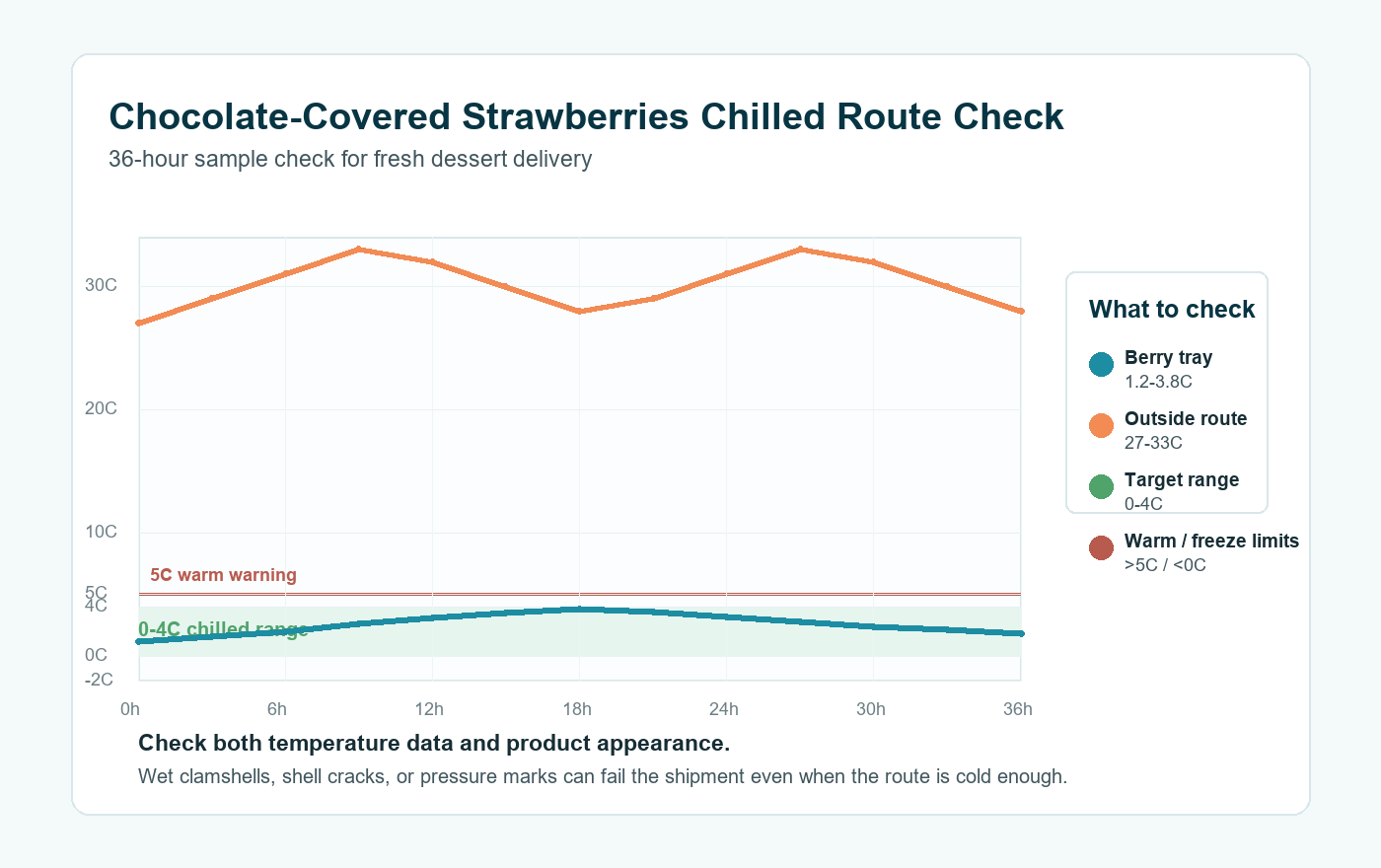
Las fresas cubiertas de chocolate necesitan una ruta fría, pero el paquete no puede tratarlos como chocolate normal o fruta normal.. El objetivo es mantener las bayas frías., mantener la cáscara seca, proteger la concha, y evite la presión directa del refrigerante.
Riesgo del producto
Una caja de hielo estándar puede mantener el envío frío, pero aún puede fallar si la cubierta se moja, las bayas se ablandan, grietas de chocolate, o la bandeja está presionada por paquetes de gel congelados. El envase tiene que controlar temperatura y presentación al mismo tiempo..
La fruta caliente añade carga térmica y acorta la vida útil. El producto terminado debe ingresar al transportista ya enfriado..
Conchas mojadas, etiquetas, y las superficies de chocolate crean la apariencia de una mala manipulación incluso cuando el producto aún está frío.
Los paquetes de gel duro colocados directamente encima pueden agrietar el revestimiento., aplanar coberturas, o deformar la tapa tipo almeja.
El receptor comprueba el brillo., sequedad, posición de la bandeja, firmeza de la fruta, y limpieza del paquete antes de los datos de temperatura.
Recomendación basada en ruta
Estos son puntos de partida prácticos para el diseño de muestras.. El peso final del paquete de gel, espesor de aislamiento, y la colocación debe verificarse con una prueba de ruta.
| Condición de envío | Paquete Tempk recomendado | Dirección inicial del refrigerante | Posición del refrigerante | Que validar |
|---|---|---|---|---|
| Entrega local el mismo día 8-18h ruta, ambiente debajo 22 do, corto tiempo de transferencia |
Revestimiento de cartón aislado o cargador compacto de EPS, bandeja rígida tipo almeja, almohadilla absorbente, bolsa de forro seco | Punto de partida de paquetes pequeños: acerca de 0.4-0.8 kg total de bolsas de hielo en gel acondicionado para un 1-3 kg de carga útil refrigerada. Utilice la calculadora para conocer el tamaño real de la caja y el tiempo de ruta. | Pared lateral o esquina superior con divisor corrugado; sin contacto directo con la tapa tipo almeja | Temperatura de llegada, sequedad de almeja, brillo de chocolate, movimiento de la bandeja, y estado restante del refrigerante |
| Ruta de paquetería nocturna 18-36h ruta, ambiente 22-30 do, exposición de depósito y furgoneta |
Caja aislada de EPP o EPS, bolsa de revestimiento, capa absorbente, espaciador rígido de producto, protección exterior del cartón | Gama de diseños de muestra: acerca de 0.8-1.5 kg total de bolsas de hielo en gel o PCM enfriado para un paquete pequeño. Seleccionar refrigerante por rango objetivo, masa de carga útil, y nivel de aislamiento. | Dos posiciones laterales o lateral más superior con capa de amortiguación; registrador cerca del producto, no contra el refrigerante | Traza de temperatura, puntos de condensación, presión superior, firmeza de la fruta, grietas de concha, y condición de la etiqueta |
| Ruta con clima cálido o propensa a retrasos 30-35 ambiente C, 36-48h riesgo, Posibilidad de retención durante el fin de semana |
Transportador de EPP/EPS más grueso, mayor margen de aislamiento, barrera contra la humedad, cartón exterior más fuerte, registrador de ruta | Rango de prueba primero: acerca de 1.5-2.5 kg de refrigerante total o un sistema PCM para un paquete pequeño. Los ladrillos de hielo solo se pueden considerar con una amortiguación completa y pruebas de punto frío. | Disposición perimetral del refrigerante con divisor en todos los lados orientados al producto; Mantenga el peso fuera de la parte superior tipo almeja. | Punto interno más cálido, riesgo de punto frío, recuperación de condensación, recibiendo apariencia, y margen de retraso de ruta |
La masa refrigerante es un punto de partida., no es una garantía. Ajustar por peso de carga útil, recuento de conchas, tamaño del listón, material aislante, acondicionamiento del refrigerante, duración de la ruta, perfil ambiental, y criterios de recepción. Más hielo no soluciona las conchas rotas, etiquetas mojadas, o bandejas aplastadas si el soporte del producto y la barrera contra la humedad son incorrectos.
Estructura de embalaje
Para fresas cubiertas de chocolate, El soporte interior del producto es tan importante como el aislamiento.. Un buen embalaje protege las bayas del golpe de frío., movimiento de la bandeja, y humedad antes de que intente extender la duración de la ruta.
Proceso de embalaje
Este producto no debe envasarse caliente ni rescatarse con hielo adicional.. El mejor resultado se obtiene controlando la temperatura del producto antes de envasarlo y utilizando un diseño de refrigerante amortiguado..
Mueva las bandejas terminadas a una habitación refrigerada controlada antes de empacar para que las fresas y la cáscara de chocolate comiencen a estar frías y estables..
Utilice el paquete de gel seleccionado o la condición PCM según la ruta probada. No coloque paquetes de productos congelados directamente contra frutas o almejas..
Mantenga las almejas niveladas, reducir el espacio vacío, y evitar la presión de carga superior del refrigerante o elementos mixtos.
Temperatura récord, pero también inspeccionar el brillo de la concha, grietas, sequedad de almeja, firmeza de la fruta, condición de la etiqueta, y movimiento de la bandeja.
Cuándo cambiar el diseño
Mantenga el mismo objetivo térmico, luego mejorar las capas de barrera, material absorbente, espacio de ventilación, o acondicionamiento del refrigerante.
Reducir la presión superior, mover el refrigerante a los bolsillos laterales, agregar un espaciador de producto, y verifique el espacio de cabeza tipo clamshell.
Aumentar el margen de aislamiento, ajustar la masa de refrigerante, acortar el tiempo de ruta, o trasladarse a un transportista de EPP/EPS para la temporada.
Recursos relacionados
Comparte el conteo de fresas, tamaño de concha, peso del producto, rango de temperatura deseado, duración de la ruta, rango ambiental de verano, y recibir cheques. Tempk puede ayudar a elegir el transportista, diseño del paquete de gel, capas de buffer, y plan de validación.
Solicite una revisión del paqueteSoporte de paquete personalizado
Para tamaños de cartón fijos, límites de carga útil, requisitos de marca, carriles estacionales, o objetivos de validación, Tempk puede adaptar esta solución a un paquete de cadena de frío personalizado.