


Esmalte y calidad de la superficie.
Los cambios de temperatura pueden afectar el glaseado del hielo, apariencia superficial, y confianza del cliente.
Los palés de marisco congelado necesitan control congelado y protección de calidad superficial. El plan de ruta debe gestionar el estado del glaseado, fugas de cartón, separación de olores, cartones de borde expuesto y cualquier apoyo con hielo seco durante la transferencia.
Las rutas de palés deben evaluarse por temperatura a nivel de carga y condición de recepción. El siguiente plan ofrece un punto de partida práctico antes de realizar una prueba de carril con el patrón de palé real y el proceso de remolque..
Los cambios de temperatura pueden afectar el glaseado del hielo, apariencia superficial, y confianza del cliente.
El deshielo o los daños en el cartón pueden generar agua de deshielo, olor, y recibir preocupaciones de saneamiento.
Marisco palés puede necesitar separación de productos mixtos, embalaje retornable, o cartones absorbentes.
| Condición de ruta | Intención de temperatura | Configuración de protección de carga | Planificación de refrigerante o cubierta | Revisión en recepción |
|---|---|---|---|---|
| Frozen almacén to camión refrigerado, 0-4 h exposición en muelle | Mantener marisco congelado, comúnmente planeado cerca -18 do, y proteger los bordes pálidos expuestos. | Pastel precongelado, cubierta congelada durante la transferencia, separación de fugas/olores si se mezclan, superior-borde-núcleo registradores. | Generalmente no hay hielo seco si el transporte activo congelado es estable.. Use a frozen cover or liner for exposición en muelle. | Edge and temperatura del núcleo, condición del esmalte, humedecimiento del cartón, olor, y tiempo de transferencia. |
| Muelle de transbordo o ruta congelada de varias paradas, 4-12 h | Ruta congelada con protección adicional para la calidad de la superficie del marisco y control de fugas. | Frozen cubierta de palé or liner, patrón de cartón estable, capa de control de fugas donde sea necesario, hielo seco separado si está validado. | Hielo seco backup may be tested around 10-25 kg por palé cuando esté permitido, con controles de ventilación y recepción. | curva de registro, deshielo de bordes, vidriado, fuga, transferencia de olores, and remaining hielo seco. |
| Riesgo de retraso o segmento congelado pasivo, 12-24 h | Protección congelada validada con hielo seco transparente., cubrir, y procedimientos de recepción. | Cubierta congelada de alto rendimiento, separación de fugas/olores, Zonas de hielo seco alejadas de daños en la caja., revisión de riesgo de ruta. | Acerca de 25-55 Es posible que se necesiten kg de hielo seco para algunas carrilleras de marisco paleizadas.; calcular y validar para la ruta. | Mapa de temperatura, condición del esmalte, humedecimiento del cartón, olor, estabilidad de carga, and hielo seco remaining. |
Utilice estos rangos para muestreo y cotización. Final hielo seco, PCM, acumulador de gel, cubrir, o la elección del revestimiento debe confirmarse con masa pálida., patrón de cartón, duración de la ruta, ventilación, Reglas del operador, exposición ambiental, y manejo de recepción.
No combine marisco con cartones absorbentes de olores a menos que se haya verificado el revestimiento o el plan de separación..
usa la funda, transatlántico, y mapa de registradores para proteger el borde superior y exterior donde el calentamiento comienza primero.
Utilice revestimientos o capas de separación cuando el agua de deshielo o los daños en el cartón retrasarían la recepción o contaminarían las cargas adyacentes..
Si se requiere hielo seco, plan de masa, colocación, ventilación, etiquetado, y recibir manipulación antes de la prueba de carril.
Estos son los problemas visibles y operativos que el plan palé debería reducir antes de que la carga llegue al receptor.
Utilice la curva de prueba como comparación de trabajo, luego validar con la masa palé real, cubrir, transatlántico, soporte de refrigerante, proceso de remolque, y temporada. For palés, El borde expuesto y la capa superior a menudo importan tanto como el núcleo..
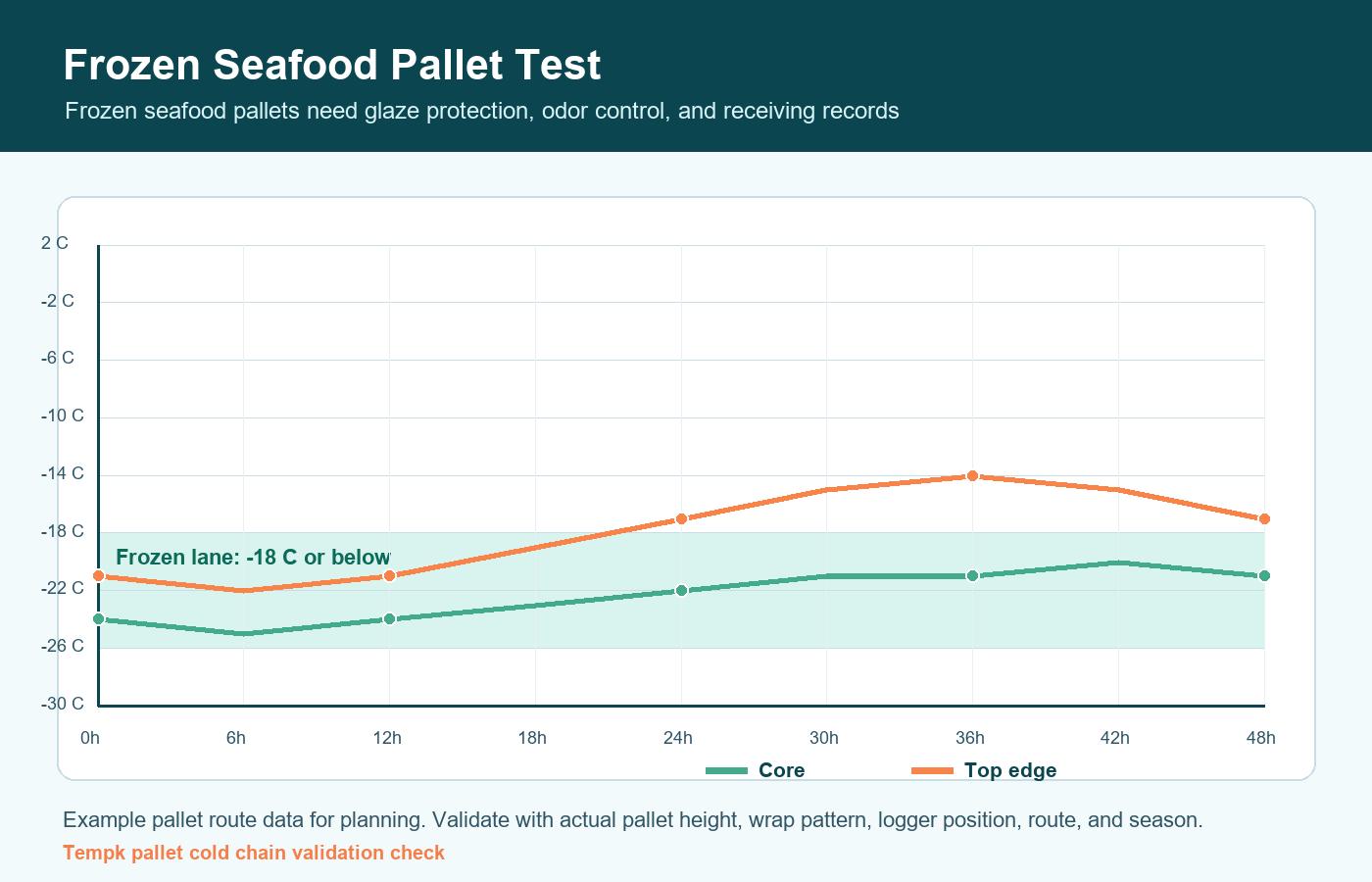
Utilice estas páginas para comparar rutas de palacios cercanos, hielo seco planning, elección de aislamiento, y riesgo de ruta antes del muestreo.
Las paletas de mariscos congelados necesitan temperatura congelada además de control de humedad y olores. marisco glaseado, cajas con revestimientos, y las cargas de especies mixtas pueden comportarse de manera diferente en el mismo remolque.
Los fallos típicos son los cartones de esquina descongelados., pérdida de esmalte, olor a marisco en el trailer, cartones mojados, y cajas aplastadas por apilamiento desigual.
Utilice un embalaje interior resistente a fugas., cajas fuertes, palé esquineros, y una cubierta superior que protege de la condensación del muelle sin atrapar el agua de deshielo.
Complementar con hielo seco o gel congelado sólo después de comprobar la ventilación., control de olores, y seguridad del manipulador. No coloque refrigerante donde pueda romper las uniones de la caja..
Inspeccionar el esmalte, olor, humedad del cartón, y temperaturas pálidas en las esquinas. Los controles de Marisco palé deben incluir una nota de fugas y olores..
Palés de marisco congelado should be validated beyond palé temperature. marisco glaseado, filetes en caja, y los mariscos pueden crear problemas de humedad y olores cuando los cartones de borde se descongelan parcialmente durante la espera en muelle.
Utilice cartones fuertes, esquineros, y una cubierta superior que protege de la condensación sin atrapar el agua de deshielo. El hielo seco suplementario o el gel congelado no deben bloquear el flujo de aire ni dañar las uniones de la caja..
Tempk debería mapear el núcleo pálido, esquinas expuestas, capa superior, y posiciones en el muelle. La recepción debe verificar el estado del esmalte., olor, humedad del cartón, estabilidad pálida, y dureza del producto.
Custom configuración de embalaje support
Para tamaños de cartón fijos, límites de carga útil, requisitos de marca, carriles estacionales, o objetivos de validación, Tempk can adapt this solution into a custom cold-chain configuración de embalaje.
Comparte las dimensiones pálé., masa del producto, patrón de cartón, temperatura objetivo, tiempo en muelle, tipo de remolque, pasos del muelle de transbordo, condición ambiental, y recibir cheques. Tempk puede ayudar a comparar portadas, revestimiento, acumuladores de gel, PCM, hielo seco support, posiciones de registradores, y pasos de validación.
Solicitar revisión de ruta de palés