


Filetes De Salmón
Proteger la textura fría, presentación del lado de la piel, control de goteo, y sequedad del cartón sin dejar que los paquetes de gel congelados toquen el paquete de pescado directamente.
Los envíos de mariscos fracasan por diferentes motivos: Los filetes frescos pueden gotear y perder textura., Los filetes de atún necesitan un control más estricto del calentamiento, las ostras deben permanecer frías sin congelarse, y los mariscos congelados necesitan un plan de ruta de congelados separado. Esta página ayuda a relacionar el tipo de marisco con el aislamiento., colocación de refrigerante, control de humedad, y validación de ruta.
Pescado fresco, mariscos vivos, y los mariscos congelados necesitan un comportamiento diferente del refrigerante. El embalaje debe proteger la temperatura., humedad, fuga, olor, y presión del producto al mismo tiempo. For fully frozen lanes, ver Soluciones de envasado de cadena de frío para alimentos congelados..
Proteger la textura fría, presentación del lado de la piel, control de goteo, y sequedad del cartón sin dejar que los paquetes de gel congelados toquen el paquete de pescado directamente.
Controlar la estancia cálida, color de la superficie, transferencia de olores, y marcas de presión para programas de atún sensibles a la histamina que se mueven a través de paquetes o rutas aéreas.
Mantenga las ostras frías, húmedo, y protegido del congelamiento, agua de deshielo estancada, fuerza aplastante, y etiquetas de mariscos ilegibles.
Estos rangos de planificación ayudan a decidir qué paquete de Tempk validar primero. La masa de refrigerante final debe probarse con la carga útil real., tamaño de la caja, temperatura del carril, y nivel de servicio.
| Ruta del marisco | Objetivo común | Estructura de embalaje | Punto de partida del refrigerante | Mira primero |
|---|---|---|---|---|
| filetes frescos, 8-18 h | Manténgase cerca de 0-2 C de calidad sin dejar de cumplir con el programa de seguridad alimentaria del transportista. | Revestimiento de fugas, almohadilla absorbentee, bandeja de producto o bolsa de vacío, refrigerante lateral/perimetral, EPP o cartón aislado. | Acerca de 0.6-1.2 kg de paquetes de gel acondicionado o 0 PCM para 1-3 kg de carga útil. | Marcas de congelación directa, goteo, cartones mojados, transferencia de olores. |
| Pescado fresco, 18-36 h | Ruta casi helada con permanencia menos cálida en el momento de la recogida y la entrega. | Aislamiento más fuerte, revestimiento interior sellado, Refrigerante superior y lateral separados, registrador en el espacio aéreo del producto. | Acerca de 1.2-2.4 paquetes de gel de kg o PCM para 1-3 kg de carga útil. | Contacto de refrigerante, compresión de caja, temperatura de recepción. |
| mariscos vivos, 8-30 h | Frío y húmedo, pero no congelado ni sumergido en agua de deshielo. | Diseño de cargador transpirable o no hermético según sea necesario, revestimiento húmedo, protección de concha, refrigerante separado encima o al lado del producto. | Acerca de 0.5-1.8 paquetes de gel acondicionado de kg, ajustado al volumen y temporada del marisco. | Lesión por congelación, agua estancada, rotura de concha, legibilidad de etiquetas. |
| Mariscos congelados | -18 C o inferior cuando la ruta se especifica como congelada. | Transportista congelado, Plan de hielo seco o refrigerante congelado., brecha de vapor, controles de etiquetas y transportistas. | Utilice la planificación con hielo seco por tamaño de caja, carga útil, tiempo de ruta, y límite de transportista. | Sublimación con hielo seco, marcado reglamentario, deshielo en la última milla. |
Úselos como rangos de planificación, luego validar. Para pallets de marisco congelado, ver Paletas de Mariscos Congelados.
Una verificación de la ruta de los productos del mar debe mostrar tanto el control de la temperatura como el estado del producto en el momento de la recepción.: goteo, olor, presión de cáscara o filete, condición de la etiqueta, y si el refrigerante permaneció separado del producto.
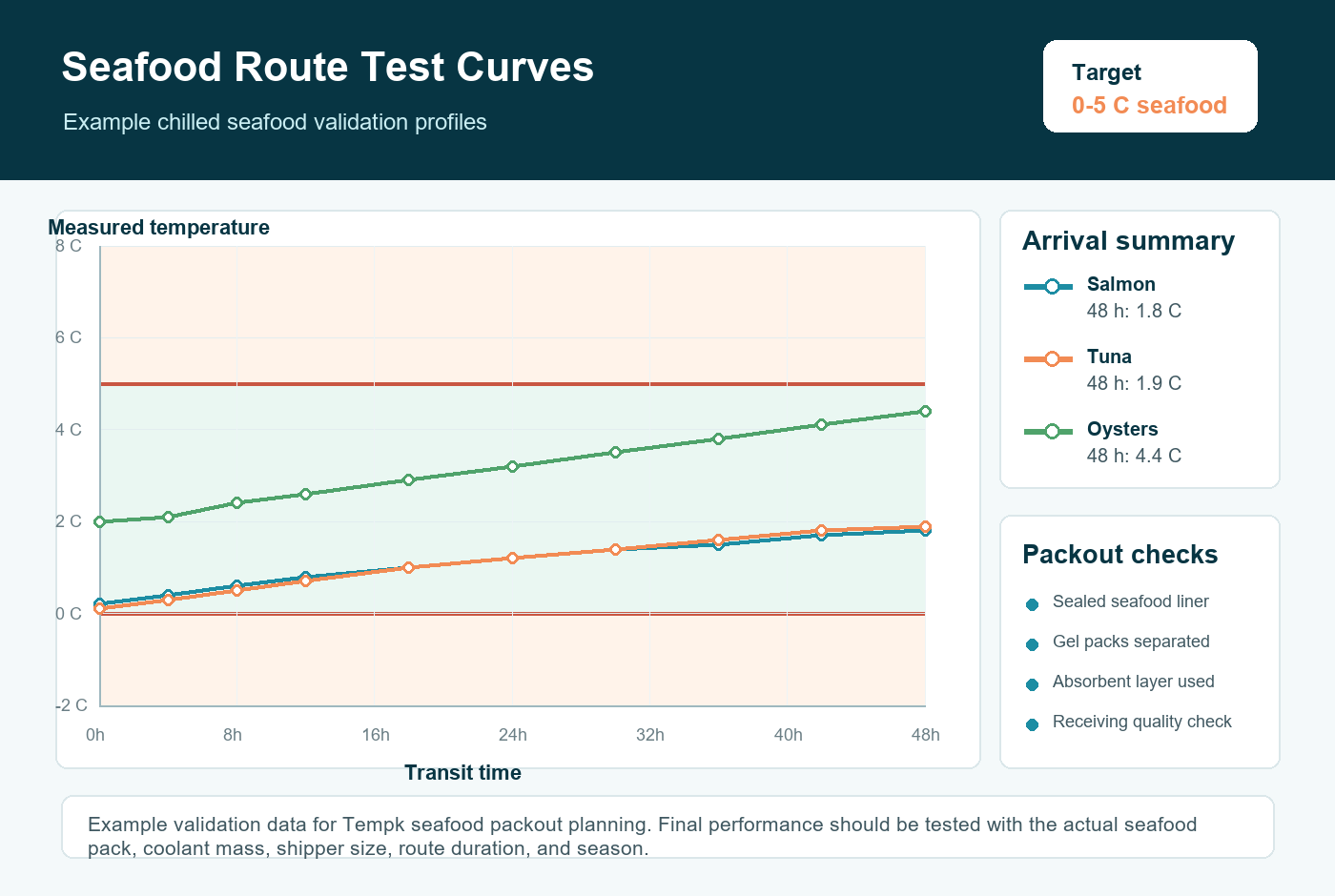
Utilice estas notas del producto cuando el tipo de marisco no esté en una de las tres páginas prioritarias pero aún necesite una humedad diferente., presión, o decisiones de colocación de refrigerante.
Para programas de productos del mar más pequeños que aún necesitan notas de manipulación específicas del producto, Revise la guía de embalaje antes de construir el carril de prueba..
Para programas de productos del mar más pequeños que aún necesitan notas de manipulación específicas del producto, Revise la guía de embalaje antes de construir el carril de prueba..
Para programas de productos del mar más pequeños que aún necesitan notas de manipulación específicas del producto, Revise la guía de embalaje antes de construir el carril de prueba..
Para programas de productos del mar más pequeños que aún necesitan notas de manipulación específicas del producto, Revise la guía de embalaje antes de construir el carril de prueba..
Para programas de productos del mar más pequeños que aún necesitan notas de manipulación específicas del producto, Revise la guía de embalaje antes de construir el carril de prueba..
Ejecute un primer cálculo, elige la familia de refrigerantes, y luego validar la ruta con el paquete de mariscos real. For parcel and express lanes, ver Soluciones de cadena de frío para paquetería y entrega urgente..
Programas relacionados: Cajas de suscripción de mariscos y todas las soluciones de cadena de frío.
Comparte el formulario de mariscos., peso de carga útil, tamaño de la caja, nivel de servicio, temperatura de origen, temporada de carril, y ventana de recepción. Tempk puede ayudar a comparar el aislamiento, masa refrigerante, colocación, y pasos de validación.
Los envíos de mariscos no deben utilizar una receta de caja fija para cada producto.. Comenzar con 0-2 C control enfriado para mariscos frescos o -18 Control C para formatos congelados, luego separe los productos por carga de calor, resistencia del embalaje, y como son recibidos. Para programas mixtos, Tempk suele comparar una ruta local corta, una ruta de paquetería nocturna, y la temporada más calurosa esperada antes de confirmar el transportista.
Utilice un revestimiento resistente a fugas, capa absorbentee, cargador aislado, y caja exterior con control de orientación claro. El plan de refrigeración debe comenzar con bolsas de hielo en gel para mariscos refrigerados., Hielo seco o PCM congelado solo cuando el producto se vende congelado.. Cuando la carga útil tiene cajas de venta minorista delicadas, textura suave, material vivo, o documentación médica, Proteja la carga útil primero y luego agregue capacidad de enfriamiento.. Si el envío se retrasa en el embalaje, manos libres, aduanas, o traslado de muelle, se debe volver a verificar el perfil de ruta en lugar de solo aumentar el peso del refrigerante.
La validación debe incluir la verificación de la pérdida por goteo., control de olores, sequedad superficial, y registros del registrador en el punto más caliente del producto. Una prueba útil registra el punto de carga útil más cálido, el punto más frío cerca del refrigerante, y la condición de recepción después de la manipulación. Esto le da al equipo de operaciones una instrucción práctica sobre el embalaje., no solo una tabla de temperatura.
Soporte de paquete personalizado
Para tamaños de cartón fijos, límites de carga útil, requisitos de marca, carriles estacionales, o objetivos de validación, Tempk puede adaptar esta solución a un paquete de cadena de frío personalizado.