


Compatibilidad de SKU mixtos
alimentos preparados, lácteos, producir, y las bebidas pueden no compartir el mismo olor, humedad, o tolerancia a la resistencia del cartón.
Los palés mixtos refrigerados combinan productos con distinta humedad, olor, resistencia del cartón y sensibilidad térmica. El plan de ruta debe mantener el palé frío sin bloquear el flujo de aire ni aplastar cartones más blandos.
Las rutas de palés deben evaluarse por temperatura a nivel de carga y condición de recepción. El siguiente plan ofrece un punto de partida práctico antes de realizar una prueba de carril con el patrón de palé real y el proceso de remolque..
alimentos preparados, lácteos, producir, y las bebidas pueden no compartir el mismo olor, humedad, o tolerancia a la resistencia del cartón.
El exceso de envoltura puede atrapar zonas cálidas y evitar que el aire frío del almacén o del remolque llegue a las áreas expuestas..
Las cajas exteriores ven primero la exposición al muelle y al traslado del remolque, mientras que la condensación puede debilitar las etiquetas y el cartón.
| Condición de ruta | Intención de temperatura | Configuración de protección de carga | Planificación de refrigerante o cubierta | Revisión en recepción |
|---|---|---|---|---|
| Cámara fría to camión refrigerado, 0-4 h exposición en muelle | Utilice el requisito de SKU más estricto en el palé, a menudo 2-8 C para alimentos refrigerados. | Pálido preenfriado, envoltura con flujo de aire previsto, esquineros si es necesario, Cobertura térmica durante el traslado al muelle.. | Generalmente no se agrega refrigerante cuando el carril del camión refrigerado está estable. Si la exposición al traspaso es alta, prueba 4-10 kg PCM or acumuladores de gel in a separated palé buffer. | Arriba, borde, and temperatura del núcleos; movimiento de la envoltura; cartones mojados; cartones blandos triturados. |
| Muelle de transbordo or ruta de varias paradas, 4-12 h | Mantener temperatura fría a través de puntos de transferencia y eventos de puerta abierta. | Cubierta térmica de palé or liner, Separación de SKU por riesgo de humedad/olor, mapa de registradores at borde expuesto and core. | Para soporte pasivo validado, prueba sobre 8-20 kg PCM o acumuladores de gel acondicionado, colocado de manera que el flujo de aire no esté bloqueado. | Diferencia de temperatura, condensación, legibilidad de la etiqueta, transferencia de olores, y retraso en la recepción. |
| Interrupción o ruta de amortiguación pasiva, 12-24 h | Ruta refrigerada validada con más aislamiento y límites de recepción claros. | Insulated funda de palé, patrón envolvente transpirable o controlado, zonas de refrigerante separadas, revisión de riesgo de ruta. | Acerca de 20-40 Es posible que se necesiten kg de PCM o acumuladores de gel acondicionados para un plan de palé pasivo.; confirmar con prueba de carril. | curva de registro, humedad del cartón, calentamiento de bordes, compatibilidad del producto, y ajuste de la cubierta. |
Utilice estos rangos para muestreo y cotización. Final hielo seco, PCM, acumulador de gel, cubrir, o la elección del revestimiento debe confirmarse con masa pálida., patrón de cartón, duración de la ruta, ventilación, Reglas del operador, exposición ambiental, y manejo de recepción.
Separe los productos que crean humedad., absorber el olor, o aplastar fácilmente. Palé mixto de comestibless falla cuando se ignora el SKU más débil.
No envuelva tan apretado que el flujo de aire se bloquee.. Usar respiraderos, ajuste de la cubierta, y tensión de envoltura según el diseño del almacén y del remolque.
Los paquetes de gel o PCM pueden ayudar durante la exposición al traspaso, pero sólo cuando estén separados del producto y no bloqueen los canales de aire..
Colocar sensores en la parte superior., borde exterior, centro, y capa inferior para que la revisión de la ruta refleje todo el palé.
Estos son los problemas visibles y operativos que el plan palé debería reducir antes de que la carga llegue al receptor.
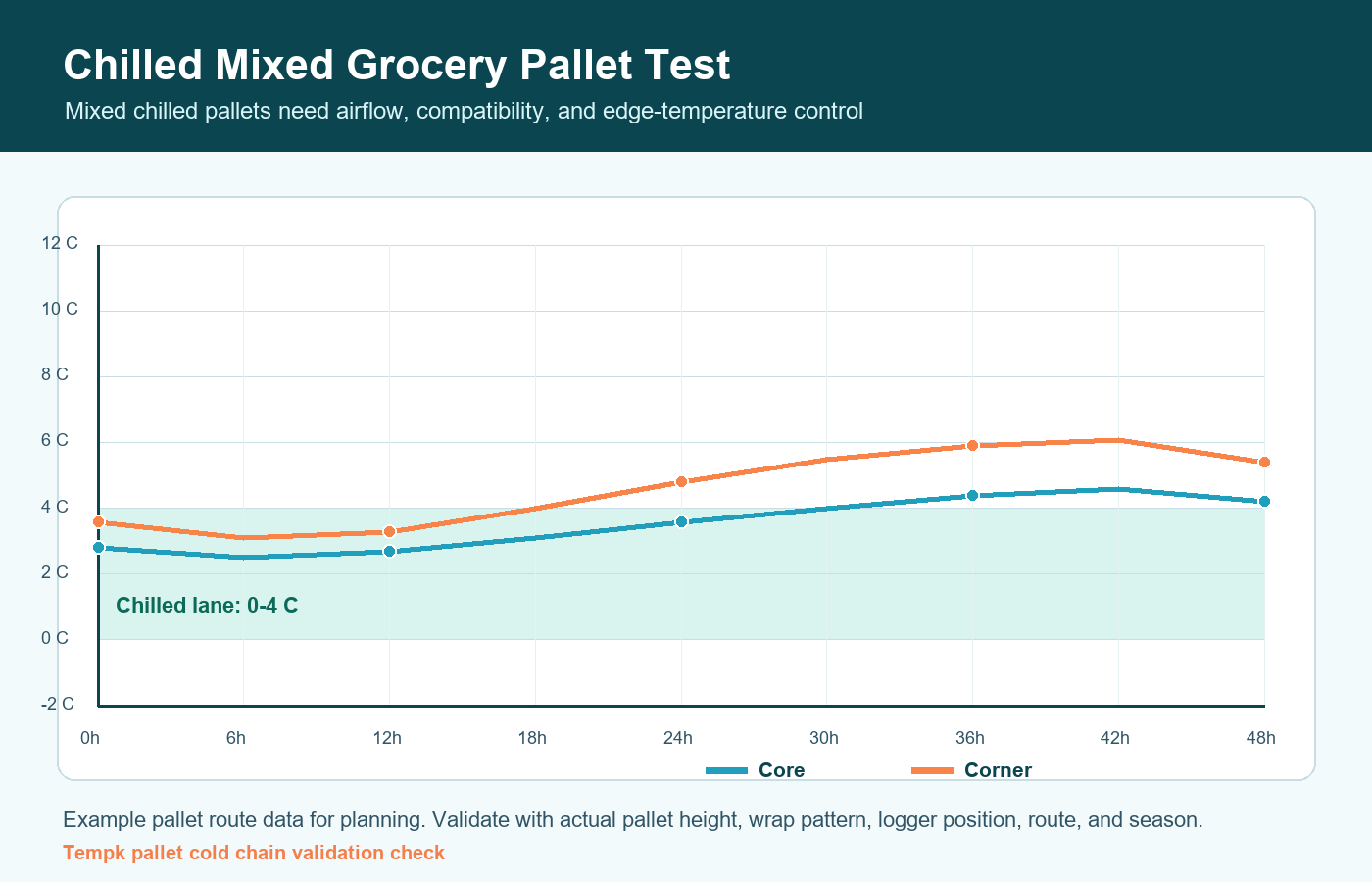
Utilice la curva de prueba como comparación de trabajo, luego validar con la masa palé real, cubrir, transatlántico, soporte de refrigerante, proceso de remolque, y temporada. For palés, El borde expuesto y la capa superior a menudo importan tanto como el núcleo..
Utilice estas páginas para comparar rutas de palacios cercanos, hielo seco planning, elección de aislamiento, y riesgo de ruta antes del muestreo.
For chilled palés mixtos de comestibles, Los palés mixtos contienen productos con diferentes cargas térmicas y límites de trituración.. La configuración de embalaje debe elegirse entre las condiciones del producto y la promesa de entrega., no solo por el tamaño de la caja. Comenzar con 0-4 C refrigerado o -18 C control congelado a través de la puesta en escena pálé, traslado de muelle, y transporte de línea, luego decida si el mayor riesgo es el calentamiento, congelación, condensación, fuga, daño por presión, o retraso en la recepción.
Utiliza mantas pálé o puesta en escena fría, Coloque los artículos sensibles lejos de los bordes pálidos., and reduce espera en muelle time. Validar los cartones de borde y el núcleo palé por separado. El aislamiento debe dejar una cavidad de carga útil estable y el refrigerante debe colocarse donde elimine el calor sin tocar las superficies sensibles del producto.. Si el recorrido es corto y controlado, un diseño de paquete de gel acondicionado más ligero puede ser suficiente. Si la ruta incluye estancia en parcela de verano, retraso en el transporte aéreo, o fin de semana recibiendo riesgo, use más aislamiento o un perfil PCM más suave antes de agregar refrigerante congelado agresivo.
Ejecute la prueba con el recuento de productos real, tamaño de la caja, masa refrigerante, y flujo de trabajo del empacador. Registre el punto de producto más cálido, el punto más frío al lado del refrigerante, condición del paquete, y tiempo desde la entrega hasta el almacenamiento. La recomendación final de Tempk debe indicarle al equipo de empaque exactamente dónde se ubica cada elemento de refrigerante y qué debe verificar primero el receptor..
Custom configuración de embalaje support
Para tamaños de cartón fijos, límites de carga útil, requisitos de marca, carriles estacionales, o objetivos de validación, Tempk can adapt this solution into a custom cold-chain configuración de embalaje.
Comparte las dimensiones pálé., masa del producto, patrón de cartón, temperatura objetivo, tiempo en muelle, tipo de remolque, pasos del muelle de transbordo, condición ambiental, y recibir cheques. Tempk puede ayudar a comparar portadas, revestimiento, acumuladores de gel, PCM, hielo seco support, posiciones de registradores, y pasos de validación.
Solicitar revisión de ruta de palés