


Calor y luz solar
La espera cálida puede afectar color, olor y confianza en la marca, especialmente cuando los paquetes quedan en vehículos, lockers o puertas.
Los paquetes de sérum de vitamina C necesitan control de calor, protección de luz y soporte cuidadoso del frasco. El objetivo es reducir la exposición al calor de verano sin causar contacto congelado, etiquetas mojadas, fuga de tapa o movimiento del frasco de vidrio.
Para entrega cosmética en cadena de frío, el mejor empaque protege tanto la condición de la fórmula como la presentación al cliente. La configuración siguiente da un punto de partida práctico antes de probar la ruta.
La espera cálida puede afectar color, olor y confianza en la marca, especialmente cuando los paquetes quedan en vehículos, lockers o puertas.
Un gel pack demasiado cerca del cartón retail puede motarro etiquetas y cajas impresas aunque la temperatura del producto parezca aceptable.
Los frascos y goteros de vidrio necesitan soporte en la cavidad central para que el producto no vibre., chip, o presione en un paquete de gel.
| Condición de la ruta | Intención de temperatura | Configuración de embalaje | Rango preliminar de refrigerante | Revisión de recepción |
|---|---|---|---|---|
| mensajero local, 4-8 h | Protección fría contra el calor.; Siga las instrucciones de almacenamiento de la etiqueta si se requiere manipulación en frío.. | Envío publicitario aislado o caja de cartón aislante pequeña, manga del frasco, 1-2 pequeños paquetes de gel acondicionados o PCM con placa espaciadora. | Acerca de 0.3-0.7 kilogramos para un 0.5-2 kg de carga útil de suero. | Movimiento de botella, sello de tapa, sequedad de etiqueta, y cálido tiempo de transferencia. |
| Cálida ruta de comercio electrónico, 8-24 h | A menudo se planifica como una ruta fría, como 8-15°C, cuando la marca necesita reducción de calor.; evitar la congelación. | Cartón aislado o caja compacta de EPP, cavidad central del producto, refrigerante acondicionado en posiciones laterales/superiores, amortiguador corrugado o de espuma. | Acerca de 0.7-1.5 kilogramos para un 0,5-3 kg de carga útil. | Temperatura mínima, etiquetar humedad, aplastamiento de cartón, y cualquier preocupación por el color u olor. |
| Ruta caliente o riesgo de retraso, 24-36 h | Utilice un objetivo frío o frío probado según la etiqueta del producto y la promesa al cliente.. | Aislamiento más grueso, mayor masa de PCM o paquete de gel, Producto aislado de superficies frías., registrador opcional para carriles premium. | Acerca de 1.5-2.6 kg para un cargador compacto; validar antes del lanzamiento. | Curva del registrador, estado refrigerante restante, fuga de tapa, y apariencia del producto. |
Utilice estos rangos para discusiones y muestreos sobre empaques.. La masa final del refrigerante debe confirmarse con la fórmula actual., recuento de unidades, tamaño del frasco o tarro, dimensiones del cartón, duración de la ruta, condición ambiental, y cualquier requisito del registrador.
No congele ni enfríe demasiado los frascos a menos que la etiqueta y el proceso de calidad interno lo permitan.. Condición de refrigerante antes de la configuración de embalaje para que el producto no se vea afectado por una superficie congelada..
Coloque los frascos en una manga., bandeja, o divisor. Mantenga material absorbente o resistente a la humedad entre la caja de venta al por menor y el refrigerante..
Utilice la ubicación lateral y superior para los carriles de verano, pero mantenga un espaciador físico entre el refrigerante y el frasco o caja de venta al por menor.
La revisión de la recepción debe incluir el registro de temperatura, si se utiliza., sequedad de etiqueta, condición de la tapa, movimiento de vidrio, y señales visibles de color u olor..
Estos son los problemas que la configuración de embalaje debe reducir antes de que el envío llegue al cliente.
Utilice la curva de prueba como comparación de trabajo, luego validar con el producto real, refresco, aislamiento, duración de la ruta, y temporada. For cuidado de la piel, también revisa la presentación: sequedad de etiqueta, condición del cartón, sello de tapa, y textura del producto.
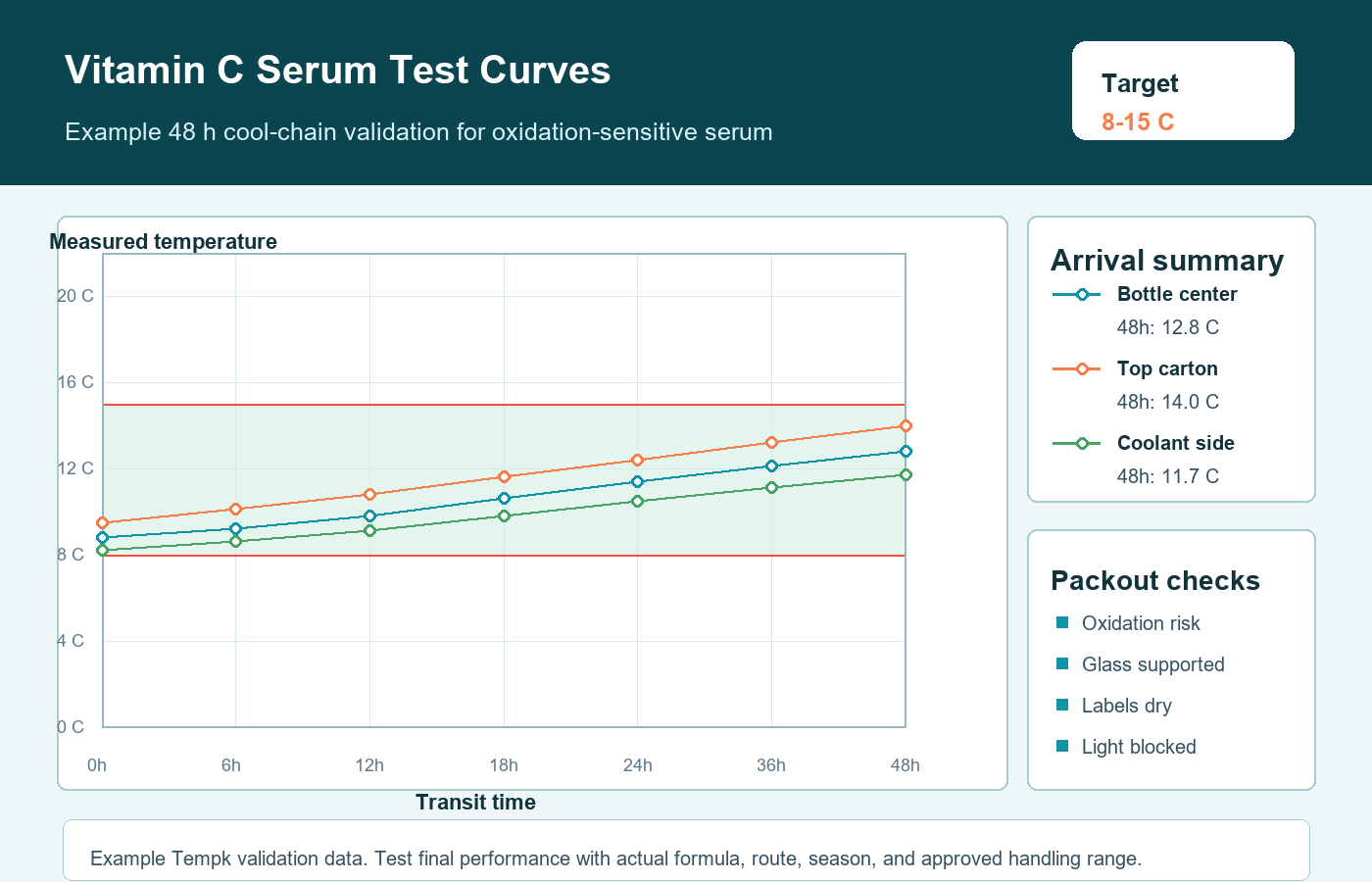
Utilice estas páginas para comparar rutas de productos cercanas, seleccionar refrigerante, y comprobar el riesgo de la ruta antes del muestreo.
El sérum de vitamina C puede oscurecerse o perder atractivo cuando se expone al calor y la luz.. The configuración de embalaje should moderate temperature while protecting glass frascos, goteros, y cajas de venta al por menor.
Esté atento al cambio de color, goteros con fugas, hinchazón del cartón, levantamiento de etiquetas, y vidrios rotos por contacto directo con refrigerante duro.
Utilice un divisor o frasco celular., agregue una barrera contra la humedad alrededor del cartón minorista, y coloque el refrigerante al lado de un amortiguador en lugar de contra el vidrio..
Utilice paquetes de gel frío o PCM para la entrega de paquetes en temporada cálida. Evite el enfriamiento excesivo si la fórmula no está etiquetada para transporte refrigerado..
Comparar color, claridad, viscosidad, y función cuentagotas antes y después de la ruta. Un registro fotográfico es útil para la revisión de la calidad de la marca..
Para suero de vitamina C en frascos cuentagotas de vidrio, use divisores o celdas de frasco dentro del paquete aislado. El gel frío o PCM puede reducir los picos de calor del verano, pero el refrigerante no debe tocar directamente el vidrio o las cajas de papel.. Agregue una barrera contra la humedad donde las etiquetas o cajas miran hacia la zona fría.. Si el producto no está etiquetado como refrigerado, validate a heat-moderation configuración de embalaje rather than a very cold payload. Comparar color, claridad, viscosidad, función cuentagotas, adhesión de etiquetas, y secado del cartón antes y después de la ruta.
Custom configuración de embalaje support
Para tamaños de cartón fijos, límites de carga útil, requisitos de marca, carriles estacionales, o objetivos de validación, Tempk can adapt this solution into a custom cold-chain configuración de embalaje.
Comparte las instrucciones de almacenamiento., recuento de unidades, tamaño del cartón, peso de carga útil, duración de la ruta, condición ambiental, entrega de entrega, y si necesitas un registrador de temperatura. Tempk puede ayudar a comparar paquetes de gel, PCM, PPE, cajas aisladas, capas de buffer, y recibir cheques.
Solicitar una revisión de configuración