


Estimar la masa del refrigerante
Usar peso de carga útil, tiempo de ruta, tamaño de la caja, y temperatura ambiente estacional antes de pedir el primer paquete de prueba.
El empaque de pechuga de pollo debe controlar la temperatura fría y las fugas de aves crudas al mismo tiempo.. Un paquete útil contiene el producto en 0-4 do, mantiene el refrigerante separado del paquete primario, y agrega suficiente revestimiento y capacidad absorbentee para proteger cajas de cartón y artículos cercanos.
Las cantidades de refrigerante a continuación son rangos iniciales para la planificación.. El paquete final debe validarse con la carga útil exacta, tamaño de la caja, carril de transporte, y temporada.
| Condición de la ruta | Intención de temperatura | Configuración del embalaje Tempk | Rango de planificación de refrigerante | Posición del refrigerante |
|---|---|---|---|---|
| Ruta avícola local o del mismo día, 8-18 h | 0-4 C enfriado | Paquete sellado primario, revestimiento secundario, almohadilla absorbentee, EPP o cartón aislado. | 0.8-1.4 kg de paquetes de gel acondicionado o 0 PCM para 1-4 kg de carga útil. | Refrigerante lateral con divisor; no permita que el agua derretida o la condensación lleguen a los paquetes de aves. |
| Paquete nocturno, 18-36 h | 0-4 C con permanencia cálida baja | Aislamiento más grueso, barrera de doble fuga, base absorbentee, registrador en el espacio aéreo del producto. | 1.4-2.6 paquetes de gel de kg o PCM para 1-4 kg de carga útil. | Refrigerante superior y lateral separados por tablero o bolsa; proteger el revestimiento de pinchazos. |
| Ruta caliente o riesgo de retraso, 36-48 h | Ruta refrigerada validada | Mayor aislamiento, espacio de cabeza reducido, contención secundaria más fuerte, servicio de transporte más rápido cuando sea posible. | 2.6-4.2 paquetes de gel de kg o PCM para 1-4 kg de carga útil. | Si aparece humedad en la caja, Mejore el revestimiento y la estructura absorbentee antes de agregar refrigerante.. |
Para una primera estimación más ajustada, usar el Calculadora de bolsa de hielo. Si la ruta está congelada, comparar con el Calculadora de hielo seco antes de probar.
La secuencia correcta reduce la permanencia cálida, fuga, contacto con refrigerante, y daños en el paquete antes de que la caja llegue al receptor.
El paquete debe mantener la temperatura., No derribar aves de corral crudas y calientes después de empacarlas..
Utilice el paquete de producto principal más un revestimiento secundario apto para alimentos con material absorbentee del tamaño adecuado para la purga esperada..
Mantenga los paquetes de gel o PCM alrededor de la cámara con un divisor para que los paquetes sin procesar no se aplasten ni se mojen..
Registrar la temperatura del producto, fuga, sequedad del cartón, olor, punción del revestimiento, y si el refrigerante se desplazó durante el tránsito.
Utilice estas comprobaciones de recepción cuando decida si ajustar la masa del refrigerante., estructura del revestimiento, o espesor del aislamiento.
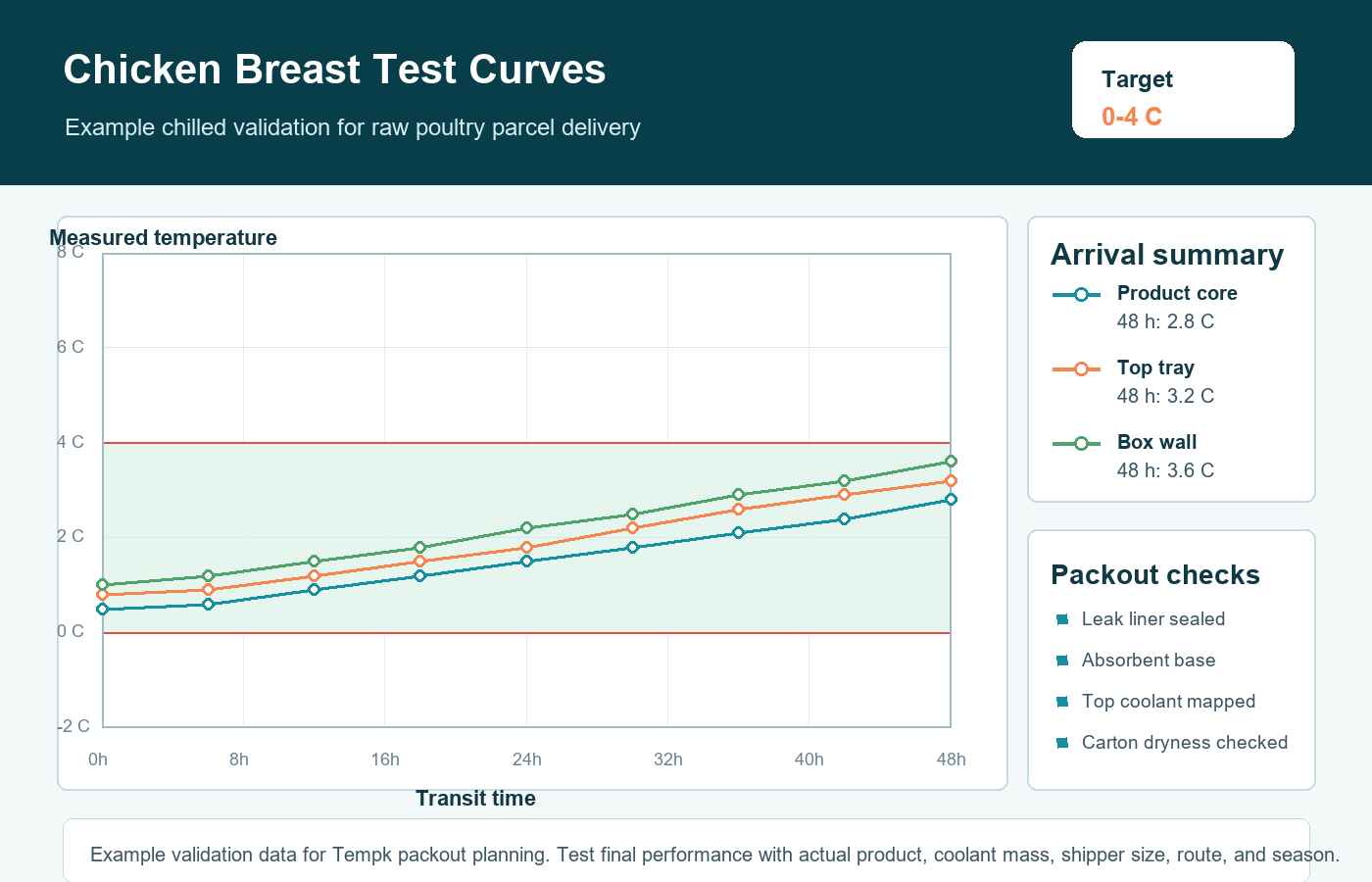
Utilice la página del producto para la lógica de manejo., luego dimensione la primera prueba con herramientas y valide la ruta real.
Usar peso de carga útil, tiempo de ruta, tamaño de la caja, y temperatura ambiente estacional antes de pedir el primer paquete de prueba.
Comparar paquetes de gel acondicionados, 0 PCM, y lógica de hielo seco de ruta congelada antes de cambiar el tamaño del aislamiento.
Revisar la recogida en espera, retraso en la última milla, ventana receptora, y sazonar antes de emprender una ruta de carne.
Comparte el formulario del producto, objetivo refrigerado o congelado, peso de carga útil, tamaño de la caja, duración de la ruta, estación, y recibir cheques. Tempk puede ayudar a elegir el aislamiento, masa refrigerante, estructura del revestimiento, y pasos de validación.
Soporte de paquete personalizado
Para tamaños de cartón fijos, límites de carga útil, requisitos de marca, carriles estacionales, o objetivos de validación, Tempk puede adaptar esta solución a un paquete de cadena de frío personalizado.