


filetes
Elija un paquete de gel frío o una lógica de hielo seco congelado en función de si el bistec debe llegar fresco, profundamente helado, o sólido congelado.
Los envíos de carne y aves no son un problema de embalaje. Los filetes premium se pueden enfriar o congelar., El pollo crudo necesita una contención de fugas más fuerte, y las carnes frías necesitan una presentación minorista limpia. El paquete debe coincidir con la forma del producto., temperatura objetivo, comportamiento del refrigerante, duración de la ruta, y recibir controles de calidad.
La temperatura importa, pero los programas de carne también fallan por fugas de purga, bandejas trituradas, etiquetas mojadas, contacto con refrigerante, y una intención poco clara de elegir entre refrigeración y congelación.
Elija un paquete de gel frío o una lógica de hielo seco congelado en función de si el bistec debe llegar fresco, profundamente helado, o sólido congelado.
Controle las fugas de aves crudas, capacidad absorbentee, integridad del revestimiento, y riesgo de contacto cruzado mientras se mantiene un 0-4 C ruta refrigerada.
Proteger 0-4 temperatura C, legibilidad de la etiqueta, apariencia del paquete minorista, condensación, y separación de olores sin congelar la superficie del producto.
Utilice estos rangos de planificación para elegir el primer paquete de Tempk para realizar pruebas. La masa de refrigerante final debe validarse con la carga útil exacta, tamaño de aislamiento, ruta, y temporada.
| Ruta del producto | Objetivo común | Estructura de embalaje | Punto de partida del refrigerante | Mira primero |
|---|---|---|---|---|
| Filetes refrigerados premium, 8-36 h | 0-2 C para una presentación fría de alta calidad, o 0-4 C donde el programa de seguridad alimentaria lo permita. | Envasado al vacío o en bandeja, capa absorbentee, revestimiento de fuga, EPP o cartón aislado, paquetes de gel separados o 0 PCM. | Acerca de 0.8-2.8 paquetes de gel de kg o PCM para 1-4 kg de carga útil. | Marcas de congelación, purga, abolladuras de bandeja, cambio de color. |
| Pechuga de pollo cruda, 8-36 h | 0-4 C ruta refrigerada con estricto control de fugas. | Paquete sellado primario, revestimiento secundario, base absorbentee, refrigerante separado de los paquetes de aves. | Acerca de 0.8-2.6 paquetes de gel acondicionado de kg o PCM para 1-4 kg de carga útil. | Fugas, impregnación de cartón, riesgo de contacto cruzado, capa superior cálida. |
| Embutidos y fiambres, 8-36 h | 0-4 C ruta refrigerada para envases procesados o listos para el consumo. | Bolsa o bandeja para venta al por menor, barrera de condensación, protección de etiquetas, refrigerante lateral y superior con divisor. | Acerca de 0.6-2.2 paquetes de gel de kg o PCM para 1-4 kg de carga útil. | Condensación, daño en la etiqueta, transferencia de olores, congelación de la superficie. |
| Envíos de carne congelada | -18 C o inferior cuando la ruta se especifica como congelada. | Transportista congelado, Plan de hielo seco o refrigerante congelado., brecha de vapor, controles de etiquetas y transportistas. | Utilice la planificación con hielo seco por tamaño de caja, peso de la carne, tiempo de ruta, y límite de transportista. | Sublimación con hielo seco, deshielo en la última milla, marcado reglamentario. |
Para paletas congeladas o programas a granel, ver Paletas de carne congelada. Para programas de suscripción, ver Cajas de carne DTC.
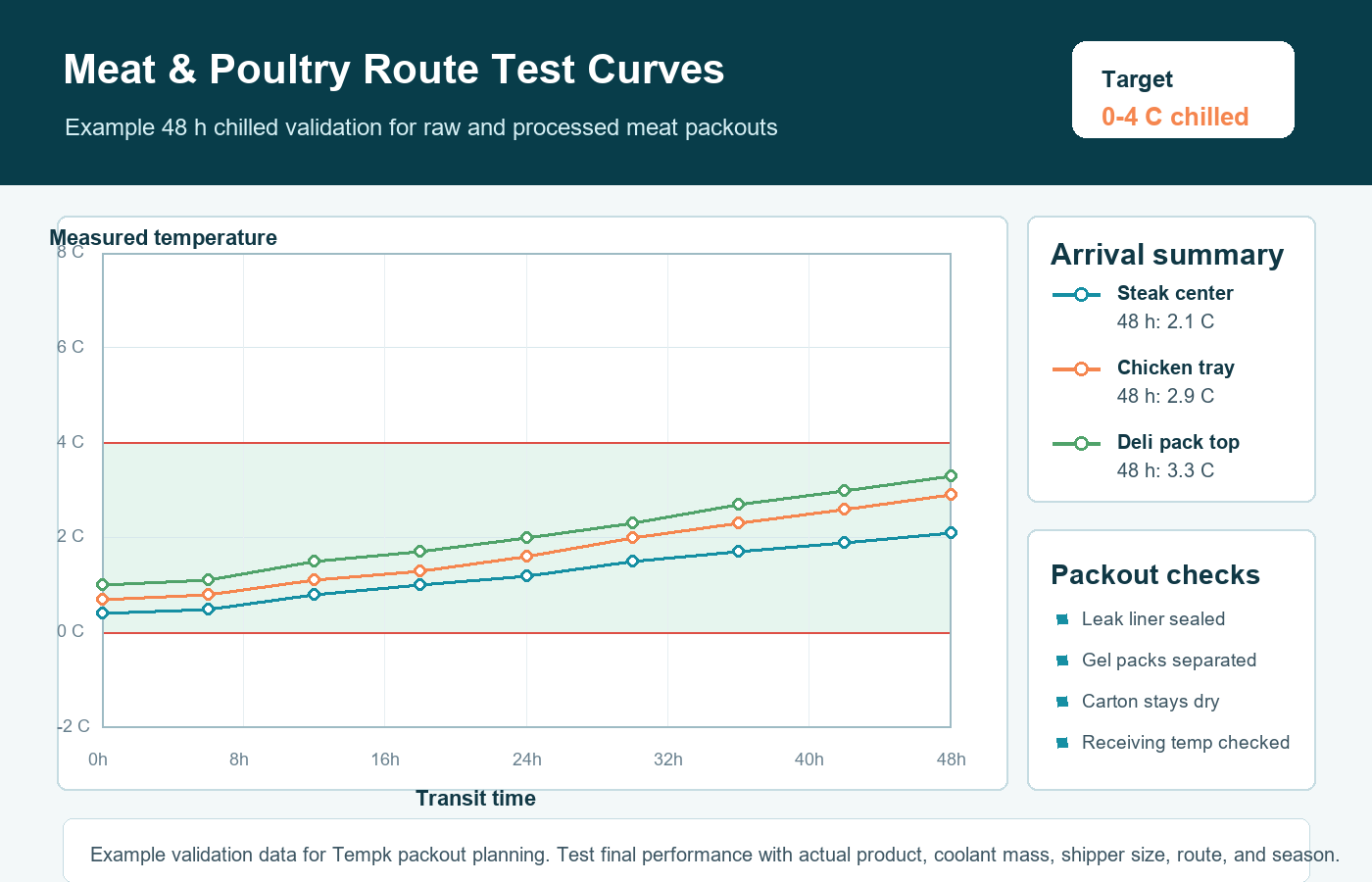
Las curvas de temperatura solo son útiles cuando se combinan con cheques de recepción: purga, fuga, condición de la etiqueta, sequedad del cartón, posición del refrigerante, y calidad de la superficie del producto.
Estas guías de productos admiten la página de categorías sin forzar que cada producto esté en una página de soluciones separada..
Utilice esta guía cuando el producto no esté en una de las tres páginas de prioridad pero aún necesite una decisión sobre el empaque de carne específica del producto..
Utilice esta guía cuando el producto no esté en una de las tres páginas de prioridad pero aún necesite una decisión sobre el empaque de carne específica del producto..
Utilice esta guía cuando el producto no esté en una de las tres páginas de prioridad pero aún necesite una decisión sobre el empaque de carne específica del producto..
Utilice esta guía cuando el producto no esté en una de las tres páginas de prioridad pero aún necesite una decisión sobre el empaque de carne específica del producto..
Utilice las herramientas para dimensionar la primera prueba., luego validar con la carga útil de carne real y recibir cheques.
Comparte el formulario del producto, objetivo refrigerado o congelado, peso de carga útil, tamaño de la caja, duración de la ruta, estación, y recibir cheques. Tempk puede ayudar a elegir el aislamiento, masa refrigerante, estructura del revestimiento, y pasos de validación.
Carne & Los envíos de aves de corral no deben utilizar una receta de caja fija para cada producto.. Comenzar con 0-4 C control enfriado para cortes frescos o -18 C para programas de carne congelada, luego separe los productos por carga de calor, resistencia del embalaje, y como son recibidos. Para programas mixtos, Tempk suele comparar una ruta local corta, una ruta de paquetería nocturna, y la temporada más calurosa esperada antes de confirmar el transportista.
Utilice soporte para envasado al vacío, almohadillas absorbentees, revestimiento de fuga, cartón aislado, y protección de esquinas. El plan de refrigerante debe comenzar con paquetes de gel para paquetes refrigerados y hielo seco o PCM congelado para carriles congelados que requieren un tiempo de espera prolongado.. Cuando la carga útil tiene cajas de venta minorista delicadas, textura suave, material vivo, o documentación médica, Proteja la carga útil primero y luego agregue capacidad de enfriamiento.. Si el envío se retrasa en el embalaje, manos libres, aduanas, o traslado de muelle, se debe volver a verificar el perfil de ruta en lugar de solo aumentar el peso del refrigerante.
La validación debe incluir el control de purga de verificación., temperatura de la superficie, compresión de cartón, y tiempo de descarga en destino. Una prueba útil registra el punto de carga útil más cálido, el punto más frío cerca del refrigerante, y la condición de recepción después de la manipulación. Esto le da al equipo de operaciones una instrucción práctica sobre el embalaje., no solo una tabla de temperatura.
Soporte de paquete personalizado
Para tamaños de cartón fijos, límites de carga útil, requisitos de marca, carriles estacionales, o objetivos de validación, Tempk puede adaptar esta solución a un paquete de cadena de frío personalizado.