


Intención de temperaturaSigue la etiqueta del producto. La FDA señala que es común almacenar insulina en refrigeradores 36-46 F, alrededor de 2-8°C, y advierte contra la congelación.
Solución de cadena de frío para plumas de insulina
Los envíos de plumas de insulina son cargas pequeñas, por lo que la configuración debe evitar tanto la exposición al calor como el sobreenfriamiento por contacto directo con acumuladores de gel refrigerante. El objetivo es una ruta refrigerada basada en la etiqueta del producto, con cartónes protegidos, posición estable de la pluma y registro claro de temperatura al recibir.
Lo que debe controlar el embalaje
regla del refrigeranteUtilice acumuladores acondicionados o 5 C PCM con separador. Mantenga bolígrafos y cartones alejados de superficies directamente congeladas..
Enfoque en embalajeLas cargas útiles pequeñas se sobreenfrían fácilmente, soporte de cartón, capa amortiguadoras, sequedad de la etiqueta, y la ubicación del registrador son críticos.
Elegir la configuración según la condición de ruta
| Condición de ruta | Configuración de embalaje | Rango preliminar de refrigerante | Revisión de colocación y recepción |
|---|---|---|---|
| Local farmacia entrega, 4-8 h | Small insulated cartón, cartón de la pluma in center, refresco lateral con separador de cartón. | 0.3-0.7 acumuladores acondicionados en kg o PCM para un 0.5-2 carga útil. | Verifique el contacto directo con el refrigerante y almacene rápidamente. |
| DTC o paquete de mensajería, 8-24 h | EPP o cartón aislado, center cavidad de carga, refrigerante lateral/superior acondicionado, funda para documentos seca. | 0.7-1.6 acumuladores acondicionados en kg o PCM para un 0.5-3 carga útil. | Verificar registro mínimo/máximo, sequedad del cartón, claridad de la etiqueta, y movimiento de la pluma. |
| Ruta cálida o posible retraso, 24-36 h | Aislamiento más grueso, refrigerante equilibrado, zona de amortiguamiento más grande, registrador cerca de la cavidad del producto. | 1.6-2.8 Acumuladores acondicionados en kg o PCM, validado antes de escalar. | Si la temperatura mínima se acerca al punto de congelación, agregue buffer o elija PCM más cálido antes de agregar más refrigerante. |
Utilice estos rangos como punto de partida para la revisión del embalaje. Confirmar la masa refrigerante final con la etiqueta aprobada., recuento de carga útil, tamaño del listón, duración de la ruta, perfil ambiental, colocación del registrador, y procedimiento interno de calidad.
Cómo Tempk construiría el envío
Cargar desde la condición de almacenamiento indicada
Comience con la etiqueta del producto y acondicione previamente el transportista y el refrigerante para que el paquete mantenga el alcance en lugar de corregir una carga útil caliente..
Crear una cavidad central
Mantenga los cartones de plumas alejados de las paredes del cargador y de acumuladores de gel refrigerante mediante el uso de cartón., espuma, o inserciones moldeadas.
Controlar puntos fríos
Coloque el registrador cerca de la carga útil., no contra refrigerante, y revisar la temperatura mínima con la misma atención que la máxima.
Proteger documentación de farmacia y etiquetas
Utilice una funda seca o un área exterior para documentos para que la condensación no dañe las etiquetas., información del lote, o documentos de cara al paciente.
Puntos de fallo comunes que evitar
Para paquetes de medicamentos, un paquete para sentir frío no es suficiente. El receptor necesita un envío documentado que se mantenga dentro del rango requerido y proteja el paquete del producto..
- Exposición bajo cero causada por el contacto directo con gel congelado.
- Warm delivery after espera en la puerta or delayed entrega.
- Etiquetas o tarjetas mojadas por condensación..
- Cajas de cartón moviéndose dentro de un cargador de gran tamaño.
Curva de validación y evidencia de recepción
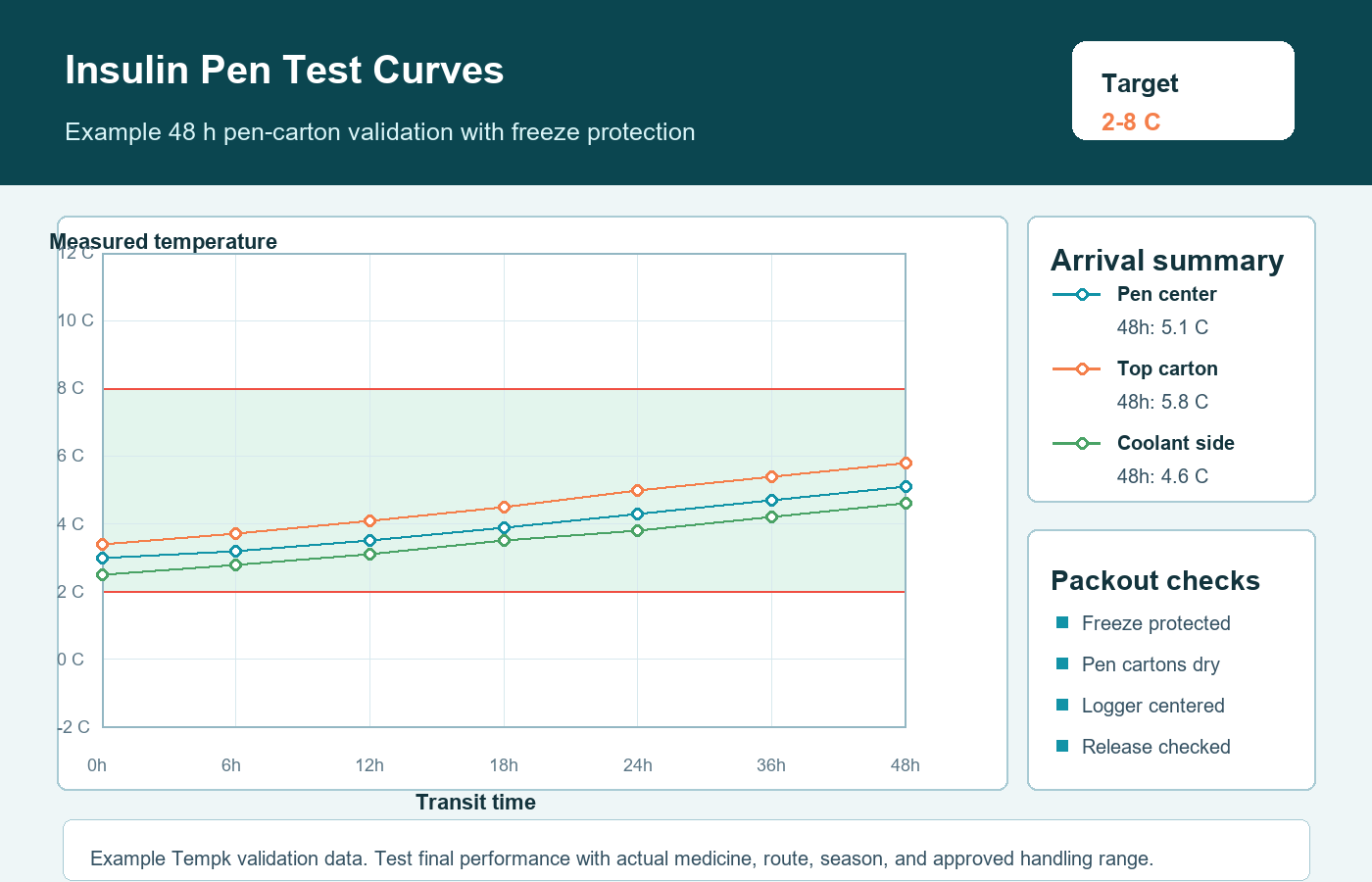
Revisar la curva con la carga útil real., refresco, tamaño del listón, duración del carril, y temporada. Agregar notas de recepción para la condición de cartón, claridad de la etiqueta, movimiento de producto, and any contacto directo con el refrigerante.
Páginas relacionadas para planificar la configuración
categoría de medicamentosPlumas GLP-1Inyecciones de fertilidadGuía de antibióticos refrigeradosEstuches de viaje para insulina para bolígrafos refrigeradosCajas médicas de cadena de frío para entrega y transporte de plumas de insulinaPaquetes PCM y bloques de hielo para la entrega y transporte de plumas de insulinaHerramientas para la cadena de fríoContactar a Tempk
Notas prácticas de ruta
Proteger las plumas de insulina del calor y la congelación
Las plumas de insulina generalmente se envían como tarjetas listas para el paciente.. La configuración debe mantener el rango refrigerado indicado y evitar que los acumuladores de gel refrigerante congelados creen puntos fríos contra el cartón de la pluma.
Donde este producto suele fallar
The main risks are exposición a congelación, entrega residencial retrasada, aplastamiento de cartón, y pacientes que reciben un paquete mojado o confuso.
Configuración de embalaje to test first
Utilice una pequeña funda de carga útil o una cavidad de cartón con un amortiguador transparente en cada lado que mira hacia el refrigerante.. Agregue relleno de huecos para que los cartones de plumas no puedan hacer ruido contra los paquetes duros..
Elección de refrigerante
Usar 2 a 8 C PCM o cuidadosamente acumuladores acondicionados para rutas nocturnas y de dos días. Evite el hielo seco y evite los paquetes congelados sin acondicionar junto a los cartones de insulina..
Verificación de validación de ruta
Pruebe las estaciones frías y cálidas por separado. Place the registrador beside the cartón de la pluma and check temperatura mínima, sequedad del cartón, y experiencia de apertura del paciente.
Detalle de configuración
Insulin pen parcels need instrucciones seguras para el paciente
Caso de uso
Las plumas de insulina suelen enviarse a domicilio., por lo que el embalaje debe proteger el producto y dar confianza al paciente al abrirlo.. La carga útil debe estar limpia., seco, y separado del refrigerante por un amortiguador visible.
Elección de embalaje
Para carriles nocturnos o de dos días, usar 2 a 8 C PCM o acumuladores empaquetados en un diseño validado. Evite el hielo seco y evite el contacto directo con el paquete congelado porque la congelación puede ser más dañina que una exposición breve y suave al calor..
Lo que Tempk debería validar
Tempk should test the actual cartón de la pluma count, carga útil más pequeña, carga útil más grande, y vivienda residencial. Revisar temperatura mínima, temperatura máxima, sequedad del cartón, y si las instrucciones son fáciles de seguir.
Custom configuración de embalaje support
Necesita que este carril se construya alrededor de su producto y ruta?
Para tamaños de cartón fijos, límites de carga útil, requisitos de marca, carriles estacionales, o objetivos de validación, Tempk can adapt this solution into a custom cold-chain configuración de embalaje.
¿Necesita revisar esta ruta de medicamento antes del envío?
Enviar la temperatura de la etiqueta del producto., tamaño de carga útil, dimensiones del cartón, nivel de servicio, condición ambiental, entrega entrega, y requisito de registrador. Tempk puede ayudar a comparar el aislamiento, acumuladores acondicionados, PCM, capa amortiguadoras, inserciones, y pasos de validación.
Solicitar una revisión de configuración