


Los clientes notan daños en la textura.
Los alimentos congelados pueden volver a congelarse y verse duros mientras la textura, forma, o la calidad ya ha cambiado.
Envíos DTC congelados
Los envíos de DTC congelados necesitan más que una fuente de frío. El paquete debe mantener los productos congelados., Separe el hielo seco de los paquetes minoristas., permitir que el gas se ventile, Proteger etiquetas y cajas., y hacer que la recepción del cliente sea segura y sencilla.
Riesgo del producto
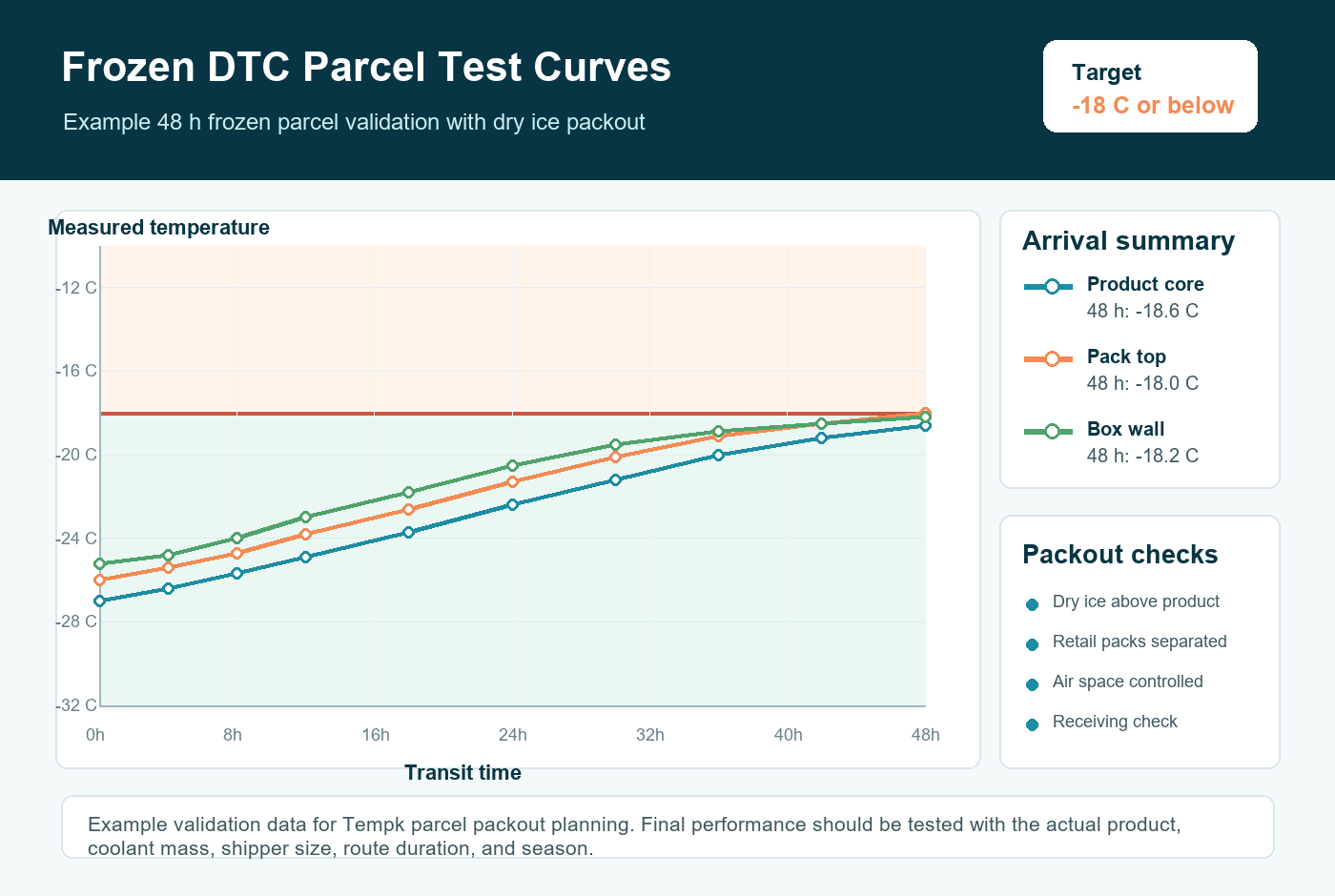
El paquete correcto debe proteger el producto real y la decisión de recepción., no sólo muestra un rastro de registrador en frío. Estos riesgos determinan el aislamiento., elección de refrigerante, posición del refrigerante, soporte interior, y controles de validación.
Los alimentos congelados pueden volver a congelarse y verse duros mientras la textura, forma, o la calidad ya ha cambiado.
El hielo seco se sublima hasta convertirse en gas y puede requerir reglas de manipulación y etiquetado específicas del transportista..
Helada, presión, y las cajas mojadas pueden dañar las etiquetas y hacer que la entrega parezca insegura.
Las cajas pueden incluir tinas., paquetes de vacío, bandejas, o bolsas que responden de manera diferente a la presión y al contacto frío.
Recomendación basada en ruta
Estos son puntos de partida prácticos para la planificación de muestras.. Masa refrigerante final, espesor de aislamiento, y el soporte interno debe validarse con la carga útil real, ruta, servicio de mensajería, y recibir estándar.
| Condición de envío | Paquete Tempk recomendado | Dirección inicial del refrigerante | Posición del refrigerante | Que validar |
|---|---|---|---|---|
| Entrega congelada el mismo día 8-18h ruta, ambiente debajo 22 do, carga útil congelada | Transportista EPS o EPP, transatlántico, divisores de productos, zona de hielo seco, y caja exterior ventilada | Acerca de 1.5-2.5 kg de hielo seco para un 1-3 kg de carga útil congelada como rango de prueba inicial. Utilice la calculadora de hielo seco para conocer las condiciones reales de la ruta. | Zona de hielo seco superior o lateral con divisor y espacio superior; Mantenga el hielo seco alejado de los frágiles paquetes minoristas.. | Estado congelado, hielo seco restante, sequedad del cartón, condición de la etiqueta, y apertura segura para el cliente |
| Paquete DTC nocturno 18-36h ruta, manejo de depósito, ambiente 22-30 do | Transportador de EPS/EPP más grueso, divisor de hielo seco, filas de productos fijas, transatlántico, maderero, y cartón exterior fuerte | Acerca de 3.0-5.0 kg de hielo seco para una prueba de paquete pequeño. Ajustar por peso del producto, volumen de la caja, aislamiento, tiempo de ruta, y límites del transportista. | Diseño de hielo seco en el lado superior positivo con cobertura total del divisor y ruta de ventilación. | Temperatura máxima, hielo seco restante, firmeza del producto, nivel de escarcha, presión del cartón, y condición del paquete minorista |
| Ruta DTC en climas cálidos o propensa a retrasos 30-35 ambiente C, 36-48h riesgo, Posibilidad de retención durante el fin de semana | Transportador aislado de mayor rendimiento, cámara de hielo seco más grande, cartón reforzado, divisores de productos, y registrador de rutas | Acerca de 5.0-8.0 kg de hielo seco para pruebas prolongadas de paquetes pequeños. Confirmar espacio de cabeza, desfogue, y requisitos del operador antes de escalar. | Hielo seco perimetral y superior con divisores; Evite el contacto directo con las etiquetas., bolsas, o bandejas frágiles. | Condición de recepción retrasada, hielo seco restante, descongelar evidencia, impregnación de cartón, y claridad en el trato con el cliente |
La masa refrigerante es un punto de partida., no es una garantía. Ajustar por temperatura del producto en el embalaje., peso de carga útil, tamaño del listón, material aislante, acondicionamiento del refrigerante, duración de la ruta, perfil ambiental, manejo del transportista, y recibir cheques. Más refrigerante puede provocar congelación, daño por presión, embalaje mojado, o manipulación insegura del hielo seco cuando la separación y las instrucciones son incorrectas.
Estructura de embalaje
Los paquetes de paquetes necesitan soporte de producto, separación de refrigerante, y recibir claridad antes de que se cierre el remitente. Comience con la carga útil y los criterios de aceptación., luego dimensione el aislamiento y el refrigerante.
Proceso de embalaje
Un transportista más fuerte ayuda, pero condición de carga, separación de refrigerante, soporte interior, y recibir instrucciones generalmente deciden si el paquete es aceptado.
No empaque productos blandos y espere que el hielo seco restablezca la calidad..
Tinas separadas, bolsas, bandejas, o cajas de cartón para que los artículos pesados no aplasten los paquetes frágiles.
Crea una zona de hielo seco con divisores., espacio para la cabeza, y un camino seguro para el gas.
Inspeccionar el hielo seco restante, dureza del producto, helada, condición de la etiqueta, y claridad de las instrucciones de manejo.
Cuándo cambiar el diseño
Mejorar divisores, transatlántico, fuerza del cartón, y separación del hielo seco antes de cambiar la masa de hielo seco.
Aumentar el margen de aislamiento, ajustar la masa de hielo seco, reducir el tiempo de ruta, o cambiar el tamaño del remitente.
Mejorar la advertencia de hielo seco, instrucciones de manejo, desfogue, y separación de los paquetes minoristas.
Recursos relacionados
Compartir mezcla de productos, objetivo congelado, peso de carga útil, tamaño de la caja, tiempo de ruta, rango ambiental, modo portador, y requisitos de recepción del cliente. Tempk puede ayudar a elegir masa de hielo seco, aislamiento, divisores, desfogue, y pasos de validación.
Solicite una revisión del paquete del paqueteSoporte de paquete personalizado
Para tamaños de cartón fijos, límites de carga útil, requisitos de marca, carriles estacionales, o objetivos de validación, Tempk puede adaptar esta solución a un paquete de cadena de frío personalizado.