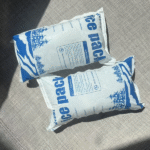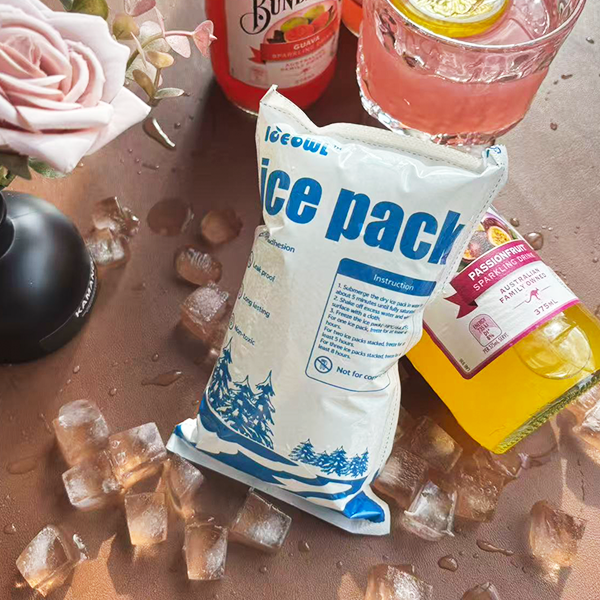
A Route-Ready Framework for Bulk Dry Ice Pack for Fruit Logistics
Le bon volume paquet de glace sec for fruit logistics is not the one with the strongest cold claim. It is the one that fits a defined fruit, emballer, itinéraire, and operating process without creating freezing injury, flux d'air bloqué, condensation, or inconsistent preparation. In this framework, the product is a water-activated coolant sheet that is hydrated and frozen before packing. It is not solid carbon dioxide dry ice. Buyers should state that identity explicitly because the two products have different temperatures, dangers, exigences de manutention, and transport implications. De là, sourcing becomes a disciplined sequence: define the fruit, map heat exposure, design the packout, teste-le, and scale it under change control.
Grille 1: Establish the Product and Route Boundaries
Start with an internal shipment requirement, not a supplier catalog. The requirement should answer:
- Which fruit, variété, maturité, and grade will be shipped?
- Is the shipment intended to maintain condition, continue ripening, or arrive at a defined ripeness?
- What primary and secondary packages are used?
- What is the approved product temperature at pack assembly?
- What minimum and maximum conditions apply, including short-exposure concerns?
- Quelle est la longueur de l'itinéraire, and where can uncontrolled dwell occur?
- Is transport refrigerated, ambiant, ou mixte?
- What does the receiver do immediately after delivery?
If these answers vary across products, create separate requirement sets. "Fruits frais" is not a thermal specification.
Clarify the meaning of dry ice pack
Procurement language must distinguish a hydration sheet from carbon dioxide dry ice. Put the material identity in the item description, spécification, purchase order, instruction de travail, and warehouse label. Confirm that the sheet is soaked, drainé, congelé, and used as a passive coolant.
This prevents several failures: a carrier applying irrelevant dangerous-goods assumptions, an operator expecting sublimation, a buyer comparing unlike products, or a technical team designing around the temperature of solid carbon dioxide. If the operation actually requires solid dry ice, it needs a separate safety, conditionnement, ventilation, and compliance assessment.
Grille 2: Decide Whether Passive Sheets Fit the Job
Hydration sheets make sense where broad, flexible coolant placement complements an insulated package and the route challenge remains within a tested design. They can be useful in parcel boxes, doublures, sacs plus frais, or totes, especially when dry inbound storage and adaptable placement matter.
They are not automatically appropriate when:
- Fruit arrives warm from harvest and needs rapid, uniform precooling.
- The commodity is highly sensitive to chilling or contact freezing.
- Ventilation is central to product quality and the sheet would obstruct it.
- The route has routinely uncontrolled delays beyond the design.
- The payload requires active control or refrigerated transport.
- The facility cannot hydrate, vidange, geler, and segregate sheets consistently.
- Moisture exposure would compromise the carton, étiquette, or primary package.
This fit decision should occur before a bulk price negotiation. A low unit cost cannot rescue a mismatched operating model.
Grille 3: Convert Fruit Physiology Into Packout Rules
Fruit keeps respiring after harvest, which means it continues to generate heat and moisture. Cooling generally slows biological activity, but too much cold damages susceptible tissue. Ethylene production and sensitivity can further limit mixed loading. These characteristics translate into practical design rules.
| Biological or physical characteristic | Packout implication | Required buyer decision |
|---|---|---|
| Chilling sensitivity | Avoid overly cold local exposure | Define commodity-specific minimum condition |
| Freezing susceptibility | Manage direct coolant contact | Select and test buffer or spacing |
| High respiration | Preserve heat-removal paths | Confirm precooling and ventilation |
| Ethylene production | Avoid incompatible consolidation | Set mixed-load rules |
| Ethylene sensitivity | Control neighboring commodities and dwell | Define segregation and ventilation |
| High moisture loss | Balance humidity retention and condensation | Choose package and liner deliberately |
| Delicate structure | Avoid pressure from expanded cells | Check hydrated fit and cushioning |
The table is a translation tool, not a produce handbook. Your postharvest specification remains the source of commodity limits.
Precooling is a release condition
Treat fruit temperature at packing as an incoming quality attribute. Coolant inside a boîte d'expédition is primarily intended to help maintain a defined condition against heat gain. If it is used to remove substantial field heat, peripheral fruit may become cold while inner fruit remains warm, and the coolant may be depleted early.
Define where and how product temperature is checked, acceptable variation across the load, hold rules for warm product, and who can release it. The most sophisticated coolant specification will fail if warm fruit routinely enters the box.
Preserve airflow on purpose
Trous d'aération, aligned channels, espaces de palettes, and headspace are functional elements. A flexible sheet can conform so well that it seals a vent or closes a vertical channel. Packout drawings should show both sheet placement and airflow paths.
During trials, photograph the loaded geometry before closure and after the test. Fruit settles, hydrated cells change shape, corrugated softens, and void fill shifts. The final geometry may explain temperature variation better than the initial drawing.
Grille 4: Control the Activation Process
The buyer receives a dry component but uses a hydrated, frozen one. The transformation must be part of the quality plan.
A practical activation flow
Receive and identify. Match item code, disposition des cellules, parcelle, dimensions, quantité, and condition to the approved specification.
Hydrater. Use the supplier's instructions and a clean, defined water source. Control immersion, manutention, and acceptance of expanded cells.
Vidange. Remove excess surface water by a repeatable method. Dripping sheets add moisture that was not necessarily present in the test.
Geler. Load racks or freezers with adequate air access and within validated operating capacity. Control status so partially frozen sheets cannot be confused with ready stock.
Inspect and stage. Reject leaks, open seams, contamination, lost identification, or abnormal expansion. Limit staging conditions before assembly.
Place and close. Follow the approved layer sequence, orientation, tampon, emplacement du moniteur, fermeture, and label instructions.
Every step should have an owner, release criterion, and exception response. Avoid universal activation numbers unless they appear in the approved product instructions and have been confirmed under site conditions.
Grille 5: Develop Evidence in Layers
A supplier sample can answer fit and usability questions. It cannot prove a commercial route.
Begin with component characterization: dimensions hydratées, manutention, état des coutures, fuite, pliable, and compatibility with the intended packaging. Then conduct packout development using the actual box and representative payload. Challenge contact points, coins, fermeture, and likely heat-entry paths.
Move to route-relevant performance testing. Document:
1. Exact bill of materials.
2. Fruit load and starting condition.
3. Sheet preparation, condition, compter, et orientation.
4. Récipient isolé et fermeture.
Outils de décision utiles
Vérifiez les détails avant de choisir l'emballage
Ces outils rapides peuvent vous aider à comparer le risque d'itinéraire, besoins de dimensionnement, choix de liquide de refroidissement, et les détails de l'emballage avant de demander un devis.
Calculateur de glace carbonique
Estimer les besoins en glace carbonique pour les envois congelés ou ultra-froids avant l'emballage.
Estimation de la neige carboniqueRéférence du matériau isolant
Comparez les choix de matériaux d'isolation pour différents besoins d'emballage de la chaîne du froid.
Comparez les matériauxSélecteur d'emballage
Comparez les options d'emballage isotherme par produit, itinéraire, et besoin de température.
Trouver un emballage5. Ambient challenge and rationale.
6. Sensor identity, état d'étalonnage, intervalle, et emplacement.
7. Temperature and package-condition acceptance criteria.
8. Deviations and test observations.
Run enough builds to evaluate repeatability. A single favorable result should be treated as development information, not broad proof.
Use sensor placement to search for failure
Place sensors where the design may fail: near a coolant interface, in a central load, at a corner or lid, and at vertical extremes. If fruit core behavior matters, use an appropriate method rather than assuming air temperature represents pulp temperature.
Review traces with photographs and physical observations. A cold spike at one wall may indicate contact; slow center cooling may indicate warm loading or blocked airflow; rapid top warming may reveal closure leakage. The corrective action should target the mechanism.
Grille 6: Qualify the Supplier and the Production Item
Bulk orders introduce lot-to-lot and sample-to-production risk. A supplier review should cover more than nominal dimensions and price.
Specification controls
Agree on product name, construction, dry and hydrated dimensions, géométrie des cellules, identification, conditionnement, stockage, instructions de préparation, defect criteria, et notification de changement. If custom printing or cell layouts are used, control the approved artwork and drawing revision.
Evidence controls
Request material declarations relevant to intended use, component test descriptions, informations sur le lot, and quality documents appropriate to the buyer's risk assessment. Avoid asking for a generic certificate that supposedly proves all fruit logistics. Compliance obligations differ by contact condition, produit, marché, and role.
Commercial and continuity controls
Confirmer la commande minimum, délai de mise en œuvre, forecast windows, peak-season capacity planning, shipping configuration, stock de sécurité, gestion des non-conformités, and replacement process. Seasonal fruit programs often have compressed windows, so a clear escalation path matters.
Production confirmation
On receipt, verify identity and visible quality. Periodically compare hydration behavior and fit with the approved state. Trend defects by lot. If dimensions, matériels, coutures, âme absorbante, site, or instructions change, assess impact before normal use.
Grille 7: Build the Route Around Human Behavior
Even an excellent design can fail at a dock or doorstep. Translate the packout into simple operational controls.
Create a visual instruction showing correct layers, orientation, sheet count, tampon, enregistreur, fermeture, et étiquettes. Train operators on the reason for each element. Use line clearance when switching fruit or box formats. Segregate sheet status physically.
At handovers, define responsibility. The carrier should receive necessary temperature-control and handling instructions. Customer service should know how to manage delays without authorizing packout improvisation. Receivers should inspect promptly and move fruit to the required environment.
Par exemple, suppose a parcel is held overnight at a hub. The approved response may be to continue, retour, or assess the shipment using monitoring and product criteria. It should not be "add two sheets" unless that recovery configuration has been designed and approved. Opening the box and inserting coolant changes both temperature and contamination risk.
Grille 8: Manage Moisture, Sanitaire, and Food-Safety Responsibilities
Hydration operations introduce water into a food-packing environment. Include tanks, hoses, supports, drains, gants, surface, and freezers in sanitation procedures. Prevent wet sheets from touching floors or uncontrolled surfaces. Define disposal for damaged units and clean separation between unused and returned sheets.
Aux États-Unis, sanitary transportation requirements may apply to parties involved in covered food movements. Adequate temperature control where needed for safety, équipement sanitaire, communication, training where applicable, and records can all be relevant. Requirements and exemptions depend on the operation. A hydration sheet is not a certificate of compliance and packaging is not a substitute for a safe food process.
If the fruit is in a primary package, record whether the coolant contacts that package, une doublure intérieure, or food directly. Ask for material information specific to the actual contact scenario and destination market. Avoid turning a limited declaration into a universal "qualité alimentaire" réclamer.
Grille 9: Improve With Data Without Chasing Every Variation
Après le lancement, review data at a useful cadence. Group observations by fruit, itinéraire, saison, transporteur, boîte, and packout revision. Track both temperature and physical outcomes such as wet cartons, fuite, crushed packages, ripening inconsistency, and delivery complaints.
Not every variation requires redesign. Set investigation triggers. A single misplaced sensor may explain an anomaly; a repeated wall-side cold pattern likely deserves action. When a change is made, document the rationale, approve the new revision, train users, and prevent old and new configurations from mixing.
Sustainability improvements should follow the same discipline. A thinner sheet, boîte à briquet, or reuse program should preserve fruit protection and sanitation. Compare material, fret, eau, énergie de congélation, logistique de retour, nettoyage, and product loss within the same system boundary. Make claims only from data the program can support.
Questions fréquemment posées
What is the first specification to confirm when buying these sheets?
Confirm the product identity: a water-activated hydration coolant sheet frozen before use, pas du dioxyde de carbone solide. Then confirm exact dry and hydrated geometry, because expanded fit can affect payload compression and airflow. Commercial terms should follow, not precede, these technical boundaries.
Should every fruit packout include a buffer between sheet and payload?
Pas nécessairement, but direct-contact risk must be assessed. Sensibilité aux matières premières, emballage primaire, état du liquide de refroidissement, and route determine the need. A buffer can reduce local cold exposure while also reducing heat transfer, so its material and thickness should be tested as part of the exact packout.
How is a supplier hold-time statement evaluated?
Ask for the container, isolation, charge utile, températures de départ, coolant preparation and count, profil ambiant, positions des capteurs, and pass criterion. If those conditions differ from your program, the result is reference information only. Establish duration for the intended route through your own controlled evaluation.
Can a hydration sheet be cut?
Only where the product design and instructions allow it. Cutting through a cell can release the hydrated medium and compromise containment. If flexibility or size is important, request a cell layout with defined seams and obtain written preparation and folding guidance.
What if one fruit program has many box sizes?
Create a configuration matrix rather than one flexible instruction. Link each box and payload to an approved sheet item, compter, orientation, tampon, position du moniteur, et fermeture. Limit the number of operational variants where possible and use item-level visual controls to prevent substitutions.
Who approves the final packout?
The buyer should assign approval through its technical, postharvest, qualité, and food-safety governance. A component supplier can provide product information and samples, but does not know every commodity condition, itinéraire, transporteur, facilité, or regulatory duty. Responsibilities should be explicit in the project plan.
Conclusion
A route-ready fruit program follows gates: define the commodity, confirm the coolant identity, decide whether passive sheets fit, control activation, develop packout evidence, qualify production supply, train operations, manage sanitation, and review route data. This process prevents a bulk dry ice pack for fruit logistics from becoming an uncontrolled "très froid" composant. It also makes procurement clearer because price, volume, and lead time are evaluated against one approved specification and packout rather than a vague freshness promise.
À propos du tempk
The Tempk brand belongs to Shanghai Tempk Industrial Co., Ltée. and includes hydration coolant sheets and emballage isolé for temperature-sensitive distribution. Tempk can discuss sheet formats when a buyer shares fruit type, géométrie de l'emballage, conditions d'itinéraire, daily volume, and preparation capability. Those inputs help narrow samples for evaluation. Commodity limits, protocoles de tests, food-safety controls, qualification decisions, and shipment disposition should be owned by the buyer's responsible teams.
CTA: Provide Tempk with one complete fruit-lane requirement and packout drawing to begin a controlled sample-to-route evaluation.