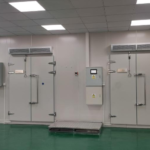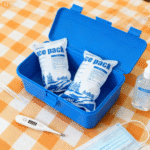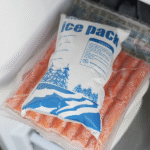
The future of healthcare logistics is here. As biologics and advanced therapies become mainstream and regulators demand full traceability, cold chain express shipping for medical supplies is no longer optional—it’s your lifeline. Les enjeux sont élevés: temperature excursions destroy potency, trigger recalls and jeopardize patient safety. Dans 2025 the global pharmaceutical cold chain market reached roughly US$10.04 billion and the packaging market was valued at US$28.9 billion, underscoring the scale and urgency. This guide uses plain language and real examples to help you navigate compliance, maintain temperature integrity and deliver medications quickly, safely and sustainably.
Ce guide vous aidera:
Comprendre pourquoi l'expédition express sous chaîne du froid est essentielle dans 2025, including the rise of biologics and mRNA therapies and why even brief temperature excursions can ruin an entire batch.
Prepare for DSCSA compliance by learning the 2025 deadlines for manufacturers, grossistes et distributeurs.
Choose appropriate packaging and monitoring technologies—passive and active containers, phase change materials and IoT trackers—to maintain strict temperature ranges.
Optimise last mile delivery and same day shipping through micro fulfilment, analyse prédictive, drones and 4PL/5PL partnerships.
Gardez une longueur d'avance 2025 trends such as sustainable packaging, AI powered logistics and new market growth projections.
Why cold chain express shipping matters in 2025
The rise of biologics and advanced therapies
Biologics and cell and gene therapy products now account for roughly 30 % du pipeline pharmaceutique. These complex molecules require strict temperature control to preserve their potency. Par exemple, mRNA vaccines must be kept at −70 °C to −80 °C—exposure outside the +2 °C à +8 °C window can invalidate an entire batch. As therapies like GLP 1 medications and monoclonal antibodies expand, express shipping ensures that ultra cold and refrigerated products reach patients quickly and safely.
Patient safety and economic stakes
Jusqu'à 20 % of temperature sensitive pharmaceutical shipments are compromised each year due to logistics failures, causing about US$35 billion in losses. Beyond dollars, les médicaments dégradés mettent les patients en danger et érodent la confiance. Cold chain logistics account for approximately 23 % des budgets de transport pharmaceutique, donc chaque diplôme compte. La livraison express réduit le temps de transit, limits exposure to ambient conditions and prevents spoilage.
| Plage de température | Classement de stockage | Exemples de produits | Pourquoi ça compte |
| 20 °C–25 °C (15Excursions –30 °C) | Room/controlled room temperature | Small molecule tablets, liquides oraux | Avoiding heat and moisture maintains stability—excursions above 30 °C risque de perte de puissance. |
| 8 °C–15 °C | Cool storage | Eye drops, probiotiques | Many biologics tolerate “cool” conditions but must not freeze. |
| 2 ° C - 8 ° C | Réfrigéré | Vaccins, insuline, anticorps monoclonaux | La chaîne du froid pharmaceutique la plus courante; excursions au-delà +8 ° C ou en dessous +2 °C peut rendre les produits inefficaces. |
| −20 °C ±5 °C | Stockage au congélateur | Produits pharmaceutiques surgelés, réactifs | Requires insulated packaging and gel packs or dry ice. |
| −70 °C à −80 °C | Ultra cold/cryogenic | vaccins d'ARNm, cellule & thérapies géniques | Cryogenic logistics with dry ice or liquid nitrogen ensure viability but demand specialised containers. |
Pression réglementaire: DSCSA and good distribution practices
Aux États-Unis, la loi sur la sécurité de la chaîne d'approvisionnement en médicaments (DSCSA) mandates full serialization and electronic traceability across the pharmaceutical supply chain. Après une période de stabilisation en 2024, manufacturers and repackagers had to comply by May 27 2025, grossistes d'ici août 27 2025, et distributeurs avec 26 or more employees by November 27 2025; les petits distributeurs ont jusqu'en novembre 27 2026. Failure to comply can stall shipments and lead to fines or product seizures. Bonnes pratiques de distribution (PIB) further require validated systems, continuous temperature monitoring and trained staff. In other regions, frameworks like EU GDP, USP <1079>/<659>, IATA Temperature Control Regulations and 21 Partie CFR 11 impose similar standards.
DSCSA deadlines at a glance
| Trading partner | DSCSA compliance deadline | Exigences clés |
| Fabricants & reconditionneurs | Peut 27 2025 | Exchange serialized data and verify product identifiers electronically using 2D barcodes and EPCIS standards. |
| Distributeurs en gros | Août 27 2025 | Receive and exchange serialized EPCIS data with manufacturers; verify suspect products and quarantine discrepancies. |
| Distributeurs (≥ 26 employés) | Nov 27 2025 | Accept serialized data, verify packages and maintain systems for product tracing. |
| Petits distributeurs (≤ 25 employés) | Nov 27 2026 | Exonéré jusqu'à 2026 but encouraged to prepare early. |
The cold chain market: growth and opportunities
The cold chain pharmaceutical market expanded from US$8.85 billion in 2024 à US$10.04 billion in 2025 and is projected to reach US$18.2 billion by 2030. Entre-temps, the pharmaceutical cold chain packaging market will climb from 28,9 milliards de dollars américains 2025 à 75 milliards de dollars d'ici 2032. Investments in resilient express shipping unlock new markets, réduire les rappels et renforcer la fidélité des clients.
Maintaining temperature integrity during express shipping
Step by step packaging & shipping best practices
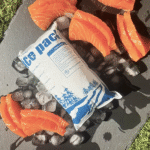
Pre condition products and coolants. Freeze or pre chill the product and match the phase change material (PCM) to the required temperature band (Par exemple, 2–8 ° C, −20 °C ou −70 °C). Pre conditioning reduces the cooling burden on gel packs or dry ice.
Wrap and protect. Wrap individual items in plastic or vacuum seal them to prevent cross contamination. Use absorbent material beneath the product and cardboard dividers to maintain cold zones.
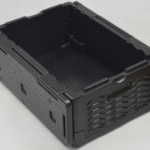
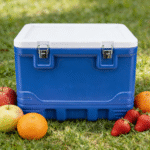
Joint, label and insulate. Close the insulated cooler securely, fill voids with bubble wrap and label the shipment clearly (“Keep Refrigerated” or “Keep Frozen”). Include dry ice hazard labels when necessary.
Schedule smartly. Expédiez tôt dans la semaine pour éviter les retards du week-end. Choose overnight or two day express services and share tracking information with recipients.
Require signature and insurance. Pour les envois de grande valeur, souscrire une assurance supplémentaire et exiger une signature à la livraison pour garantir que quelqu'un est disponible pour recevoir le colis.
Inclure la documentation. Enclose DSCSA documents, certificats d'analyse ou autres documents réglementaires dans une pochette étanche à l'humidité. Utilisez un enregistreur de température compatible IoT pour une surveillance en temps réel et conservez des enregistrements numériques pour les audits.
Passive vs active packaging technologies
Passive solutions (VIP et PCM). Panneaux isolés sous vide (Vips) use evacuated silica panels with ultra low thermal conductivity (~5 mW/m·K), offrant des temps d'attente de 7–10 jours, 2–3 times longer than expanded polystyrene coolers. PCMs are tuned to specific temperature bands and maintain stable temperatures without freezing products. Reusable VIP shippers are projected to grow from US$4.97 billion in 2025 à 9,13 milliards de dollars d'ici 2034.
Conteneurs actifs. Battery powered or compressor driven units such as the MedStow Micro provide 72 heures of service across −20 °C to +25 °C and are reusable. Envirotainer’s RelEye pallet containers use active refrigeration with 18 sensors and maintain 4–30 °C for up to 170 heures. Sonoco ThermoSafe’s Pegasus ULD is a passive unit load device rated for 300 heures à 2–8 °C. Active solutions offer precise control and real time data but come with higher rental or purchase costs.
| Technologie | Plage de température | Approximate hold time | Avantages clés | Compromis |
| VIP passive shipper | 2–8 ° C, −20 °C, −70 °C | 7–10 jours | Ultra long hold, léger, réutilisable, besoins énergétiques minimes | Coût plus élevé; les panneaux fragiles nécessitent une manipulation soigneuse |
| Matériau à changement de phase (PCM) | Accordable (2–8 ° C, −20 °C, −70 °C) | 24–96 h | Température stable sans gel; personnalisable à la charge utile | Nécessite un préconditionnement; may need combinations for long trips |
| Active refrigerated container (MedStow, RelEye) | −20 °C à +25 °C | 72–170 heures | Contrôle précis de la température; capteurs intégrés; réutilisable | Coût élevé; nécessite une logistique de charge/alimentation |
| Cryogenic freezer (Cryoport Express HV3) | −150 °C | Jusqu'à 300 h | Maintains ultra low temperatures for cell and gene therapies | Vraquier; charge utile limitée; doit respecter les réglementations sur la glace carbonique |
Surveillance, traçabilité et intégrité des données
Surveillance continue. Use automated data loggers and real time systems to track temperatures during storage and transport. 21 CFR Part 11–compliant loggers produce secure audit trails, signatures électroniques et alertes à distance par SMS ou email.
Blockchain et IoT. Smart sensors coupled with blockchain create tamper proof temperature and location records. Colour changing smart labels provide visual confirmation of temperature excursions, while IoT devices enable predictive analytics and dynamic rerouting.
Intelligence artificielle. AI systems analyse data streams to predict excursions, optimise routes and manage inventory. Avec plus d'envois suivis par l'IoT et la blockchain, AI is projected to monitor over 75 % of pharmaceutical shipments by 2030.
Considérations de durabilité. Regulators and consumers demand eco friendly solutions. Les tendances incluent le carton recyclé, mousses végétales, bio plastic gel packs and modular designs that reduce waste. Reusable shippers and return by mail programs lower carbon footprints and save costs.
Practical tips and advice for your shipments
Match your packaging to your product: Use VIP shippers for high value biologics and longer routes; PCM packs for shorter domestic deliveries; active containers for sensitive or long haul shipments.
Planifier les imprévus: Pack extra coolants, test your packaging under worst case conditions and use redundant temperature sensors to catch failures early.
Formez votre équipe: Educate staff about DSCSA requirements, packaging procedures and emergency response to minimize human error.
Tirer parti de la technologie: Mettre en œuvre la surveillance de l'IoT, track and trace platforms and AI route optimisation to proactively manage exceptions.
Focus sur la durabilité: Choose reusable or recyclable materials, consolidate shipments where possible and partner with carriers that prioritise green logistics.
Exemple du monde réel: The Nordic Express Pack, lancé dans 2025, is a purpose built cold chain packaging solution for GLP 1 medications. Its precise temperature control and irreversible colour change temperature indicator help providers verify that drugs remain within range. The pack is easy to use, reduces storage needs and optimises freight efficiency.
Navigating DSCSA and regulatory compliance
Understanding the DSCSA 2025–2026 transition
The DSCSA requires an interoperable system that traces prescription drugs at the package level to prevent counterfeit or harmful products from entering the supply chain. Après août 27 2025, the “connected trading partner” exemption expired for large pharmacies, leaving only the small dispenser exemption—pharmacies with fewer than 25 employees have until November 27 2026 to fully comply. Compliance demands that trading partners exchange serialized EPCIS data, verify product identifiers and maintain secure records.
Steps to ensure DSCSA compliance
Audit your systems and partners. Conduct a readiness assessment to evaluate your current serialization capabilities and partner data exchange protocols.
Implement EPCIS standards. Upgrade your ERP or warehouse management systems to send and receive serialized transaction data. Choose track and trace platforms that automate EPCIS data exchange.
Leverage 2D barcodes and RFID. High density barcodes hold GTIN, numéros de lots, expiration dates and serial numbers; Les étiquettes RFID permettent une numérisation sans contact et améliorent la précision.
Adopt cloud based traceability. Cloud solutions provide centralised visibility, alertes en temps réel et audits simplifiés, but must meet Part 11 data integrity standards.
Tester et valider. Perform end to end tests with trading partners before deadlines to verify data formats, message sequencing and exception handling.
Stay engaged. Participate in industry groups and regulatory forums; monitor FDA guidance updates and prepare to implement new rules (Par exemple, the proposed NDC 12 rule expected in early 2026).
Au-delà de la DSCSA: global regulatory frameworks
In addition to DSCSA, other frameworks govern cold chain logistics:
I PIB: Requires validated systems, temperature control and comprehensive traceability.
USP <1079> / USP <659>: Provide guidance on temperature ranges and recommend medical grade refrigerators, uniformity testing and continuous monitoring.
Réglementation IATA sur le contrôle de la température: Set standards for air shipment of pharmaceuticals, covering training, étiquetage, emballage et traçabilité.
21 Partie CFR 11 and EU GMP Annex 11: Mandate electronic record keeping, audit trails and user access controls.
Local regulations (Par exemple, MHRA, Ema, CDSCO): Additional country specific rules may apply; always consult the relevant authorities.
Choosing the right packaging technology
Passive solutions
Panneaux isolés sous vide (VIP). VIP shippers use evacuated silica panels that trap air molecules and dramatically slow heat transfer. They provide longer hold times (7–10 jours) and are lightweight and reusable, but require careful handling to prevent panel damage.
Matériaux à changement de phase (PCM). Les PCM absorbent ou libèrent de la chaleur à des températures spécifiques, maintaining a stable environment without freezing products. They’re ideal for shipments requiring 24–96 hour hold times and can be customised to different temperature bands.
Active solutions
Battery powered containers (MedStow Micro). Offering 72 hours of power across a wide range of temperatures (−20 °C à +25 °C), these containers are suitable for remote locations or when precise control is critical.
Compressor driven units (Envirotainer RelEye). Avec 18 capteurs, these containers maintain 4–30 °C for up to 170 heures. They provide continuous refrigeration and are often used for high value pharmaceuticals with longer transit times.
Cryogenic shippers (Cryoport Express HV3). Designed for ultra cold therapy shipping (−150 °C), these shippers maintain temperatures for up to 300 heures. They’re used for cell and gene therapies, but carry weight and regulatory considerations.
Packaging selection tips
Use VIP or PCM packs for routine biologics (2–8 ° C). Choose PCMs tuned to your required band for cost effective shipping.
For shipments requiring extreme cold (−70 °C to −150 °C), select cryogenic shippers with redundant dry ice or liquid nitrogen.
Evaluate active containers when shipping high value products over long distances or through uncertain transit conditions; weigh the cost against risk.
Incorporate sustainability by choosing reusable containers and participating in return by mail programs.
Optimising last mile delivery and same day shipping
Micro-exécution, predictive analytics and 4PL/5PL partnerships
The last mile can account for 41–53 % du coût total de la chaîne du froid. Pour maîtriser les coûts et accélérer la livraison:
Microcentres de distribution (MFC). Position inventory closer to consumers to reduce travel time; use robotics and AI to process orders quickly.
Analyse prédictive. Use real time weather and traffic data to choose optimal routes and adjust schedules to maintain temperature.
4PL/5PL partnerships. Consolidate carriers, warehousing and IT systems through fourth or fifth party logistics providers to gain end to end visibility and manage risk.
Drone delivery and autonomous vehicles
Les drones transforment la logistique médicale. Dans 2025, Cleveland Clinic targeted 10délais de livraison minutes pour les médicaments de spécialité, and Zipline operated in 11 NOUS. états. Drone deliveries in Rwanda reduced blood transport times by 79–98 minutes et une diminution des taux d'expiration des produits de 67 %. Le marché mondial de la livraison par drones médicaux devrait passer de 245,4 millions de dollars américains 2023 à 1,9 milliard de dollars d'ici 2032 (TCAC 22.3 %). Modern drones carry refrigerated payloads with real time temperature monitoring, providing rapid access to remote areas.
Same day delivery success stories
Retailers are capitalising on the demand for rapid prescription delivery. Walmart’s nationwide pharmacy delivery service completed over four million orders in its first year, delivering refrigerated prescriptions like insulin and GLP 1 medications in as little as neuf minutes. Drivers obtain electronic signatures to maintain chain of custody, and packages use insulated, light blocking materials. This demonstrates how local fulfilment integrated with express shipping can deliver high value pharmaceuticals quickly while maintaining regulatory compliance.
Evaluating last mile options
| Last mile solution | Delivery speed | Produits adaptés | Avantages clés | Considérations |
| Same day courier (partenariats avec des détaillants) | 1–24 h (certains aussi vite que 9 min) | Insuline, biologique, ordonnances réfrigérées | Livraison immédiate; personal handoff; signature upon receipt | Nécessite un réseau dense; des coûts de main d'œuvre plus élevés |
| Micro-exécution & local vans | 2–8h | Vaccins, kits de repas, trousses de diagnostic | Reduces distance; prend en charge la livraison programmée | Investissement en capital dans les pôles locaux; gestion des stocks complexe |
| Drones | 10–30 minutes | Médicaments d'urgence, produits sanguins, livraisons à distance | Contourne le trafic; dessert les zones rurales; reduces expiry | Limited payload; regulatory restrictions; dépendant de la météo |
| Traditional express carriers (air & route) | Nuit à 2 jours | Expéditions en vrac, livraisons à travers le pays | Large réseau; conformité établie; suivi en temps réel | Risque plus élevé de retards; nécessite un emballage robuste |
2025 tendances et perspectives d'avenir
Aperçu de la tendance
The cold chain pharmaceutical landscape in 2025 est façonné par l’intégration technologique, durabilité et changement réglementaire. Plateformes de suivi compatibles avec la blockchain, IoT based smart packaging and AI driven predictive analytics are now mainstream. Companies are adopting bio based insulating materials and modular packaging to reduce environmental impact. Global operators are forging strategic partnerships to diversify sourcing and strengthen resilience. The largest market share lies in North America (≈33 %), while Asia Pacific shows the fastest growth due to manufacturing expansion. Market forecasts predict that over 75 % of pharmaceutical shipments will be tracked with IoT and blockchain by 2030.
Faits saillants des derniers progrès
Croissance du marché: The pharmaceutical cold chain market increased from 8,85 milliards de dollars américains (2024) to US$10.04 billion (2025) and is expected to hit 18,20 milliards de dollars d'ici 2030. Le marché de l'emballage passera de 28,9 milliards de dollars américains 2025 à 75 milliards de dollars d'ici 2032.
Technological integration: Réseaux de capteurs en temps réel, blockchain and AI route optimisation are standard tools. Sur 75 % of shipments will use IoT and blockchain by 2030.
Évolution de la réglementation: DSCSA phased deadlines ended in 2025 for most trading partners, and Europe is implementing stricter GDP audits and digital EUDAMED data exchange.
Sustainability shifts: Expéditeurs réutilisables, plant based foams and renewable energy powered storage are reducing carbon footprints. Tariffs on imported refrigeration equipment are pushing local innovation and modular design.
Geographic expansion: Asia Pacific holds about 31 % du marché de l'emballage sous chaîne du froid (2024) and is growing quickly, while North America retains a ~33 % partager.
Insistance au marché
Consumer behaviour: Patients expect home delivery of prescriptions and diagnostics. La génération Z recherche les options de soins de santé en ligne, driving demand for transparent, responsive supply chains.
Investment drivers: Biopharmaceutical companies dominate end user demand (≈54 % partager) and drive packaging innovation. Plastics such as EPS and EPP account for about 74 % de composition matérielle, tandis que les petites boîtes et les expéditeurs isolés constituent 38 % de part de type de produit.
Infrastructure challenges: Developing economies face inadequate cold chain facilities and high energy costs. Tariffs on imported refrigeration equipment drive domestic innovation. Collaboration entre 3PL, 4Les PL et les fournisseurs de technologie sont essentiels pour atteindre les communautés éloignées.
Questions fréquemment posées
Q1: Quels sont les principaux délais DSCSA pour 2025?
Les fabricants et les reconditionneurs devaient satisfaire aux exigences de sérialisation et de vérification en Peut 27 2025, grossistes par Août 27 2025, et distributeurs avec 26 or more employees by Novembre 27 2025. Les petits distributeurs ont jusqu'à Novembre 27 2026. Le non-respect peut interrompre les expéditions et entraîner des sanctions.
Q2: Combien de temps un panneau isolé sous vide peut-il (VIP) l’expéditeur conserve les produits pharmaceutiques entre 2 et 8 °C?
Les expéditeurs VIP peuvent maintenir des plages de température pendant 7–10 jours—about 2–3 times longer than conventional expanded polystyrene coolers. Ce temps de rétention prolongé les rend idéaux pour les envois express internationaux ou les livraisons à distance.
Q3: Pourquoi les capteurs IoT sont-ils importants pour le transport express sous chaîne du froid?
Les capteurs IoT fournissent real time temperature, données d'humidité et de localisation. Paired with blockchain, ils créent des enregistrements inviolables et permettent des analyses prédictives pour éviter les excursions. Par 2030, une estimation 75 % of pharmaceutical shipments will be tracked using IoT and blockchain.
Q4: Quelle plage de température est requise pour les vaccins à ARNm?
mRNA vaccines must be kept at −70 °C à −80 °C. Even brief exposure outside this range can render the vaccine batch ineffective.
Q5: How can I reduce last mile costs while maintaining compliance?
Use micro fulfilment centres to shorten delivery distances, employ predictive analytics to optimise routes and partner with 4PL/5PL providers for end to end visibility. Evaluate drones for urgent or remote deliveries and select same day couriers for local prescriptions.
Résumé et recommandations
Cold chain express shipping for medical supplies is more than a logistical necessity—it’s a strategic advantage. As biologics and advanced therapies dominate pipelines, maintaining strict temperature ranges protects potency and patient safety. Délais DSCSA dans 2025 ushered in full serialization and digital traceability; organizations must upgrade systems, train staff and collaborate with trusted partners. Choosing the right packaging—whether passive VIPs, PCMs or active containers—ensures temperature integrity during transport. Surveillance en temps réel, IoT, blockchain and AI are no longer optional; they provide predictive insights and full visibility across the supply chain. Pour exceller dans 2025 et au-delà, invest in sustainable solutions, optimize last mile delivery and stay ahead of regulatory requirements.
Prochaines étapes réalisables
Assess your current cold chain strategy. Identifier les lacunes dans l'emballage, surveillance et conformité. Use this guide’s checklists to prioritise improvements.
Technologie de mise à niveau. Implémenter des capteurs IoT, traçabilité de la blockchain et optimisation des itinéraires de l'IA; integrate EPCIS standards in your data systems.
Éduquez votre équipe. Provide DSCSA training and ensure everyone understands temperature control, packaging and documentation requirements.
Partenaire judicieusement. Work with logistics providers who offer validated lanes, real time monitoring and DSCSA compliant systems. Consider 4PL/5PL collaborations for end to end visibility.
Champion sustainability. Choose reusable or recyclable packaging, explore plant based materials and participate in return by mail programs.
Rester informé. Track regulatory updates (Par exemple, upcoming NDC 12 rules), monitor industry publications and participate in supply chain forums.
À propos du tempk
Tempk is a leading innovator in cold chain packaging and monitoring solutions. We design reusable, produits écologiques de la chaîne du froid, y compris les packs de gel, sacs isolés, medical ice boxes and vacuum insulated panels. Notre R&D centre develops advanced materials and IoT sensors to ensure temperature integrity during transit. Nous nous engageons à helping customers meet DSCSA requirements and providing step by step guidance for safe and compliant deliveries. With dedicated support and customized solutions, we partner with you to protect every shipment and patient outcome.
Learn more
Ready to elevate your cold chain logistics? Contact Tempk today to discuss the right packaging, monitoring and delivery solutions for your organisation. Our experts can help you build a resilient, compliant and sustainable cold chain for 2026 et au-delà.