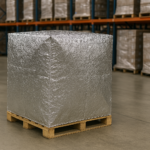
Couvertures de palettes pour chaîne du froid pour l'entreposage à température contrôlée: Un plan de contrôle de la sortie à la réception
Le moment le plus sûr pour décider de la signification d’une housse de palette est avant qu’une palette couverte n’atteigne le quai.. Couvertures de palettes chaîne du froid pour l'entreposage à température contrôlée doit s'inscrire dans un plan de contrôle de la sortie à la réception avec des portes de préparation définies, propriétaires, limites, et des preuves. La couverture elle-même est passive: il ralentit un peu le transfert de chaleur mais ne détecte ni ne régule la température. Sa présence ne peut autoriser un délai indéfini ni remplacer un espace contrôlé.
Cette approche de plan de contrôle change la conversation d'achat. Au lieu de demander un temps de protection universel, l'équipe définit le transfert, choisit la couverture pour cet événement, vérifie une configuration représentative, et indique exactement quand le flux normal doit s'arrêter.
Commencez par la promesse du produit, Pas la revendication de couverture
L’exigence du produit est le point d’ancrage. Les conditions de stockage et de transfert peuvent provenir de l'étiquetage, informations sur la stabilité, un accord qualité client, food safety controls, ou une autre spécification approuvée. Ils peuvent varier selon le produit et le marché. Un entrepôt ne doit pas adopter une règle générale "gamme chaîne du froid" et attendez-vous à ce qu'une couverture satisfasse chaque chargement.
Traduire l’exigence en obligations de processus. Quelle pièce est approuvée pour le stockage? Quelles conditions environnementales sont surveillées? Qu'est-ce qui rend un véhicule ou une zone suivante prêt? Comment le statut du produit et de la palette est-il vérifié? Quelles données sont examinées avant leur publication? À qui appartient une attente inattendue? Ces questions définissent le contrôle indépendamment de tout accessoire.
Énoncez ensuite la demande de couverture de manière précise. Il pourrait s'agir de réduire l'exposition radiante et convective à court terme lors du déplacement d'une zone de répartition surveillée vers un véhicule prêt à l'emploi.. Il pourrait fournir un tampon passif pendant que le personnel d'accueil effectue un contrôle d'identité planifié dans une baie protégée.. Chaque mention nomme une opération et une finalité thermique sans promettre que le couvercle maintient une température universelle pendant un temps universel.
Évitez de fusionner des fonctions distinctes. Le CVC ou la réfrigération contrôlent l'entrepôt. La cartographie de la température caractérise le comportement spatial et aide à placer des dispositifs de surveillance. Conditions des enregistrements de surveillance. Un enregistreur mesure au niveau de son capteur. Une couverture résiste au flux de chaleur. La connaissance de la stabilité des produits soutient l'évaluation de l'impact. La qualification montre qu'un processus ou un système défini est adapté à l'usage prévu. Aucun élément n'effectue toutes ces tâches.
Cette séparation est également pratique lors d'un événement. Une alarme de pièce ne peut pas être ignorée car une charge est couverte. Une lecture favorable de l'enregistreur ne peut pas prouver que chaque cas a été protégé. Un couvercle endommagé ne signifie pas automatiquement que le produit est défectueux. Chaque signal entre dans le processus de déviation, lorsque les preuves pertinentes et les exigences du produit soutiennent la décision.
Utilisez cinq portes de préparation autour du transfert
La première porte est l’éligibilité. Confirmez que le produit, format de palette, configuration de la couverture, itinéraire, et l'événement prévu relève de l'utilisation approuvée. Les charges mixtes nécessitent une attention particulière car l'exigence applicable la plus restrictive peut façonner la manutention., alors que différentes masses thermiques peuvent réagir différemment.
La deuxième porte est la préparation à la destination. Ne libérez pas une palette simplement parce que la couverture est disponible. La salle de réception, véhicule, position intermédiaire, personnel, et la documentation doit être prête conformément à la procédure. Cette porte élimine les séjours évitables au lieu de demander à l'isolation de l'absorber..
La troisième porte est la préparation à la couverture. Sélectionnez la taille et le statut corrects. Inspecter les panneaux, coutures, jupe, fermetures, accéder aux fonctionnalités, identification, propreté, et sécheresse, le cas échéant. Confirmez que les étiquettes et tout moniteur requis restent accessibles. Poser le couvercle sans déstabiliser la charge ni créer de matière dans une allée ou un chemin d'équipement.
La quatrième porte est à mouvement contrôlé. Propriété de l'heure de début, suivre l'itinéraire approuvé, limiter les arrêts inutiles, maintenir les fermetures dans l'état requis, et protéger contre les conditions non couvertes par la couverture, comme des précipitations ou un vent dangereux. Si le transfert dépasse sa limite, suivre l’escalade plutôt que de l’étendre silencieusement.
La cinquième porte est la réception et la fermeture. Le propriétaire qui reçoit confirme l'arrivée, enregistre les informations requises, enlève ou retient le couvercle selon la procédure, inspecte la charge, et achemine le couvercle vers l'élimination, retour, nettoyage, ou quarantaine. La responsabilité ne s'arrête pas lorsque le chariot élévateur franchit le seuil.
Ces portes peuvent être simples dans une opération à faible risque et plus formelles dans une opération réglementée.. Leur valeur est qu’ils rendent visibles les hypothèses. Une couverture passive est plus solide lorsque la préparation à la destination et la possession du temps sont déjà fortes.
Vérifiez la configuration exacte que l'équipe utilisera
La qualification ou la vérification doit répondre à une décision, ne produit pas un graphique attrayant. Écrivez la déclaration d'utilisation prévue, l'évaluation des risques, protocole, critères d'acceptation, et modifier les limites avant de commander à grande échelle. Le niveau de formalité doit refléter le produit, opération, et les exigences de qualité applicables.
| Question de vérification | Des preuves à recueillir | Décision qu’il soutient |
|---|---|---|
| La housse s'adapte-t-elle aux charges approuvées? | Hauteurs représentatives, surplomb, Caps supérieurs, film étirable, fermetures, et accéder à l'observation | Définit l’enveloppe de palette utilisable et la méthode de montage sécurisée |
| Résout-il le chemin thermique pertinent? | Tests de couverture complète avec température ambiante mesurée, radiant, flux d'air, et le contexte du contact, le cas échéant | Prend en charge une revendication limitée à des fins thermiques |
| Le résultat est-il pertinent pour le produit? | Charge utile justifiée ou simulant, état de départ, carte des capteurs, instruments calibrés, et règle d'acceptation | Relie la réponse thermique à la décision de produit ou de processus prévue |
| Le personnel concerné peut-il l’appliquer de manière cohérente? | Essai de manipulation avec un représentant d'équipe, numérisations d'étiquettes, timing, sécurité, et contrôles de fermeture | Soutient l’instruction de travail et le modèle de dotation |
| La couverture peut-elle rester contrôlée? | Chèques entrants, identification, nettoyage ou élimination, critères de dommages, et notification de changement | Prend en charge l'approvisionnement de routine, réutilisation, et gouvernance du cycle de vie |
| Que se passe-t-il en dehors du plan? | Retard, dommage, alarme, mauvais itinéraire, et discussions ou exercices sur les défis de couverture manquante | Définit les règles d'arrêt et la réponse en cas de déviation |
Le tableau combine délibérément des preuves thermiques et opérationnelles. Un couvercle qui fonctionne dans une chambre mais ne peut pas être fermé après la numérisation n'est pas vérifié pour ce flux de travail. Une couverture facile à installer mais dépourvue de preuves thermiques pertinentes ne peut pas étayer l'allégation thermique prévue..
Les articles de test doivent représenter des matériaux de production, coutures, fermetures, fenêtres, et dimensions. La palette, charge utile, arrangement de cas, capuchon supérieur, et l'emballage doit représenter une variation de routine approuvée. Mesurez le défi local plutôt que de vous fier uniquement au point de consigne de l'entrepôt. Les positions des capteurs doivent inclure des emplacements justifiés par le risque, et chaque canal doit être identifié comme étant de l'air, surface, simulant, ou mesure pertinente pour le produit.
Examiner les traces individuelles avant les moyennes. Recherchez les virages qui changent tôt, asymétrie, événements de volet, mouvement du capteur, et variabilité d'une période à l'autre. Exclusions de documents et écarts de protocole. Si les conditions de démarrage diffèrent, ne prétendez pas que la couverture a causé toute la différence dans la réponse.
Des méthodes externes peuvent éclairer le plan le cas échéant. Les normes thermiques ISTA s'adressent à des contextes de transport-emballage définis, tandis que les suppléments techniques de l'Organisation mondiale de la santé abordent la qualification, cartographie, surveillance, et le temps- et produit sensible à la température systèmes. Les bonnes pratiques de distribution de l’UE abordent la cartographie représentative du stockage, équipement de surveillance et de contrôle approprié, et protection lors de la réception et de l'expédition. Aucun ne supprime la nécessité de montrer qu'une méthode correspond à cette palette, transfert d'entrepôt, et décision.
Outils de décision utiles
Vérifiez les détails avant de choisir l'emballage
Ces outils rapides peuvent vous aider à comparer le risque d'itinéraire, besoins de dimensionnement, choix de liquide de refroidissement, et les détails de l'emballage avant de demander un devis.
Vérificateur de risque d'itinéraire
Examinez les conditions des pistes avant de sélectionner l'emballage en fonction des exigences opérationnelles réelles..
Vérifier le risque d'itinéraireRéférence du matériau isolant
Comparez les choix de matériaux d'isolation pour différents besoins d'emballage de la chaîne du froid.
Comparez les matériauxSélecteur d'emballage
Comparez les options d'emballage isotherme par produit, itinéraire, et besoin de température.
Trouver un emballageRendre les écarts exploitables avant qu’ils ne se produisent
Écrivez les règles d'arrêt dans un langage de fonctionnement simple. Les exemples incluent une mauvaise taille de couverture, fermeture ouverte ou ratée, larme, couverture mouillée ou contaminée, étiquette d'état masquée, charge instable, véhicule non prêt, route bloquée, alarme d'installation, limite de temps manquée, exposition extérieure inattendue, problème de capteur, ou arrivée dans la mauvaise zone. Reliez chaque événement à une action immédiate sûre et à un propriétaire de l'escalade.
Une action immédiate protège le produit et les personnes sans décider plus que ce que l'opérateur sait. Cela peut impliquer de conserver la charge dans un stockage approuvé, le renvoyer dans une zone contrôlée, suspendre le mouvement, remplacement d'un couvercle, sécuriser l'itinéraire, ou notifier la qualité. L'opérateur ne doit pas décider de l'acceptabilité du produit en fonction de la sensation ambiante., apparition de la couverture, ou une seule lecture en direct, à moins qu'une procédure approuvée n'attribue spécifiquement cette décision.
Considérons une hypothétique expédition pharmaceutique. Un transfert couvert qualifié ne commence qu'une fois que le véhicule est déclaré prêt.. A mi-chemin de la baie, le véhicule échoue à un contrôle de préchargement et l'itinéraire recule. L'opérateur respecte la règle d'arrêt et ramène la palette vers la salle d'expédition surveillée plutôt que de la garer sous le couvert. L'heure et les lectures pertinentes sont enregistrées, la couverture est inspectée, et la qualité détermine si une évaluation plus approfondie est nécessaire. Le contrôle a fonctionné car le plan empêchait que la couverture devienne stockage.
L’examen des causes profondes doit aller au-delà "erreur de l'opérateur." L'état de préparation du véhicule était-il fiable ?? Le couvercle était-il difficile à fermer? La taille approuvée était-elle disponible? Une étiquette a-t-elle nécessité une réouverture? La variation de production a-t-elle dépassé l'enveloppe de charge spécifiée? Le personnel ou le débit de pointe ont-ils rendu la procédure irréaliste ?? Corrigez le système qui a produit l'erreur.
L'évaluation du produit doit utiliser les preuves et le processus définis par le système de qualité ou de sécurité alimentaire responsable.. Conditions environnementales, données sur le produit ou la surface si disponibles, durée, connaissance de la stabilité des produits, conditionnement, et l'histoire des événements peut avoir de l'importance. Le couvercle de la palette peut influencer l'exposition, mais il ne prend pas la décision de disposition.
Contrôler l'approvisionnement et le cycle de vie après approbation
Un échantillon approuvé ne garantit pas une équivalence continue. Les spécifications d'achat doivent identifier les matériaux et la construction contrôlés., dimensions, coutures, fermetures, accéder aux fonctionnalités, marques, fabrication, emballage entrant, et notification de modification adaptée au risque. Définir ce qui peut être inspecté à la réception et quels dossiers des fournisseurs ou preuves de test peuvent être examinés.
Évoluez avec soin lorsque la personnalisation est impliquée. Impression, fenêtres, pochettes pour étiquettes, poignées renforcées, changements de fermeture, et les ajustements de taille peuvent affecter les fuites d'air, ponts thermiques, ajuster, nettoyage, et manipulation. Un changement de marque visuelle peut encore nécessiter une évaluation technique. Le système qualité doit décider si l'examen de la documentation, confirmation d'ajustement, ou une reprise thermique est garantie.
Les couvertures réutilisables nécessitent une boucle d’identité et de condition. Établir propre, émis, utilisé, nettoyage, séchage, quarantaine, réparation, et États retraités. Définir à qui appartient chaque transition. Une réparation ne doit pas s'improviser avec du ruban adhésif ou des coutures inconnues si cela peut nuire à la propreté, isolation, comportement de la vapeur, ou en forme. Les critères de retraite doivent être suffisamment pratiques pour que le personnel puisse reconnaître une unité inapte.
Pour les couvertures aller simple, connaître la destination. Composition du matériau, revêtements, couches mélangées, contamination, et les infrastructures locales de gestion des déchets affectent l'élimination ou le recyclage. Les allégations de durabilité doivent correspondre aux limites vérifiées. La réutilisation n’entraîne pas automatiquement un impact moindre lorsque le rendement est faible, et recyclable ne signifie pas que l'article sera recyclé.
Revoir les indicateurs de processus avec un objectif: utilisation correcte, stock manquant, type de dommage, erreur de fermeture, retour, rejet de nettoyage, séjour imprévu, et les écarts. Les tendances peuvent apparaître lorsqu'une conception de couverture, fournisseur, itinéraire, ou la formation ne supporte plus l'état approuvé. Ils peuvent également montrer qu'une amélioration du processus a supprimé le besoin initial..
Le contrôle des modifications doit couvrir à la fois le produit et l'exploitation.. Un nouveau matériau de couverture, processus fournisseur, hauteur de palette, configuration du cas, motif de film étirable, itinéraire, disposition du quai, plan de surveillance, agent de nettoyage, ou le transfert du véhicule peut modifier les performances. Évaluer l’impact avant de traiter les anciennes preuves comme étant actuelles.
FAQ sur le plan de contrôle
Chaque palette couverte doit-elle transporter un enregistreur de données?
Pas automatiquement. La stratégie de surveillance dépend du risque produit, exigences de qualité, traiter les preuves, et le but de la mesure. Surveillance d'entrepôt, enregistreurs de palettes ou d'expéditions, et les capteurs d'étude répondent à différentes questions. Si un enregistreur est utilisé, définir son emplacement, état d'étalonnage, installation, revoir, et règles d'action. L'enregistreur enregistre; il n'offre pas de protection.
Un essai estival réussi peut-il couvrir une utilisation hivernale?
Uniquement si les preuves approuvées et l'évaluation des risques justifient les deux sens d'exposition.. L'hiver peut présenter un risque de refroidissement ou de gel, mouvement d'air différent, comportement de condensation après la rentrée, et différentes manipulations de matériaux. Des conditions saisonnières représentatives peuvent nécessiter des travaux de provocation distincts ou des preuves supplémentaires.
Que se passe-t-il si le fournisseur de la housse change une couture ou une fermeture ??
Évaluer le changement par rapport à la configuration approuvée. Les coutures et les fermetures peuvent affecter les fuites, ponts thermiques, ajuster, comportement de l'opérateur, nettoyage, et durabilité. La réponse peut aller de l'examen de la documentation aux tests d'ajustement et thermiques., en fonction du risque. Ne présumez pas que le changement est inoffensif car le matériau du panneau principal reste inchangé..
Est-ce que la couverture fait partie de la qualification de l'entrepôt?
Il peut s'agir d'une qualification pour un processus de transfert spécifique ou d'un contrôle opérationnel., en fonction du système qualité. Cela ne qualifie pas l’entrepôt lui-même. Qualification des installations, cartographie, surveillance, CVC ou réfrigération, entretien, et les procédures opérationnelles conservent leurs propres objectifs et preuves.
Conclusion: Libérer uniquement dans un transfert prêt
Un plan de couverture de palette fiable commence par les exigences du produit et la préparation à la destination. Utiliser l'éligibilité, couverture, mouvement, et portes de réception; vérifier la configuration exacte; écrire des règles d'arrêt; et contrôler les changements d’approvisionnement et de cycle de vie. Cette structure transforme une couverture portable en un élément de processus limité plutôt qu'en une autorisation informelle d'attendre..
Les couvertures de palettes pour chaîne du froid pour entrepôts à température contrôlée sont passives, contrôles supplémentaires. Ils ne peuvent se substituer aux locaux contrôlés, cartographie représentative, surveillance de routine, CVC ou réfrigération, exigences spécifiques au produit, transport adapté, évaluation de la qualité, ou qualification. Leur rôle est de réduire une exposition définie entre des contrôles plus stricts.
À propos du tempk
Tempk travaille dans le domaine de emballage à température contrôlée et solutions pour la chaîne du froid. Nous pouvons vous aider à structurer une discussion sur la couverture des palettes autour des portes de préparation, ajustement de charge, fermeture et accès, preuve de vérification, et contrôle de routine du cycle de vie. Nous évitons de traiter une couverture comme un stockage universel ou de supposer qu'une réclamation matérielle générale s'applique à chaque produit et itinéraire.. L'installation de l'acheteur, surveillance, procédures, examen de la qualité, et les limites de fonctionnement restent déterminantes.
Donnez à Tempk le transfert prévu et les conditions qui devraient l'arrêter. Ces détails soutiennent une recommandation de couverture plus utile et un chemin plus clair vers la vérification avant la publication de routine..