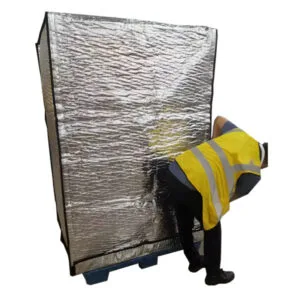
Couvertures d'expédition thermiques pour la logistique tierce: Contrôlez les minutes incontrôlées
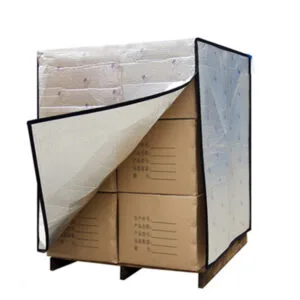
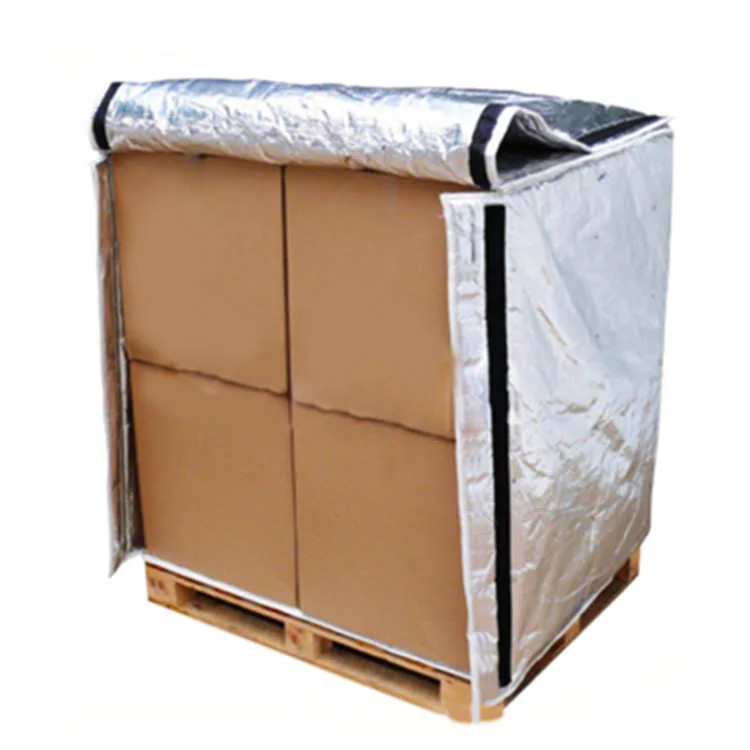
Le point faible d'un parcours sensible à la température est souvent le temps qui n'appartient à aucune pièce contrôlée.: une palette attend une porte, paperasserie, équipement, ou le prochain transporteur. Couvertures d'expédition thermiques pour la logistique tierce peut réduire l'effet de cette exposition en ralentissant le transfert de chaleur et en protégeant la charge, mais seulement dans un contexte opérationnel défini. Ce ne sont pas des appareils de réfrigération portables et ils ne prouvent pas la conformité du produit.. Un programme 3PL solide traite la couverture comme une barrière dans une chaîne de contrôles, l'attribue à la bonne palette, et des plans pour le moment où un retard dépasse ce que la barrière était censée gérer.
Commencez par un budget d’exposition, pas un catalogue de produits
Un budget d'exposition est une description pratique de l'endroit et de la manière dont une charge peut quitter son environnement requis.. Il n'est pas permis que la température du produit dérive, et il ne faut pas l'inventer comme un nombre universel. Il organise les questions qu'un chargeur, équipe de qualité, et 3PL doivent répondre ensemble.
Cartographier le trajet depuis le point de stockage final conditionné à l'origine jusqu'au premier point de stockage approprié à destination. Inclure la construction de palettes, pose de la couverture, mise en scène, mouvement du quai, chargement, transfert intermédiaire, contrôles douaniers ou de sécurité, déchargement, inspection de réception, et retrait du couvercle. Pour chaque étape, identifier l’environnement prévu, retard crédible, soleil direct ou vent, partie responsable, état de surveillance, et lieu de récupération.
La cartographie du processus révélera généralement deux problèmes différents. Le premier est l’exposition de routine qui peut être réduite grâce à une planification et à une couche protectrice. La seconde est l’exposition aux exceptions causée par des connexions manquées, portes indisponibles, paperasse rejetée, ou panne d'équipement. Une couverture peut soutenir le premier et fournir une marge supplémentaire limitée pendant le second, mais cela ne devrait pas devenir le plan d'urgence par défaut.
Définir les limites du produit avant de sélectionner la couverture. La condition approuvée ou spécifiée par le client, sensibilité à la stabilité, charge utile, et les règles de disposition contrôlent la décision. Une mention générique telle que « rester au frais » n’est pas suffisante pour les produits réglementés. Aliments sensibles à la température, matériel de santé, produits chimiques, et les ingrédients industriels peuvent avoir des conséquences et des exigences en matière de preuves totalement différentes, même lorsqu'ils voyagent sur des palettes identiques..
Énoncez ensuite le travail de la couverture en une phrase. Par exemple: "Réduisez l'exposition radiante et convective de courte durée pendant qu'une palette définie est transférée entre une pièce contrôlée et un véhicule préconditionné." Cela facilite le rejet des affirmations non pertinentes et la conception d'un test qui répond à la vraie question..
Placez correctement les couvertures thermiques d’expédition dans la logistique tierce
Un bon contrôle logistique commence par supprimer ou réduire l’exposition lorsque cela est possible. Programmer le véhicule, utiliser un quai fermé, mettre en scène la palette dans un espace contrôlé, raccourcir le trajet à travers la cour, et établir un traitement prioritaire. Une couverture complète ces contrôles; cela ne devrait pas excuser un séjour évitable.
Le niveau suivant est le système de transport ou d'emballage. Selon le produit et la voie, il peut s'agir d'un véhicule à température contrôlée, conteneur actif, qualifié expéditeur passif avec liquide de refroidissement, ou une autre solution approuvée. UN couverture de palette les cartons ordinaires qui entourent n’est automatiquement équivalent à aucun d’entre eux. Il n'a pas de source d'alimentation, pas de boucle de contrôle, et généralement pas de réfrigérant.
La surveillance fournit des preuves sur les conditions. Il peut identifier un écart et soutenir une enquête, mais il ne peut pas protéger le produit. Un 3PL doit garder les fonctions distinctes:
Les contrôles opérationnels réduisent le risque et la durée de l'exposition.
Emballage thermique ou l'équipement résiste ou contrôle le mouvement de la chaleur.
La surveillance enregistre les conditions sélectionnées.
Les procédures qualité déterminent l’approbation, escalade, enquête, et disposition.
Confondre ces fonctions crée une fausse confiance. Un couvercle plus enregistreur n'est toujours pas un système actif à température contrôlée. Une couche réfléchissante ne constitue toujours pas une qualification d'itinéraire. Une livraison réussie ne prouve toujours pas que chaque future palette se comportera de la même manière..
Concevoir autour de la vraie palette, y compris ses parties gênantes
Les dimensions nominales des palettes ne sont qu'un point de départ. La charge finie peut pencher, renflement, avoir des planches de coin, bretelles saillantes, un sommet inégal, pochettes à documents, ou une étiquette qu'il faut scanner sans ouvrir le couvercle. Mesurez l'enveloppe tridimensionnelle maximale et observez les variations au cours de la production normale.
L'ajustement modifie le comportement thermique et opérationnel. L'excès de tissu peut flotter sous l'effet du flux d'air., accroc sur l'équipement, ou créer un espace de convection interne. Une couverture étanche peut passer au-dessus de la base de la palette, déchirure aux coins, appuyer sur les cas, ou décourager une fermeture correcte. Si plusieurs hauteurs de charge sont communes, des fonctionnalités réglables peuvent aider, mais ils ajoutent des étapes qui doivent être enseignées et inspectées.
Revoir la limite inférieure. De nombreux couvercles protègent les côtés et le dessus tout en laissant la base de la palette ouverte. La chaleur peut toujours circuler à travers le sol, planches de terrasse, et dessous exposé. Cela peut être acceptable pour un bref transfert, ou il peut s'agir d'une faiblesse dominante dans des conditions de froid ou de chaleur intenses. La réclamation et le test doivent refléter la configuration réelle.
Les décisions de construction impliquent des compromis. Les surfaces réfléchissantes peuvent réduire le gain de chaleur solaire. Les couches isolantes résistent à la conduction. Les fermetures et les chevauchements limitent les échanges d'air. Les renforts résistent aux dommages de manipulation. Pourtant, une surface réfléchissante ne résout pas un joint ouvert, un renforcement supplémentaire peut créer un pont, et une couche épaisse peut être difficile à plier et à retourner. Évaluer l'assemblage fini en cours de manutention, fonctionnalités non isolées sur une fiche de vente.
Un essai d’ajustement pratique
Utilisez au moins les configurations de charge approuvées les plus petites et les plus grandes. Demandez aux opérateurs normaux de récupérer, identifier, installer, scanner à travers ou autour, rouvrir, refermer, retirer, pli, et rangez la housse. Observer les erreurs sans coacher du premier coup. Vérifier le dégagement du chariot élévateur et du transpalette, visibilité de l'étiquette, alignement de fermeture, arêtes vives, effort de levage, et si la housse touche des sols sales.
L'essai n'établit pas de performances thermiques. Il répond si la conception peut être utilisée de manière cohérente. C'est une condition nécessaire pour que tout résultat de test ultérieur reste significatif en fonctionnement..
Rendre les preuves proportionnées au risque
Les preuves doivent être suffisamment solides pour justifier l'allégation et les conséquences du produit.. Un entrepôt peut utiliser une simple comparaison documentée pour choisir entre les modèles de couverture pour un transfert non critique.. Un client pharmaceutique peut exiger une, qualification agréée liée au produit, emballage, itinéraire, saison, et système qualité. Le 3PL ne devrait pas regrouper ces niveaux en un seul certificat de test.
| Couche de preuves | Question à laquelle il peut répondre | Ce qu'il ne peut établir seul |
|---|---|---|
| Données matérielles | Comment un composant se comporte selon une méthode de test indiquée | Performance du fini, couverture drapée |
| Essai d'assemblage | Comment une configuration de couverture se comporte avec une charge et un défi indiqués | Chaque charge utile, saison, voie, ou état vieilli |
| Essai de manipulation | Si les opérateurs peuvent déployer la couverture de manière cohérente | Protection de la température du produit sur un itinéraire |
| Profil de voie | Quelles conditions environnementales et événements de séjour se produisent sur un itinéraire | Qu'une couverture particulière contrôle ces conditions |
| Étude de qualification | Si un système défini répond aux critères approuvés dans des conditions spécifiées | Configurations non révisées ou modifications d'itinéraire futures |
| Suivi opérationnel | Quels capteurs sélectionnés ont enregistré lors d'un envoi | Protection des emplacements non mesurés ou élimination automatique des produits |
Cette échelle de preuves évite les erreurs de catégorie. Un certificat matériel n’est pas inutile; cela soutient simplement une décision plus étroite. La combinaison des couches fournit une base plus défendable, tandis que chaque changement doit être évalué par rapport à la portée des travaux antérieurs.
Lors de l'examen d'un rapport thermique, nécessiter un contexte. Identifiez la couverture exacte, âge et état, masse et disposition de la charge utile, conditions initiales, profil ambiant, flux d'air ou installation solaire, type et emplacement du capteur, durée, répétitions, critères d'acceptation, et les écarts. S'il en manque un, énoncer la limitation au lieu de combler le vide avec une hypothèse.
Outils de décision utiles
Vérifiez les détails avant de choisir l'emballage
Ces outils rapides peuvent vous aider à comparer le risque d'itinéraire, besoins de dimensionnement, choix de liquide de refroidissement, et les détails de l'emballage avant de demander un devis.
Calculateur de banquise
Estimation de la quantité de pain de glace pour les expéditions réfrigérées et planification pratique des itinéraires.
Estimer les packs de glaceCalculateur de glace carbonique
Estimer les besoins en glace carbonique pour les envois congelés ou ultra-froids avant l'emballage.
Estimation de la neige carboniqueLiquide de refroidissement & Référence PCM
Comparez les options de liquide de refroidissement et de PCM lorsqu'un itinéraire nécessite une prise en charge supplémentaire de la température.
Comparez les optionsLes cadres officiels soutiennent cette séparation basée sur les risques. Les procédures thermiques ISTA fournissent des profils standardisés pour certaines emballage de transport applications. Les suppléments techniques de l'OMS distinguent les opérations de transport, profilage d'itinéraire, surveillance, et qualification. Le guide européen de bonnes pratiques de distribution prévoit que les conditions de stockage des médicaments soient maintenues pendant le transport. Ces références guident un programme; aucun ne rend une housse de palette générique universellement qualifiée.
Construire le système d'exploitation autour de l'actif
Un programme de couverture 3PL nécessite un contrôle de configuration car les entrepôts sont conçus pour la rapidité et les ressources partagées.. Attribuez à chaque motif de couverture un code unique. Liez ce code au client approuvé, service, enveloppe de charge, instructions, norme d'inspection, méthode de nettoyage, et l'état des preuves.
En cause, vérifier le code de couverture par rapport à l'envoi. À l'installation, capturer l'achèvement via l'analyse ou la liste de contrôle appropriée. Pendant le transfert, préserver l'orientation de la couverture et la visibilité de l'étiquette. Au retour, déplacer le couvercle dans un état défini: en attente d'inspection, en attente de nettoyage, en réparation, prêt, ou retraité. Ne laissez pas les couvertures retournées et libérées partager une pile incontrôlée..
Les instructions de travail doivent indiquer quand le couvercle est installé et retiré, comment les fermetures sont sécurisées, quelles lacunes sont acceptables, et comment les inspections sont gérées. Il convient également de définir les conditions d'arrêt. Les exemples incluent une mauvaise configuration, couture ouverte, fermeture endommagée, intérieur humide, identité illisible, cartons inférieurs exposés, ou s'attarder au-delà du scénario approuvé.
L'escalade doit conduire à une action, pas seulement une notification. La palette peut nécessiter un stockage contrôlé, une housse de remplacement, contact client, examen de surveillance, une tenue de qualité, ou une autre réponse définie par accord. La disposition du produit appartient à la partie qualité autorisée, pas à l'installateur de la couverture.
Les responsabilités devraient survivre aux transferts organisationnels. Utilisez une matrice de rôles ou un accord de service pour définir à qui appartient les exigences du produit., état de préparation du véhicule, allocation de couverture, installation, suivi des retards, configuration de l'enregistreur, récupération de données, rapport d'écart, nettoyage, retour, et disposition finale. La logistique tierce devient fiable lorsque les tiers savent précisément où changent la garde et le pouvoir de décision.
Sourcer une configuration contrôlée, pas un sosie
Deux couvertures peuvent sembler identiques tout en différant par le matériau de base, film, adhésif, ruban de couture, fil, renforcement, fermeture, ou dimensions. L’approvisionnement doit préserver la construction échantillonnée et évaluée.
Envoyez aux fournisseurs un brief opérationnel plutôt qu’une simple taille. Inclure l'enveloppe de charge, utiliser l'environnement, méthode de manipulation, accès requis, projet d'identité, attentes en matière de réutilisation et de nettoyage, et le niveau de preuve nécessaire. Demander un dessin et une définition de construction. Demandez quelles dimensions sont utilisables, quelles tolérances s'appliquent, et comment le fournisseur contrôle les couches, coutures, fermetures, et la fabrication.
Les rapports de test des fournisseurs doivent être examinés pour en vérifier la pertinence., non collecté comme décoration. Demander si l'échantillon testé correspond à l'article cité, quelle méthode et quel défi ambiant ont été utilisés, quelle charge utile était présente, et quelle conclusion le fournisseur considère justifiée. Si le résultat provient d'un coupon matière plat, qualifiez-le de preuve matérielle.
Les spécifications d'achat doivent inclure l'approbation de l'échantillon, critères d'inspection à l'arrivée, identité du lot, le cas échéant, définitions de défauts, emballage pour la livraison, et notification de changement. Les changements potentiellement importants incluent la source matérielle, composition, épaisseur, revêtement, adhésif, méthode de couture, fermeture, renforcement, dimensions, et lieu de fabrication. L'acheteur peut alors évaluer si un nouveau test ou l'approbation du client est nécessaire..
La comparaison commerciale doit inclure plus que le prix unitaire. Cube de rangement, main d'oeuvre pour l'installation, fret de retour, nettoyage, séchage, inspection, réparations, perte, administration, et l'élimination affectent tous le coût. Demander le délai de livraison actuel, quantité minimale, et personnalisation sous forme de citations plutôt que d'assumer des valeurs génériques.
La réutilisation nécessite une boucle fermée et une comptabilité honnête
La réutilisabilité est une intention de conception; une réutilisation réussie est un comportement observé du système. La couverture doit revenir, être identifiable, rester nettoyable, passer l'inspection, et remise en service. Une voie sans mécanisme de retour peut être un mauvais candidat même si le produit est durable.
Pilotez la boucle. Suivre le problème sortant, retour du récepteur, temps hors de la piscine, état de nettoyage, dommage, réparation, perte, et la retraite. Enregistrer pourquoi un actif a quitté le service. Ces données révèlent si le problème principal est la crevaison, fermetures manquantes, contamination, défaut de retour, ou simple mauvaise attribution.
L'évaluation environnementale doit inclure les intrants matériels, livraison, transport de retour, nettoyage, réparation, emballages évités, et gestion de fin de vie. Le cadre actuel de l’Union européenne en matière d’emballage rend la prévention des déchets, Recyclabalité, et des systèmes réutilisables de plus en plus pertinents, mais l'applicabilité juridique varie selon le format et le flux. Ne revendiquez pas la conformité ou la supériorité environnementale du mot réutilisable.
Les critères de retraite doivent être précis. Coutures ouvertes, isolation apparente, distorsion dimensionnelle, échec de fermeture, humidité persistante, contamination, ou une identification illisible peut nécessiter une réparation ou un retrait. Les vêtements cosmétiques ne peuvent être acceptés que si les critères approuvés indiquent qu'ils n'ont aucun effet sur l'utilisation.. Une couverture réparée ne doit pas hériter silencieusement de toutes les preuves antérieures si la réparation modifie la construction.
Questions fréquemment posées
Combien de temps de protection supplémentaire offre une housse de palette?
Il n'y a pas de temps universel. Le résultat dépend de la construction de la couverture, ajuster, masse thermique de charge, état initial, profil ambiant, vent, exposition solaire, base de palette, et critère d'acceptation. Demander les conditions de test et évaluer l'utilisation prévue. Une durée de titre provenant d'une charge utile ou d'un environnement différent ne doit pas être appliquée à votre voie..
Si le couvercle est serré ou lâche?
Il doit être bien ajusté sans comprimer les cartons, exposer les bords inférieurs, équipement d'accrochage, ou créer de grands espaces aériens. La tolérance correcte dépend de la variation de charge et de la conception de la fermeture. Un essai pratique sur l'enveloppe de palette minimale et maximale approuvée est plus instructif que de choisir uniquement à partir des dimensions nominales..
Une couverture thermique est-elle suffisante pour le fret pharmaceutique?
Pas tout seul. L'état approuvé du produit doit être maintenu grâce à un système de transport basé sur les risques pouvant impliquer des équipements contrôlés., emballage qualifié, surveillance, procédures, et contrôle de la qualité. Une couverture peut constituer un contrôle supplémentaire si elle est évaluée pour le produit et le couloir.. Elle ne devrait jamais être présentée comme une conformité pharmaceutique universelle..
Qui devrait décider où va l'enregistreur de température?
L'expéditeur responsable ou le plan de surveillance approuvé par la qualité doit déterminer le type d'appareil, configuration, et placement. L'emplacement du capteur modifie ce qui est mesuré, et de l'air, surface, et les températures proxy du produit ne sont pas identiques. Le 3PL doit exécuter le plan approuvé et conserver les responsabilités d'étalonnage et de traitement des données définies dans le contrat de service..
Quel est le premier signe d’échec d’un programme de couvertures réutilisables?
L'identité non contrôlée est un avertissement précoce. Si les équipes ne peuvent pas savoir quelle couverture est approuvée pour quel service, si c'est propre, ou combien d'actifs manquent, les revendications thermiques et durables deviennent difficiles à défendre. Établir les codes de configuration, contrôle d'état, et suivi des retours avant de faire évoluer le pool.
Conclusion: protéger le processus autour de la palette
Les couvertures thermiques sont mieux comprises comme limitées, barrières utiles contre l’exposition lors de transferts connus. Leur apport dépend de l'assemblage complet, vraie palette, condition de départ, environnement, et les personnes qui les installent et les gèrent. Ils ne peuvent pas remplacer la réfrigération, qualification spécifique au produit, stratégie de surveillance, ou contrôle des écarts.
Pour un programme 3PL défendable, cartographier les minutes incontrôlées, définir le travail étroit de la couverture, tester l’adéquation et les preuves au niveau approprié, contrôler la configuration fournie, et exploiter la réutilisation en boucle fermée. Cette séquence donne à l'approvisionnement, opérations, et les équipes qualité une base commune pour décider quand une couverture convient et quand des contrôles plus stricts sont nécessaires.
À propos du tempk
Tempk est un B2B emballage chaîne du froid fournisseur proposant des palettes isolées et des couvertures thermiques ainsi que des emballage à température contrôlée. Nous aidons les acheteurs à discuter du choix des couvertures dans le contexte de la géométrie des palettes, exposition par voie, manutention, réutilisation, et le rôle des autres contrôles de la chaîne du froid. Parce que chaque chargement et chaque voie sont différents, les questions de performance et de qualification pertinentes doivent être réglées en fonction de vos conditions et exigences de qualité définies.
Envoyez à Tempk les dimensions de votre palette, état du produit, étapes d'itinéraire exposées, contraintes d'exploitation, et les attentes en matière de preuves pour comparer une approche appropriée de couverture thermique.