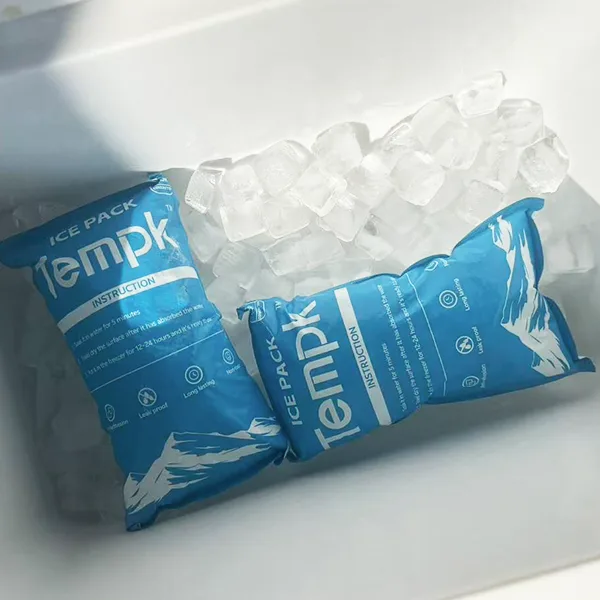
Conception personnalisée de briques cool pour de réelles contraintes d'emballage
Un projet personnalisé en brique cool doit commencer par une contrainte qui peut être observée et mesurée. Peut-être qu'un bloc standard vole de l'espace de charge utile, appuie contre un produit sensible, s'adapte mal après congélation, ou est installé à plusieurs reprises dans la mauvaise position. Géométrie personnalisée, liquide de refroidissement, identification, ou l'emballage peut résoudre ce problème, mais chaque changement crée aussi du travail en outillage, contrôle de fabrication, essai, inventaire, et remplacement.
La frontière est importante: une brique personnalisée reste un composant de refroidissement. Il ne peut pas établir seul un emballage à température contrôlée. La performance appartient au système complet d’isolation, charge utile, quantité et état des briques, arrangement, exposition par voie, et manipulation.
Utilisez une échelle de personnalisation avant de dessiner une nouvelle coque
Le changement ayant le moins d’impact et qui corrige l’échec est généralement le plus facile à contrôler. Commencez par le pack actuel et gravissez les échelons de personnalisation uniquement lorsque l'option précédente ne peut pas répondre aux exigences..
D'abord, corriger le processus. Si les emballeurs utilisent la mauvaise quantité ou la mauvaise orientation, une instruction de travail plus claire, plateau de préparation, vérification par numérisation, ou la séparation des stocks peut résoudre le problème. Ce n'est pas une excuse pour blâmer les opérateurs; il teste si le produit lui-même doit changer.
Suivant, essayez un autre format établi. Une épaisseur ou une empreinte standard différente peut s'adapter à la même isolation avec moins de développement. Un séparateur, manche, poche, ou insert peut gérer le contact et la localisation tout en gardant le brique de refroidissement inchangé. Ces composants secondaires appartiennent toujours à l'emballage contrôlé et nécessitent une évaluation appropriée..
Pensez ensuite à l’identification et à la présentation. Un code modèle durable, marque d'orientation, étiquette, couleur, ou la configuration du carton peut réduire les confusions. La couleur devrait aider plutôt que remplacer l’identité, à cause du gel, éclairage, décoloration, et la perception humaine peut rendre la couleur peu fiable. La marque peut avoir une valeur commerciale, mais il ne doit pas contenir une allégation de performance plus large que les preuves.
Changer la géométrie uniquement pour un problème d'interface défini. Épaisseur, côtes, poignées, clés, niches, ou les contours affectent l'ajustement, contact superficiel, volume de charge utile, comportement de congélation, moulage, nettoyage, et fret. Le descriptif du projet doit nommer l'échec et le test qui démontrera l'amélioration.
Changer le liquide de refroidissement ou faire le plein lorsque la stratégie thermique l'exige. Il s'agit d'un changement de conception fondamental, pas une option cosmétique. Cela affecte la préparation, comportement de phase, fabrication, informations de sécurité, évaluation des transports, et tests complets. Un point de changement de phase demandé doit émerger de l’analyse du produit et de l’itinéraire, pas à partir d'un numéro de catalogue.
A chaque étape, demander si le bénéfice attendu dépasse le fardeau d'une nouvelle configuration. Un programme stable à volume élevé peut justifier un outillage permettant un emballage plus rapide. Un envoi médical de moindre volume peut le justifier car la charge utile et le risque sont conséquents. Il n’y a pas de commande minimale universelle responsable ni de seuil de remboursement. Construire le dossier à partir des prévisions, valeur de la charge utile, conséquences de l'échec, qualification, fret, travail, capacité du congélateur, retours, et dépendance de remplacement.
Traiter la géométrie comme une interface thermique et humaine
Une brique occupe de l'espace, conduit la chaleur, limite le flux d'air, et indique à un emballeur où le mettre. Une bonne géométrie répond aux quatre rôles. Conception à partir du système de coordonnées interne du conteneur commercial, y compris les doublures, séparateurs, cartons de produits, dispositifs de surveillance, fermetures, et la pile de tolérance complète.
Les dimensions nominales ne suffisent pas. Vérifier la pièce dans son état de fabrication et après la préparation prévue. Une plaque remplie peut se dilater ou changer de profil lorsqu'elle est congelée ou conditionnée. Le conteneur et la charge utile varient également. Un modèle numérique qui utilise uniquement des valeurs nominales peut créer un assemblage qui respecte les limites de production ordinaires..
| Fonctionnalité proposée | Objectif utile | Nouveau risque introduit | Preuve nécessaire avant l'approbation |
|---|---|---|---|
| Large, panneau mince | Couvre un mur tout en préservant l'espace central de charge utile | S'incliner, contact local fort, préparation inégale en piles denses | Ajustement à l’état préparé, étude de charge du congélateur, cartographie thermique |
| Bloc épais et compact | Concentre la masse de liquide de refroidissement dans une unité simple | Espace de charge utile perdu et exposition localisée au froid | Comparaison de charge et chaud- plus évaluation du risque de rhume |
| Clé, languette, ou asymétrie | Rend la bonne orientation évidente | Dépendance à un conteneur dédié et substitution plus difficile | Essai avec des emballeurs représentatifs et examen d’urgence |
| Nervures d'écartement moulées | Maintient un produit à l'écart du visage froid | Lacunes chaudes, pièges à résidus, variante d'outil | Cartographie de la température, nettoyabilité, contrôle dimensionnel |
| Fermeture encastrée | Protège le point de remplissage des impacts de manipulation | Visibilité réduite et nettoyage difficile | Défi d’intégrité, accès pour inspection, examen de l'hygiène |
| Marque de modèle permanente | Préserve l’identité grâce à la condensation et à la réutilisation | Flexibilité limitée des illustrations ou recoins difficiles à nettoyer | Lisibilité après manipulation et évaluation du nettoyage |
Le tableau doit faire partie du dossier de conception. Chaque fonctionnalité nécessite un avantage attendu, un effet secondaire crédible, et des preuves pour les deux. Si l'équipe ne peut pas énoncer le problème, une fonctionnalité le résout, le supprimer améliore généralement la conception.
L'analyse du flux thermique doit identifier les chemins de chaleur probables à travers les murs., couvercle, coutures, ouvertures, et lacunes internes, ainsi que des zones froides à côté du liquide de refroidissement préparé. Une plaque supérieure peut traiter l'exposition de la zone du couvercle mais peut créer un contact direct avec une charge utile supérieure. Une plaque murale peut répartir le refroidissement sur une grande surface mais peut devenir difficile à retirer. Un bloc inférieur peut simplifier le chargement tout en produisant un gradient vertical. Il n’existe pas d’arrangement universellement supérieur.
Le contact direct est à la fois thermique et mécanique. Une surface gelée peut endommager localement un produit sensible au gel; un coin rigide peut abraser un sachet ou charger un plateau de flacons. Une barrière peut réduire ces risques mais ajoute une résistance thermique et devient un autre composant contrôlé. Sa matière, épaisseur, position, et les conditions de réutilisation doivent correspondre à la configuration testée.
La condensation mérite également une attention particulière en matière de conception. L'humidité peut affaiblir les éléments ondulés, desserrer les étiquettes, masquer les codes, ou compliquer l'hygiène. La texture de la poignée peut aider un opérateur ganté et piéger les résidus plus tard. Évaluez l'humidité réelle et la séquence de manipulation plutôt que de prétendre qu'un design ne transpire jamais..
La sélection et le conditionnement du liquide de refroidissement doivent être opérationnellement possibles
Le matériau à changement de phase absorbe et libère de la chaleur latente autour d'une région de transition, mais la valeur nominale de la phase n'est pas la température de la charge utile. Résistance de la coque, masse de liquide de refroidissement, chaleur sensible, remplir, superficie, isolation, charge utile, conditions de départ, exposition ambiante, et le temps crée des gradients de température. Demander au fournisseur les caractéristiques mesurées, méthodes, tolérances, et contrôles de lots pertinents pour la formulation choisie.
La préparation fait partie de la conception du produit. Documenter les équipements de congélation ou de conditionnement disponibles, conditions de fonctionnement, disposition à pleine charge, flux d'air, empilement, ouvertures de portes, mise en scène, et la méthode utilisée pour confirmer l'état de préparation. Une conception de chambre qui nécessite un état de départ que votre entrepôt ne peut pas créer de manière fiable n'est pas une conception pratique..
Les directives de l’OMS concernant les équipements de vaccination illustrent l’importance de l’état du liquide de refroidissement. On distingue les surgelés, conditionné, cool, et des packs d'eau chaude pour des situations vaccinales et climatiques définies, et sa catégorie de produits E005 dispose de parcours de préqualification spécifiques. Ces règles ne devraient pas être copiées en bloc dans un projet alimentaire ou pharmaceutique commercial.. Le principe transférable est plus étroit: le risque produit et la conception du conteneur passif déterminent la manière dont le liquide de refroidissement est préparé et utilisé.
Si la formulation est exclusive, établir suffisamment d’informations contrôlées pour la sécurité, transport, examen du marché prévu, cohérence de fabrication, intervention en cas de déversement, élimination, et évaluation du changement. Une divulgation confidentielle à un personnel qualifié ou à un tiers convenu peut être appropriée.. « Non toxique," "qualité alimentaire,» ou « adapté à la médecine » ne doivent pas être acceptés comme un substitut sans portée aux preuves..
Pour briques préremplies, la conception doit également tenir compte de la tolérance de remplissage, espace de tête ou justification d’expansion, fermeture, et traçabilité. Pour un format rempli localement, contrôler le milieu de remplissage, montant, méthode de fermeture, mode d'emploi, et inspection. Ne passez pas d'une version préremplie à une version remplie localement sans évaluer les conséquences physiques et thermiques..
Enfin, préparation aux tests à l'échelle opérationnelle. Les cheminées denses peuvent bloquer la circulation de l'air, et le centre d'une charge de congélateur peut atteindre l'état requis plus tard que les unités exposées. Vérifiez les emplacements représentatifs plutôt que de vous fier uniquement à l’affichage de l’air du congélateur. Inclure le temps de préparation, supports, énergie, travail, et mise en scène des pertes dans l'analyse de rentabilisation.
Laissez les preuves mûrir avec le prototype
Le développement personnalisé échoue lorsqu'un modèle prometteur est traité comme une preuve de production. Utilisez chaque étape de l'échantillon pour répondre à un ensemble limité de questions, et étiquetez son statut afin que les premiers résultats ne puissent pas être mal appliqués.
Outils de décision utiles
Vérifiez les détails avant de choisir l'emballage
Ces outils rapides peuvent vous aider à comparer le risque d'itinéraire, besoins de dimensionnement, choix de liquide de refroidissement, et les détails de l'emballage avant de demander un devis.
Sélecteur d'emballage
Comparez les options d'emballage isotherme par produit, itinéraire, et besoin de température.
Trouver un emballageCalculateur de banquise
Estimation de la quantité de pain de glace pour les expéditions réfrigérées et planification pratique des itinéraires.
Estimer les packs de glaceRésistance aux chutes du matériau isolant
Examinez la résistance aux chutes et les facteurs de manipulation avant de choisir des matériaux d'isolation..
Vérifier la résistanceMaquette spatiale: confirme l'autorisation de la charge utile, accès manuel, orientation, et fermeture du couvercle. Cela en dit peu sur le comportement thermique ou la durabilité.
Prototype d'ingénierie: explore la géométrie, masse approximative, et les premiers concepts de flux de chaleur. Différences par rapport au polymère prévu, remplir, et la clôture doit être enregistrée.
Échantillon d'outil: teste la fabricabilité, variation de la cavité, dimensions critiques, construction de fermeture, marques, et ajusté après préparation.
Lot pilote: montre le comportement du processus ordinaire, emballage, traçabilité, libération du lot, et état d'expédition.
Emballage représentatif de la production: prend en charge la décision thermique et opérationnelle finale pour la configuration nommée.
Les travaux thermiques nécessitent des critères d'acceptation tirés des exigences de charge utile avant que les résultats ne soient examinés.. Utilisez la publicité récipient isolé, charges minimales et maximales justifiées, la révision et le nombre de briques approuvés, état de départ défini, arrangement, séparateurs, fermeture, défi ambiant, et emplacements des capteurs basés sur les risques. Les capteurs à proximité du liquide de refroidissement aident à identifier l'exposition au froid; les positions chaudes suspectées répondent au risque de chaleur. La température de l'air et la température du produit ou du produit simulé peuvent réagir différemment, le protocole devrait donc indiquer ce que représente chaque mesure.
Norme ISTA 20 fournit un processus de conception et de qualification pour des conteneurs d'expédition isolés, et la norme 7E fournit des profils thermiques de colis définis. Ceux-ci peuvent soutenir un projet le cas échéant, mais il ne s'agit pas de données de voie personnalisées et ne certifient pas un composant lâche simplement parce qu'il est apparu lors d'un test.. Enregistrez la méthode exacte, configuration, révision de l'article de test, et résultat.
Exemple pratique: un kit de laboratoire perd de l'espace utilisable
Imaginez un laboratoire dont le portoir d'échantillons s'adapte confortablement jusqu'à ce qu'une brique standard soit placée sous le couvercle.. La première demande personnalisée est une plaque supérieure plus fine. Une maquette restitue le jeu souhaité, mais une comparaison technique montre que la réduction de l'épaisseur modifie également la masse du liquide de refroidissement et la zone de contact..
L'équipe cartographie l'entrée de chaleur autour du couvercle, examine les charges d'échantillons minimales et complètes, et examine ses grilles de congélateur. Il ajoute un évidement peu profond autour du capuchon de protection du rack plutôt que d'amincir la plaque entière. Un bord claveté empêche l'évidement d'être orienté dans la mauvaise direction, et une simple zone de préhension permet au personnel de retirer la plaque préparée sans faire levier contre le revêtement.
Le profil des échantillons d'outils est vérifié après préparation, car la planéité à température ambiante ne répond pas à l'ajustement.. Les emballages représentatifs de la production sont évalués dans le cadre du défi d'itinéraire et de retard justifiés., avec surveillance à proximité des échantillons supérieurs ainsi que des positions chaudes attendues. Le personnel peu familier avec la conception assemble des kits pilotes à partir du projet d'instruction. Leurs erreurs conduisent à une marque permanente plus claire des pièces avant leur sortie.
La conception est approuvée car elle restaure de l'espace et reste exécutable tout en répondant aux critères du package.. Aucune affirmation n'est faite selon laquelle la plaque à elle seule maintient une plage ou une durée indiquée..
Mettez le programme commercial autour de la conception finale
Un composant personnalisé publié nécessite un fil conducteur technique et commercial reliant le dessin, matériels, liquide de refroidissement, remplir, fermeture, couleur, marques, emballage unitaire, carton principal, site de fabrication, outil, inspection, instructions de préparation, nomenclature d'emballage, et dossier de qualification. Utiliser un code de configuration qui rend difficile le mélange de versions incompatibles.
L'accord sur l'outillage devrait aborder la propriété, propriété intellectuelle, utilisation autorisée, entretien, réparation, stockage, accéder, transfert, et disposition en fin de programme. Le paiement de frais d'outillage ne résout pas automatiquement tous les droits. Définir qui approuve les modifications et ce qui se passe si la relation fournisseur prend fin; obtenir des conseils juridiques pour des engagements importants.
Les propositions des fournisseurs doivent séparer l'utilisation d'une plateforme existante, outillage modifié, nouvel outillage, et nouveau travail de formulation. Demandez des exemples d'étapes spécifiques au projet, quantités commerciales, hypothèses de calendrier, livrables de documents, et responsabilités d'acceptation plutôt que de compter sur un délai de livraison générique ou une commande minimum. Une couleur ou une étiquette personnalisée peut avoir un faible impact; une nouvelle géométrie ou un nouveau liquide de refroidissement peut nécessiter un chemin de preuve différent.
La notification de modification doit couvrir la géométrie, remplir, formulation ou source, résine de coque et additifs, fermeture, réparation ou transfert d'outillage, site de fabrication, processus critique, méthode d'essai, étiquette, et emballage le cas échéant. Tous les changements ne nécessitent pas une requalification thermique complète, mais chaque changement pertinent nécessite une décision d'impact documentée par les propriétaires de produits et de qualité appropriés..
La continuité est plus difficile avec une pièce unique. Une brique standard nominalement similaire ne constitue pas automatiquement un substitut car sa forme, superficie, remplir, conditionnement, et les contacts diffèrent. Planifier la maintenance des outils, pièces de rechange critiques, inventaire contrôlé, et alternatives potentielles en fonction du risque commercial réel. Si une source de sauvegarde est importante, l'évaluer avant une perturbation.
La réutilisation et les allégations environnementales appartiennent à cette conception commerciale, pas après coup. Comparez le matériau et le liquide de refroidissement, impacts sur les outils et la production, fret entrant, énergie de préparation, durabilité, distance de retour, nettoyage et séchage, contamination, perte, retraite, parcours locaux de fin de vie, et protection de la charge utile. Une forme personnalisée peut améliorer la récupération dans un réservoir fermé tout en restant peu performante dans un canal à sens unique.. Suivre les rotations réalisées et les raisons des échecs au lieu de promettre une durée de vie universelle.
Les programmes de l'Union européenne devraient classer le produit et chaque couche d'emballage selon les règles en vigueur. Règlement (UE) 2025/40 est entré en vigueur en 2025 et déclare l'application générale à partir d'août 12, 2026, tandis que les exigences ultérieures, définitions, exemptions, et les mesures de mise en œuvre varient. Une étiquette réutilisable ou recyclable n'est pas un raccourci vers la conformité ou une preuve d'un impact environnemental moindre..
La décision est prête lorsque la fonctionnalité personnalisée résout un problème défini, le processus de production peut conserver ses attributs critiques, l'entrepôt peut le préparer et l'identifier, le pack complet répond à ses critères, et l'accord contrôle les changements futurs. La personnalisation doit signifier une amélioration contrôlée, pas de complexité permanente.
Questions fréquemment posées
Ai-je besoin d'un nouveau moule pour une brique cool personnalisée?
Pas toujours. Étiquettes, impression, couleur, configuration des cartons, ou une plate-forme shell existante peut répondre à l'exigence. La marque moulée peut utiliser un insert, tandis que de nouvelles dimensions ou fonctionnalités fonctionnelles peuvent nécessiter un outillage dédié. Comparer le coût, contrôle, termes de propriété intellectuelle, besoins en matière d'échantillons, obsolescence, et l'impact de la qualification avant de choisir l'itinéraire.
Puis-je sélectionner un PCM uniquement par sa température de changement de phase?
Non. La région de phase n'est qu'une propriété thermique. Il faut aussi tenir compte de la masse, coquille, tolérance de remplissage, préparation, chemin de transfert de chaleur, isolation, charge utile, exposition ambiante, contrôle de l'approvisionnement, sécurité, et élimination. Surtout, tester l'emballage commercial complet par rapport aux exigences du produit; la valeur nominale du PCM n'est pas égale à la température de la charge utile.
Chaque révision personnalisée doit-elle répéter tous les tests du package?
Il n'y a pas de réponse universelle. Évaluer si la révision modifie la capacité thermique, géométrie, contact, flux d'air, état de départ, intégrité, identité, ou comportement de fonctionnement. Une mise à jour d'une illustration peut nécessiter uniquement un examen des documents et des autorisations de ligne., tandis qu'un liquide de refroidissement, remplir, ou un changement dimensionnel peut nécessiter un travail sur les composants et des tests d'emballage supplémentaires. Enregistrer la justification et l’approbation.
À propos du tempk
Et tempk, nous proposons des formats de briques de glace rigides et pouvons discuter des choix de projet tels que les dimensions, épaisseur, couleur de la coque, étiquette, option liquide de refroidissement, et emballage en carton. Nous commençons une évaluation personnalisée avec la limitation du pack actuel: interface de conteneur, charge utile, matériel de préparation, itinéraire, manutention, plan de réutilisation, et marché de destination. Cela permet de séparer un ajustement de plate-forme standard du travail d'outillage ou de formulation.. Partagez votre dessin, statut de l'échantillon, et critères d'acceptation avec nous pour planifier une étude de faisabilité ciblée; qualifier le package final représentatif de la production avant de publier des réclamations de performance ou des commandes de volume.