Le contrôle pharmaceutique de Cool Brick est prouvé dès la réception, Pas au congélateur
Un destinataire qui regarde un enregistreur alarmé n'a pas besoin de savoir que les briques étaient froides au moment de l'expédition.. Le destinataire a besoin d'une réponse traçable: La configuration pharmaceutique approuvée en briques froides a-t-elle été emballée et conditionnée correctement ?, l'envoi a-t-il relevé le défi pour lequel il avait été conçu, et qui peut évaluer le médicament maintenant? Cette perspective change le projet. Un rigide brique de refroidissement n'est pas acheté comme protection indépendante; il est sélectionné comme composant contrôlé dans un, surveillé, système qualifié. De nombreux flux de médicaments réfrigérés utilisent une température comprise entre 2°C et 8°C., mais les limites requises sont toujours spécifiques au produit. Certains médicaments ont des conditions différentes, et certains peuvent être endommagés par le gel, même lors d'un envoi nominalement réfrigéré..
Rédigez la décision de réception avant de concevoir la boîte
Commencez par la décision qui doit être prise après la livraison. Définir les conditions de transport autorisées du produit, quelles données doivent être disponibles, qui examine ces données, et quelles preuves soutiennent la libération, quarantaine, escalade, ou un rejet. Cela évite que le développement des emballages ne devienne une compétition pour produire un produit à long terme., graphique de température plat sans contexte de fonctionnement significatif.
Une exigence de réception utile répond à cinq questions:
Qu'est-ce qui identifie l'envoi, produit, révision du pack-out, et surveiller?
Quelles limites de température et règles de durée s'appliquent à ce produit?
Quels contrôles physiques sont requis avant le déballage ou la libération?
Qui a le pouvoir d’évaluer une éventuelle excursion?
Que se passe-t-il lorsque les données, scellés, composants, ou il manque des documents?
Les lectures du moniteur de température sont une preuve, pas de protection ni une décision de disposition automatique. L'évaluation peut nécessiter des informations sur la stabilité du produit, ampleur et durée de l'exposition, contexte du capteur, et autorisation de qualité. Matériel USP concernant le stockage, expédition, et la température cinétique moyenne peut éclairer une procédure, mais une mesure récapitulative ne doit pas être utilisée pour écarter une exposition au gel ou remplacer une évaluation spécifique au produit..
Une fois la décision finale explicite, travailler à rebours. Le moniteur doit être récupérable et correctement placé. Le pack-out doit être lié à une instruction contrôlée. L'identité de la brique et l'état de conditionnement doivent être vérifiables. La qualification doit couvrir la charge prévue et le défi thermique. L’approvisionnement doit préserver la spécification des composants dont dépend la preuve.
Convertissez le médicament et la voie en exigences de l'utilisateur
Les exigences utilisateur du pack doivent être suffisamment courtes pour être utilisées et suffisamment détaillées pour être testées.. Commencez par les conditions du produit étiquetées ou autrement approuvées.. Évitez de traiter 2°C à 8°C comme valeur par défaut de la catégorie. Enregistrer la sensibilité au gel, chaleur, lumière, vibration, orientation, ou d'autres facteurs pertinents sans supposer qu'un composant du liquide de refroidissement les résout tous.
Décrire les limites de la charge utile à l'aide des configurations d'expédition réelles. La charge minimale peut être thermiquement vulnérable car elle contient moins de masse de produit et plus d'espace vide. La charge maximale peut restreindre la circulation ou placer les cartons plus près d'une brique. Si les kits intermédiaires varient, définir des dispositions autorisées ou une matrice de configuration qualifiée.
Documentez ensuite la voie sous la forme d'une séquence d'expositions et de changements de garde.. Le temps de transit nominal n'est qu'une entrée. Inclure les fenêtres de collecte, mise en scène, moyeux, retenues de douane ou de sécurité, week-end, planification du dernier kilomètre, heures de réception, et des retards crédibles. Examiner les risques estivaux et hivernaux de manière indépendante. Les conseils techniques de l’OMS séparent mais relient la qualification des conteneurs maritimes, profilage d'itinéraire, et suivi des transports; il s'agit d'un modèle utile pour maintenir les preuves de laboratoire liées à leur utilisation sur le terrain..
Enfin, établir des contraintes opérationnelles. Quel équipement de conditionnement est disponible? Combien de briques peuvent y être correctement espacées? Combien de temps un composant conditionné peut-il reposer avant d'être emballé? Le personnel peut-il distinguer des coques similaires contenant différentes formules PCM? Un destinataire peut-il retourner des composants réutilisables? Une conception qui ne fonctionne que sous une supervision technique idéale n'est pas prête pour une distribution de routine.
Utilisez des portes de preuves au lieu de superlatifs de produits
Un projet contrôlé passe par les portes des preuves. Chaque porte supprime une incertitude différente, et aucun ne peut être remplacé par des affirmations telles que « longue durée »," "qualité médicale,» ou « conforme au RGPD ».
| Grille | Décision à prendre | Preuves utiles minimales |
|---|---|---|
| Produit | Ce qu'il faut protéger? | Conditions approuvées, sensibilités, plage de charge utile |
| Composant | Quelle est exactement la brique? | Dessin, identification de la coque et du remplissage, tolérances, critères d'inspection |
| Conception | Comment les pièces interagiront-elles? | Concept d'emballage, espacement, conditionnement, justification thermique |
| Qualification | Le système répond-il aux exigences? | Protocole et rapport pour des charges définies, profils, capteurs, et les limites |
| voie | L’utilisation prévue correspond-elle au défi? | Examen des risques liés à l'itinéraire, données mesurées là où c'est nécessaire, justification du retard |
| Opération | Les sites peuvent-ils le reproduire et l'évaluer? | Consignes contrôlées, entraînement, surveillance, recevoir, écarts |
| Cycle de vie | Les preuves survivront-elles au changement et à la réutilisation? | Notification du fournisseur, inspection, enregistrements, règles de révision ou de requalification |
Cette séquence expose les lacunes dès le début. UN expéditeur qualifié le rapport ne peut pas établir l'identité d'une brique de remplacement proposée. Les données détaillées sur les matériaux ne peuvent pas prouver l'expéditeur fini. D'excellentes données sur les voies ne peuvent pas sauver un assemblage que le personnel ne peut pas reproduire. Le dossier d'achat doit conserver les sept liens.
Liquide de refroidissement équilibré, Isolation, Charge utile, et aérien
La performance thermique passive provient du transfert de chaleur. L'énergie circule à travers le conteneur par conduction, convection, et rayonnement. L'isolation ralentit ce mouvement. La brique absorbe ou libère de l'énergie lorsque sa température change et, pour un PCM, à mesure que le matériau change de phase. La charge utile et l'air intérieur réagissent en fonction de leur masse, arrangement, conditionnement, et contact avec les surfaces environnantes.
C'est pourquoi « plus de liquide de refroidissement » n'est pas une règle d'ingénierie. Une brique plus grande ou plus froide peut prolonger la protection du côté chaud, mais augmente le risque de contact froid, consommer du volume de charge utile, obstruer la circulation, ou dépasser la capacité de conditionnement. De la même manière, la valeur de conductivité thermique d’un matériau ne prouve pas les performances d’une boîte avec coins, coutures, un couvercle, et variation de fabrication.
Les médicaments sensibles au gel nécessitent une séparation délibérée des surfaces très froides. Une brique à base d'eau gelée placée contre un carton de produit peut provoquer une excursion locale même lorsqu'un capteur d'air central reste acceptable. Une entretoise, tampon conditionné, géométrie révisée, ou un PCM approprié peut être envisagé, mais chacun fait partie de la configuration contrôlée. L'étiquette PCM à elle seule ne prouve rien sur le comportement ou l'adéquation des phases.; des informations spécifiques à la formule et des tests du système sont nécessaires.
Outils de décision utiles
Vérifiez les détails avant de choisir l'emballage
Ces outils rapides peuvent vous aider à comparer le risque d'itinéraire, besoins de dimensionnement, choix de liquide de refroidissement, et les détails de l'emballage avant de demander un devis.
Vérificateur de risque d'itinéraire
Examinez les conditions des pistes avant de sélectionner l'emballage en fonction des exigences opérationnelles réelles..
Vérifier le risque d'itinéraireDoublure de boîte & Dimensionnement des couvertures de palettes
Vérifiez la logique de dimensionnement du revêtement de boîte et du couvercle de palette pour les projets d'emballage isotherme.
Dimensionnement estiméCalculateur de glace carbonique
Estimer les besoins en glace carbonique pour les envois congelés ou ultra-froids avant l'emballage.
Estimation de la neige carboniqueLe conditionnement établit la limite de départ. Définir le point de consigne de l'équipement, modèle de chargement, espacement, demeurer, vérification de l'état des composants, séquence de suppression, et temps de transfert autorisé. Un congélateur rempli de plaques empilées peut les conditionner différemment de la configuration utilisée lors de la qualification.. Documenter le processus pratique et tester avec des composants préparés de cette façon.
Défier le système, Alors lisez attentivement la portée
La qualification doit identifier l'isolation exacte, révision des briques, quantité et emplacement du liquide de refroidissement, procédure de conditionnement, simulateur de charge utile ou charge de produit, positions des capteurs, défi ambiant, durée, et critères d'acceptation. Les profils ISTA 7E peuvent défier la thermique emballage de transport utilisé dans les réseaux de colis. Norme ISTA 20 fournit un processus de conception et de qualification plus large pour conteneurs d'expédition isolés. Cela ne signifie pas non plus qu'une brique individuelle est approuvée pour chaque médicament., expéditeur, ou voie.
Utiliser un profil générique lorsque cela est justifié, données sur les voies lorsque le comportement spécifique à un itinéraire est important, ou une combinaison documentée. Un test en chambre fournit souvent une contrainte reproductible; la vérification sur le terrain teste les hypothèses dans des conditions de manipulation réelles. L’évaluation des risques de l’organisation doit définir la relation. Ne commercialisez pas le temps de rétention en laboratoire sans expliquer le système, profil, charge utile, logique du capteur, et les limites qui l'ont produit.
Lire les échecs à titre d'information. Un point froid dans un coin peut révéler un contact conducteur, un problème de charge minimale, ou une incohérence de conditionnement. Une montée de chaleur tardive peut indiquer une articulation du couvercle, réserve thermique insuffisante, ou un retard au-delà de la durée de conception. Enquêter sur l'étalonnage, assemblée, exécution en chambre, et l'intégrité des données avant la refonte. Modifiez ensuite une ou plusieurs variables contrôlées avec une hypothèse claire et retestez si nécessaire..
Le PIB de l'UE espère que le transport des médicaments préservera des conditions acceptables dans le cadre d'un système de gestion de la qualité., approche basée sur les risques. Les bonnes pratiques de stockage et de distribution de l’OMS répondent aux responsabilités documentées, surveillance, qualification, et contrôles tout au long de la chaîne de distribution. Ces principes définissent la manière dont la preuve est gouvernée. Ils ne confèrent pas de conformité à une coque HDPE, Remplissage PCM, ou terminé l'emballage simplement parce qu'un nom standard apparaît dans un rapport.
Pilote hypothétique: Rendre l'incertitude visible
Supposons qu'une équipe qualité introduise une plaque rigide réutilisable sur une piste de médicaments réfrigérée.. Cet exemple hypothétique suppose une exigence approuvée de 2 °C à 8 °C et une sensibilité connue au gel.; il ne fournit aucune réclamation sur un produit particulier, durée, ou configuration Tempk.
L’équipe projet gèle d’abord les exigences, pas les briques: limites du produit, deux extrêmes de charge utile, retard d'itinéraire crédible, défis d'été et d'hiver, heures de réception, et responsabilités de suivi. Une plaque PCM proposée est dimensionnée pour s'adapter à un carton isolé défini avec un séparateur empêchant le contact direct avec la charge utile.. Le fournisseur fournit des dessins de composants et des informations spécifiques à la formule, tandis que l'ingénierie de l'emballage est propriétaire de la conception du système.
Le travail de développement identifie les positions des capteurs les plus difficiles. Les tests formels utilisent le processus de conditionnement opérationnel et les critères d'acceptation approuvés.. Un pilote à voie limitée vérifie ensuite l'exécution du packer, timing de transfert, récupération du moniteur, et réponse du récepteur. Les unités réutilisables sont identifiées de manière unique pour le pilote et passent par l'inspection, nettoyage, ségrégation de statut, et reconditionnement.
La décision de déploiement n’est pas simplement une réussite ou un échec. L’équipe répertorie les risques résiduels, configurations approuvées, besoins de formation, performances de récupération, écarts ouverts, et déclencheurs d'examen. Si un itinéraire manque de réception fiable ou de retour de brique, il peut rester sur une autre configuration qualifiée. Un déploiement partiel contrôlé est plus fort qu’une affirmation non étayée d’ajustement universel.
Exploitez la chaîne de preuves au quotidien
À l'emballage, vérifier les instructions de travail actuelles, identité de l'expéditeur et du composant, état et statut des briques, configuration de charge correcte, séparateurs, activation du moniteur, fermeture, et étiquettes. Enregistrez suffisamment d'informations pour reconstituer l'envoi sans créer de documents que personne n'utilise. Les photographies ou les numérisations peuvent prendre en charge les contrôles lorsqu'elles sont régies de manière appropriée, mais ils ne remplacent pas la formation et la responsabilisation.
Avant la première expédition commerciale, effectuer un examen de l'état de préparation de la ligne avec les personnes réelles, équipement, et lieux de stockage. Confirmez que les briques entrantes peuvent être adaptées aux spécifications approuvées et séparées par remplissage et statut.. Équipement de conditionnement de charge à la densité de fonctionnement attendue, confirmer la récupération après l'ouverture des portes, et rendre visible l'espace de contingence. Demandez à plus d'un opérateur qualifié d'assembler chaque cas de charge autorisé à partir des instructions, sans encadrement.. Contester les contrôles d'erreur en présentant une plaque endommagée, un article non approuvé d'apparence similaire, un lot conditionné en retard, et un moniteur indisponible. Le résultat souhaité n’est pas la vitesse; c'est une reconnaissance et une escalade correctes. Enfin, demander au site de réception de répéter une alarme et un événement de données manquantes. Comblez tous les écarts de préparation avant la sortie, ou documenter une mesure temporaire contrôlée avec approbation de qualité. Ces travaux de mise en service testent la capacité du processus autour du conditionnement qualifié sans revendiquer de nouvelles performances thermiques..
A la réception, inspecter les dommages, fuite, problèmes de joint, disposition inattendue, et disponibilité des données. Déplacez la charge utile suspecte vers la condition de maintien définie pendant que le personnel autorisé l'évalue. N'utilisez pas l'état de dégel des briques comme raccourci réussite/échec. Fermer le dossier avec disposition, raisonnement, et toute action corrective.
Pour réutilisation, traiter chaque retour comme un composant entrant. Inspecter les coutures, capuchons, forme, surface, étiquette, et contamination par rapport à des critères écrits. Nettoyer et sécher avec une méthode compatible. Rester sale, faire le ménage, endommagé, conditionné, et unités prêtes séparées. Il n’existe pas de décompte universel défendable des cycles de réutilisation; la retraite devrait suivre les preuves des composants, état observé, et procédure approuvée.
Alarmes de tendance périodiques, durée de l'itinéraire, écarts d'emballage, rejets de briques, perte de retour, capacité de conditionnement, retard du récepteur, et changements de fournisseurs. Ces données révèlent une dérive avant que cela ne devienne une routine. Le contrôle des changements doit évaluer les modifications apportées à la moisissure., résine, capuchon, remplir, étiquette, emballage en carton, expéditeur, charge utile, séparateur, équipement de conditionnement, transporteur, itinéraire, ou plan de surveillance. Le résultat peut être une justification documentée, vérification ciblée, ou requalification.
Deux dernières questions avant l'approbation
Quelle est la question la plus importante du fournisseur?
Demandez quelles preuves s'appliquent au composant exact et à la configuration que vous envisagez d'acheter. Cela ouvre les suivis nécessaires: matériel et remplir l'identité, révision du dessin, tolérances, conditionnement, inspection, expéditeur et charge utile testés, notification de changement, et la cohérence de la production. Une réclamation sans ses conditions ne peut pas justifier l'approbation.
Quand une brique réutilisable est-elle un mauvais choix ??
Il peut s'agir d'un mauvais ajustement lorsque l'itinéraire ne peut pas récupérer les composants, le nettoyage ou le contrôle de l'état n'est pas pratique, la capacité de conditionnement est insuffisante, la géométrie sacrifie l'espace de charge utile essentiel, ou la qualification montre un risque inacceptable de chaleur ou de froid. Un liquide de refroidissement flexible, un autre format PCM, un système passif différent, ou une solution active peut mieux convenir. Décider des exigences et des preuves, pas une préférence de réutilisation.
Conclusion: Contrôler la décision, Pas seulement la température
L'emballage pharmaceutique le plus efficace commence avec la décision de libération à la réception et remonte jusqu'à la surveillance., risque de voie, qualification, conception du système, et les éléments de preuve. Liquide de refroidissement, isolation, charge utile, et l'air doivent être évalués ensemble. Limites spécifiques au produit, particulièrement sensible au gel, régir le résultat; 2°C à 8°C est courant mais jamais universel. Instructions de routine, contrôles de réutilisation, examen des données, et la gestion du changement préserve les tests établis. Une brique froide et rigide est précieuse lorsqu'elle rend cette chaîne de preuves plus reproductible, pas quand il est traité comme la chaîne elle-même.
À propos du tempk
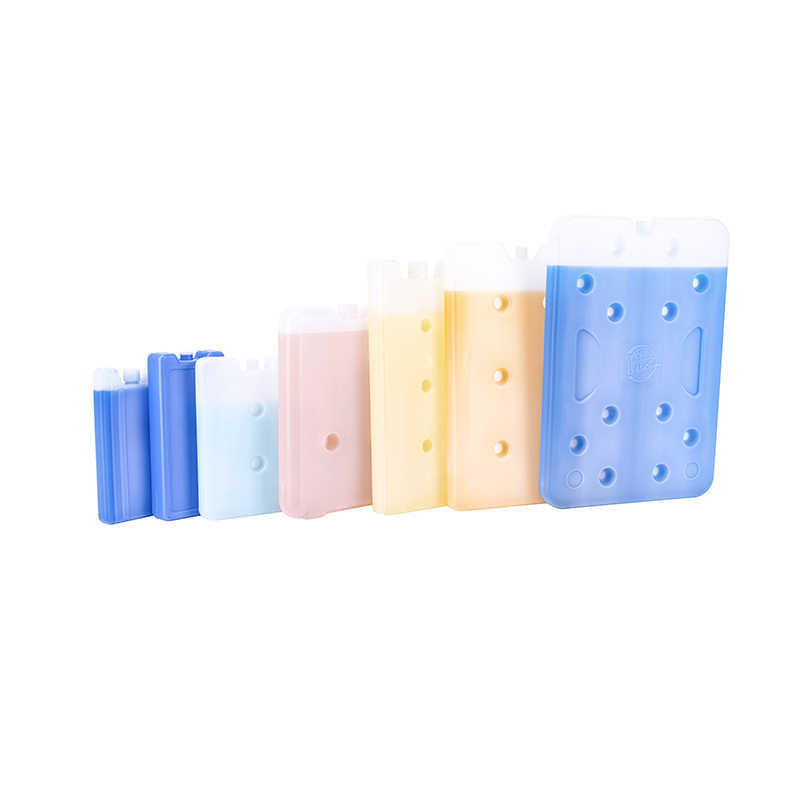
Les choix de composants sont particulièrement importants lorsqu'ils correspondent directement à un concept d'emballage approuvé.. Tempk fournit briques de glace réutilisables et plaques de glace PCM pour cartons isothermes, boîtes médicales, sacs plus frais, et assemblages reproductibles; les produits publics incluent des briques de glace en PEHD. Nous pouvons discuter du volume, forme du moule, capuchon, couleur de la coque, Formule PCM, étiquette, et emballage carton pour un projet défini. Ces options peuvent aligner la brique sur un expéditeur et un plan opérationnel, tandis que les équipes qualité et packaging de l’acheteur conservent la responsabilité de qualifier la configuration complète et son utilisation prévue.
Avant l'approbation de l'échantillon, comparer les hypothèses de dessin et de conditionnement des briques proposées avec les besoins de votre utilisateur; Tempk peut aider à définir les options de composants disponibles.