Transport de briques cool: Un fichier de contrôle de l'expédition au retour
Lorsqu'une boîte en retard arrive à la réception, l'équipe a besoin de plus qu'un pack anti-froid. Il doit savoir quelle configuration a été utilisée, combien de temps a duré le voyage, ce que le moniteur a enregistré, et qui peut décider de la disposition de la charge utile. Un transport fiable de briques froides est construit autour de cette chaîne de preuves. Un liquide de refroidissement rigide et réutilisable peut rendre le placement et le comptage des retours plus cohérents, mais ce n'est qu'un élément du fichier de contrôle. Limites de produit, isolation, conditionnement, charge utile, exposition ambiante, transferts, qualification, surveillance, et des procédures d'exception déterminent si le voyage est adapté.
Première page: Définir la Mission Transport
Commencez par une mission d'une page qu'un ingénieur en emballage, acheteur, superviseur d'entrepôt, gestionnaire de transporteur, évaluateur de la qualité, et le récepteur peut interpréter de la même manière. Il doit décrire la charge utile et la voie sans cacher l'incertitude.
Indiquer l'exigence de température spécifique au produit et la source de l'approbation interne. Ajouter de la sensibilité au gel, refroidissement excessif, condensation, orientation, lumière, ou choc, le cas échéant. Définir les cas de charge minimum et maximum et la condition de départ de la charge utile. Inclure le volume utilisable après le liquide de refroidissement et les diviseurs, pas seulement la capacité annoncée de la boîte.
Suivant, tracer l'itinéraire par garde plutôt que par distance:
Le produit quitte le stockage contrôlé.
Début de la mise en scène du conditionnement et du liquide de refroidissement.
Le transporteur accepte l'expéditeur fermé.
Chaque dépôt, cross-dock, aéroport, ou le transfert du véhicule a lieu.
La livraison atteint un rôle de réception nommé.
La charge utile est déplacée vers le stockage approprié.
Les actifs réutilisables entrent dans le chemin du retour.
Pour chaque étape de garde, enregistrer la durée normale, retard crédible, environnement probable, autorisation d'ouverture, suivi de la disponibilité, et propriétaire de l'escalade. Un parcours multi-drop de trente kilomètres peut être plus exigeant qu'un trajet direct plus long car la boîte est ouverte ou manipulée à plusieurs reprises..
Terminez la mission avec la décision de réception. Définir les contrôles, données, et les dossiers nécessaires avant l'acceptation. Cette exigence détermine la sélection du moniteur, étiquettes, scellés, accès aux données, et flux de documents. Si le séquestre ne peut pas obtenir de preuves, la conception du transport est incomplète.
Page deux: Concevoir l'ensemble thermique et mécanique
L’expéditeur doit gérer l’énergie tout en restant physiquement intact. Traiter l'isolation, briques sympas, charge utile, séparateurs, fardage, enregistreur, et fermeture en un seul produit emballé.
L'isolation ralentit le flux de chaleur. Le liquide de refroidissement absorbe de l'énergie lorsque sa température change et, le cas échéant, à mesure que son contenu change de phase. La charge utile ajoute de la masse thermique. Les diviseurs contrôlent le contact et peuvent modifier la convection. Les coutures et le couvercle peuvent former des chemins de chaleur plus rapides. Le mouvement peut déplacer n'importe quel composant qui n'est pas retenu.
Match thermal storage to the requirement
Sensible heat capacity depends on mass, capacité thermique du matériau, et changement de température. Latent heat capacity depends on mass and phase-change behavior. These principles help compare candidate water, gel, ou remplissages PCM. They do not yield a universal hold time because real performance also depends on heat-transfer rate, géométrie, isolation, charge utile, histoire ambiante, et état de départ.
Ask the supplier to define the brick, pas seulement le nommer. Confirmer les dimensions externes, filled mass or volume definition, matériau de la coque, conception de casquette, remplissage ou formule PCM, étiquette, couleur, conditionnement, stockage, et instructions de nettoyage. If a thermal property is stated, méthode de demande et unités. Si la durée est indiquée, request the full system context.
Design for both warm and cold locations
Placing more frozen mass close to a payload may delay warming while increasing local cold risk. Un emballage peut avoir un côté froid au début et un couvercle chaud plus tard. Le contact direct ne doit être utilisé que lorsque le produit et la conception évaluée le permettent. Les espaceurs et séparateurs sont des composants thermiques fonctionnels, not optional packing material.
Utiliser la cartographie exploratoire pour identifier les positions pertinentes des capteurs. Consider minimum and maximum loads, parce que la masse de charge utile et la réponse gratuite au changement d'air. Vérifier la fermeture, retenue, compression, and orientation with the actual components. Une brique qui se déplace après inversion peut invalider la disposition soigneusement planifiée.
Keep the component claim narrow
A rigid cool brick can provide stable geometry, endiguement, and reusable thermal mass. Il ne permet pas de contrôler la température d'un carton non isolé.. It is not an active container, enregistreur, or qualified shipping system. Cette limite doit apparaître dans les documents d'achat et dans la formation afin que le personnel ne remplace pas un composant pour la conception complète..
Page Three: Convertir la conception en contrôles de répartition
Le dispatch est l'endroit où les hypothèses de test se transforment en actions humaines. Construisez des portes observables au lieu de vous fier à la mémoire.
| Porte d'expédition | Chèque obligatoire | Des preuves qui peuvent le soutenir | Condition d'arrêt |
|---|---|---|---|
| Libération de la charge utile | Produit correct, cas de charge, et condition de départ | Étape de sélection d'enregistrement ou de publication approuvée | Produit en dehors du processus de préparation approuvé |
| Identité de brique | Modèle approuvé et formule sélectionnée | Code produit, étiquette, couleur plus contrôle des stocks | Brique d'apparence similaire ou non vérifiée |
| Conditionnement | État de départ requis atteint | Processus défini de l’équipement et contrôle de libération | Alarme d'équipement, stock mixte, préparation incomplète |
| Emballage | Compter, orientation, séparateurs, enregistreur, et instruction de match de clôture | Norme visuelle, balayage, liste de contrôle, ou photographier selon le cas | Composant manquant ou fermeture forcée du couvercle |
| Transfert du transporteur | Service, timing, étiquette, joint, et la voie d'escalade sont correctes | Enregistrement d'expédition et événement de suivi | Coupure manquée ou récepteur indisponible |
| Début des données | Le moniteur est actif et configuré si nécessaire | Device status and ID record | Erreur, expired calibration, mauvais programme |
Each gate addresses a distinct failure. Un scan peut prouver l'identité de la brique, mais ne peut pas prouver qu'elle a été conditionnée.. Une photographie peut montrer l'emplacement mais pas la température de départ de la charge utile. Sélectionnez une petite combinaison de contrôles qui couvre les risques importants sans créer de paperasse que personne ne vérifie.
Conditioning deserves particular discipline. L'affichage d'un congélateur ou d'une chambre contrôlée reflète son capteur de contrôle, not the core of every packed brick. Flux d'air, position des grilles, densité de pile, température entrante, and door opening affect preparation. Establish the method using the actual brick, équipement, et modèle de chargement. Retour séparé, nettoyage, préparation, prêt, et stock rejeté.
Staging limits should be realistic. Si les briques préparées attendent sur un banc ouvert pendant que la paperasse est terminée, they have already begun absorbing energy. Coordonner la préparation de la charge utile et du liquide de refroidissement afin qu'aucun côté de l'assemblage ne passe de temps inutile en dehors de son état prévu.
Utiliser une image d'emballage en trois dimensions. Afficher la couche inférieure, flancs, charge utile, espaceurs, moniteur, couche supérieure, couvercle, et sceller. Définir des variantes de chargement approuvées. Si les opérateurs rencontrent une charge utile qui ne correspond pas, ils devraient s'arrêter et intensifier plutôt que de retirer une brique ou une cloison.
Page quatre: Gérer le transporteur et chaque remise
Le transporteur a besoin d'exigences liées à son rôle. Eviter de demander à un réseau colis de contrôler des conditions qu'il ne peut pas respecter ou à un chauffeur d'interpréter une excursion médicamenteuse. Plutôt, spécifier le niveau de service, fermeture, orientation, manutention, restrictions environnementales le cas échéant, suivi, fenêtre de livraison, et contact exceptionnel.
Mouvement routier
Pour un coursier dédié, l'emplacement du véhicule et la garde directe peuvent être visibles, mais le stationnement, trafic, et les échecs de livraison nécessitent des contrôles. Dans un itinéraire multi-drop, les accès répétés et la réorganisation des charges peuvent dominer. Un véhicule réfrigéré peut réduire le défi ambiant, mais les ouvertures de portes, quais de chargement, répartition de la température, et le transfert du dernier mètre restent d'actualité. Le point de consigne du véhicule ne constitue pas une preuve de la température de chaque charge utile.
Mouvement de colis
Les réseaux de colis introduisent des centres de tri, changements d'orientation, et séjour variable. La norme ISTA 7E est destinée à évaluer l'exposition à la température externe des produits emballés individuellement lors de la livraison de colis et peut prendre en charge expéditeur isolé essai. Utiliser la norme dans son champ d’application et la combiner avec l’examen des voies. Il ne certifie pas une brique autonome et ne prédit pas chaque tentative de livraison.
Mouvement connecté à l'air
Le fret aérien comprend un service de transport routier, terminal acceptance, sécurité, rampe, vol, gestion des destinations, et livraison finale. La catégorie de produit et le type de réfrigérant peuvent introduire des exigences spécifiques en matière de transport ou de documentation.. Une brique de gel ou PCM réutilisable ne doit pas être confondue avec glace carbonique. Vérifier la compagnie aérienne concernée, transporteur, marchandises dangereuses, produit, et règles locales avec du personnel qualifié.
Outils de décision utiles
Vérifiez les détails avant de choisir l'emballage
Ces outils rapides peuvent vous aider à comparer le risque d'itinéraire, besoins de dimensionnement, choix de liquide de refroidissement, et les détails de l'emballage avant de demander un devis.
Vérificateur de risque d'itinéraire
Examinez les conditions des pistes avant de sélectionner l'emballage en fonction des exigences opérationnelles réelles..
Vérifier le risque d'itinéraireSélecteur d'emballage
Comparez les options d'emballage isotherme par produit, itinéraire, et besoin de température.
Trouver un emballageRésistance aux chutes du matériau isolant
Examinez la résistance aux chutes et les facteurs de manipulation avant de choisir des matériaux d'isolation..
Vérifier la résistanceA chaque remise, préserver l'identité et le temps. A seal, tracking scan, chain-of-custody entry, ou un enregistrement de transfert physique peut être approprié en fonction du risque. Définir si n'importe qui peut ouvrir l'expéditeur et que se passe-t-il si un manutentionnaire pense qu'il est endommagé. Une ouverture imprévue modifie le système thermique et devrait déclencher une documentation et un examen.
La planification des exceptions doit couvrir les seuils manqués, depot holds, route diversion, vehicle failure, logger alarm, damaged shipper, unavailable receiver, and return-to-origin. N'écrivez pas « contacter l'expéditeur » sans propriétaire et sans fenêtre de réponse.. Déterminer où le colis peut être conservé et qui peut autoriser la prochaine action.
Page Five: Faire du reçu un examen des preuves
L'équipe qui reçoit termine l'itinéraire contrôlé. Il doit savoir où placer l'envoi, how to inspect it, whether to open it, how to handle the monitor, and who decides exceptions.
Start with identity, joint, dommage, heure d'arrivée, and applicable shipping records. Transférer la charge utile rapidement selon la procédure approuvée. If a logger is present, stop or read it correctly and preserve the data. A device can fail, et les données manquantes devraient avoir un cheminement prédéterminé plutôt qu'une hypothèse improvisée.
Temperature interpretation needs context. Un capteur enregistre son emplacement à son intervalle configuré avec une précision et un état d'étalonnage déclarés. It may not represent every payload point. La qualification ou la cartographie aide à établir pourquoi un placement de routine est significatif. Les alarmes doivent être connectées à des règles de décision spécifiques au produit et à un examen de qualité autorisé.
N'utilisez pas l'apparence du liquide de refroidissement comme outil de disposition. Une brique peut rester partiellement solide tandis qu'un emplacement de charge utile est chauffé au-delà d'une limite autorisée.. Il peut également fondre même si la charge utile est restée à sa portée jusqu'à son arrivée.. Les preuves du système et les critères approuvés régissent.
Enregistrer les anomalies de conditionnement qui peuvent améliorer la conception: misplaced bricks, missing dividers, bouchons endommagés, water or residue, box deformation, étiquettes illisibles, or monitor movement. Renvoyez ces observations à l’origine et à l’approvisionnement. La réception est une source de données de processus, not only a destination.
Qualification, Route Trials, et la surveillance de routine ont des tâches différentes
Le travail de développement explore les options et explique le comportement. Qualification, là où c'est nécessaire, documente qu'une configuration spécifiée répond à des critères prédéfinis dans des conditions définies. Les essais d'itinéraire examinent l'exécution dans le réseau de transport prévu. Un suivi de routine enregistre les expéditions sélectionnées ou chaque expédition selon une stratégie justifiée.
Keep the terms separate. Un essai informel de congélateur n'est pas une qualification. Une trace d'un enregistreur d'itinéraire ne prouve pas que toutes les conditions saisonnières ont été remises en question.. Un test en chambre ne montre pas si les coursiers suivent les instructions. Ensemble, des activités conçues de manière appropriée fournissent des preuves.
Un protocole doit identifier l'expéditeur, briques, formule, compter, conditionnement, charge utile, cas de charge, séparateurs, fermeture, profil ambiant, capteurs, critères d'acceptation, justification des répétitions ou de la variabilité, et gestion des écarts. Pour les médicaments, la surveillance de la qualité et les attentes en matière de bonnes pratiques de distribution applicables peuvent influencer la portée. Les orientations de l’OMS soutiennent également une vision systémique du conditionnement, chargement, manutention, surveillance, et qualification du conteneur d'expédition pour le temps- et Produits sensibles à la température.
La stratégie de surveillance de routine doit répondre à une question commerciale ou de qualité. Si chaque expédition est surveillée, ensure devices can be started correctly, données récupérées, alarmes examinées, et dossiers conservés. Si l'échantillonnage est utilisé, document the rationale and triggers for increased monitoring, such as a route or pack-out change.
Reuse Adds a Second Transport Network
The outbound payload travels under one set of controls; empty bricks travel back under another. That return network determines fleet size, condition, and the credibility of sustainability claims.
Define who removes the bricks, whether they remain inside the shipper, how dirty and clean items are separated, where units are inspected, what cleaning method applies, and how they re-enter conditioning. Si les clients détiennent des actifs, set a collection schedule and count process. If returns are consolidated, account for the effect on ready inventory.
Track the fleet by state rather than only by total purchases. Prêt, sortant, at consignee, revenir, awaiting wash, conditionnement, mis en quarantaine, et les unités retraitées ont une disponibilité différente. La demande de pointe peut révéler une pénurie même lorsque le total semble adéquat.
L'évaluation environnementale doit comparer le même service de livraison réussi. La réutilisation peut soutenir la réduction à la source, mais l'impact réel inclut la fabrication, poids sortant, backhaul, lavage, énergie de conditionnement, perte, et fin de vie. Utiliser les données de rendement mesuré et de retraite. Ne multipliez pas par un inventaire cyclique théorique non étayé par la pratique sur le terrain..
La personnalisation peut aider la boucle. La couleur de la coque peut identifier une flotte ou une formule; les étiquettes peuvent prendre en charge la propriété et la manipulation; la forme du moule peut localiser la brique; l'emballage en carton peut simplifier le stockage entrant. Chaque fonctionnalité personnalisée doit résoudre un problème opérationnel nommé et être contrôlée via la spécification approuvée..
Exemple pratique: Le hub de transfert qui manquait dans le fichier
Envisagez un distributeur d'ingrédients alimentaires utilisant des cartons isothermes et des briques rigides réutilisables pour les livraisons routières de nuit.. La description originale de l'itinéraire dit "direct de nuit," mais les données de suivi montrent que certaines expéditions transitent par un hub régional et attendent un véhicule de correspondance..
L'équipe reconstruit la mission de transport. Il identifie la mise en scène d'origine, premier véhicule, déchargement du moyeu, séjour au quai, deuxième véhicule, sécurité des destinations, et réception du stockage. Les spécialistes du produit confirment l'état requis de l'ingrédient. Les opérations définissent les chargements minimum et maximum ainsi que le processus de réception tardive.
Les briques candidates sont évaluées pour leur ajustement au carton, retenue, espace de charge utile, conditionnement, et nettoyage. Les tests de développement cartographient les emplacements limites. La configuration sélectionnée est testée dans une séquence ambiante appropriée avec des critères énoncés, suivi d'essais d'itinéraire surveillés à travers le hub.
Les essais révèlent que l'emballage n'est qu'une partie du contrôle. Un premier véhicule en retard manque la zone de transfert intérieure protégée et laisse le carton près d'une baie ouverte. Le contrat de transport est révisé, le scan de transfert déclenche une escalade après une attente définie, et le personnel de réception est formé pour examiner rapidement les preuves d'expédition.
Le flux retour est piloté en même temps. Les sites de vente au détail regroupent les briques et les cartons vides sur les liaisons existantes. Le distributeur suit le redressement, pertes, exceptions de nettoyage, et disponibilité du conditionnement. Il ne fait aucune allégation fixe de performance ou de durabilité jusqu'à ce que les preuves soutiennent une telle affirmation..
C'est ce que fait un fichier de contrôle de transport utile: il rend visible un transfert invisible et relie la spécification de la brique à la responsabilité opérationnelle.
Des décisions qui n’ont pas de réponses universelles
How many bricks should be packed?
The count depends on formula, masse, conditionnement, charge utile, isolation, géométrie, durée totale, profil ambiant, et critères d'acceptation. Un plus grand nombre de briques peut ajouter de la capacité tout en réduisant l'espace de charge utile ou en augmentant le risque de froid. Déterminer le nombre grâce à la conception thermique et à l'évaluation appropriée de l'emballage complet.
Is one configuration enough for every season?
Éventuellement, if evidence supports it across relevant conditions and operations can execute it. Some programs use controlled seasonal configurations. Each additional version introduces selection risk, complexité des stocks, et changer de contrôle, so use the fewest justified variants and make them easy to distinguish.
When can a supplier's report be used?
First compare its container, liquide de refroidissement, conditionnement, charge utile, profil ambiant, capteurs, durée, and criteria with your application. Confirm the report scope and approval. It may support selection or part of a broader data package, but important differences may require additional evaluation. Ne transférez pas un résultat système vers la brique seule.
What proves a brick is ready after conditioning?
Use a release method justified for the coolant, équipement, et emballer. Le temps et le point de consigne de l'air peuvent faire partie du processus, mais ils ne prouvent pas automatiquement l'état de base sous chaque charge. Modèle de chargement, flux d'air, incoming condition, and equipment recovery should be controlled. Les instructions du fournisseur et les preuves de développement peuvent éclairer la procédure.
À qui appartient la décision d'excursion?
Name an authorized role before shipment. Le récepteur doit conserver la charge utile dans des conditions appropriées, collect temperature and route evidence, documenter l'événement, et escalader. Les chauffeurs et les emballeurs ne devraient pas prendre de décisions concernant la qualité des produits à moins que cette responsabilité ne fasse explicitement partie d'une procédure approuvée..
Closing the File
Le transport de briques cool devient défendable lorsque le record suit le voyage. Page one defines product and route. Page two controls the thermal and mechanical assembly. Page three makes dispatch observable. Page four assigns carriers and handovers. Page five turns receipt into an evidence review. Qualification, surveillance, exceptions, and reuse connect those pages.
Choose a rigid brick for a reason that can be stated clearly: ajuster, placement stable, formule, identification, manutention, ou retourner. Then keep the reason attached to the complete shipper and route. The outcome is a controlled transport process, not a promise attached to a cold object.
À propos du tempk
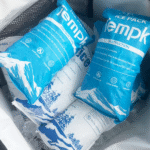
Fournitures temporaires briques de glace réutilisables et plaques à glace PCM pour sacs plus frais, boîtes médicales, cartons isothermes, and repeatable transport pack-outs. The public range includes HDPE ice bricks. Customization may cover volume, forme du moule, conception de casquette, couleur de la coque, Formule PCM, étiquetage, et emballage en carton. These options can support component fit, identification, cohérence du conditionnement, et gestion de la flotte. Tempk's products remain components within a larger transport system that must be matched to the payload, isolation, conditionnement, voie, plan de preuve, et exigences applicables.
Building or revising a transport control file? Partagez les événements du parcours, cas de charge utile, géométrie du conteneur, condition de température requise, processus d'expédition, et méthode de retour avec Tempk pour planifier un examen d'échantillon ciblé.