La crème réfrigérée est un produit laitier très humide avec une fenêtre de qualité courte. Un bon emballage doit garder le produit au froid, protéger le capuchon ou le sceau du carton, et gardez la surface de vente au détail suffisamment sèche pour l'épicerie, kit repas, boulangerie, et équipes de réception en restauration. Le but n'est pas simplement d'ajouter plus de liquide de refroidissement. L'emballage doit réduire le gain de chaleur sans geler la paroi du produit, écraser le récipient, ou créant de la condensation qui affaiblit les étiquettes et les cartons.
Cream chaîne du froid planning data
| Plage cible typique | 0-4 C pour les itinéraires de crème glacée; utiliser la propre plage de versions du producteur lorsqu'elle est plus stricte. |
|---|---|
| Humidité et condensation | Gardez les bouteilles et les cartons au sec; les cartons de crème peuvent ramollir lorsque de la condensation se dépose sous un pack de gel ou sur le panneau supérieur. |
| Pré-refroidissement | Pré-refroidir la crème et l'expéditeur isolé avant l'emballage. Ne comptez pas sur l'expéditeur pour retirer le produit chaud après le chargement.. |
| Pression d'emballage | Utilisez des séparateurs ou des manchons pour mettre les épaules en bouteille, capuchons, cartons, et les joints d'inviolabilité ne sont pas comprimés par la masse de liquide de refroidissement. |
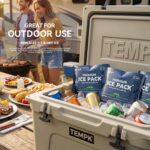
| Emplacement du liquide de refroidissement | Utiliser un placement latéral et supérieur avec une barrière sèche. Évitez le contact direct des emballages congelés avec des bouteilles en plastique minces ou des cartons à pignon. |
| Durée du transit | Idéal pour validé 24-48 h itinéraires de colis et d'épicerie; les itinéraires plus longs nécessitent un expéditeur plus important, liquide de refroidissement ajouté, ou transport de ligne réfrigéré. |
| Pertes communes | Odeur aigre, séparation, carton qui transpire, fuite du bouchon, déformation de la bouteille, et arrivée chaleureuse après le pas de la porte. |
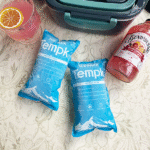
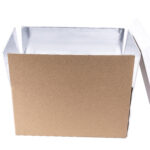
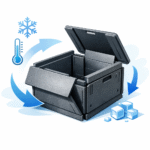
| Ajustement de l'emballage Tempk | Boîte isotherme ou expéditeur EPS, packs de gel conditionnés, doublure absorbante, séparateurs verticaux, et un enregistreur d'itinéraire pour la validation saisonnière. |
Pourquoi la crème a besoin de son propre emballage
La crème se réchauffe plus rapidement que les aliments surgelés denses et présente une dégradation visible de la qualité lorsque le contrôle de la température est faible.. Un abus de température peut raccourcir la durée de conservation, tandis qu'une manipulation brutale peut desserrer les capuchons, coutures de pignon ouvertes, ou créer de petites fuites qui endommagent le reste de l'envoi. Contrairement au fromage, la crème se déplace généralement sous forme liquide dans des bouteilles ou des cartons, donc chargement vertical, remplissage de vide, et la protection du capuchon compte autant que la température.
Pour les itinéraires de colis réfrigérés, commencer avec un produit déjà pré-refroidi rangement froid. Versez la crème dans un récipient réfrigéré expéditeur isolé avec packs de gel conditionné pour la plage cible sélectionnée. Placez du liquide de refroidissement autour de la charge utile, pas directement contre les parois minces du conteneur. Ajoutez une barrière sèche entre le liquide de refroidissement et les packs de vente au détail, utilisez ensuite des séparateurs ou un plateau bien ajusté pour éviter l'impact du capuchon contre le mur pendant le tri et la livraison..
Outils de décision utiles
Vérifiez les détails avant de choisir l'emballage
Ces outils rapides peuvent vous aider à comparer le risque d'itinéraire, besoins de dimensionnement, choix de liquide de refroidissement, et les détails de l'emballage avant de demander un devis.
Liquide de refroidissement & Référence PCM
Comparez les options de liquide de refroidissement et de PCM lorsqu'un itinéraire nécessite une prise en charge supplémentaire de la température.
Comparez les optionsVérificateur de risque d'itinéraire
Examinez les conditions des pistes avant de sélectionner l'emballage en fonction des exigences opérationnelles réelles..
Vérifier le risque d'itinéraireRéférence du matériau isolant
Comparez les choix de matériaux d'isolation pour différents besoins d'emballage de la chaîne du froid.
Comparez les matériauxApproche d'emballage Tempk recommandée
Tempk commencerait normalement par un boîte isotherme ou expéditeur EPS dimensionné selon le nombre de produits, une disposition du pack de gel adaptée à la durée du parcours, et une doublure absorbante ou une couche de contrôle de l'humidité. Pour les petits envois DTC, une cavité de charge utile compacte aide à maintenir la crème verticale et limite les mouvements. Pour les envois d’abonnements d’épicerie, l'emballage doit séparer la crème des produits ou des produits secs et protéger le capuchon de la pression de charge supérieure.
La validation doit inclure un simulateur de produit ou un chargement de produit en direct, un enregistreur de température calibré à l'intérieur de la zone de charge utile, et recevoir des contrôles de température, sécheresse du carton, fuite, odeur, et séparation visible. Testez les itinéraires d'été et les portes d'entrée avant de monter à l'échelle. FoodSafety.gov répertorie le stockage du réfrigérateur à 40 F (4 C) ou ci-dessous, et les références du Code alimentaire de la FDA soutiennent l'utilisation du contrôle de la température pour la sécurité des aliments comme principe de base de manipulation.. Les décisions de commercialisation doivent toujours suivre les spécifications du propriétaire du produit., règles locales, et le résultat réel du test d'itinéraire.