Guide d'emballage de la chaîne du froid de la crème naturelle sans conservateur
Les expéditions de crèmes naturelles sans conservateurs nécessitent un emballage qui protège la stabilité de la formule., présentation au détail, et la confiance des clients. Un positionnement naturel et sans conservateur peut augmenter la sensibilité à la chaleur, variations de température répétées, manipulation des pots, et exposition à l'humidité, l’expédition doit donc être planifiée à partir de la plage de stockage validée de la formule plutôt qu’à partir de la seule taille du carton.
La plage de manipulation finale doit provenir des données de stabilité de la marque, instructions sur l'étiquette, accord de qualité, et les résultats des tests d'itinéraire. Une chaîne du froid n'a pas besoin de rendre le produit aussi froid que possible. Il doit maintenir la formule dans sa plage approuvée tout en empêchant le gel., condensation, mouvement du pot, et les dommages causés aux cartons de vente au détail.
Données de planification d'emballage
| Plage de température | Utiliser la gamme de stockage validée de la marque; de nombreuses crèmes sans conservateur utilisent une voie fraîche ou réfrigérée pour protéger la qualité. |
|---|---|
| Humidité et condensation | Conserver les cartons, scellés, étiquettes, et les inserts en papier sèchent car la condensation peut affaiblir les emballages de vente au détail haut de gamme. |
| Pré-refroidissement | Crème finie pré-conditionnée, expéditeur, liquide de refroidissement, et la zone d'emballage avant le chargement afin que le produit ne soit pas utilisé comme dissipateur thermique. |
| Pression du paquet | Protéger les bocaux, pompes sans air, joints en aluminium, et cartons de vente au détail provenant de la compression, impact de chute, et pression du liquide de refroidissement. |
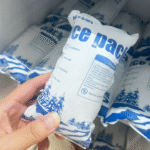
| Emplacement du liquide de refroidissement | Utilisez des packs de gel conditionnés ou des packs à changement de phase séparés des pots par du carton ondulé., mousse, ou inserts moulés. |
| Durée du transport | 24-48 le commerce électronique, spa, réapprovisionnement au détail, ou les voies d'abonnement devraient inclure des tests de séjour à domicile et des tests ambiants d'été. |
| Pertes communes | Exposition à la chaleur, séparation de phases, changement de texture, cartons humides, mouvement du pot, levage des joints, et plaintes concernant les risques microbiens. |
| Ajustement de l'emballage Tempk | Expéditeur isolé à chaîne du froid Tempk, liquide de refroidissement conditionné, insert de pot, barrière sèche, et enregistreur de température pour les voies validées. |
Quels changements pour ce produit
La crème naturelle sans conservateur peut être plus vulnérable aux plaintes liées au risque microbien, séparation de phases, changement de texture, et rejet du client en cas d'exposition à une chaleur élevée ou à un emballage humide. Les crèmes en pot nécessitent également un contrôle de la pression, car un pack de gel lourd ou un carton mélangé peut stresser le couvercle., joint, ou carton extérieur.
Question de pré-refroidissement et de conditionnement du liquide de refroidissement. Si le produit entre dans l'expéditeur chaud, le liquide de refroidissement est obligé d'évacuer la chaleur du produit avant de protéger le parcours. Si le liquide de refroidissement est trop froid ou trop près du pot, la formule ou la zone de l'étiquette peut être endommagée même lorsque la température moyenne de la boîte semble acceptable.
Outils de décision utiles
Vérifiez les détails avant de choisir l'emballage
Ces outils rapides peuvent vous aider à comparer le risque d'itinéraire, besoins de dimensionnement, choix de liquide de refroidissement, et les détails de l'emballage avant de demander un devis.
Liquide de refroidissement & Référence PCM
Comparez les options de liquide de refroidissement et de PCM lorsqu'un itinéraire nécessite une prise en charge supplémentaire de la température.
Comparez les optionsGénérateur de liste de contrôle de conformité
Créer une liste de contrôle pratique pour l'examen des emballages, expédition, et documentation.
Construire une liste de contrôleDoublure de boîte & Dimensionnement des couvertures de palettes
Vérifiez la logique de dimensionnement du revêtement de boîte et du couvercle de palette pour les projets d'emballage isotherme.
Dimensionnement estiméApproche d'emballage Tempk recommandée
Utilisez un Tempk expéditeur isolé ou doublure de boîte avec conditionné packs de gel, une barrière sèche, et un insert de pot qui maintient les produits dans la zone testée. Pour les commandes e-commerce premium, l'insert doit protéger à la fois la qualité de la formule et la présentation au déballage, y compris les bords du carton, étiquettes imprimées, et des phoques.
Pour les itinéraires chauds, valider le pack avec des profils ambiants d'été, vivre au seuil de la porte, et le nombre réel de produits. Pour les programmes réfrigérés ou en chambre froide, confirmer que l'équipe de réception comprend la plage de température prévue et sait comment gérer la condensation, vérifications des scellés, et prendre des décisions.
Réception de chèques
A l'arrivée, examiner les données de l'enregistreur lorsqu'il est utilisé, sécheresse du carton, position du pot, état du joint, lisibilité de l'étiquette, et des changements de formule visibles. Si le produit présente une séparation, changement d'odeur, fuite, ou saturation du carton, suivre la procédure qualité de la marque avant de libérer l'envoi.
Tempk peut prendre en charge le dimensionnement de l'expéditeur, placement du liquide de refroidissement, conception d'insertion, et validation des itinéraires pour les programmes de soins naturels sans conservateurs. Partager les dimensions du produit, matériau du pot, nombre de cas, plage cible, durée de l'itinéraire, profil ambiant, et les exigences de déballage pour créer un emballage spécifique à la voie.