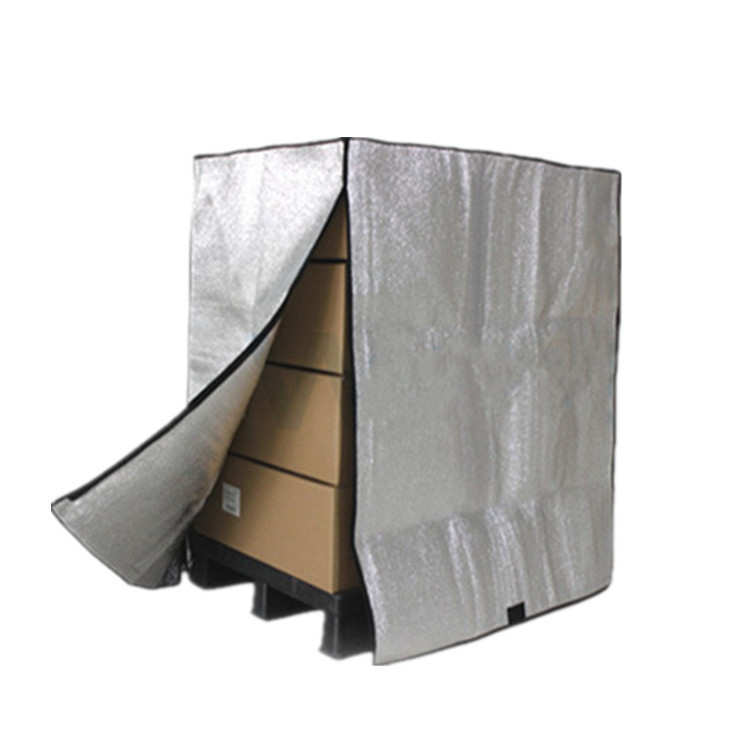
Couvertures de palettes de contrôle de température pour l’expédition de produits chimiques en vrac: Un système de décision qui tient le coup
Couvertures de palettes de contrôle de température pour le transport de produits chimiques en vrac doit être approuvé par le biais d'un système de décision, non acheté en tant que promesse autonome. Le système relie une exigence chimique documentée à une exposition cartographiée, une couverture passive équipée, preuve représentative, étapes de fonctionnement sûres, et une sortie claire vers un contrôle plus fort. Cette approche évite deux erreurs courantes: s'attendre à ce que l'isolation réfléchissante régule un point de consigne, et laisser un couvercle interférer avec l'emballage de marchandises dangereuses ou la communication des dangers. Le résultat est une utilisation définie que les achats peuvent spécifier, les opérateurs peuvent répéter, et les équipes de qualité et de sécurité peuvent examiner.
Préparez deux fichiers avant de demander des échantillons
Le premier fichier est le brief produit et package. Il identifie le produit chimique ou la famille approuvée, fiche de données de sécurité actuelle, critères d'état du produit, mécanismes connus de réponse à la température, détermination des marchandises dangereuses, conteneurs autorisés, construction de palettes, retenue, et accès requis. Il convient de distinguer les exigences de qualité des conditions de stockage sûres et des contrôles réglementaires du transport..
Le cadre des fiches de données de sécurité de l'OSHA comprend des précautions pour une manipulation sûre et des conditions pour un stockage sûr., y compris les incompatibilités. Cette information doit rester au cœur du processus sur le lieu de travail. Un spécialiste du transport doit encore déterminer les exigences relatives à l'expédition proprement dite.. Les règles de la PHMSA régissent les États-Unis concernés. mouvements de matières dangereuses; ADR, Processus IATA relatifs aux marchandises dangereuses, et le Code IMDG de l'OMI s'appliquent dans leurs routes respectives, air, et contextes maritimes.
Le mémoire devrait également résoudre le mot "en gros." S'il s'agit d'une commande commerciale groupée de conteneurs plus petits, déclarer que. Si l'envoi utilise un conteneur pour vrac intermédiaire ou une autre forme considérée comme un emballage en vrac par les règles applicables, enregistrer la catégorie réelle. La housse ne change pas le statut de l'emballage, limites de quantité, ou des tâches de communication.
Le deuxième fichier est le dossier d'itinéraire et d'opérations. Il cartographie l'expédition depuis le conditionnement jusqu'à la réception, y compris tous les points d'arrêt, moyens de transport, conditions saisonnières, soleil direct ou flux d'air froid, contact au sol, ouvertures, changements de garde, et des retards. Il nomme ce qui peut être contrôlé à chaque point et les options protégées disponibles en cas d'échec du planning..
Ensemble, les fichiers donnent aux fournisseurs un problème résoluble. Sans eux, les fournisseurs sont poussés vers des descriptions génériques car personne n'a défini la charge ou l'exposition. Ils donnent également aux évaluateurs internes une base de référence stable: quand le produit, emballer, ou des changements d'itinéraire, l'entreprise peut voir quelles hypothèses d'approbation doivent être révisées.
Tracez la limite autour de ce que possède la couverture
La couverture doit posséder une exposition particulière, pas toute la chaîne du froid ou de la température. Une déclaration de limite peut l'attribuer à une préparation sortante et à une bande-annonce régionale ambiante., tandis que l'exploitation protégée possède un délai prolongé et que l'entrepôt possède le conditionnement des produits. Chaque risque doit faire l'objet d'un contrôle doté de suffisamment d'autorité.
| Question limite | Réponse qui prend en charge l'utilisation passive | Réponse qui signale une escalade | Propriétaire à impliquer |
|---|---|---|---|
| Le produit démarre-t-il dans l'état approuvé? | Processus de démarrage mesuré ou contrôlé | État du noyau inconnu ou libération à une limite | Équipes produit et qualité |
| L’exposition est-elle limitée et représentée par des preuves? | Étapes définies avec délai et sauvegarde crédibles | Attente incontrôlée ou variabilité d'itinéraire inobservée | Logistique et transporteur |
| La configuration de la palette est-elle stable? | Forfaits approuvés, modèle de charge, retenue, et en forme | Constructions mixtes ou changeantes sans révision | Conditionnement et opérations |
| Le couvercle peut-il rester correctement fermé? | Les ouvertures sont limitées, simulé, et revérifié | Des inspections ou des numérisations fréquentes empêchent la fermeture | Opérations et gestionnaires |
| La communication des dangers et l’inspection sont-elles préservées? | L'arrangement exact a l'approbation compétente | Marques, étiquettes, fermetures, ou les dommages sont cachés | Équipes marchandises dangereuses et sécurité |
| La mise en mémoire tampon passive est-elle suffisante pour les conséquences? | Marge vérifiée et éventualités réalisables | Conséquence élevée, marge étroite, ou contrôle actif requis | Propriétaires techniques et de conformité |
Ce tableau est un écran de gouvernance. Il empêche qu’un élément matériel favorable annule un itinéraire inapproprié.. Une seule réponse d'escalade ne met pas toujours fin au projet, mais il doit être résolu par le contrôle de la route, changement de conception, emballage plus solide, ou équipement actif.
La limite doit inclure le bas. Une couverture qui enveloppe uniquement les côtés et le dessus peut laisser des chemins conducteurs et convectifs à la base de la palette.. Si un panneau inférieur, jupe, ou une interface au sol est utilisée, il doit rester compatible avec les chariots élévateurs, transpalettes, retenue, drainage, et une manipulation sûre. Les arrangements testés et expédiés doivent correspondre.
La limite doit également inclure le temps passé en dehors des mouvements normaux.. Fermetures le week-end, transferts manqués, inspection de sécurité, les douanes tiennent, pannes de véhicules, refus de livraison, et une panne de courant ou d’équipement sur les sites protégés peut déplacer la responsabilité. Donnez à chaque événement crédible un propriétaire et une réponse.
Sélectionnez une architecture, Pas seulement une couche isolante
L'architecture du couvercle comprend une face extérieure, âme isolante, visage intérieur, coutures, coins, fermeture, haut, base, accéder, identification, et intégration avec la palette. Chaque pièce peut changer le flux de chaleur ou l'exécution. Les fournisseurs doivent expliquer la fonction prévue sans convertir les propriétés des composants en garanties du système fini..
Un extérieur réfléchissant est utile contre le gain radiant dans des conditions pertinentes. Il n'arrête pas la chaleur déplacée par l'air ou le contact. L'isolation ralentit la conduction mais peut être contournée par des espaces et des zones comprimées. Un ajustement serré peut réduire l'échange d'air mais peut obstruer les étiquettes ou l'inspection.. Un volet d'accès facilite les opérations mais crée une fermeture qui doit être systématiquement restaurée.
Pour usage chimique, l'architecture inclut également le comportement de contamination. Les surfaces lisses peuvent être plus faciles à inspecter, pourtant, les coutures et les bords peuvent retenir les résidus. Certains matériaux peuvent être attaqués par le produit chimique ou l'agent de nettoyage approuvé. Demandez des informations matérielles exactes et des preuves de compatibilité étendues. Si le comportement au feu, contrôle statique, ou la résistance aux liquides est importante, préciser le scénario et la méthode de test. Ne vous fiez pas à des adjectifs non qualifiés.
Choisissez la taille dans l'enveloppe de la palette chargée et la méthode de travail. Inclure les tolérances des packages, renflement, planches de coin, capuchon supérieur, sangles, et projections. Vérifier la portée de l'opérateur et la manipulation mécanique. Un ajustement personnalisé peut améliorer la cohérence mais augmente la complexité de l'élément; un ajustement réglable peut prendre en charge plusieurs constructions mais crée de la variation. Le bon équilibre dépend du portefeuille de palettes et des conséquences d'une mauvaise utilisation.
Déterminer si la couverture est à usage unique, réutilisation limitée, ou partie d'une boucle fermée gérée. L'architecture de réutilisation peut nécessiter des surfaces durables, unités identifiables, fonctionnalités réparables, et résistance au nettoyage définie. Mais la durabilité à elle seule ne crée pas une boucle de sécurité. Le destinataire, logistique inversée, ségrégation, et le processus de quarantaine doit exister.
Exigez des preuves en couches
Commencez par la documentation des composants pour comprendre la construction, puis passez à la couverture terminée et acheminez les preuves. Un coupon de matériau peut prendre en charge une comparaison entre les couches. Un test de couverture finie révèle les coutures et la géométrie. Une comparaison chargée montre comment la charge utile change de réponse. Un protocole représentatif de la route relie la configuration à la décision. Le suivi opérationnel vérifie si l'utilisation réelle reste dans les limites des hypothèses.
A chaque couche, demander ce qui a été testé et quelle déduction est justifiée. Enregistrer le lot de matériel ou l'identité de la couverture, état de production, dimensions, charger, état de départ, profil externe, rayonnement et débit d'air, le cas échéant, sol et base, emplacements des capteurs, étalonnage de l'appareil, intervalle de données, nombre de courses, écarts, et règle d'acceptation. Si le résultat est confidentiel, organiser un examen technique contrôlé plutôt que d'accepter seulement un titre.
Test par rapport à un comparateur approprié. Une palette découverte mais par ailleurs équivalente peut quantifier l'effet incrémentiel de la couverture. Une autre couverture ou un contrôle opérationnel peut appuyer une décision alternative. Assurer des conditions de départ et une exposition comparables. Une palette de contrôle plus chaude peut embellir la couverture proposée sans que la couverture en soit responsable.
Mesurer les quantités qui répondent à la décision de produit. Air sous couverture, surface du conteneur, produit, et les températures de substitution ne sont pas interchangeables. Utiliser une carte de capteurs documentée et des appareils calibrés adaptés à l'objectif. Préserver les données brutes et les heures des événements. Indiquer comment l'incertitude et la variation spatiale affectent l'acceptation.
Ne transformez pas un résultat en durée inconditionnelle. Une revendication s'applique uniquement à la configuration et aux conditions aux limites qu'elle représente. Si le test prend en charge une exposition de routine mais pas un long délai, enregistrer les deux résultats. Le retard appartient au plan d'exception, pas de formulation créative.
Utiliser des normes officielles ou reconnues uniquement dans le cadre. L'ISTA publie des ressources de tests de transport thermique pour des systèmes de distribution définis, mais un profil orienté colis peut ne pas décrire le fret chimique palettisé. Une méthode standard améliore la répétabilité lorsque cela est approprié; il ne remplace pas le critère chimique, géométrie des palettes, ou modèle d'itinéraire.
Mettez le contrôle des fournisseurs dans l’approbation technique
La qualification du fournisseur pour une couverture passive doit se concentrer sur les attributs qui soutiennent la preuve. Créer une spécification d'achat pour des matériaux ou une construction définie, dimensions et tolérances, méthodes de couture et de fermeture, accéder aux emplacements, base, identification, fabrication, réparations autorisées, stockage, et soins. Inclure l'élément de production exact lié à l'essai.
Demander au fournisseur de décrire le contrôle des matières entrantes, contrôles en cours, inspection terminée, gestion des non-conformités, traçabilité adaptée au produit, et notification de changement. N'inventez pas de certifications que le fournisseur doit détenir à moins que l'entreprise n'ait une exigence vérifiée. Une question d'audit utile est de savoir comment le fournisseur empêcherait un film de substitution apparemment similaire, mousse, fermeture, ou l'adhésif d'entrer en production sans examen.
Demander des échantillons de production avant la sortie en volume ou établir un autre contrôle du premier article adapté aux risques. Comparez-les avec la configuration approuvée pour l'ajustement, matériels, fabrication, fermetures, accéder, et identité. Un beau prototype issu d'un banc de développement ne démontre pas une production reproductible.
Définir les contrôles de réception que les opérateurs peuvent effectuer. Confirmer l'article et la taille, inspecter pour déceler des larmes, délaminage, coutures incomplètes, fermetures endommagées, contamination, humidité, et identification incorrecte. Un échantillonnage dimensionnel peut être approprié. La vérification thermique peut avoir lieu périodiquement ou après des changements en fonction du risque plutôt que sur chaque reçu.
Rendre la mise à l’échelle commerciale conditionnelle. Prix, quantités minimales de commande, délai de mise en œuvre, personnalisation, enregistré, conditionnement, et le calendrier de livraison sont des questions spécifiques au fournisseur. Ajouter les coûts internes de formation, application, stockage, inspection, nettoyage, retours, pertes, surveillance, et gestion des exceptions. Le prix de couverture le plus bas peut entraîner le coût de processus le plus élevé si l'ajustement n'est pas cohérent..
Outils de décision utiles
Vérifiez les détails avant de choisir l'emballage
Ces outils rapides peuvent vous aider à comparer le risque d'itinéraire, besoins de dimensionnement, choix de liquide de refroidissement, et les détails de l'emballage avant de demander un devis.
Référence du matériau isolant
Comparez les choix de matériaux d'isolation pour différents besoins d'emballage de la chaîne du froid.
Comparez les matériauxCalculateur de banquise
Estimation de la quantité de pain de glace pour les expéditions réfrigérées et planification pratique des itinéraires.
Estimer les packs de glaceRésistance aux chutes du matériau isolant
Examinez la résistance aux chutes et les facteurs de manipulation avant de choisir des matériaux d'isolation..
Vérifier la résistancePiloter le processus opérationnel, Puis relâchez le produit
Un projet pilote doit commencer au point de conditionnement ou d'étape et se terminer après réception, pas à la porte du laboratoire. Des opérateurs représentatifs construisent et inspectent la palette, appliquer la couverture, scannez-le et déplacez-le, effectuer les transferts attendus, ouvrez-le si nécessaire, le remettre en place, et supprimez-le. Les observateurs de la qualité et de la sécurité enregistrent les solutions de contournement, problèmes de visibilité, dommage, et la pression du temps.
Utiliser la surveillance du lancement lorsque cela est justifié pour comparer l'exposition sur le terrain avec le modèle de test. Le plan définit les emplacements des appareils, état d'étalonnage, échantillonnage, télécharger, critères d'alarme ou de révision, gestion des données manquantes, et pouvoir de décision. La surveillance ne remplace pas la protection et ne doit pas créer de problèmes électriques ou d'accès incontrôlés autour du produit chimique..
Former les gens sur la raison de chaque étape critique. "Fermez complètement le rabat" est plus facile à suivre lorsque les gestionnaires comprennent qu'un chemin ouvert modifie la limite testée. "Ne couvrez pas un tambour taché" relie le processus thermique à la sécurité des emballages. Évitez de demander aux opérateurs de décider de la stabilité du produit; donnez-leur des conditions d'arrêt observables et des contacts d'escalade.
La documentation de sortie doit inclure le produit et le package approuvés, dessin de palette, article de couverture, mode d'emploi, accès requis, processus de condition de départ, voies ou étapes approuvées, surveillance, et flux d'exceptions. Il devrait également indiquer les exclusions, telles que des hauteurs de palettes non approuvées, produits mélangés, marchandises dangereuses spécifiées, routes d'exportation incontrôlées, ou couvertures contaminées, le cas échéant.
Les commentaires sur le terrain doivent être examinés rapidement. Un problème apparemment mineur, comme une fermeture qui s'ouvre lors d'un scan, peut invalider les hypothèses thermiques. Corriger la conception ou le flux de travail avant d'étendre le programme. Une trace de température réussie n’excuse pas une étiquette bloquée ou une inspection dangereuse.
Une perturbation révèle si le système est réel
Considérons un lancement hypothétique de fûts palettisés sur une voie routière à température ambiante approuvée.. La couverture s'adapte, les étiquettes restent accessibles, et les preuves d'itinéraire soutiennent le mouvement de routine. À un cross-dock, un transporteur change d'équipement et la palette manque sa connexion. La durée de vie probable dépassera la limite d'utilisation passive.
Les instructions d'expédition nomment cet événement. Le terminal place la palette dans une zone protégée revue sans retirer le capot, enregistre l'heure et l'état de la couverture, et alerte le propriétaire de l'itinéraire. L’équipe technique examine les informations d’exposition et de surveillance. Si l'option protégée n'est pas disponible, le plan identifie une décision de récupération ou de retour gérée par la température. Il n’est pas demandé au chauffeur ou au docker de deviner l’adéquation du produit..
Pendant l'inspection, un manutentionnaire remarque de l'humidité près d'un fût. La réponse passe immédiatement du délai thermique à la procédure incident chimique. Le personnel isole la palette et suit la FDS, processus d'urgence du site, et les mesures de protection requises. La couverture est traitée comme potentiellement contaminée. La performance thermique n’est plus la priorité.
Après l'événement, l'équipe confirme si le changement de transporteur était prévisible, si les instructions du terminal étaient accessibles, et si le fichier d'utilisation approuvée doit être révisé. Il examine les données sans prétendre qu'un seul capteur prouve l'état de chaque fût.. La disposition du produit reste avec la fonction autorisée.
Ce scénario expose la valeur d'un système en couches. La couverture achète une marge passive, l'emplacement protégé contrôle un retard, la surveillance éclaire l'examen, et les procédures de sécurité prennent le relais en cas de fuite suspectée. Aucun composant n'est invité à effectuer le travail d'un autre.
Rejeter les affirmations qui réduisent les distinctions importantes
"Température contrôlée" est incomplet si le produit est passif. Demandez s'il ralentit simplement les échanges thermiques ou utilise une régulation active. "Maintient la température" est incomplet sans une plage, charger, état de départ, profil, durée, point de mesure, et règle d'acceptation. "Testé" est incomplet sans le protocole et le lien de production.
"Convient aux produits chimiques" est trop large. Demandez quelles surfaces ont été évaluées par rapport à quelles substances, concentration, modes de contact, durée, et températures. "Étanche" ne prouve pas la compatibilité chimique, et "réutilisable" n'établit pas la nettoyabilité après un déversement. "Antistatique" ou "résistant au feu" nécessite une méthode pertinente et une construction complète.
"Conforme" est particulièrement risqué. La couverture ne classe pas le produit chimique, autoriser le réceptacle, créer une formation, préparer les documents d'expédition, ou satisfaire toutes les marques, étiquette, placard, arrimage, ségrégation, ou règle de contrôle de la température. La conformité appartient à l'expédition et à l'exploitation conformément aux exigences applicables, pas à un accessoire de palette générique.
"Expédition en vrac" doit également être déballé. Une phrase marketing sur le volume ne permet pas de déterminer si les conteneurs réels sont des emballages en vrac réglementaires.. Demandez au professionnel des marchandises dangereuses de l'expéditeur de documenter la décision..
Enfin, rejeter les allégations environnementales sans frontières. Les matériaux recyclables peuvent ne pas être acceptés localement. Le matériel réutilisable peut ne pas revenir. Un poids de produit inférieur peut ne pas compenser les pertes ou le nettoyage. Exiger une comparaison définie avant de publier des pourcentages ou des déclarations absolues.
Terminez avec un mémo d'approbation que les opérations peuvent utiliser
La décision finale doit tenir sur une page d'approbation concise étayée par des preuves. Il nomme le produit, emballer, palette, couverture, étapes du parcours, processus de démarrage, ouvertures autorisées, référence à la preuve, surveillance, limite opérationnelle, contingence, voie de réutilisation ou d’élimination, propriétaires, et changer les déclencheurs. Il s'agit du contrôle qui accompagne l'objet physique.
Approuver uniquement ce que les preuves soutiennent. Développez plus tard grâce à un examen délibéré. Si une nouvelle voie a des durées d'attente plus longues, une charge différente, ou un autre mode de transport, traitez cela comme un changement, pas une extension administrative. Si les événements approchent à plusieurs reprises la limite, améliorer l'itinéraire ou passer à un système doté d'une plus grande autorité de contrôle.
FAQ sur l'approbation
Quelle est la question la plus importante lors d'une première réunion avec un fournisseur?
Demandez au fournisseur d'expliquer quelle configuration de couverture finie et quelles conditions de test soutiennent l'utilisation proposée sur votre palette et votre itinéraire réels.. Cela ouvre la discussion sur les matériaux, ajuster, charge utile, profil, emplacements des capteurs, et limites. Un fournisseur qui commence par ces conditions vous donne des informations plus utiles qu'un fournisseur qui commence par une durée universelle..
Les couvertures de palettes peuvent-elles remplacer le préconditionnement?
Non. Une couverture passive préserve un état de départ uniquement en ralentissant le changement. On ne peut pas compter sur lui pour amener le produit chimique dans le bon état.. Définir comment le produit et l'emballage sont conditionnés, comment un délai adéquat est-il établi, et quelle mesure ou contrôle de libération confirme l'état de départ.
Quand la couverture doit-elle être retestée?
De nouveaux tests ou autres examens techniques peuvent être nécessaires après des modifications apportées aux matériaux., coutures, dimensions, fermetures, géométrie des palettes, emballer, charge utile, processus de démarrage, nettoyage, itinéraire, transporteur, mode, ou profil ambiant. Le niveau de travail dépend du risque et de la relation avec les preuves antérieures. Définir les déclencheurs dans le contrôle des modifications avant le lancement.
À qui appartient la décision d'excursion?
Le produit autorisé ou la fonction qualité doit être propriétaire de la disposition en utilisant la procédure approuvée et la connaissance pertinente du produit.. Événements de la route des fournitures logistiques, fournitures de surveillance conditions mesurées, et le personnel chargé de la sécurité ou des marchandises dangereuses s'occupe des dangers et de la conformité. Un fournisseur de couverture ou un chauffeur ne doit pas déclarer de manière indépendante que le produit chimique concerné est acceptable..
À propos du tempk
Pour les acheteurs construisant ce système de décision, Tempk est associé à emballage à température contrôlée et solutions pour la chaîne du froid et peut aider à explorer les configurations passives de couverture de palette. Nous pouvons travailler à partir d'une palette définie et d'un itinéraire adapté, accéder, construction de la couverture, et les questions de vérification restent concrètes. Nous ne positionnons pas une couverture comme un système d'expédition automatique qualifié, un dispositif de conformité des marchandises dangereuses, ou un substitut aux exigences SDS et à l'approbation interne du produit.
Partagez votre dossier de produit et d'emballage et votre dossier d'itinéraire et d'opérations avec Tempk pour démarrer une discussion de couverture ciblée avant les échantillons, essai, ou achat en volume.