Le guide pratique d'achat pour Pack de gel réfrigérant pour le transport du sang
Un fournisseur de sang n'achète jamais packs de gel réfrigérant en tant que produits autonomes. Le pack doit fonctionner à l'intérieur d'un conteneur de transport qualifié, à la bonne température de conditionnement, pour le bon composant sanguin. Le choix le plus fiable consiste généralement à combiner un ajustement pratique de l'itinéraire, discipline technique, et une sélection réaliste des fournisseurs.
Un pack de gel réfrigérant pour le transport du sang n'est utile que lorsqu'il est adapté au composant sanguin, le expéditeur qualifié, et le parcours. Globules rouges, plaquettes, et les produits sanguins congelés ne partagent pas la même plage de température de transport. Cela signifie qu’il n’existe pas de « pack de gel sanguin » unique qui soit automatiquement adapté à chaque application.. Ce dont les acheteurs ont réellement besoin, c'est d'une stratégie de refroidissement spécifique aux composants, avec une discipline documentée en matière de conditionnement et d'emballage.. La décision devient beaucoup plus facile une fois que vous séparez trois questions: de quelle température le produit a réellement besoin, comment se comporte l'itinéraire, et avec quelle cohérence le fournisseur peut reproduire le format choisi.
Ce que le bon pack devrait réellement faire
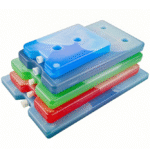
En termes simples, un pack de gel réfrigérant est un élément de refroidissement conditionné utilisé à l'intérieur d'un récipient de transport de sang qualifié. Dans de nombreuses chaînes d'approvisionnement, il fonctionne comme un insert réfrigérant réutilisable ou jetable plutôt que comme un système d'expédition autonome.. On peut l'appeler un réfrigérant qui transporte le sang., un insert de liquide de refroidissement, ou un autre nom commercial selon le secteur d'activité. Ce qui compte pour l'acheteur, c'est moins l'étiquette que la combinaison de tailles., remplir la masse, comportement de phase, durabilité du film, et comment le pack s'adapte au récipient isolé.
Dans la logistique du sang, le bon pack est précieux car il stabilise un expéditeur validé sans le fardeau opérationnel de la glace mouillée en vrac dans de nombreux programmes. La plupart des formats de gel standard fonctionnent en stockant l'énergie froide pendant le conditionnement au congélateur, puis en absorbant la chaleur lors de leur décongélation.. Le temps de maintien pratique ne dépend pas uniquement du pack: qualité de l'isolation, masse du produit, température initiale du produit, placement des paquets, et l'exposition extérieure changent toutes le résultat. Du point de vue de l'ingénierie, l'acheteur gère réellement le flux de chaleur à travers l'ensemble de la pile d'emballages. Un mur plus épais ou un meilleur revêtement peut réduire le nombre de packs réfrigérants nécessaire, tandis qu'un expéditeur mal isolé peut effacer l'avantage d'un liquide de refroidissement plus lourd.
La logistique du sang est impitoyable car la qualité du produit peut être compromise à la fois par un réchauffement ou un refroidissement excessif.. Un pack de gel dont les performances sont acceptables pour les globules rouges peut ne pas convenir aux plaquettes., et une stratégie figée pour une catégorie de produits peut être erronée pour une autre. Le pack doit donc être sélectionné dans le cadre du système d'emballage validé, pas comme un accessoire lâche.
Le transport sanguin est spécifique au composant, donc le bon pack dépend si la charge utile est constituée de globules rouges, plaquettes, plasma, ou un autre produit sanguin validé.
Il est également important de séparer l'emballage extérieur de protection d'un système d'expédition à température contrôlée. Un pack de gel ou une brique peut aider à contrôler la température, mais cela ne rend pas automatiquement l'envoi conforme ou validé. Les exigences peuvent varier selon le produit, itinéraire, conditions de manutention, et les procédures qualité du transporteur.
Comment choisir l'itinéraire, Produit, et gérer la réalité
Dans de nombreux cas, Les packs de gel réfrigérant sont particulièrement utiles lorsque les équipes ont besoin d'une source de froid pouvant être placée de manière répétée., manipulé proprement, et étendu à plusieurs expéditions. Les charges utiles typiques incluent les globules rouges, plaquettes, plasma, plaquettes conservées au froid, et des échantillons de sang et du matériel lié aux tissus. Cela ne signifie pas que chaque charge utile a besoin du même pack. Cela signifie que le format peut être adapté si l'acheteur définit clairement le parcours et les contraintes du produit..
Les risques d'itinéraire que les acheteurs doivent généralement prévoir incluent la dérive de température lors du transfert entre les installations., utiliser le mauvais pack pour le mauvais composant sanguin, mauvais conditionnement des packs de stabilisation de la température, opérations de reconditionnement dans les hôpitaux, et en supposant que le pack de gel à lui seul crée une conformité.
Une voie de transfert hospitalier pour les globules rouges, un mouvement de plaquettes entre les installations, et le transport de composants sanguins congelés peuvent tous impliquer un milieu stabilisant, mais la conception du réfrigérant et de l'expéditeur ne peut pas simplement être permutée entre eux. La discipline opérationnelle compte autant que la sélection du pack.
La plus grande erreur est d’acheter un pack de gel décrit comme « médical » ou « sang » et de supposer que cette description à elle seule rend l’envoi acceptable.. Pour le transport du sang, l'adéquation dépend du composant, l'expéditeur validé, le processus de préparation, et les conditions de l'itinéraire.
En même temps, les acheteurs doivent respecter les limites: différents composants sanguins ont des températures d'expédition différentes; le pack doit faire partie d'une boîte qualifiée et d'une SOP documentée; les gels standards à base d’eau peuvent trop refroidir certains produits ou être moins performants dans d’autres; et les pistes de plaquettes peuvent nécessiter des stratégies de stabilisation très différentes de celles des pistes de globules rouges.
Instantané de sélection
| Option | Où cela convient le mieux | Force principale | Que vérifier |
| Pack de gel congelé standard | Quelques applications réfrigérées robustes | Simple et disponible | Peut ne pas convenir aux besoins sanguins spécifiques à des composants |
| Pack de gel conditionné | Applications contrôlées de type globules rouges | Risque moindre de froid excessif au contact | Nécessite toujours un emballage et des instructions qualifiés |
| Pack PCM | Programmes de produits sanguins à portée plus étroite ou sensibles | Meilleur ciblage de la température | Complexité et coût plus élevés |
| Glace humide ou autre support stabilisant | Programmes spécifiques hérités ou dépendants de composants | Peut convenir à certains modèles opérationnels | La gestion et la qualification de l’humidité restent importantes |
La liste de contrôle des fournisseurs qui compte vraiment
Il est plus facile de présélectionner des fournisseurs lorsque vous les comparez à l'expédition réelle plutôt qu'à un langage marketing général.. Les meilleures conversations d'achat connectent la conception de produits, gérer la réalité, et fournir la fiabilité dans un seul tableau de bord plutôt que de les traiter comme des décisions distinctes.
Avant de passer une commande groupée, les acheteurs doivent traduire le problème d'expédition dans un dossier d'emballage écrit. Ce dossier devrait couvrir la plage de température cible, type de charge utile, dimensions de l'expéditeur, temps de transit prévu, stress ambiant, séquence de chargement, et conditions d'accueil. Une fois ces points notés, discussions sur MOQ, outillage, entrepôts, ou le prix devient beaucoup plus productif car tout le monde parle du même objectif technique.
Outils de décision utiles
Vérifiez les détails avant de choisir l'emballage
Ces outils rapides peuvent vous aider à comparer le risque d'itinéraire, besoins de dimensionnement, choix de liquide de refroidissement, et les détails de l'emballage avant de demander un devis.
Liquide de refroidissement & Référence PCM
Comparez les options de liquide de refroidissement et de PCM lorsqu'un itinéraire nécessite une prise en charge supplémentaire de la température.
Comparez les optionsSélecteur d'emballage
Comparez les options d'emballage isotherme par produit, itinéraire, et besoin de température.
Trouver un emballageRéférence du matériau isolant
Comparez les choix de matériaux d'isolation pour différents besoins d'emballage de la chaîne du froid.
Comparez les matériaux- Confirmer les dimensions internes et externes après congélation, pas seulement les dimensions nominales à température ambiante.
- Demander la tolérance du poids de remplissage, masse froide utilisable, et la méthode de conditionnement cible avant expédition.
- Vérifier la structure de la résine ou du film, conception de couture, et les attentes en matière de résistance aux fuites sous une contrainte de manipulation réelle.
- Vérifiez comment le pack s'adapte à l'expéditeur isolé, y compris la couverture murale, interférence du couvercle, et séparation des produits.
- Vérifier l'empilabilité, nidification, et efficacité de retour si le pack est utilisé dans des programmes réutilisables ou des boucles fourre-tout.
- Demandez comment les étiquettes, codes à barres, codage des dates, ou la traçabilité des lots est appliquée et contrôlée.
- Demander des preuves que la qualité des échantillons correspond à la qualité de la production, y compris tout processus de contrôle des modifications pour les matériaux ou les dimensions.
- Demandez des données de conditionnement ou de performances thermiques qui reflètent la masse de votre charge utile, type d'expéditeur, et profil ambiant réaliste.
- Clarifier ce qui se passe si les matières premières, formulation de gel, épaisseur du film, ou changement de lieu de fabrication après approbation.
- Demandez quelle plage de température le pack est conçu pour supporter et s'il a été utilisé par des transporteurs de sang qualifiés..
- Demander des conseils de conditionnement pour la classe de produit exacte, pas une instruction générique pour le congélateur.
- Vérifier la traçabilité des lots, cohérence de l'échantillon à la production, et si le fournisseur peut prendre en charge l'enregistrement des données ou les discussions de qualification.
Demandez des données qui reflètent le conditionnement complet plutôt qu'un test de réfrigérant autonome. Un ensemble de données utiles montre généralement le type d'expéditeur, niveau d'isolation, masse de charge utile, défi ambiant, placement des paquets, et durée du test. Sans ce contexte, deux fournisseurs peuvent faire des déclarations de temps de maintien similaires tout en décrivant des conditions de test complètement différentes. Les acheteurs sérieux veulent comprendre les conditions limites, pas seulement le résultat principal.
Les exigences en matière de transport sanguin diffèrent selon le produit: Par exemple, Les principales directives du service du sang montrent que les globules rouges sont expédiés entre +1°C et +10°C, plaquettes aussi proches que possible de +20°C à +24°C, et produits surgelés sans preuve de décongélation. Les emballages de stabilisation de température sont conditionnés à la température appropriée pour le produit expédié. Un fournisseur de réfrigérant doit soutenir un système de conteneurs validé plutôt que de laisser entendre qu'un pack seul suffit.. Pour les envois réglementés ou sensibles à la qualité, les allégations sur l'emballage doivent être lues attentivement. UN pack de liquide de refroidissement peut soutenir les objectifs de conformité, mais ce n'est généralement qu'une partie du processus documenté. Entraînement, instructions d'emballage, recevoir des chèques, qualification d'itinéraire, et les exigences spécifiques au produit influencent toutes si l'envoi est réellement adapté.
Du côté de la durabilité et des opérations, les acheteurs apprécient souvent le fait que les packs de stabilisation propres et réutilisables peuvent réduire les déchets de manipulation dans les boucles fermées de soins de santé; des emballages mieux adaptés à l'itinéraire réduisent la perte de produit, ce qui représente le plus grand gain opérationnel et de durabilité; et les acheteurs en gros apprécient de plus en plus les systèmes qui réduisent les erreurs de reconditionnement et les taux de rejet. En pratique, les acheteurs évaluent de plus en plus l’impact opérationnel total: poids du fret, espace de rangement au congélateur, facilité de réception, gestion des déchets, et le risque de perte de produit si l'itinéraire devient instable. Un pack plus durable ou mieux ciblé peut parfois coûter plus cher tout en réduisant le coût réel du programme d'expédition..
Erreurs d'achat courantes
Une plaquette adaptée aux globules rouges peut ne pas convenir aux plaquettes.. Les décisions de transport de sang doivent toujours suivre la procédure validée spécifique au composant.
Une fois qu'un pack a été approuvé, le contrôle du changement devient crucial. Petites différences selon le fournisseur de film, rapport de gel, volume de remplissage, mise en page d'impression, ou les paramètres de la ligne de fabrication peuvent modifier les dimensions, résistance aux fuites, ou comportement d'emballage. Les fournisseurs professionnels documentent ces changements et les communiquent avant qu'ils n'affectent les expéditions réelles..
Les conditions de réception comptent plus que ce à quoi de nombreux acheteurs s’attendent. Si les cartons sont ouverts dans un quai chaud, laissé sur le sol avant inspection, ou remballé à température ambiante, le réfrigérant choisi doit compenser la variabilité opérationnelle ainsi que l'exposition au transit. C'est pourquoi les achats, opérations, et les équipes qualité devraient examiner ensemble le flux de travail de destination au lieu de traiter le réfrigérant comme une décision d'achat uniquement..
Le prix unitaire n’est qu’un élément de l’économie. Un pack plus grand ou moins cher peut augmenter les frais de transport, réduire la charge utile du produit, lignes d'emballage lentes, ou créer plus de déchets à la réception. Par contre, un emballage mieux ajusté peut parfois réduire le coût total car il réduit la perte de produit, évite le suremballage, et simplifie la manipulation. Les bonnes conversations avec les fournisseurs comparent donc le coût total d'utilisation, pas seulement le prix par paquet.
Détails opérationnels à ne pas ignorer
La palettisation et le comportement du carton extérieur peuvent également influencer le bon choix. Lorsque les cartons sont étroitement empilés, compression des flancs, pression du couvercle, et un débit d'air réduit peut modifier la façon dont les packs congelés reposent et décongèlent.. C'est une autre raison d'évaluer le réfrigérant à l'intérieur de l'unité d'expédition réelle plutôt que comme élément autonome..
La planification d’urgence doit être discutée avant la première commande importante. Si la demande augmente, la météo interrompt le transport, ou un changement important nécessite une nouvelle approbation, l'acheteur doit savoir si le stock de sauvegarde, entrepôts alternatifs, ou des formats de remplacement sont disponibles. La résilience de l’offre fait partie de l’adéquation des produits.
Là où le risque produit est élevé, les acheteurs devraient passer de la sélection à la qualification par étapes: Confirmez d'abord les spécifications physiques, puis testez le pack-out dans les conditions prévues, et ensuite seulement mettre à l'échelle le volume. Cette séquence réduit les chances de parvenir à un accord commercial autour d'un réfrigérant qui semblait bon isolément mais qui fonctionne mal dans l'expéditeur fini..
FAQ
Un pack de gel réfrigérant peut-il couvrir les globules rouges et les plaquettes?
Non. Ces produits ont des exigences thermiques différentes, une sélection spécifique au composant est donc essentielle.
Pourquoi les transporteurs de sang se concentrent-ils autant sur le conditionnement?
Parce que la température de démarrage modifie la façon dont le liquide de refroidissement interagit avec la charge utile. Le conditionnement peut réduire le risque de refroidissement excessif local et améliorer la répétabilité.
Que devraient demander les acheteurs aux fournisseurs?
Demandez des recommandations spécifiques aux composants, preuve de la cohérence du paquet, contrôle dimensionnel, et prise en charge des configurations d'emballage qualifiées.
Dernier mot
Le résultat le plus fort vient généralement de la combinaison d'une sélection pratique de packs, discipline technique, et une sélection réaliste des fournisseurs. C'est ce qui fait que les packs de gel réfrigérant, d'une source de froid générique, deviennent un élément fiable de votre processus de distribution..
À propos du Tempk
Et Tempk, nous nous concentrons sur les emballages à température contrôlée pour expédition sous chaîne du froid. Fondée en 2011 en tant que marque de Shanghai Huizhou Industrial, nous proposons des soins médicaux emballage chaîne du froid, packs de gel, Options PCM, et systèmes d'expédition isolés pour les expéditions sensibles à la température. Notre travail de développement est soutenu par un R&Centre D fonctionnant avec des pratiques alignées CNAS et ISTA, et notre réseau de fabrication comprend des installations certifiées ISO en Chine. Cette combinaison nous aide à prendre en charge à la fois les formats d'approvisionnement standard et les formats d'emballage personnalisés pour la distribution sensible à la température..
Prochaine étape: Avant de passer à l'échelle, aligner le format du pack avec votre itinéraire, charge utile, et les conditions de réception afin que la recommandation soit basée sur l'expédition réelle plutôt que sur une ligne de catalogue générique.