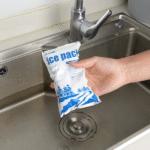
Packs de glace à injection d'eau sont fournis vides ou partiellement préparés, puis rempli d'eau et congelé près du point d'utilisation. Pour les utilisateurs de gros volumes de la chaîne du froid, ce format peut réduire le volume de fret entrant, diminution de la pression de stockage en entrepôt, et permettre la congélation locale avant l'emballage. Cependant, les packs d’injection d’eau ne sont pas automatiquement meilleurs que les packs préremplis packs de gel. Ils fonctionnent mieux lorsque l'acheteur dispose de suffisamment de travail de remplissage., contrôle de l'eau propre, capacité du congélateur, discipline de chasse au phoque, et tests d'itinéraire.
Cet article explique dans quels cas les packs de glace à injection d'eau sont judicieux pour les programmes de chaîne du froid B2B tels que les kits repas., livraison d'épicerie, fruit de mer, colis réfrigérés, distribution de la ferme à la table, et expédition de produits alimentaires saisonniers. Il explique également quand les packs de gel préremplis ou les packs PCM sont de meilleurs choix..
Pourquoi l'eau est utile comme matériau de la chaîne du froid
L'eau est l'un des matériaux de stockage thermique les plus courants car elle possède une capacité thermique spécifique élevée et une chaleur latente de fusion élevée lorsqu'elle passe de la glace à l'eau liquide.. Les références techniques répertorient généralement la chaleur spécifique de l'eau à proximité 4.18 kJ/kg·K à température ambiante, et la chaleur latente de fusion de la glace/eau autour 334 kJ/kg. Cela signifie qu'un pack congelé à base d'eau peut absorber une chaleur importante tout en fondant à environ 0°C. / 32°F.
Cela ne signifie pas qu’un pack d’injection d’eau convient à chaque expédition.. Un pack d'eau congelée peut être trop froid pour certains médicaments à 2-8°C s'il est placé en contact direct. Il ne peut pas conserver les aliments surgelés surgelés lors d'un long trajet de colis en été. Il peut fuir si le film, joint, méthode de remplissage, ou le processus de manipulation est médiocre. Comme tout élément de la chaîne du froid, il doit être sélectionné dans le cadre d'un pack complet.
Tableau 1. Propriétés de l'eau pertinentes pour les packs de glace à injection d'eau.
| Paramètre thermique | Valeur de référence typique | Signification de l’emballage |
|---|---|---|
| Point de congélation de l'eau | 0°C / 32°F à pression standard | Les packs à base d'eau gèlent dans la glace et libèrent leur capacité de refroidissement autour du changement de phase glace-eau.. |
| Capacité thermique spécifique de l'eau | À propos 4.18 kJ/kg·K | L'eau liquide absorbe la chaleur sensible à mesure que sa température augmente. |
| Chaleur latente de fusion glace/eau | À propos 334 kJ/kg | Le processus de fusion absorbe une grande quantité de chaleur sans augmentation de température lors du changement de phase. |
| Densité de l'eau liquide | À propos 1,000 kg/m³ proches des conditions communes | Le volume de remplissage correspond à peu près à la masse de remplissage; un 500 Le remplissage en ml est d'environ 0.5 kg avant poids d'emballage. |
En quoi les packs de glace par injection d'eau diffèrent des packs de gel pré-remplis
Un pack de gel prérempli arrive prêt à être congelé et utilisé. Un pack d'injection d'eau arrive compact et est rempli plus tard. Cela change la structure des coûts. Les packs pré-remplis réduisent le travail sur site et les erreurs de remplissage, mais l'expédition et le stockage de produits lourds en eau peuvent coûter cher. Les packs d’injection d’eau transfèrent une partie du travail à l’utilisateur, ce qui peut être utile pour les opérations à volume élevé avec une main-d'œuvre locale et une infrastructure de congélation.
Tableau 2. Comparaison opérationnelle entre injection d'eau et packs de gel préremplis.
| Facteur | Pack de glace à injection d'eau | Pack de gel pré-rempli |
|---|---|---|
| Fret entrant | Faible avant le remplissage car le pack est expédié à plat ou compact. | Plus élevé car le pack est livré avec un poids d'eau/gel déjà inclus. |
| Stockage en entrepôt | Gain de place avant le remplissage. | Nécessite un espace de stockage pour les packs remplis. |
| Main d'œuvre sur le site d'utilisation | Nécessite un remplissage, contrôle du scellage ou du bouchon, séchage, gel, et CQ. | Nécessite la congélation et l'emballage, mais pas d'étape de remplissage. |
| Cohérence | Dépend de la précision du remplissage et du contrôle du processus local. | Le poids de remplissage en usine est contrôlé pendant la fabrication. |
| Risque de fuite | Cela dépend du film, conception de valve/capuchon/joint, méthode de remplissage, et manipulation. | Dépend de la qualité du film et du joint d'usine. |
| Meilleur cas d'utilisation | Opérations à grand volume avec capacité de préparation locale. | Opérations nécessitant une manipulation simple, poids de remplissage contrôlé, et un déploiement plus rapide. |
Quand les packs de glace à injection d’eau sont meilleurs
Les packs d’injection d’eau sont généralement meilleurs lorsqu’un acheteur expédie de gros volumes, a des itinéraires prévisibles, et souhaite réduire le coût et l'espace d'importation de blocs de glace lourds finis. Ils peuvent également être utiles lorsqu'une marque doit stocker un stock saisonnier important avant le pic de demande., ou lorsque l'expédition à l'étranger de packs pré-remplis entraînerait des frais de transport inutiles.
- Kit repas à grand volume et itinéraires d'épicerie où de nombreux packs sont utilisés chaque jour.
- Centres de distribution régionaux avec stations-service et surgélation ou capacité de congélation suffisante.
- Programmes saisonniers de la chaîne du froid nécessitant un inventaire compact de pré-saison.
- Projets d'exportation où l'expédition de paquets vides est plus efficace que l'expédition de poids en eau.
- Itinéraires réfrigérés courts à moyens où les packs d'eau congelée sont appropriés après les tests d'emballage.
Quand les packs de gel préremplis sont meilleurs
Les packs de gel préremplis sont généralement préférables lorsque le client souhaite un, produit prêt à congeler avec moins de risques de préparation. Ils conviennent également mieux aux clients qui ne disposent pas d'équipement de remplissage., travail constant, contrôle de l'eau, ou une capacité de congélation suffisante. Un pack de gel prérempli peut inclure des choix de formulations qui améliorent la viscosité, réduire la libre circulation de l'eau, et permet une manipulation plus propre par rapport à un simple pack d'eau.
Pour l’envoi d’échantillons pharmaceutiques et biologiques, les packs PCM pré-qualifiés ou les packs de gel contrôlés sont souvent préférés car l'emballage doit être reproductible et documenté. Un pack d'injection d'eau ne peut être utilisé que si le pack validé le permet et que l'utilisateur peut répéter le remplissage., conditionnement, et processus de placement. Le contact direct entre les packs d'eau congelée et les produits sensibles au gel doit être évité, sauf si l'emballage a été conçu à cet effet..
Outils de décision utiles
Vérifiez les détails avant de choisir l'emballage
Ces outils rapides peuvent vous aider à comparer le risque d'itinéraire, besoins de dimensionnement, choix de liquide de refroidissement, et les détails de l'emballage avant de demander un devis.
Calculateur de glace carbonique
Estimer les besoins en glace carbonique pour les envois congelés ou ultra-froids avant l'emballage.
Estimation de la neige carboniqueRésistance aux chutes du matériau isolant
Examinez la résistance aux chutes et les facteurs de manipulation avant de choisir des matériaux d'isolation..
Vérifier la résistanceGénérateur de liste de contrôle de conformité
Créer une liste de contrôle pratique pour l'examen des emballages, expédition, et documentation.
Construire une liste de contrôleCas d’utilisation et ajustement de la chaîne du froid
Tableau 3. Ajustement typique par application.
| Cas d'utilisation | Pack d'injection d'eau adapté | Attention clé |
|---|---|---|
| Livraison de kits repas | Bon ajustement lorsque les opérations peuvent se remplir et se figer à grande échelle. | L'élimination par le client et le contrôle des fuites doivent être clairs. |
| Livraison d'épicerie locale | Idéal pour les itinéraires réfrigérés avec des délais de livraison contrôlés. | Les commandes mixtes ambiantes/réfrigérées peuvent nécessiter une planification des compartiments. |
| Expédition de fruits de mer | Possible pour les fruits de mer réfrigérés, mais la gestion de l'humidité est essentielle. | Utilisez des sacs scellés, matériau absorbant, et tests d'itinéraire. |
| Colis de produits surgelés | Ajustement limité pour les longs itinéraires, sauf test; de la glace carbonique peut encore être nécessaire. | FedEx et UPS recommandent généralement la glace carbonique pour les articles surgelés. |
| 2-8°C médicament | Utiliser avec prudence uniquement dans les emballages approuvés. | Les packs d'eau gelée peuvent créer un risque de gel s'ils sont placés trop près du médicament.. |
| Sac à lunch consommateur | Bon ajustement pour un refroidissement simple après congélation. | Pas la même exigence de performance que la chaîne du froid des colis. |
Liste de contrôle de contrôle qualité pour les packs d’injection d’eau
Un programme de packs d’injection d’eau doit inclure une liste de contrôle de qualité locale. Les échecs les plus courants sont le sous-remplissage, Trop rempli, faible étanchéité, air emprisonné, eau sur les surfaces du pack, congélation incomplète, et les préposés à l'emballage placent les paquets dans la mauvaise position. Ces problèmes peuvent créer des excursions de température, cartons humides, dommages aux codes à barres, broyage du produit, ou réclamations clients.
- Confirmez le volume de remplissage cible ou le poids de remplissage pour chaque taille de paquet.
- Utiliser de l’eau propre adaptée à l’application prévue et aux attentes du client.
- Vérifiez la vanne, capuchon, ou méthode de scellage avant congélation.
- Sécher la surface extérieure avant le stockage ou l'emballage du carton.
- Congeler complètement les packs selon le processus de congélation validé du site.
- Évitez de trop remplir car l'eau se dilate pendant la congélation et peut stresser l'emballage..
- Utiliser des instructions d'emballage écrites montrant le placement du paquet et la séparation du produit.
- Effectuez un test de température pour chaque nouvelle taille de boîte, durée de l'itinéraire, et profil de saison.
Comment comparer le coût total
Le prix unitaire le plus bas peut ne pas produire le coût total le plus bas. Comparez le fret entrant, espace de stockage, travail, équipement de remplissage, capacité du congélateur, rejets de fuite, performances de l'itinéraire, et réclamations du service client. Un pack d'injection d'eau peut réduire les coûts d'expédition et de stockage, mais si le site manque de contrôle des processus, le coût caché d'un mauvais remplissage et des fuites peut être supérieur aux économies réalisées.
Tableau 4. Questions sur le coût total des programmes de packs d'injection d'eau.
| Zone de coût | Questions à poser |
|---|---|
| Fret entrant | Combien d’argent est économisé en expédiant des paquets vides au lieu du poids de l’eau? |
| Travail de remplissage | Combien de packs peuvent être remplis par heure, et quel contrôle qualité est nécessaire? |
| Capacité du congélateur | Le site peut-il geler complètement le volume quotidien du pack avant l'emballage? |
| Taux de fuite | Quel est le taux de rejet acceptable après remplissage, gel, et manipulation? |
| Performances des itinéraires | L'emballage maintient-il la température requise tout au long du parcours? |
| Expérience client | Les clients comprendront-ils la réutilisation, vidange, ou instructions d'élimination? |
FAQ
Les packs de glace à injection d'eau sont-ils les mêmes que les packs de gel?
Non. Les packs d'injection d'eau sont généralement remplis d'eau par l'utilisateur, tandis que les packs de gel sont généralement pré-remplis d'une formulation de gel. Les deux peuvent fournir du refroidissement, mais ils diffèrent dans la manipulation, cohérence, et contrôle des performances.
Les packs d’injection d’eau permettent-ils d’économiser les frais de transport?
Ils peuvent, car le pack peut être expédié vide ou compact avant d'être rempli. Les économies doivent être comparées à la main d’œuvre locale de remplissage, capacité du congélateur, et coût du contrôle qualité.
Les packs d’injection d’eau peuvent-ils être utilisés pour l’expédition d’aliments surgelés?
Parfois, mais les longs itinéraires gelés nécessitent souvent une planification plus rigoureuse des sources de froid. FedEx et UPS recommandent généralement glace carbonique pour les articles surgelés, tandis que les packs de gel sont couramment utilisés pour les cuisinières réfrigérées.
Les packs d’injection d’eau peuvent-ils être utilisés pour des médicaments?
Uniquement lorsque l’emballage est conçu et approuvé pour la plage de température du médicament. Les packs d'eau gelée peuvent créer un risque de gel s'ils sont placés trop près de produits à 2-8°C..
Comment tester les packs d’injection d’eau?
Testez-les à l’intérieur de la boîte ou du sac réel, avec la charge utile réelle, remplir le poids, isolation, placement des paquets, température de départ, et acheminer le profil ambiant.