The best thermal box liner supplier helps you protect product temperature, lower shipping waste, improve packing speed, and keep your supply chain stable. You are not buying insulation alone. You are buying performance across materials, ajuster, essai, conformité, capacité, et coûter.
Cet article vous aidera à répondre:
- What the best thermal box liner supplier should offer
- How liner materials affect cold-chain performance
- Which test and compliance checks matter before scale-up
- How to compare suppliers on total value, pas seulement le prix unitaire
- Quoi 2026 trends mean for your packaging strategy
Why does supplier choice matter so much?
A weak liner supplier creates hidden problems. You get oversized cartons, inconsistent folds, emballage lent, excess refrigerant, missed specifications, or avoidable spoilage. A strong thermal box liner supplier does the opposite. They help you build a shipping system that is stable, répétable, and easier to improve over time.
The supplier should understand your real use case:
- réfrigéré ou congelé
- parcel or LTL
- 24 heures ou 72 heures
- food or healthcare
- stock size or custom size
If they skip those questions, they are probably selling a material, not solving a cold-chain problem.
Which liner material is right for your shipment?
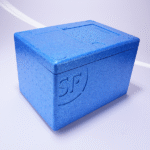
There is no universal “best” material. The right answer depends on route time, exposition ambiante, payload density, and packing workflow. Foil bubble liners are usually lighter and easier to store. Foam structures usually provide stronger conductive insulation but take more space. Fiber-based or paper-based designs may support sustainability goals, but they still need full validation.
Tableau de comparaison des matériaux
- What buyers often forget
- Reflective layers work best as part of a full structure, not as magic on their own.
- Extra empty space inside the box weakens the whole system.
- A custom-fit liner can reduce both spoilage and freight cost at the same time.
Cas pratique: A frozen-food seller thought it needed a thicker liner. Testing showed the real fix was a tighter fit and a better refrigerant layout. The new design used less material and performed better.
- How do you compare one thermal box liner supplier to another?
Utiliser une carte de pointage. This keeps sales style from overpowering engineering reality.
- Quick supplier scorecard
- Ask these questions before you buy
- What sizes are standard, and what can be custom?
- Which materials are available now, not just “possible later”?
- What is your normal tolerance on dimensions and seals?
- Can you support a pilot order and then scale to production?
- What test data do you already have for similar lanes?
- How do you manage raw material changes?
What testing should the supplier support?
A good thermal box liner supplier should help you validate the full pack-out, not just ship you a sample. Ask for testing based on your real shipment logic:
product load
- initial product temperature
- refrigerant type and weight
- dimensions des cartons
- durée cible
- pass/fail range
- The most useful test checks
Which compliance and standards matter in 2026?
For food-contact packaging in Europe, packaging materials must comply with strict safety rules, and the EU’s plastic food-contact framework under Regulation 10/2011 sets substance controls, migration rules, and standardized testing logic. The Commission also notes the overall migration limit of 60 mg/kg food or 10 mg/dm². FDA’s food-contact framework makes clear that regulatory status depends on each component, and company-specific intended use still matters. For transport validation, Norme ISTA 20 aligns insulated-container qualification with ISTA 7E thermal profiles, while WHO and IATA continue to emphasize validated packaging and transport discipline for temperature-sensitive supply chains. (Sécurité alimentaire)
Practical meaning for buyers
- Ask for the exact intended-use statement, not a vague safety claim.
- Make sure performance data matches your carton and payload range.
- Treat pack-out instructions as part of compliance discipline, not as optional notes.
How do you reduce cost without reducing protection?
The smartest way is to optimize total shipment cost, not liner price alone. A better thermal box liner supplier can help you:
reduce carton size
- cut void fill
- lower refrigerant quantity
- improve packing speed
- reduce claims and replacements
- Cost-reduction opportunities
- 2026 trends you should plan for now
The market is moving toward more accountable packaging. FDA’s planned 30-month extension to the Food Traceability Rule keeps recordkeeping and traceability at the front of food-chain planning. WHO’s updated vaccine shipping guidance and IATA’s temperature-control framework reinforce the value of validated packaging and clean documentation. En même temps, the EU’s PPWR 2025/40 pushes recyclable, more resource-efficient packaging, while EPA’s plastics strategy emphasizes redesign, réduction des déchets, and circular materials management. (NOUS. Food and Drug Administration)
What smart buyers are doing
- Running seasonal validation instead of relying on one annual test
- Requesting lower-material designs without skipping performance checks
- Auditing suppliers on traceability and change control
- Comparing cost per successful delivery, not cost per piece
Questions fréquemment posées
What is the best thermal box liner supplier for food shipping?
It is the supplier that can prove fit, food-contact suitability where needed, lane performance, and repeatability at your volume.
Should I choose stock or custom liners?
Stock liners are good for trials or low volume. Custom liners are usually better for efficiency and thermal control once volume grows.
Can a thermal box liner supplier help reduce refrigerant use?
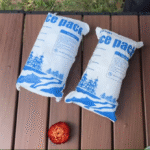
Oui. Better fit and better thermal balance can sometimes reduce the amount of gel packs or PCM you need.
Do I need different liners for summer and winter?
Souvent, Oui. Seasonal validation is one of the easiest ways to improve both cost and performance.
How do I know a supplier can scale?
Ask about batch traceability, capacité de production, raw material planning, and how they handle process changes.
Final recommendation
If you want the best thermal box liner supplier, choose the one that combines practical design support, strong testing discipline, une documentation claire, and honest communication. A good supplier saves you more through performance, stabilité, and packaging efficiency than a low-price supplier ever can through unit cost alone.
Your next step is to build one comparison sheet for every supplier. Include route time, product temperature, carton size, refrigerant type, target price, required documents, and pilot-test criteria. The best partner will stand out quickly.
À propos du tempk
Et tempk, we focus on cold-chain packaging solutions built around real operating conditions. We work on liner fit, efficacité d'emballage, and temperature-control consistency so you can reduce damage, réduire les déchets, and ship with more confidence. Notre objectif est simple: practical cold-chain packaging that performs in real lanes, not just in presentations.