


L’exigence du produit passe avant tout
L'emballage doit être construit autour du produit'la gamme étiquetée et l'expéditeur'plan de qualification des itinéraires.
Colis pharmaceutiques réfrigérés
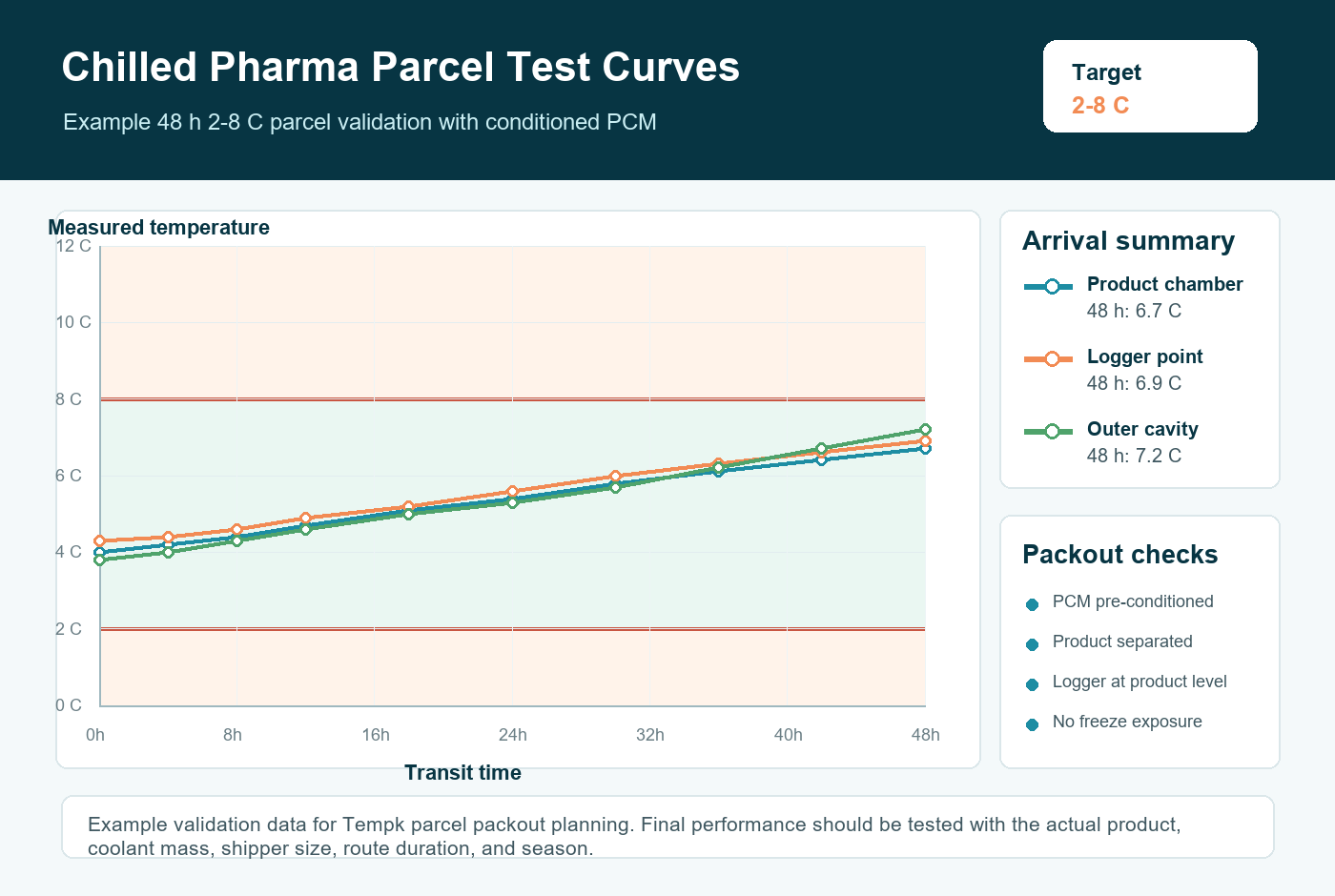
Les colis pharmaceutiques réfrigérés nécessitent une chambre de produits contrôlée, pas seulement une glacière. L'emballage doit suivre le produit's plage de stockage étiquetée, protéger contre les excursions chaudes et le contact avec le gel, et donner au destinataire une preuve claire de l'acceptation.
Risque produit
Le bon emballage doit protéger le produit réel et la décision de réception, non seulement afficher une trace d'enregistreur froid. Ces risques déterminent l’isolation, choix du liquide de refroidissement, emplacement du liquide de refroidissement, soutien intérieur, et contrôles de validation.
L'emballage doit être construit autour du produit'la gamme étiquetée et l'expéditeur'plan de qualification des itinéraires.
Les packs de gel gelé placés à proximité du produit peuvent créer un risque de gel local même lorsque la trace moyenne semble acceptable..
La boîte peut rester à un bureau de réception avant l'inspection, le plan de validation doit donc inclure un temps de transfert réaliste.
Les petits cartons et flacons ont peu de masse thermique et nécessitent une séparation minutieuse du liquide de refroidissement.
Recommandation basée sur l'itinéraire
Ce sont des points de départ pratiques pour la planification des échantillons. Masse finale du liquide de refroidissement, épaisseur d'isolation, et le support interne doit être validé avec la charge utile réelle, itinéraire, messagerie, et recevoir la norme.
| Conditions d'expédition | Forfait Tempk recommandé | Direction de démarrage du liquide de refroidissement | Emplacement du liquide de refroidissement | Que valider |
|---|---|---|---|---|
| Courrier contrôlé le jour même 8-18h itinéraire, ambiance ci-dessous 22 C, transfert direct | Expéditeur EPS ou EPP qualifié, chambre de produit, poches matériau à changement de phase conditionnées, diviseur, et enregistreur | À propos 0.5-1.0 kg au total de matériau à changement de phase conditionnés ou de packs de gel pour un petit 0.5-2 kg de charge utile. Suivez la plage étiquetée et qualifiez-vous avec la charge utile réelle. | Poches latérales ou poche sur le couvercle avec séparateur testé; ne placez jamais les emballages congelés directement contre le carton du produit. | Point du produit le plus chaleureux, point du produit le plus froid, retard du récepteur, carton écrasé, et récupération de l'enregistreur |
| Itinéraire de colis de nuit 18-36h itinéraire, manutention du dépôt, ambiant 22-30 C | Expéditeur EPP ou EPS, isolation plus épaisse, chambre de produit fixe, matériau à changement de phase conditionné, doublure, et enregistreur | À propos 1.0-2.0 kg de matériau à changement de phase total conditionné pour un test de petite parcelle. Augmenter seulement après vérification du risque de point froid. | Deux positions latérales ou matériau à changement de phase périmétrique avec tampon entièrement orienté vers le produit; enregistreur à proximité du produit, pas contre le liquide de refroidissement. | 2-8 Trace C, risque de contact gelé, stabilité de la chambre de produit, réception retardée, et état du carton extérieur |
| Itinéraire par temps chaud ou sujet aux retards 30-35 C ambiant, 36-48h risque, week-end ou délai de réception possible | Expéditeur EPP/EPS plus performant, marge d'isolation plus grande, Disposition matériau à changement de phase qualifiée, chambre de produit, et enregistreur | À propos 2.0-3.5 kg de matériau à changement de phase conditionné au total pour des tests étendus sur de petites parcelles. Confirmer la charge utile, taille de l'expéditeur, niveau de service, et critères d'acceptation avant la mise à l'échelle. | matériau à changement de phase périmétrique avec séparateurs et sans contact direct; ajouter des positions d'enregistreur pour les points chauds et froids. | Marge d'excursion chaude, température du produit la plus basse, retard de réception, compression des cartons, et acceptation documentée |
La masse du liquide de refroidissement est un point de départ, pas une garantie. Ajuster en fonction de la température du produit à l'emballage, poids de charge utile, taille de l'expéditeur, matériau isolant, conditionnement du liquide de refroidissement, durée de l'itinéraire, profil ambiant, manutention du transporteur, et recevoir des chèques. Plus de liquide de refroidissement peut créer du gel, dégâts de pression, emballage humide, ou manipulation dangereuse de la glace carbonique lorsque la séparation et les instructions sont erronées.
Structure du paquet
Les envois de colis nécessitent une assistance produit, séparation du liquide de refroidissement, et recevoir des éclaircissements avant la fermeture de l'expéditeur. Commencez par la charge utile et les critères d’acceptation, puis dimensionnez l'isolation et le liquide de refroidissement.
Processus d'emballage
Un expéditeur plus fort aide, mais condition de chargement, séparation du liquide de refroidissement, soutien intérieur, et les instructions de réception décident généralement si le colis est accepté.
Utilisez la plage étiquetée et les règles du récepteur avant la conception de l'emballage. Ne généralisez pas un produit'une voie vers une autre.
Utiliser la même méthode de conditionnement lors de la validation et de l'expédition en direct.
Empêcher la charge utile de glisser dans le liquide de refroidissement pendant la manipulation des colis.
Vérifier l'enregistrement de l'enregistreur, état du carton du produit, heure de transfert, et tout scénario d'ouverture retardée.
Quand changer la conception
Augmenter l'épaisseur du tampon, changer le conditionnement matériau à changement de phase, ou éloignez le liquide de refroidissement de la chambre du produit.
Augmenter la marge d'isolation, ajuster la masse du matériau à changement de phase, raccourcir le niveau de service, ou réduire le délai de réception.
Améliorer la résistance du carton extérieur, supports intérieurs, et dégagement de la chambre de produit.
Ressources connexes
Partager la plage étiquetée, taille de l'emballage du produit, poids de charge utile, durée de l'itinéraire, profil ambiant, niveau de service, et flux de travail de réception. Tempk peut vous aider à choisir l'isolation, Conditionnement matériau à changement de phase, disposition des chambres, et étapes de validation.
Demander un examen de l'emballage du colisPrise en charge des emballages personnalisés
Pour des tailles de carton fixes, limites de charge utile, exigences en matière de marque, voies saisonnières, ou des cibles de validation, Tempk peut adapter cette solution dans un emballage personnalisé pour la chaîne du froid.