


Intention de températurePlanifier 0-4 C ou l'exigence d'étiquetage du produit, avec des salades pré-réfrigérées et emballées à sec.
Solution chaîne du froid pour salades prêtes à consommer
Les salades prêtes à consommer sont sensibles aux meurtrissures des feuilles, humidité, pansement des fuites, et contact gel direct. L'emballage doit contenir un itinéraire réfrigéré tout en gardant les feuilles croustillantes, coquilles intactes, et coupelles à vinaigrette séparées de la source froide.
Ce que le package doit contrôler
Règle du liquide de refroidissementUtilisez des packs de gel conditionnés ou 5 C PCM sur les côtés ou au dessus d'une entretoise. Évitez tout contact direct avec le gel sur les feuilles ou le dessus des coquilles..
Focus sur l'emballageBasse pression, bilan d'humidité, séparation des pansements, et une présentation à clapet propre favorise l'acceptation.
Choisissez le pack par condition d'itinéraire
| État de l'itinéraire | Configuration de l'emballage | Gamme préliminaire de liquide de refroidissement | Chèque de placement et de réception |
|---|---|---|---|
| Itinéraire local, 4-8 h | Carton isotherme, support à clapet, liquide de refroidissement latéral, doublure sèche. | 0.4-0.8 kg de packs de gel conditionnés ou de PCM pour un 1-2 kg de charge utile. | Vérifier la texture des feuilles, joint de tasse à vinaigrette, et humidité sur la coque. |
| Itinéraire le même jour, 8-18 h | PPE ou carton isotherme, diviseur de pile basse pression, liquide de refroidissement latéral/supérieur avec entretoise. | 0.8-1.6 kg de packs de gel conditionnés ou 5 C PCM pour un 1-3 kg de charge utile. | Évitez la pression directe du pack de gel sur les verts; inspecter les bords des feuilles gelées. |
| Itinéraire urbain chaleureux, 18-24 h | Isolation plus épaisse, doublure anti-humidité, liquide de refroidissement équilibré autour de la cavité de charge utile. | 1.6-2.6 kg de PCM ou de packs de gel conditionnés, ajusté par test d'itinéraire. | Si les feuilles flétrissent ou gèlent, ajuster la température et l'espacement du liquide de refroidissement avant d'augmenter la masse. |
Utilisez ces plages comme point de départ pour l’examen des emballages. Confirmez la masse finale du liquide de refroidissement avec l'étiquette du produit, état de pré-refroidissement, taille de l'expéditeur, durée de l'itinéraire, profil ambiant, et un test d'enregistreur de température.
Comment Tempk construirait l'expédition
Emballez les salades froides et sèches
Les feuilles humides et les coquilles chaudes créent rapidement de la humidité. Pré-refroidir le produit et éviter de charger des emballages extérieurs humides.
Protégez la pile à clapet
Utilisez des séparateurs ou un plateau intérieur pour que le liquide de refroidissement épais n'écrase pas les couvercles ou n'abîme pas les feuilles..
Choisissez une disposition de liquide de refroidissement plus douce
UN 5 C Le PCM ou un pack de gel conditionné peut être meilleur qu'un pack congelé plus froid lorsque le gel des feuilles constitue le principal risque..
Inspecter la texture à la réception
Enregistrer la température du produit, meurtrissure des feuilles, bords gelés, fuite du pansement, fissures de coquille, et étiquette siccité.
Points de défaillance courants à éviter
Pour les plats préparés, une arrivée froide n'est qu'une partie de la décision. L'envoi doit également avoir l'air propre, rester au sec, protéger la texture, et passer le contrôle de qualité du destinataire.
- Bords de feuilles gelés par contact direct avec le pack de gel.
- Verts fanés après un transfert chaud ou une isolation insuffisante.
- Fuite du godet à pansement lors d'une manipulation latérale.
- Béguin à clapet, étiquettes humides, ou humidité face au client.
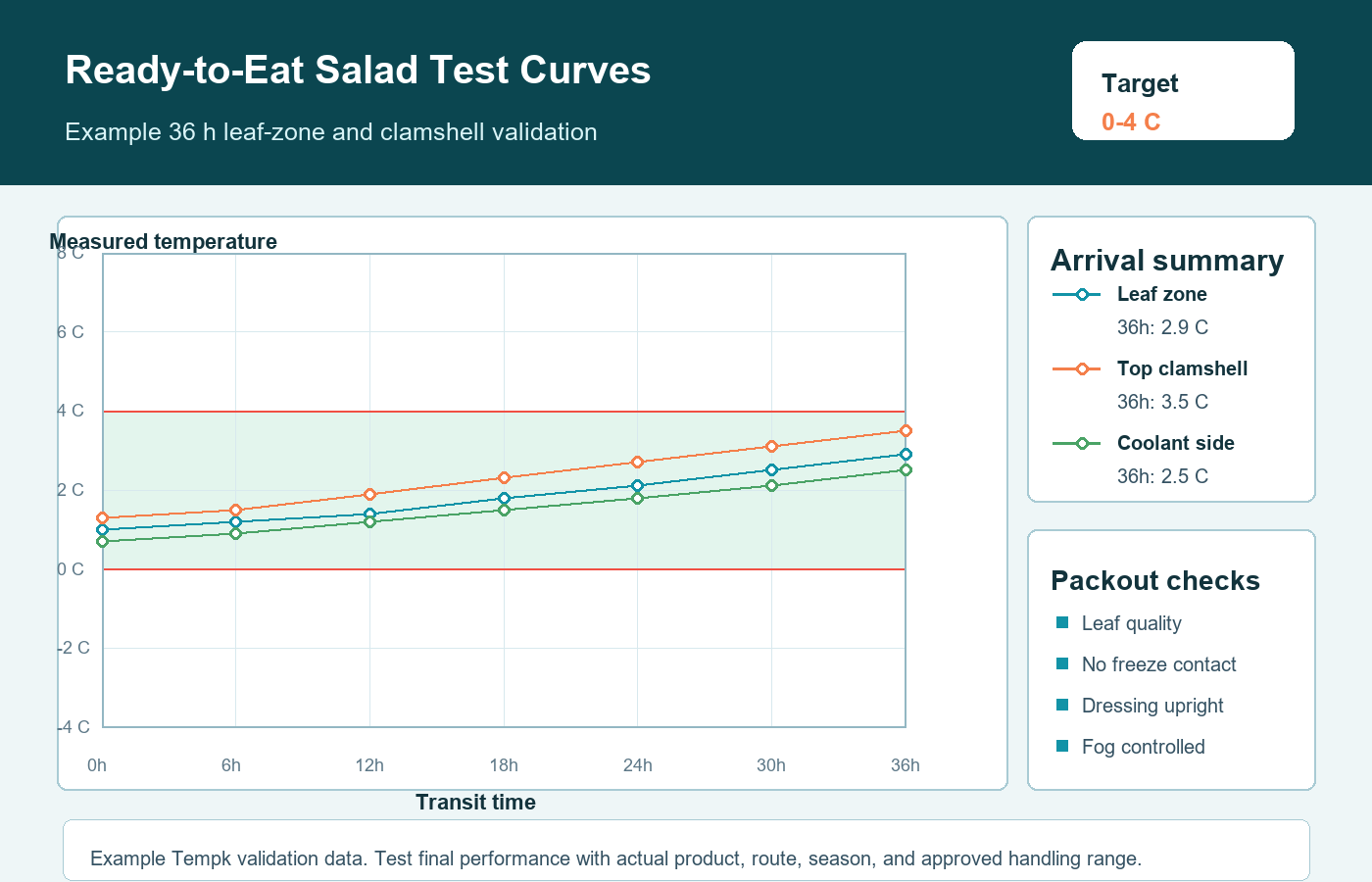
Courbe de validation et réception de preuves
Revoir la courbe avec le produit réel, masse de liquide de refroidissement, taille de l'expéditeur, durée de la voie, et assaisonner. Ajoutez des photos d'arrivée et des notes de réception afin que l'emballage soit jugé ensemble en fonction de la température et de l'état du produit..
Pages connexes pour la planification des emballages
Catégorie des aliments préparésPlats cuisinés réfrigérésSandwichs & enveloppementsGuide des soupes froidesSacs de livraison isothermes pour la livraison de salades prêtes à mangerPacks de glace en gel pour la livraison de salades prêtes à mangerSacs isothermes pour la livraison de salades prêtes à mangerOutils de la chaîne du froidContacter Tempk
Notes d'itinéraire pratiques
Gardez les salades croustillantes sans geler les bords des feuilles
Les salades prêtes à manger ont besoin de fraîcheur, ventilation, et protection contre les points froids directs. Un contact trop froid peut endommager les bords des feuilles même lorsque l'ensemble semble acceptable..
Où ce produit échoue habituellement
Flétrissement des feuilles, gel des bords, pansement des fuites, étiquettes humides, et les bols écrasés sont les principaux défauts de qualité.
Configuration de l'emballage à tester en premier
Utilisez des bols à salade rigides ou des coquilles avec contrôle du vide. Placez les packs de gel autour d'un séparateur et gardez les coupelles à vinaigrette verticales et séparées des légumes-feuilles..
Choix de liquide de refroidissement
Les packs de gel réfrigéré sont généralement plus sûrs que les packs congelés en contact direct. Utilisez PCM lorsque l'itinéraire est fortement exposé en été ou lorsque la livraison est incertaine..
Contrôle de validation d'itinéraire
Inspecter la texture des feuilles, joints de tasse à vinaigrette, couvercles à clapet, et eau gratuite dans le pack. Un emballage de salade doit inclure un contrôle visuel de la fraîcheur.
Détails de l'emballage
Les boîtes à salade ont besoin d'une protection contre le froid sans gel des feuilles
Cas d'utilisation
Les salades prêtes à manger peuvent être endommagées par contact direct avec un emballage surgelé. Les bords des feuilles peuvent geler tandis que le centre du bol reste à portée, le liquide de refroidissement doit donc être séparé par un séparateur ou placé dans des canaux latéraux.
Choix du packaging
Gardez les tasses à vinaigrette verticales et éloignées des feuilles. Si l'itinéraire comprend une livraison à chaud du dernier kilomètre, augmentez l'isolation ou utilisez du PCM plutôt que de presser des packs de gel plus froids contre les bols à salade.
Ce que Tempk devrait valider
Pour les tests Tempk, fournir la taille du bol, mélange de légumes verts, position du gobelet à pansement, nombre de packs, et durée de l'itinéraire. Vérifier le croustillant des feuilles, gel des bords, eau gratuite, sécurité du couvercle, sécheresse de l'étiquette, et température d'arrivée. Pour la livraison de repas ou la restauration de bureau, ajouter une courte attente après livraison dans la validation car les salades attendent souvent avant d'être ouvertes.
Prise en charge des emballages personnalisés
Besoin de cette voie construite autour de votre produit et de votre itinéraire?
Pour des tailles de carton fixes, limites de charge utile, exigences en matière de marque, voies saisonnières, ou des cibles de validation, Tempk peut adapter cette solution dans un emballage personnalisé pour la chaîne du froid.
Cet itinéraire de plats préparés doit-il être vérifié avant l'expédition?
Envoyer le format du produit, température cible, Taille de la charge utile, dimensions du colis, durée de l'itinéraire, conditions ambiantes, et recevoir la norme. Tempk peut aider à comparer l'isolation, pack de gel ou disposition PCM, doublures, séparateurs, et étapes de validation.
Demander une révision de l'emballage