


Intention de températurePlanifier 0-4 C ou l'exigence d'étiquetage du produit, avec garnitures pré-réfrigérées et chargement rapide par l'expéditeur.
Solution chaîne du froid pour sandwichs et roulés
Les sandwichs et les wraps nécessitent un contrôle réfrigéré pour les garnitures, mais les clients jugent l'envoi par la texture du pain, forme d'enveloppe, état de l'étiquette, et la propreté de l'article après la livraison. L'emballage doit refroidir la garniture sans tremper le papier., écraser du pain, ou des bords gelés.
Ce que le package doit contrôler
Règle du liquide de refroidissementUtilisez des packs de gel ou du PCM sur les côtés ou sur le dessus avec une barrière contre l'humidité. Ne pressez pas les paquets congelés directement dans du pain ou des emballages en papier..
Focus sur l'emballageTexture du pain, rétention de forme, sécheresse du papier, et la température de remplissage doivent être vérifiées ensemble.
Choisissez le pack par condition d'itinéraire
| État de l'itinéraire | Configuration de l'emballage | Gamme préliminaire de liquide de refroidissement | Chèque de placement et de réception |
|---|---|---|---|
| Transfert local réfrigéré, 4-8 h | Format carton isotherme ou bag-in-box, diviseur de pile, packs de gel latéraux, papier protégé de l'humidité. | 0.4-0.9 kg de packs de gel ou PCM pour un 1-3 kg de charge utile. | Vérifier la température de remplissage, surface du pain, forme d'enveloppe, et étiquette siccité. |
| Itinéraire le même jour, 8-18 h | PPE ou carton isotherme, plateau intérieur, barrière contre l'humidité, liquide de refroidissement latéral/supérieur avec entretoise. | 0.9-1.8 kg de packs de gel ou PCM pour un 1.5-4 kg de charge utile. | Utilisez des séparateurs pour que le liquide de refroidissement ne puisse pas glisser dans le pain pendant la manipulation. |
| Itinéraire chaud ou retard de livraison, 18-24 h | Isolation plus épaisse, plateau intérieur plus solide, liquide de refroidissement équilibré autour mais pas sur les sandwichs. | 1.8-2.8 kg de packs de gel ou PCM, validé avec la hauteur réelle de la pile. | Si le pain devient détrempé, améliorer la barrière contre l'humidité et la circulation de l'air avant d'augmenter le liquide de refroidissement. |
Utilisez ces plages comme point de départ pour l’examen des emballages. Confirmez la masse finale du liquide de refroidissement avec l'étiquette du produit, état de pré-refroidissement, taille de l'expéditeur, durée de l'itinéraire, profil ambiant, et un test d'enregistreur de température.
Comment Tempk construirait l'expédition
Pré-refroidir sans sécher le produit
Les remplissages froids facilitent le parcours, mais le pain exposé peut sécher ou absorber l'humidité. Gardez le package de production fermé avant le chargement.
Séparer le papier de la humidité
Utilisez une barrière contre l'humidité ou une pochette intérieure pour que les packs de gel décongelés ne mouillent pas les étiquettes., emballages en papier, ou des surfaces de pain.
Pression de la cheminée de contrôle
Utilisez un plateau, diviseur, ou un insert en carton pour empêcher le liquide de refroidissement lourd et les couches supérieures de déformer les emballages.
Inspecter la présentation à la réception
Enregistrer la température de remplissage, texture du pain, forme d'enveloppe, état de l'étiquette, humidité, et le liquide de refroidissement restant.
Points de défaillance courants à éviter
Pour les plats préparés, une arrivée froide n'est qu'une partie de la décision. L'envoi doit également avoir l'air propre, rester au sec, protéger la texture, et passe le récepteur’contrôle de qualité.
- Pain détrempé ou papier d'emballage humide à cause de la humidité.
- Sandwichs aplatis après pression du liquide de refroidissement ou des boîtes supérieures.
- Garnitures chaudes lorsque l'emballage protège la présentation mais manque de temps de refroidissement.
- Bords de pain congelés par contact direct avec le pack de gel.
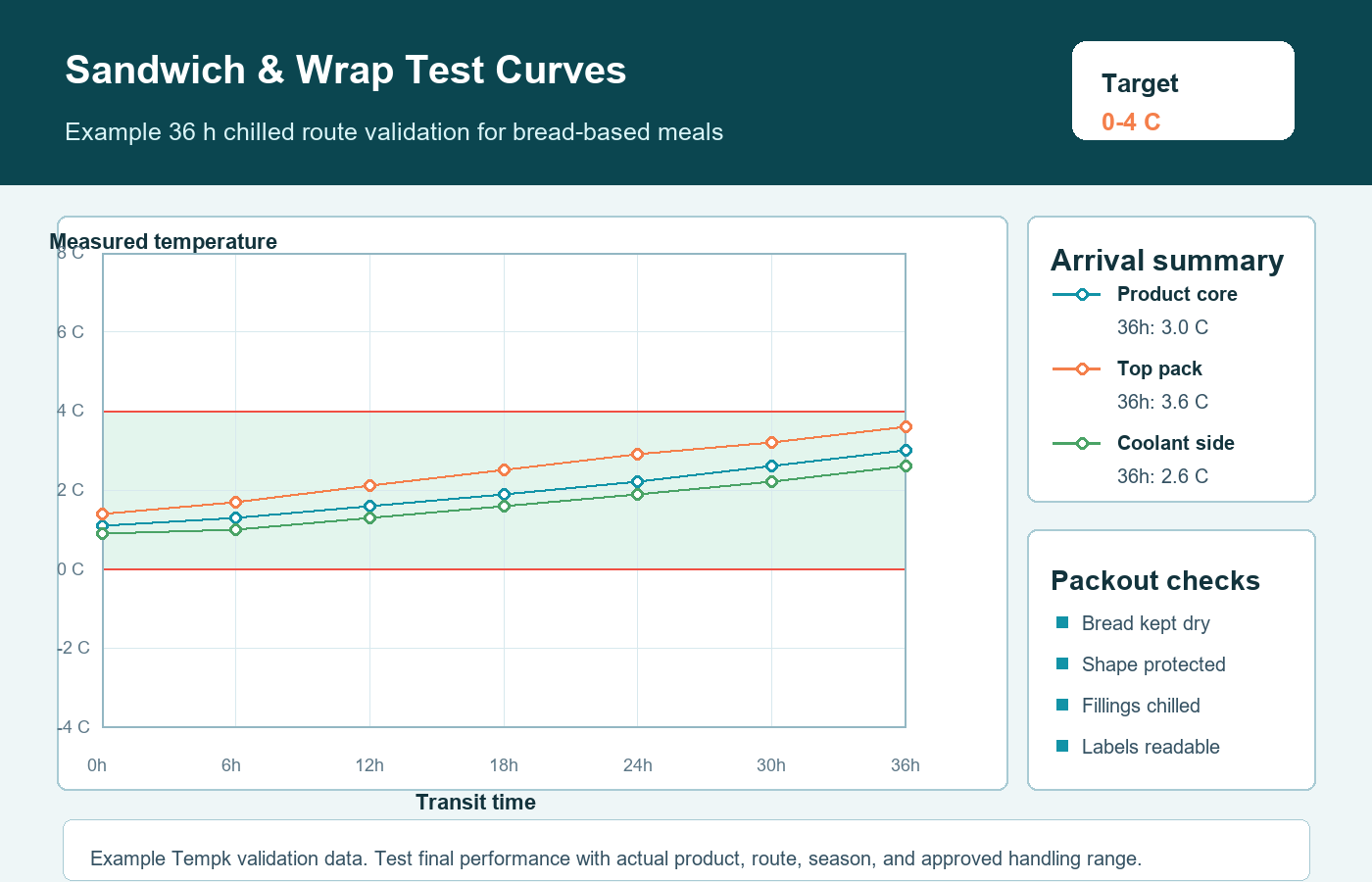
Courbe de validation et réception de preuves
Revoir la courbe avec le produit réel, masse de liquide de refroidissement, taille de l'expéditeur, durée de la voie, et assaisonner. Ajoutez des photos d'arrivée et des notes de réception afin que l'emballage soit jugé ensemble en fonction de la température et de l'état du produit..
Pages connexes pour la planification des emballages
Catégorie des aliments préparésPlats cuisinés réfrigérésSalades prêtes à mangerGuide des repas sous videSacs de livraison isothermes pour la livraison de sandwichs et de wrapsPacks de glace en gel pour la livraison de sandwichs et de wrapsDoublures de boîtes isothermes pour la livraison de sandwichs et de wrapsOutils de la chaîne du froidContacter Tempk
Notes d'itinéraire pratiques
Protégez ensemble la texture du pain et les garnitures réfrigérées
Les sandwichs et les wraps doivent être réfrigérés, mais le pain et les tortillas peuvent devenir mouillés si la humidité est mal contrôlée. L'emballage doit protéger les garnitures sans sacrifier la texture..
Où ce produit échoue habituellement
Les plaintes typiques sont le pain détrempé, wraps écrasés, mouillage des étiquettes, fuite du pansement, et centres chauds dans des paquets empilés.
Configuration de l'emballage à tester en premier
Utiliser des plateaux ou des pochettes rigides, garder le liquide de refroidissement lourd hors de la pile de sandwichs, et ajoutez un tampon de humidité là où les paquets sont placés à proximité du carton..
Choix de liquide de refroidissement
Utilisez des packs de gel réfrigérés autour de la pile, pas directement sous les emballages papier. Le PCM est utile lorsque l'itinéraire comprend des camionnettes de livraison chaudes ou une réception tardive au bureau..
Contrôle de validation d'itinéraire
Vérifier la température centrale, texture du pain, sécheresse de l'étiquette, et le pack écrase. Les contrôles de goût et de texture sont importants pour ce type de produit.
Détails de l'emballage
Les itinéraires des sandwichs et des wraps doivent protéger la texture du pain
Cas d'utilisation
Les sandwichs et les wraps doivent être manipulés au frais, mais trop de humidité peut faire du pain, tortillas, et pochettes en papier inacceptables. Le plan de refroidissement doit maintenir la température de remplissage tout en gardant les emballages en papier secs..
Choix du packaging
Utilisez des packs de gel réfrigérés positionnés sur le côté ou du PCM avec un tampon d'humidité. N'empilez pas de liquide de refroidissement lourd directement sur des emballages souples., et conservez les sauces ou les coupes à vinaigrette à la verticale dans l'emballage intérieur..
Ce que Tempk devrait valider
Tempk devrait valider la température centrale, texture du pain, sécheresse des manches, état de l'étiquette, et résistance à l'écrasement. Pour livraison au bureau ou en restauration, inclure une période d'attente après la livraison dans le test.
Prise en charge des emballages personnalisés
Besoin de cette voie construite autour de votre produit et de votre itinéraire?
Pour des tailles de carton fixes, limites de charge utile, exigences en matière de marque, voies saisonnières, ou des cibles de validation, Tempk peut adapter cette solution dans un emballage personnalisé pour la chaîne du froid.
Cet itinéraire de plats préparés doit-il être vérifié avant l'expédition?
Envoyer le format du produit, température cible, Taille de la charge utile, dimensions du colis, durée de l'itinéraire, conditions ambiantes, et recevoir la norme. Tempk peut aider à comparer l'isolation, pack de gel ou disposition PCM, doublures, séparateurs, et étapes de validation.
Demander une révision de l'emballage