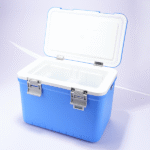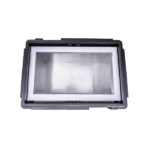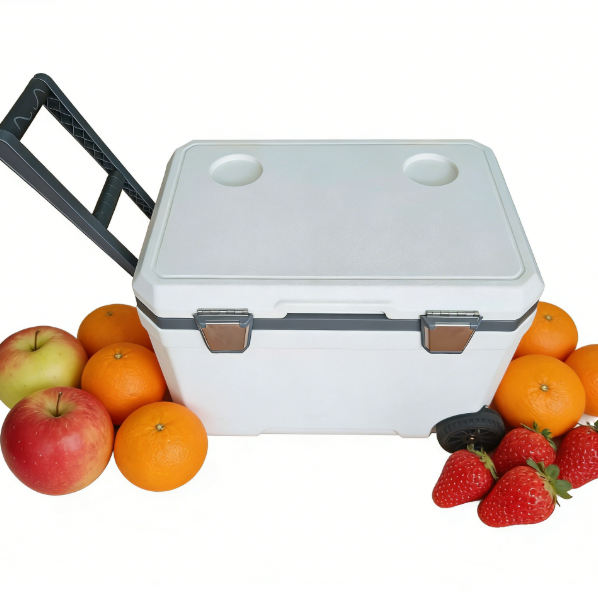
ultra-light collapsible EPP foam box is worth serious attention in 2026 when you need a box that protects temperature-sensitive product, survives real handling, and supports a cleaner sourcing story than fragile disposable packaging. The strongest solutions do not win because of one buzzword. They win because material science, desain rute, kepatuhan, and workflow all line up in one usable package.
If you are choosing between options now, focus on the complete system. Look at density and wall design, but also study packout fit, tata letak pendingin, closure stability, pembersihan, efisiensi pengembalian, and the proof behind the intended use. That integrated view is what separates a good-looking insulated box from a box that actually performs in the field.
What you will learn
- why ultra-light collapsible EPP foam box is receiving more serious buyer attention in 2026
- how material data and route design should be combined in one decision
- how to write a buying specification that survives real operations
- how to connect compliance, validasi, and sustainability without greenwashing
- what step-by-step buying plan gives the safest result
Why is ultra-light collapsible EPP foam box getting more attention right now?
Three forces are pushing buyers toward ultra-light collapsible EPP foam box. Pertama, cold chain volumes are growing across food, Perawatan kesehatan, and direct-to-consumer delivery. Kedua, reusable packaging programs are expanding because teams want lower damage and a better waste profile. Ketiga, packaging rules and customer expectations are putting more weight on recyclability, pelabelan yang lebih jelas, and credible sustainability claims. When those forces meet, EPP becomes attractive because it can be insulated, tahan lama, lampu, and reusable at the same time.
The appeal becomes stronger when the route is hard on packaging. Empty box storage and reverse logistics inefficiency is rarely caused by a single factor. It comes from bumps, kelembaban, lid opening, dermaga panas, rushed labor, and weak packouts all working together. A well-designed EPP system gives you more protection against that messy reality. It is not perfect by default, but it gives engineers and buyers more useful design levers than many disposable alternatives.
The best reason to buy ultra-light collapsible EPP foam box is operational balance
Some packages are cheap but fragile. Others are strong but heavy. Others look sustainable but are hard to recover in practice. EPP often earns its place because it balances those competing needs better than most options. You can tune density, geometri, sisipan, and handling features to the route instead of accepting one blunt compromise. That flexibility is a major reason the category keeps moving up procurement shortlists.
| <kuat>Current pressure</kuat> | <kuat>What it means for packaging</kuat> | <kuat>How EPP can respond</kuat> | <kuat>Mengapa itu penting bagi Anda</kuat> |
| Cold chain growth | More routes and more temperature-sensitive product | Reusable insulated box designs scale across several lane types | You need packaging decisions that stay workable as volume grows |
| Higher quality expectations | Damage and temperature failures are more visible | Better impact recovery and route tuning | You protect margin and customer trust |
| Tekanan keberlanjutan | Waste and recyclability are under closer review | Reuse plus recyclable material pathways | Your sourcing story becomes easier to defend |
| Stricter buying scrutiny | Procurement wants proof, bukan klaim | Data, sampel, and validation can be built into the decision | Approval becomes faster and less risky |
Tip Praktis untuk Anda
- Use the business problem to define the box, bukan sebaliknya.
- Use route segmentation if one package clearly does not suit every lane in your network.
- Use real product value and service expectations when deciding how much durability is justified.
Contoh kasus: a mixed chilled-food network moved away from a single disposable format after repeated complaints about damage and waste. An EPP-based design did not solve every route in the same way, but it gave the team a stronger reusable base to tune by lane.
How do material science and route design work together in ultra-light collapsible EPP foam box?
The material properties of ultra-light collapsible EPP foam box matter most when they are translated into route outcomes. Standard molded EPP grades often sit around 20 ke 60 gram/L, and common technical data shows compressive strength at 10 percent deflection rising from roughly 9 psi to 40 psi across that range. Water absorption is commonly listed below 5 percent by volume, which helps the box stay predictable after condensation or wet handling. Those numbers are useful because they explain why EPP can stay light, mengisolasi dengan baik, and still tolerate repeated abuse.
But route design finishes the job. The same material can work beautifully in one packout and poorly in another. Ketebalan dinding, segel tutup, ruang kepala, posisi pendingin, frekuensi pembukaan, and stacking pattern all shape the final temperature result. That is why smart teams test the whole system instead of worshipping one data point. Material science gives you the tool. Route design tells you whether the tool is being used correctly.
Turn the science behind ultra-light collapsible EPP foam box into simple buying logic
If the route is short and light, you may prioritize empty-box weight and packing speed. If the route is rough or stacked high, you may move toward denser walls or stronger geometry. If the product is regulated or premium, validation depth becomes non-negotiable. That sequence lets you use technical data in a practical way instead of treating it as background noise.
| <kuat>Technical lever</kuat> | <kuat>Apa yang diubahnya</kuat> | <kuat>Saat itu paling penting</kuat> | <kuat>Buying takeaway</kuat> |
| Kepadatan | Kekakuan, berat kosong, dan daya tahan | Menumpuk, penanganan berulang, heavy payloads | Choose it based on route stress, not prestige |
| Wall geometry | Strength and insulation distribution | Impact zones, tutup pas, dan stabilitas rongga | Smart design often beats brute-force material use |
| Struktur sel tertutup | Moisture behavior and cleaning ease | Wet docks, hidangan laut, pencucian, kondensasi | Useful for maintaining repeat-use consistency |
| Tata letak paket | Thermal performance in the real shipment | Long routes and varied ambient exposure | Validasi sistem lengkap, not the box alone |
Tip Praktis untuk Anda
- Use logger data and physical box inspection together during testing.
- Use the same loading method in validation that the warehouse will use in production.
- Use the lightest design that still meets the structural and thermal target.
Contoh kasus: a buyer improved route performance without changing the material grade by tightening the cavity layout and rebalancing coolant placement. Pelajarannya jelas: system design can unlock material value.
How do you build a buying specification for ultra-light collapsible EPP foam box that survives real operations?
A strong specification for ultra-light collapsible EPP foam box covers more than outer size and color. It should define payload type, kisaran suhu target, durasi rute, profil lingkungan, format pendingin, acceptable stack load, metode pembersihan, expected reuse model, dan dokumen yang diperlukan untuk persetujuan. When those items are vague, suppliers fill in the blanks differently and price comparisons stop being fair. A clear spec protects both quality and procurement.
You should also write the specification in operator language, not only engineer language. How fast must the box be packed? Can one person lift it safely? Does it need barcode space, tamper seals, or partition options? Is the return flow nested, kaku, or fold-flat? These questions matter because operational friction quietly becomes cost. A box that looks correct on paper but annoys the team every day is not a good purchase.
A practical decision tool for ultra-light collapsible EPP foam box buyers
When you review samples, ask four simple questions. Does the box fit the product? Does it hold temperature in the real lane? Can the team use and clean it easily? Can the supplier prove what they claim? If any answer is weak, the project is not ready for scale. This framework sounds basic, but it catches most expensive mistakes before they spread across the network.
| <kuat>Barang spesifikasi</kuat> | <kuat>Pertanyaan untuk ditanyakan</kuat> | <kuat>Jawaban yang bagus</kuat> | <kuat>Risk if it is unclear</kuat> |
| Definisi rute | What is the worst credible lane? | Profil ambient, lamanya, and handling events are named | Validation becomes generic and misleading |
| Packout logic | How is the product loaded and cooled? | Muatan, pendingin, and headspace are defined | Thermal results vary trip to trip |
| Kesesuaian operasional | How will staff pack, membersihkan, and return it? | Workflow is simple and tested | Labor cost and user error rise |
| Approval documents | What proof is required for release? | Bahan, validasi, and traceability are listed | Projects stall during review |
Tip Praktis untuk Anda
- Use the same template for every supplier quote so the comparison stays controlled.
- Use cross-functional review with operations, kualitas, and procurement before approving tooling or volume.
- Use pilot runs to test the specification under real staffing and timing pressure.
Contoh kasus: a buyer avoided an expensive redesign by catching an operator issue during sample trials. The box met thermal targets, but the label area failed after condensation and fast relabeling. Updating the spec early prevented a bigger rollout problem.
How do compliance, validasi, and sustainability fit together for ultra-light collapsible EPP foam box?
The best projects treat compliance, validasi, and sustainability as one conversation. For food-contact uses, buyers often review intended-use support under 21 CFR 177.1520 in the United States or the EU framework under Regulation (EC) TIDAK 1935/2004 and GMP under Regulation (EC) TIDAK 2023/2006. For food transport, sanitary transportation expectations around equipment, Operasi, catatan, and training also shape how the box is approved and used. These are not side issues. They are part of what makes the packaging trustworthy.
Sustainability becomes more credible when validation is strong. If you want to claim a reusable or lower-waste solution, you need realistic reuse cycles, workable returns, and an end-of-life path that exists in the target market. Di Eropa, packaging policy is reinforcing this direction by keeping attention on recyclable design and clearer labeling. EPP fits well when the program can support reuse and recovery, but the claim must be operationally true, not only theoretically true.
Credible proof makes ultra-light collapsible EPP foam box easier to approve and easier to defend
Think of documentation as a bridge between departments. Quality teams want evidence. Procurement wants comparability. Sustainability teams want a claim they can defend. Operations wants something that works every day. When a supplier provides clear material support, route-based validation, and honest reuse logic, that bridge gets much easier to build. That is what serious buyers should reward.
| <kuat>Approval pillar</kuat> | <kuat>Seperti apa rupanya</kuat> | <kuat>Mengapa itu penting</kuat> | <kuat>What goes wrong without it</kuat> |
| Regulatory support | Clear intended-use documentation | Quality review moves faster | Approval becomes slow and uncertain |
| Validasi termal | Route-based testing with defined packout | Performance claims stay believable | Field results drift from lab claims |
| Gunakan kembali modelnya | Realistic cycle and return assumptions | Sustainability claims gain substance | Green claims remain superficial |
| Jalan akhir kehidupan | Recovery or recycling logic in target market | Waste planning is stronger | Reusable packaging may still become waste |
Tip Praktis untuk Anda
- Use compliance and sustainability reviews early, not after tooling is fixed.
- Use pilot data to check both temperature performance and box condition after repeated cycles.
- Use honest recovery assumptions before calculating any environmental or cost benefit.
Contoh kasus: a reusable program passed internal sustainability review only after the team added a recovery pathway and documented expected cycle life. The material was recyclable from the start, but the program needed operational proof.
Apa yang paling pintar 2026 buying plan for ultra-light collapsible EPP foam box?
The smartest buying plan for ultra-light collapsible EPP foam box is staged, berbasis bukti, and route-specific. Start by defining the most difficult realistic lane, the product risk, and the operational model. Then shortlist only suppliers who can explain design logic, provide relevant documentation, and support testing. Setelah itu, run sample trials under real workflow conditions before you commit to volume.
This process may feel slower at the beginning, but it usually speeds up the final decision because the team is arguing with better information. It also helps prevent two expensive mistakes: overbuying a premium box you do not need or underbuying a weak box that fails once volume grows. Di dalam 2026, the best buyers are not the fastest clickers. They are the teams that connect material performance, kesesuaian rute, and business logic with discipline. That is exactly the right way to buy EPP packaging.
Five-step action plan for ultra-light collapsible EPP foam box
Tentukan jalurnya. Freeze the packout. Screen supplier proof. Pilot in the real operation. Scale only after the results are clear. Those five steps sound simple because they are. Most packaging mistakes happen when one of them is skipped. If you follow them carefully, your odds of making a strong choice rise sharply.
| <kuat>Melangkah</kuat> | <kuat>Apa yang harus dilakukan</kuat> | <kuat>What success looks like</kuat> | <kuat>Why it saves time later</kuat> |
| 1. Tentukan jalurnya | Map the harshest realistic route | Everyone agrees on the test target | You avoid vague design debates |
| 2. Freeze the packout | Set product, pendingin, and load method | Samples are tested fairly | Results become comparable |
| 3. Screen suppliers | Review data, dokumen, dan daya tanggap | Weak options fall out early | You focus on serious candidates |
| 4. Pilot the box | Run thermal and workflow trials | The team sees real performance | Surprises appear before scale-up |
| 5. Scale with discipline | Approve only after evidence is clear | Production follows a proven specification | Launch risk drops significantly |
Tip Praktis untuk Anda
- Use a written go or no-go checklist before volume approval.
- Use a pilot long enough to expose cleaning, pelabelan, and return issues, not only temperature behavior.
- Use post-pilot review to refine the design before the box becomes a standard item.
Contoh kasus: a team that followed a staged approval process took slightly longer to launch, but avoided a full-season packaging failure because the pilot exposed a lid-handling issue before scale. The delay was minor. The avoided disruption was major.
2026 developments and trends for ultra-light collapsible EPP foam box
The direction of travel for ultra-light collapsible EPP foam box is becoming easier to read. Markets want stronger temperature protection, more reusable packaging, more evidence, and less wasteful design. That combination rewards EPP when it is specified honestly and validated well. It also punishes lazy claims, because buyers are getting better at asking hard questions about route fit, regulatory support, dan logika siklus hidup.
Perkembangan terbaru sekilas
- Route-specific testing is becoming more important than generic marketing hold-time promises.
- Recyclability and lower-waste design are now part of the buying conversation, especially under European policy pressure.
- Operational fit such as packing speed, pembersihan, and return efficiency is increasingly used as a final tie-breaker between similar products.
Untukmu, the market message is positive. A thoughtful buyer can now separate good suppliers from weak ones much faster by asking for system-level proof. That makes it easier to invest in a box that truly supports quality, pengendalian biaya, and a more credible sustainability position.
Pertanyaan yang sering diajukan
How long can ultra-light collapsible EPP foam box hold temperature?
It depends on product start temperature, massa pendingin, desain dinding, profil lingkungan, and how often the lid is opened. Ask for route-specific testing instead of relying on a single headline number.
Are all ultra-light collapsible EPP foam box designs truly fold-flat?
TIDAK. Many are hybrid systems that combine EPP insulation with foldable panels or modular structures. Clarify the exact design before comparing space savings.
Can ultra-light collapsible EPP foam box be used for food applications?
It can be suitable when the resin system, additives, and process controls support the intended use. Request food-contact documentation and any needed declarations before approval.
How do you clean ultra-light collapsible EPP foam box properly?
Follow the supplier’s cleaning guidance, but in general a closed-cell EPP surface is easier to wipe and dry than absorbent materials. Validate your cleaning method for the real application.
Is ultra-light collapsible EPP foam box recyclable?
EPP is recyclable as a polypropylene-based foam, but real recycling depends on local collection and recovery options. Gunakan kembali terlebih dahulu, then confirm end-of-life handling in your market.
What should I compare first when I shortlist suppliers for ultra-light collapsible EPP foam box?
Compare route-fit, dokumentasi, kualitas sampel, and operational ease before you compare price alone. A cheap box that fails in the lane is never the lowest-cost option.
Ringkasan dan rekomendasi
The key takeaway is simple. Ultra-light collapsible EPP foam box makes sense when you need insulation, repeat durability, and a route-ready design that works in the real world. The best result comes from matching density, geometri, tata letak pendingin, and handling details to your actual use case rather than buying a box by headline claims alone.
The best path forward is to make your buying process as strong as the box. Langkah Anda selanjutnya harus praktis. Tentukan jalurnya, confirm the packout, request the right documentation, and pilot the box under real operating conditions. Clarify whether the product is a rigid nested box, a fold-flat hybrid, or a modular panel system before you compare options. A careful start usually saves far more money than a rushed purchase.
Tentang tempk
Dan Tempk, we focus on cold-chain packaging with an operations-first mindset. We look at insulation performance, pilihan bahan, logika paket, and handling reality together so a box is not only technically sound but also workable for everyday teams. Untukmu, that means the conversation stays grounded in route fit, dokumentasi, and useful design support instead of empty buzzwords.